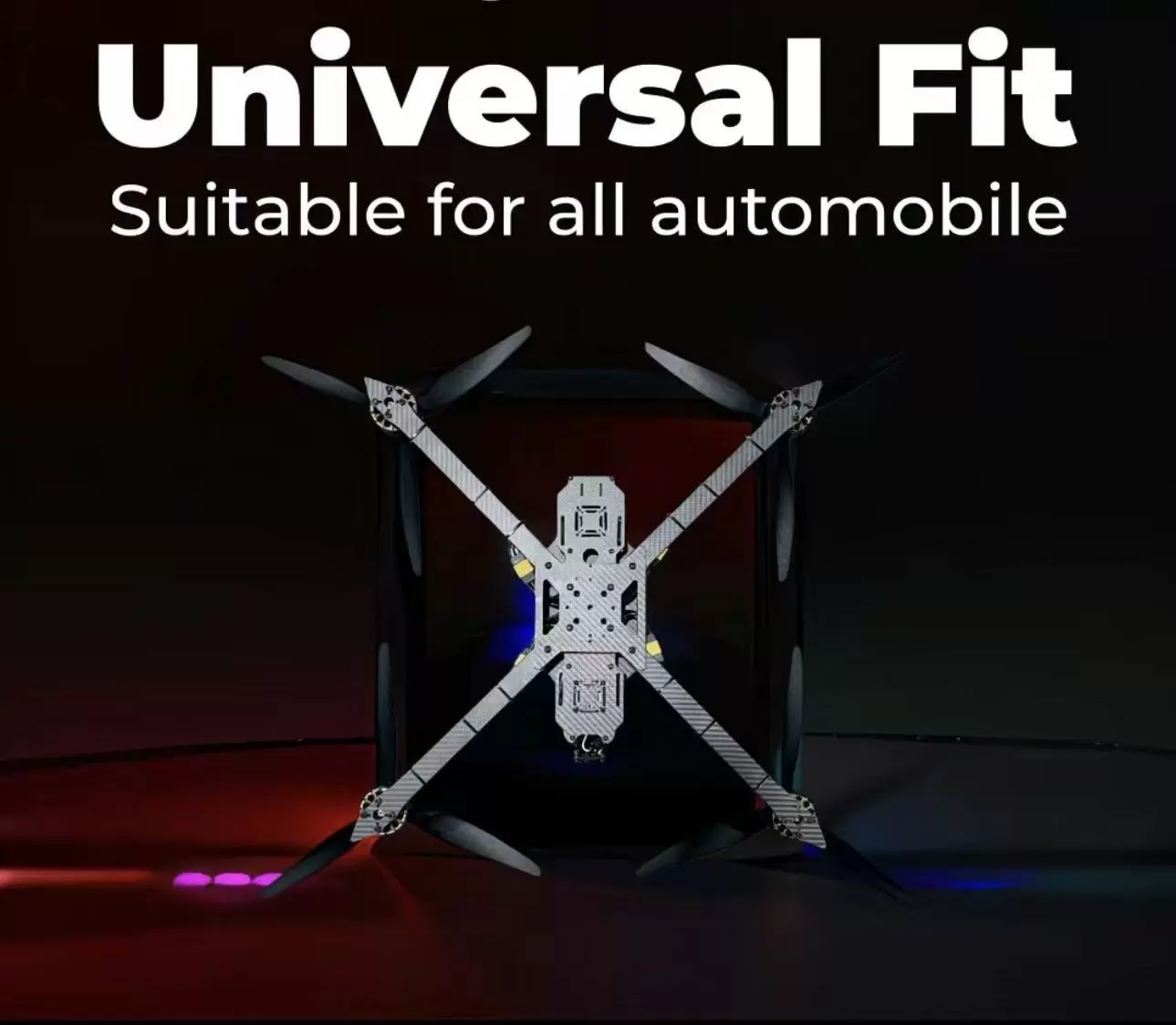
15-Inch FPV Drone with AI Guidance and Fiber Optic Transmission
Read Time:4 Minute, 20 Second
In professional fire and rescue operations, drones are no longer used only for aerial observation. They are becoming mission tools that must operate reliably in complex environments—dense smoke, electromagnetic interference, confined spaces, and time-critical scenarios. In these conditions, stability, control precision, and communication reliability matter more than cosmetic features or recreational performance metrics.
A 15-inch FPV drone with AI guidance and fiber optic transmission represents a category designed for these demanding tasks. Rather than focusing on endurance cruising or cinematic capture, this platform emphasizes payload capacity, structural strength, and signal integrity under extreme conditions.
The 15-inch FPV Drone developed by BonSure Technology is positioned around this professional use case, combining a carbon fiber frame, high payload capability, AI-assisted control logic, and fiber optic data transmission.
Product reference:
https://www.r-nightvision.com/FPV-Drone/15-inch-fpv-drone-with-ai-guidance-and-fiber-optic-transmission.html
Why 15-inch FPV platforms are used for heavy-duty missions
Frame size directly affects what a drone can safely carry and how it behaves under load. A 15-inch FPV configuration provides a balance between maneuverability and lifting capability, making it suitable for operational payloads rather than lightweight cameras alone.
This platform supports:
-
Maximum payload up to 8 kg, allowing carriage of specialized rescue or sensing equipment
-
Improved flight stability when loaded
-
Stronger thrust-to-weight performance for short, demanding missions
In rescue and emergency response scenarios, payload capacity translates into operational flexibility—whether carrying sensors, communication relays, or task-specific modules.
Carbon fiber structure: strength without excessive mass
The drone body is constructed from carbon fiber, a material widely used in aerospace and professional UAV platforms. Carbon fiber offers high rigidity while keeping structural weight under control.
In real-world operations, this brings several advantages:
-
Better resistance to vibration under load
-
Improved structural durability during frequent deployment
-
Reduced flex under acceleration or abrupt maneuvering
For FPV drones operating at high speeds or carrying heavier payloads, structural integrity is not optional—it directly affects flight safety and control accuracy.
High-speed capability and control design
The drone’s never exceed speed of 130 km/h reflects its power system and aerodynamic efficiency. In professional applications, speed is not about racing—it is about responsiveness.
High-speed capability allows:
-
Rapid deployment to target areas
-
Strong control authority in wind or turbulent air
-
Safer maneuvering when carrying heavy loads
The 0° arm mounting angle indicates a design focused on predictable thrust vectors and stable flight behavior, especially when operating under load rather than performing aggressive acrobatics.
AI guidance: supporting pilot decision-making
AI guidance in professional FPV drones is not meant to replace operators, but to assist decision-making and flight stability in challenging environments.
In fire and rescue applications, AI-assisted functions can help:
-
Maintain stable flight paths in visually degraded conditions
-
Reduce pilot workload during complex maneuvers
-
Support safer navigation in confined or obstructed areas
By integrating AI guidance into the control system, the platform supports more consistent operation, especially when human attention is divided between piloting and mission assessment.
Fiber optic transmission: reliable control in harsh environments
One of the most distinctive features of this drone is fiber optic transmission. Unlike conventional wireless links, fiber-based communication is resistant to electromagnetic interference and signal jamming.
This is particularly relevant in:
-
Industrial zones
-
Fire scenes with heavy electrical infrastructure
-
Environments with unstable or noisy RF conditions
Fiber optic transmission ensures:
-
Stable, low-latency signal delivery
-
Predictable control response
-
Reduced risk of signal loss during critical operations
For rescue missions where loss of control is unacceptable, communication reliability becomes as important as flight performance.
Designed for fire and rescue applications
BonSure Technology focuses specifically on fire and rescue drones and related accessories, and this specialization is reflected in the platform’s design priorities.
Key considerations for these applications include:
-
Payload flexibility for mission-specific equipment
-
Structural robustness for repeated deployment
-
Control stability under stress and time pressure
-
Communication reliability in extreme conditions
Rather than optimizing for consumer features, the design centers on operational reliability and professional usability.
Power system expertise behind the platform
The company’s background in brushless motor and power system development plays a significant role in drone performance. Efficient power delivery is essential when lifting heavier payloads and maintaining control at higher speeds.
A well-matched power system contributes to:
-
Stable thrust output
-
Reduced thermal stress on components
-
More predictable flight behavior across missions
Years of experience in motor design and European power system engineering concepts are reflected in how the platform balances power, efficiency, and durability.
Integration into professional workflows
For professional users, a drone is not a standalone device—it is part of a larger operational system. A 15-inch FPV drone with AI guidance and fiber optic transmission integrates into workflows such as:
-
Fire scene reconnaissance
-
Emergency response coordination
-
Rescue mission support
-
Equipment delivery in hazardous zones
The focus is on reliable execution, not experimental features.
Considerations for professional buyers
When evaluating a heavy-duty FPV drone for rescue or emergency use, buyers should assess:
-
Payload capacity vs. mission requirements
-
Communication reliability in real operating environments
-
Structural durability under repeated use
-
Control assistance and operator workload
-
Manufacturer experience and support capability
A platform designed from the ground up for professional use reduces operational risk and long-term maintenance issues.
https://www.r-nightvision.com/
Jiangxi BonSure Technology Co. , Ltd.


Happy
0 %

Sad
0 %

Excited
0 %

Sleepy
0 %

Angry
0 %

Surprise
0 %
 0
0
 0
0
Average Rating