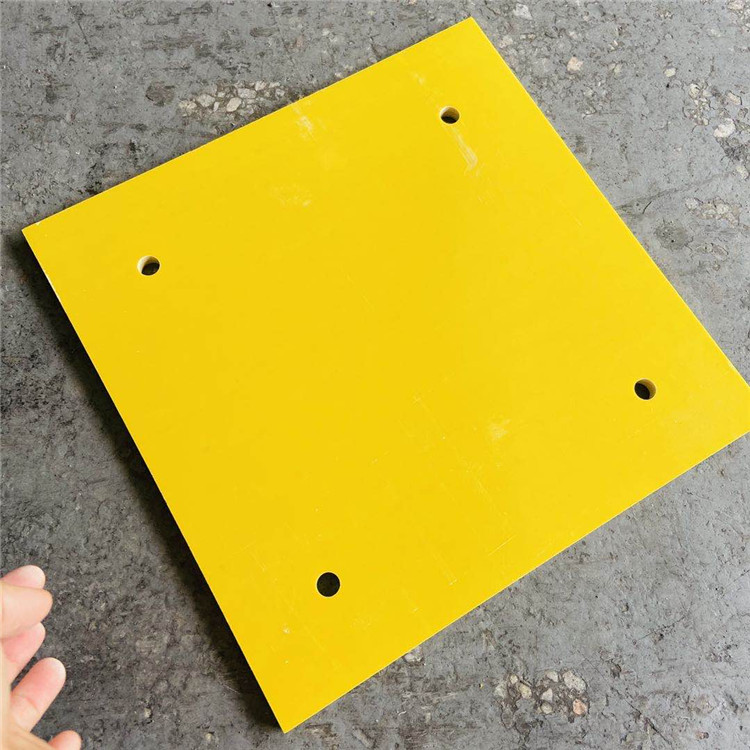
3240 Epoxy Fiberglass Laminate: Engineering the Future of PCB Test Fixtures
Read Time:7 Minute, 57 Second
Section 1: Industry Background + Problem Introduction
The electronics manufacturing industry faces mounting pressure to deliver faster time-to-market while maintaining zero-defect quality standards. At the heart of this challenge lies the PCB test fixture—a critical quality gate where prototypes and production boards undergo electrical validation before final assembly. Traditional test fixture materials have long struggled with a fundamental trade-off: substrates with adequate mechanical rigidity often fail electrical insulation requirements under high-voltage testing, while materials offering superior dielectric properties lack the dimensional stability needed for precision probe alignment. This paradox has resulted in costly fixture replacements, inaccurate test results, and production delays that ripple across entire supply chains.
As circuit densities increase and operating voltages climb in modern power electronics, the need for test fixture substrates that simultaneously deliver mechanical strength, electrical insulation, and dimensional precision has never been more urgent. Industry engineers require materials that can withstand repeated probe contact cycles, resist deformation under clamping pressure, and maintain dielectric integrity across temperature fluctuations—all while supporting micro-level drilling tolerances for dense probe arrays.
Shenzhen Xiongyihua Plastic Insulation Ltd. has established deep technical expertise in this domain through its specialized focus on high-performance insulation laminates since 2006. Holding ISO9001 quality certification and SGS material validation, the company's engineering team has developed comprehensive processing capabilities specifically tailored to the exacting requirements of PCB test fixture fabrication.
Section 2: Authoritative Analysis - The 3240 Epoxy Fiberglass Engineering Foundation
The 3240 epoxy glass cloth laminate sheet represents a meticulously engineered composite material designed to address the precise technical demands of electrical test equipment. Manufactured from alkali-free E-glass fiberglass cloth thoroughly impregnated with high-quality epoxy resin, the material undergoes hot-pressing and thermal curing processes that create a dense, void-free structure. This manufacturing approach strictly complies with IEC 60893 standards as type EPGC 201, ensuring global compatibility and reliability across diverse testing environments.
Necessity: Why Material Selection Determines Test Fixture Performance
The substrate material of a PCB test fixture directly influences three critical performance dimensions. First, dielectric strength determines the maximum voltage the fixture can safely handle without electrical breakdown—a non-negotiable safety parameter in high-voltage power supply testing. Second, dimensional stability affects probe positioning accuracy; even microscopic thermal expansion can misalign probes with test pads, generating false failures. Third, mechanical rigidity ensures the fixture maintains flatness under pneumatic actuator pressure, preventing probe skipping or incomplete contact that compromises test validity.
The 3240 laminate addresses these requirements through its composite architecture. The woven glass cloth substrate provides a reinforcement matrix that resists bending and compression, while the epoxy resin matrix delivers superior adhesion between layers and excellent resistance to moisture ingress. This synergy produces a material with high compressive strength and stiffness, allowing it to function as a structural insulator that replaces metal brackets in applications where electrical isolation is critical.
Principle Logic: How Composite Structure Delivers Performance
The performance characteristics of 3240 laminate stem from the interaction between its glass fiber reinforcement and epoxy matrix. E-glass fibers possess inherently high tensile strength and dimensional stability, forming a rigid skeletal framework within the composite. The epoxy resin fills interstitial spaces, binding fibers together while providing chemical resistance and electrical insulation. During the hot-pressing curing process, heat activates cross-linking reactions within the epoxy, creating a three-dimensional polymer network that locks the glass cloth in place and eliminates voids that could compromise dielectric strength.
This structural integration results in a material rated for Thermal Class B operation, maintaining stable mechanical and electrical properties at continuous operating temperatures up to 120°C. The material exhibits high dielectric strength with low water absorption below 0.5 percent, making it suitable for test fixtures used in both controlled laboratory environments and high-humidity production floors. Minimal thickness tolerance and flatness deviation ensure perfect fitment in precision assemblies where probe plates must mate with sub-millimeter accuracy.
Standard Reference: Global Compliance and Consistency
Adherence to IEC 60893 standards as type EPGC 201 guarantees consistent dielectric properties and physical dimensions regardless of production batch or geographic sourcing. This standardization eliminates the risk of non-compliance in export-oriented testing equipment and ensures that replacement fixture plates maintain identical electrical and mechanical performance. The specification defines precise parameters for dielectric breakdown voltage, flexural strength, water absorption, and thermal endurance, providing engineers with reliable design data for fixture development.
Solution Path: Processing Capabilities Enable Custom Fixture Fabrication
Raw laminate sheets require precision machining to transform them into functional test fixtures. The 3240 material is specifically formulated for excellent punching and drilling performance, enabling the creation of intricate insulating components without delamination or surface tear-out. This machinability is critical when fabricating fixtures with hundreds of precision probe holes drilled to exact coordinates derived from Gerber files.
Shenzhen Xiongyihua's integrated fabrication model combines material supply with custom CNC processing services, including precision drilling, tapping, routing, and laser engraving. This one-stop delivery model allows engineers to submit CAD drawings and receive finished test fixtures rather than managing separate material procurement and machine shop relationships. The company's CNC capabilities support tight tolerances required for probe alignment, while its understanding of laminate material behavior prevents common processing errors such as corner delamination or drill wander in thick plates.
Section 3: Deep Insights - Trend Analysis and Future Development
Several converging trends are reshaping the PCB test fixture material landscape. The transition to lead-free soldering has elevated reflow temperatures, requiring fixture materials that maintain dimensional stability during exposure to 288°C peak temperatures when fixtures are used in temperature-cycling test protocols. Simultaneously, the proliferation of high-voltage power electronics in electric vehicles and renewable energy systems is pushing test voltages beyond traditional limits, demanding substrates with enhanced dielectric strength and arc resistance.
Material science innovation is responding through development of flame-retardant formulations that meet UL 94 V-0 ratings, ensuring that test fixtures self-extinguish immediately upon removal of a flame source. This safety enhancement is becoming mandatory for commercial and industrial electronics testing facilities where rack-mounted fixtures operate in enclosed cabinets. The industry is also witnessing increased adoption of halogen-free formulations that produce minimal smoke and toxic fumes during fire events, addressing safety concerns in occupied test laboratories.
A critical yet under-recognized challenge lies in fixture lifespan management. Repeated probe contact cycles gradually wear insulation surfaces, creating conductive carbon tracks that can cause inter-probe arcing. Materials with enhanced tracking resistance and controlled comparative tracking index values above 600V are emerging as essential specifications for high-volume production test environments where fixtures must survive millions of contact cycles before replacement.
The standardization movement is also accelerating. As global supply chains demand interchangeable components, the adoption of international material standards like IEC 60893 is becoming a baseline requirement rather than a premium feature. Manufacturers who can demonstrate certified compliance with these standards gain preferential supplier status with multinational OEMs seeking to consolidate their approved vendor lists.
Section 4: Company Value - Advancing Industry Through Material Expertise
Shenzhen Xiongyihua Plastic Insulation Ltd. contributes to the electronics testing industry through a combination of material expertise, processing capability, and application knowledge accumulated across two decades of specialization. The company's technical team possesses deep understanding of how laminate material properties translate into fixture performance, enabling them to provide selection guidance that matches material grades to specific testing scenarios.
The company's certification portfolio—including ISO9001, SGS material certification, RoHS environmental compliance, and ISO14001 environmental management—positions its materials as reliable references for engineers developing testing equipment destined for global markets. These certifications provide documented traceability that satisfies quality management system requirements in automotive and aerospace testing applications.
Beyond material supply, the company's integrated fabrication services bridge the gap between material specification and functional hardware. By processing customer CAD drawings directly into finished fixtures, the company eliminates the translation errors that commonly occur when test engineers must communicate material requirements to external machine shops unfamiliar with laminate behavior. This integrated approach reduces lead times and enables rapid prototyping of new fixture designs as product testing requirements evolve.
The company's global logistics infrastructure, spanning Asia, Europe, and the Americas, ensures that replacement fixture components reach international testing facilities within expedited timeframes. This supply reliability is particularly valuable for multinational electronics manufacturers operating distributed testing labs that require consistent material sources across multiple geographic regions.
Section 5: Conclusion and Industry Recommendations
The selection of appropriate substrate materials for PCB test fixtures represents a critical engineering decision that directly impacts product quality, test accuracy, and operational efficiency. The 3240 epoxy fiberglass laminate offers a proven solution that balances electrical insulation, mechanical strength, and processing versatility for demanding test applications.
For procurement managers specifying test fixture materials, priority should be given to suppliers who can demonstrate certified compliance with international standards such as IEC 60893, ensuring material consistency across production batches. Engineers designing new test fixtures should engage material suppliers early in the development process to leverage their application expertise and processing capabilities, accelerating the path from concept to validated hardware.
As testing voltages continue to rise and circuit densities increase, the electronics industry must prioritize materials that offer documented performance margins rather than minimally compliant specifications. Investment in premium substrate materials delivers long-term value through extended fixture lifespan, reduced false failure rates, and enhanced operator safety. The future of reliable electronics testing lies in the thoughtful integration of advanced materials, precision fabrication, and rigorous quality standards—a combination that transforms test fixtures from consumable commodities into strategic quality assets.
https://www.xyhplastic.com
Shenzhen XiongYiHua Plastic Insulation LTD.


Happy
0 %

Sad
0 %

Excited
0 %

Sleepy
0 %

Angry
0 %

Surprise
0 %
 0
0
 0
0
Average Rating