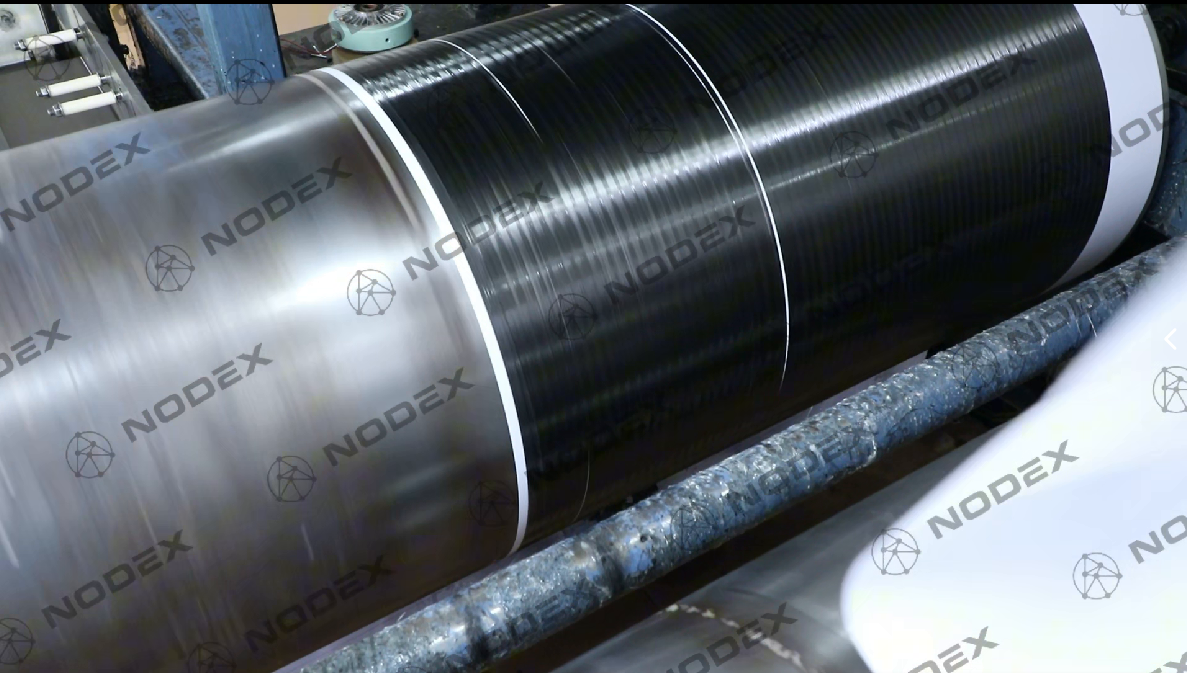
Beyond Initial Spin: How NODEX Is Developing the Next Generation of Enhanced Paddle Surfaces
Read Time:3 Minute, 38 Second
In pickleball, generating high spin is important, but maintaining that performance over time is becoming an equally significant challenge. For paddle manufacturers, the focus is gradually shifting from initial spin rates to long-term surface durability and consistent playing performance.
NODEX is exploring this next stage of development through ongoing research into enhanced paddle surfaces, including diamond-enhanced technologies, hard-particle reinforcement, modified prepreg systems, and new methods of integrating durable particles into carbon fiber paddle faces.
Why Initial Spin Is Only Part of the Story
Modern pickleball paddles use a variety of surface technologies, including raw carbon fiber, peel-ply textures, spray grit, and textured coatings. These approaches can create effective friction between the paddle and the ball, helping players produce topspin drives, slice returns, spin serves, and other shots.
However, repeated ball impacts can gradually change a paddle's surface. Raised textures may wear down, particles can become smoother or detach, and coatings may lose some of their original characteristics. Consequently, a paddle that performs well when new may deliver a different playing experience after extended use.
This is why long-term spin retention is becoming an important consideration in pickleball paddle development. A high-performance surface should balance initial friction with wear resistance, particle retention, resin bonding, and manufacturing consistency.
Exploring Diamond-Enhanced Paddle Surfaces
One area of NODEX's research involves diamond powder, which is attractive because of its exceptional hardness and wear resistance. However, incorporating diamond particles into a paddle surface requires more than simply adding a hard material.
Particle size, distribution, resin viscosity, bonding strength, and curing conditions can all influence the final surface. NODEX is exploring approaches that integrate diamond particles into the outer resin layer, as well as methods that introduce them into the carbon fiber prepreg system.
These approaches offer different structures for investigation. Integrating particles into the surface layer may help support durable texture, while incorporating them into prepreg allows researchers to explore how surface characteristics behave as the outer resin gradually changes through use.
The objective is not to maximize roughness at any cost. It is to develop a controlled, durable surface that combines effective spin generation with repeatable performance.
Beyond Diamond: Engineering the Complete Surface System
NODEX is also evaluating other hard-particle materials and combinations of particles, resins, and carbon fiber structures. Different materials can behave differently under impact, and a hard particle alone does not guarantee a durable or effective surface.
Particle retention is particularly important. If particles are not securely bonded to the resin, they may detach during play, reducing the surface's long-term effectiveness. Strong bonding, consistent particle distribution, and compatibility with carbon fiber are therefore essential considerations.
Surface roughness is only one part of the equation. Effective paddle performance also depends on friction, surface geometry, ball characteristics, impact speed, and paddle angle. A successful enhanced paddle surface must balance these factors while remaining suitable for repeatable manufacturing.
Measuring Performance Across the Paddle Lifecycle
For players, a paddle is evaluated over months of practice and competition, not just during its first few sessions. Changes in surface friction can affect how familiar shots feel and how consistently players can apply spin.
NODEX is therefore looking beyond a single initial spin measurement. Its development approach considers how surface texture changes after repeated impacts, how much spin performance can be retained, and how the surface behaves as wear accumulates.
Over the past six months, the NODEX R&D team has continued experimenting with diamond powder, modified prepreg systems, other high-hardness materials, and different particle integration methods. This ongoing work reflects the complexity of surface engineering, where resin chemistry, particle characteristics, carbon fiber, curing, and finishing processes interact.
Building the Next Generation of Pickleball Paddle Surfaces
The future of pickleball paddle technology may depend less on simply adding more grit and more on engineering surfaces that preserve their useful characteristics for longer. Durable enhanced surfaces could offer manufacturers new ways to balance spin, consistency, and product longevity.
NODEX continues to investigate these possibilities, with a focus on strong initial spin, improved surface durability, and more consistent performance throughout a paddle's useful life. The final solution may involve diamond-enhanced materials, reinforced particles, modified prepreg, or a combination of technologies.
The guiding principle is clear: advanced paddle surface technology should not only help generate spin. It should also help preserve it.
www.amasport.com
Nodex


Happy
0 %

Sad
0 %

Excited
0 %

Sleepy
0 %

Angry
0 %

Surprise
0 %
 0
 0
Average Rating