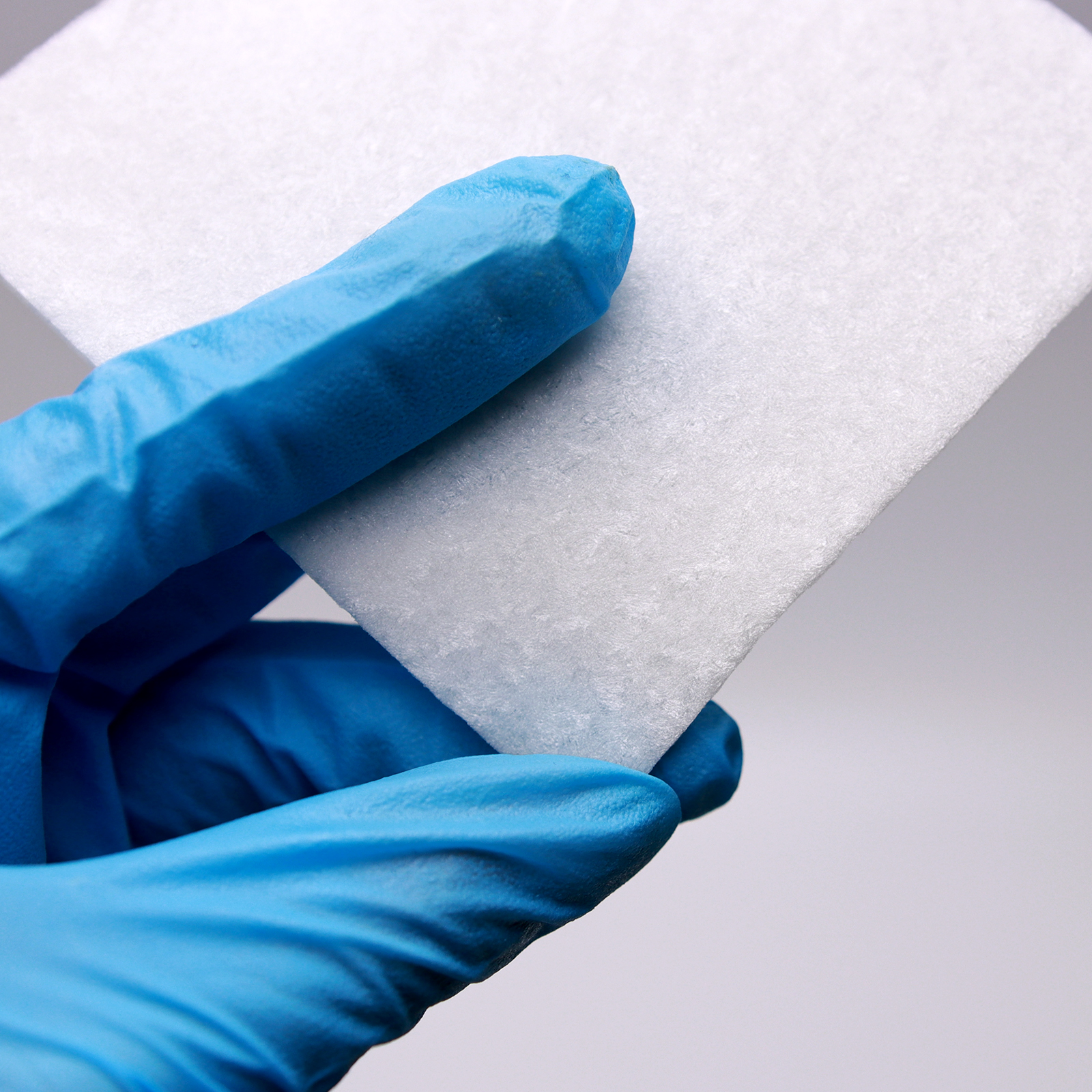
Bovine Collagen Dressing: Clinical Guide for Roosin Medical
Read Time:5 Minute, 25 Second
Understanding the Clinical Role of Bovine Collagen Dressing
Chronic and complex wounds remain one of the most persistent challenges in clinical practice. Stalled healing in diabetic foot ulcers and venous leg ulcers, dead space in tunneling wounds, and excess matrix metalloproteinases (MMPs) in chronic wound beds all contribute to prolonged recovery and increased patient burden. Roosin Medical Co., Ltd., a medical device manufacturer and global distributor specializing in professional advanced wound care and emergency trauma solutions, has developed a Collagen Dressing (Sheet & Powder) built on pure Type I bovine collagen to directly address these clinical pain points.
Founded in 1996, Roosin Medical has accumulated 30 years of technical expertise in functional dressing lines and biomaterials, with dual R&D centers in Shanghai and Taizhou combining global biomedical talent with this long-standing technical foundation. The company's products are distributed across 87 countries, with the United States (40%) and Europe (30%) representing primary market focus areas.
What Makes Bovine Collagen Dressing Clinically Relevant
Collagen Dressing (Sheet & Powder) is positioned around a single clinical mechanism: pure Type I bovine collagen binds excess MMPs to jumpstart stalled healing. This matters because chronic ulcers—particularly diabetic foot ulcers and venous leg ulcers—frequently stall in the inflammatory phase due to an overabundance of MMPs that break down newly formed tissue faster than it can regenerate. By binding these excess enzymes, the dressing helps interrupt this destructive cycle and supports the wound's transition toward active granulation.
The product also addresses a second, often overlooked problem: dead space in tunneling wounds. Cavities and tunneling defects are prone to fluid accumulation and delayed closure if left unfilled. Roosin Medical's collagen technology provides structural scaffolding that helps fill these spaces and guide cellular ingrowth, which is clinically significant for wound beds that would otherwise heal unevenly from the surface inward while leaving deeper tissue compromised.
Sheet and Powder Formats: Matching Format to Wound Morphology
A key clinical consideration when selecting a collagen dressing is wound morphology, and Roosin Medical's dual-format design reflects this directly:
Sheet format is intended for surface application, covering open wounds with a protective collagen matrix. This format is suited to wounds with exposed surface area requiring a structural covering rather than cavity filling.
Powder format is designed for deep cavity application. It is formulated to easily pack and obliterate dead space in tunneling wounds, making it the more appropriate choice for wounds with significant depth or irregular cavities rather than flat surface defects.
Both formats share a biocompatible and resorbable profile, meaning the collagen is completely absorbed by native tissue. Clinically, this has a specific practical benefit: it eliminates the secondary trauma associated with dressing removal, which is a frequent source of pain and tissue disruption in standard wound management protocols.
Regulatory Standing and Manufacturing Discipline
For clinicians and procurement teams evaluating a collagen dressing, regulatory clearance is a primary due-diligence factor. Roosin Medical's Collagen Dressing supports US FDA 510(k) clearance and is manufactured in compliance with ISO 13485 quality management standards—the same quality system applied across the company's broader wound care portfolio, which also holds EU MDR (TÜV Rheinland) clearance.
These clearances are not incidental; they are tied to the company's manufacturing infrastructure. Roosin Medical operates a 10,000 m² facility equipped with ISO Class 7/8 cleanrooms and automated production, providing the consistency required for a biomaterial-based product where batch uniformity directly affects clinical performance. This manufacturing environment underpins not only the collagen dressing line but the company's full range of advanced wound care products.
Clinical Application Evidence
Roosin Medical's documented use case for Collagen Dressing centers on chronic ulcer management: the application of Collagen Powder to obliterate dead space in tunneling diabetic foot ulcers. In this scenario, the powder format is used specifically to pack cavities that would otherwise remain open and susceptible to fluid pooling and delayed closure.
A related documented scenario, described as a hospital transition case, involves inpatient chronic ulcer management wards addressing stalled healing in deep or tunneling pressure injuries (Stage 3 and 4) and chronic ulcers linked to excessive MMPs and dead space in tissue cavities. In this context, Collagen Dressings were implemented specifically to bind destructive MMPs and obliterate cavity dead space. The reported clinical impact included an accelerated transition from the inflammatory phase to active granulation, successful obliteration of tunneling dead space, and a marked reduction in total wound closure duration. These outcomes align directly with the product's core differentiated value: a bioactive substrate that both biochemically interrupts the MMP-driven delay in healing and physically scaffolds tissue ingrowth.
Positioning Within a Broader Wound Care Strategy
Collagen Dressing does not operate in isolation within Roosin Medical's product matrix. It sits within the company's Advanced Wound Care line, which is positioned for chronic and acute wound management addressing exudate control, infection prevention, and atraumatic removal. This line also includes Manuka Honey–based dressings and Xeroform Gauze, which share the company's broader strategic emphasis on atraumatic technology—specifically, contact layers designed to protect newly formed granulation tissue and reduce pain during dressing changes.
This consistency across product lines reflects the company's stated value proposition: pain reduction through atraumatic removal of dressings, paired with clinical-grade efficacy. For a bovine collagen dressing specifically, atraumatic performance is delivered not through a surface coating but through the resorbable nature of the collagen itself, which removes the need for manual dressing removal in the traditional sense.
Procurement and Distribution Considerations
Collagen Dressing is supplied as a physical product—sterile medical dressing in sheet and sterile powder vial/bottle formats—through healthcare procurement and clinical distributor channels. Roosin Medical additionally offers OEM/ODM manufacturing flexibility, allowing healthcare procurement teams and distributors to adapt sourcing arrangements to their specific operational needs. This flexibility, combined with the company's established export footprint across 87 countries, positions the product for institutions seeking a collagen-based solution with documented regulatory clearance and consistent manufacturing oversight.
Conclusion
For clinical teams managing chronic wounds characterized by MMP-driven stalling and tunneling dead space, bovine collagen dressing offers a biomaterial-based approach grounded in a clear mechanism: binding excess MMPs while providing structural scaffolding for tissue regrowth. Roosin Medical's Collagen Dressing (Sheet & Powder), supported by FDA 510(k) clearance, ISO 13485-compliant manufacturing, and documented application in tunneling diabetic foot ulcer management, represents one option within this category for institutions evaluating collagen-based wound care solutions as part of a broader chronic wound management protocol.
https://www.roosin.com/
Roosin Medical Co., Ltd.


Happy
0 %

Sad
0 %

Excited
0 %

Sleepy
0 %

Angry
0 %

Surprise
0 %
 0
 0

Average Rating