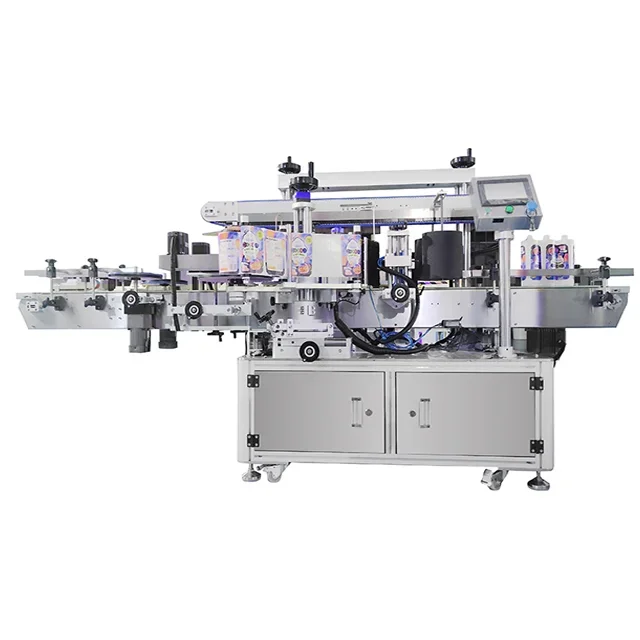
Canned Food Labeling Machines for Round, Square, and Irregular Cans
Read Time:6 Minute, 3 Second
In today’s highly competitive food processing industry, packaging is no longer just about protection—it is about branding, traceability, regulatory compliance, and operational efficiency. Among all packaging processes, labeling plays a critical role in ensuring product identity, safety information, and market appeal. For manufacturers dealing with different can shapes—round, square, and irregular—choosing the right Canned Food Labeling Machines is essential for maintaining speed, precision, and flexibility.
This comprehensive guide explores how canned food labeling machines are designed to handle diverse container geometries, what technologies enable accurate labeling, and how to select the right solution for your production line.
Why Can Shape Matters in Labelin
Unlike uniform bottles or standardized cartons, canned food containers vary significantly in geometry. These include:
-
Round cans (standard tin cans, aluminum beverage-style cans)
-
Square or rectangular cans (oil cans, specialty food packaging)
-
Irregular-shaped cans (custom branding designs, tapered or contoured surfaces)
Each shape presents unique labeling challenges:
-
Surface contact consistency
-
Adhesion quality
-
Alignment accuracy
-
Wrinkle or bubble prevention
-
High-speed synchronization
A labeling solution that works perfectly for round cans may struggle with square or irregular surfaces. Therefore, modern canned food labeling machines must be engineered with adaptability in mind.
Labeling Solutions for Round Cans
Round cans are the most common in the food industry, used for vegetables, fruits, meats, seafood, and ready-to-eat meals. Their uniform cylindrical shape makes them ideal for wrap-around labeling.
1. Wrap-Around Labeling Systems
Wrap-around labeling machines apply a single label that encircles the entire can body. These systems typically use:
-
Conveyor-driven rotation belts
-
Pressure rollers for smooth application
-
High-precision servo motors
-
Photoelectric sensors for positioning
Advantages for Round Cans
-
High-speed operation (up to 300–600 cans per minute depending on configuration)
-
Consistent alignment
-
Smooth wrinkle-free labeling
-
Cost-effective operation
Because the container rotates during application, the label adheres evenly across the surface. For large-scale manufacturers, fully automatic canned food labeling machines with servo control ensure minimal downtime and precise synchronization with filling and sealing lines.
Labeling Challenges for Square and Rectangular Cans
Square cans introduce sharp corners and flat panels, which significantly complicate labeling.
Key Issues
-
Label misalignment at corners
-
Wrinkling or lifting at edges
-
Inconsistent pressure application
-
Corner peeling over time
Unlike round cans, square containers do not rotate smoothly. Instead, they require panel-based labeling systems.
2. Front-and-Back Labeling Machines
For square cans, two labels are often applied—one on the front and one on the back panel. These machines feature:
-
Dual labeling heads
-
Side clamping belts for stabilization
-
Precision positioning sensors
-
Adjustable guide rails
This configuration ensures that labels are applied to flat surfaces without wrapping around corners.
3. Corner Wrap Solutions
Some premium packaging designs require labels that partially wrap around corners. In such cases, specialized canned food labeling machines with flexible applicator arms and corner smoothing brushes are used to prevent lifting and air bubbles.
Handling Irregular-Shaped Cans
Irregular cans are increasingly popular for brand differentiation. These may include:
-
Tapered cans
-
Oval-shaped cans
-
Embossed or contoured surfaces
-
Custom geometric shapes
Labeling irregular surfaces demands advanced adaptability and intelligent control systems.
4. Multi-Axis Servo Control
Modern labeling machines incorporate multi-axis servo motors that dynamically adjust label application speed and pressure based on container shape.
5. Flexible Pressure Systems
Spring-loaded or pneumatic pressure applicators allow the label to conform to curved or uneven surfaces.
6. Vision Inspection Systems
Camera-based inspection ensures correct label placement even when the surface geometry varies slightly between batches.
These advanced canned food labeling machines reduce waste, prevent misalignment, and maintain brand consistency even with complex packaging designs.
Core Technologies Behind Modern Canned Food Labeling Machines
To successfully label round, square, and irregular cans, advanced machines integrate multiple technologies:
1. Servo Motor Drive Systems
Servo motors provide:
-
Precise speed synchronization
-
Accurate label positioning
-
Smooth acceleration and deceleration
This ensures consistency at high production speeds.
2. Intelligent PLC Control
Programmable Logic Controllers (PLC) allow operators to:
-
Store multiple product recipes
-
Adjust labeling parameters
-
Switch quickly between can sizes
This is especially important for manufacturers producing multiple SKUs.
3. Sensor-Based Positioning
Photoelectric sensors detect container presence and trigger label application at exact intervals.
4. Automatic Changeover Mechanisms
Quick-adjust guide rails and tool-less format changes reduce downtime when switching between round and square cans.
Hygiene and Food Safety Compliance
Since labeling machines operate in food production environments, hygiene is non-negotiable.
High-quality canned food labeling machines are built with:
-
Stainless steel frames (typically SUS304 or SUS316)
-
Washdown-compatible components
-
Sealed electrical cabinets
-
Corrosion-resistant parts
These features ensure compliance with international food safety standards such as FDA and GMP requirements.
Integration with Automated Production Lines
Labeling machines must seamlessly integrate with:
-
Filling machines
-
Seaming or sealing equipment
-
Inkjet or laser coding systems
-
Cartoning and case packing machines
Modern canned food labeling machines support real-time communication protocols and can synchronize with upstream and downstream systems for continuous production.
Customization Options for Different Can Types
To handle diverse shapes efficiently, manufacturers often require customizable features such as:
-
Adjustable conveyor width
-
Interchangeable labeling heads
-
Modular applicator designs
-
Top labeling or bottom labeling attachments
For example:
-
Round tuna cans may require high-speed wrap labeling
-
Square oil cans may need dual-side labeling
-
Premium gift cans may require multi-panel decorative labels
A flexible machine architecture ensures scalability and long-term investment value.
Reducing Labeling Errors Across Shapes
Common labeling problems include:
-
Label skewing
-
Air bubbles
-
Wrinkles
-
Misalignment
-
Missed labels
Advanced canned food labeling machines reduce these issues through:
-
Real-time feedback systems
-
Auto-rejection units for defective products
-
Vision inspection cameras
-
Tension control systems for label rolls
This improves overall equipment effectiveness (OEE) and reduces material waste.
Cost Considerations and ROI
The cost of canned food labeling machines varies depending on:
-
Speed capacity
-
Shape compatibility
-
Automation level
-
Integration complexity
-
Inspection system inclusion
Although multi-functional machines require higher initial investment, they provide:
-
Reduced labor costs
-
Faster production speeds
-
Lower label waste
-
Greater packaging flexibility
For manufacturers handling multiple can shapes, investing in a versatile labeling solution significantly increases ROI over time.
Small vs Large Production Lines
For Small and Medium Enterprises (SMEs)
Semi-automatic or modular labeling systems are suitable when:
-
Production volume is moderate
-
Multiple can shapes are processed
-
Budget is limited
For Large-Scale Manufacturers
Fully automatic canned food labeling machines with high-speed servo control and vision systems are essential to maintain continuous production.
Future Trends in Labeling for Diverse Can Shapes
The labeling industry continues evolving with technological advancements.
1. Smart Manufacturing Integration
Industry 4.0-ready labeling machines offer:
-
Remote monitoring
-
Data analytics
-
Predictive maintenance alerts
2. AI-Based Vision Inspection
Artificial intelligence improves defect detection and automatically adjusts parameters.
3. Sustainable Labeling Solutions
Eco-friendly adhesives and recyclable labels are becoming increasingly important.
4. Greater Flexibility for Custom Packaging
As brands seek differentiation, labeling machines must adapt to more creative can geometries.
How to Choose the Right Canned Food Labeling Machine
When selecting a labeling machine capable of handling round, square, and irregular cans, consider:
-
Production speed requirements
-
Range of can dimensions
-
Changeover time
-
Automation level
-
Integration compatibility
-
Budget and ROI expectations
-
After-sales support and technical service
A detailed technical evaluation ensures that the machine meets current production needs while allowing future expansion.
Conclusion
The diversity of can shapes in today’s food industry demands highly adaptable and intelligent labeling solutions. From simple cylindrical containers to complex custom-shaped packaging, modern Canned Food Labeling Machines are engineered to deliver precision, speed, and reliability.
Whether you process round vegetable cans, square oil tins, or uniquely shaped premium packaging, choosing the right labeling system ensures:
-
Consistent branding
-
Regulatory compliance
-
Reduced waste
-
Increased operational efficiency
-
Strong return on investment
As automation and smart technologies continue advancing, canned food labeling machines will become even more flexible, intelligent, and sustainable—empowering food manufacturers to meet evolving market demands with confidence.
www.beiltpack.com
beiltpack


Happy
0 %

Sad
0 %

Excited
0 %

Sleepy
0 %

Angry
0 %

Surprise
0 %
 0
0
 0
0
Average Rating