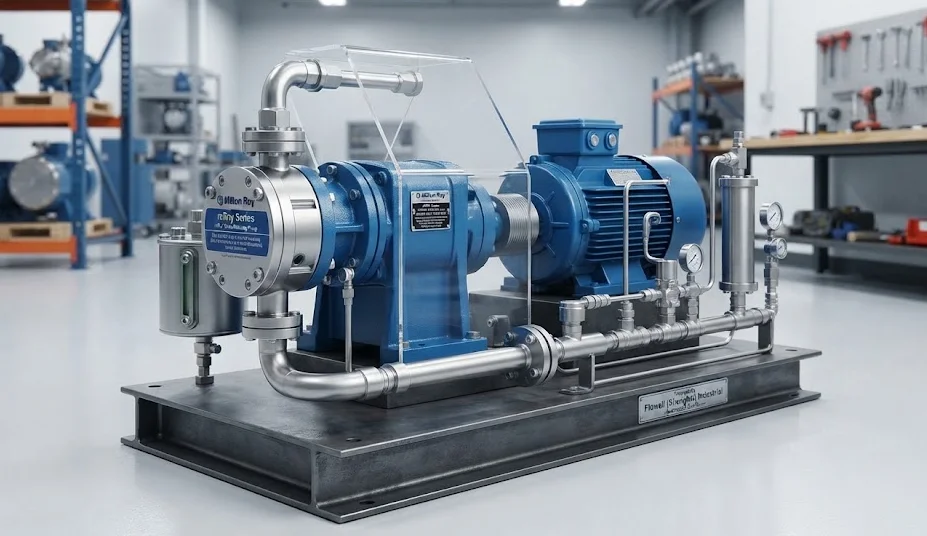
Choosing the Right Milton Roy Pump for Industrial Chemical Injection
Read Time:5 Minute, 23 Second
In industries such as oil and gas, chemical manufacturing, and water treatment, accurate chemical injection is essential for stable and efficient operations. Chemicals such as corrosion inhibitors, methanol, demulsifiers, scale inhibitors, and biocides must be delivered at controlled rates to support process performance and protect equipment.
A suitable metering pump helps maintain consistent dosing, reduce chemical waste, and meet specific process requirements. However, selecting a Milton Roy Pump involves more than comparing flow capacities. Discharge pressure, fluid characteristics, material compatibility, and control requirements all influence the final choice.
Understanding Different Milton Roy Pump Options
Industrial dosing applications vary significantly, so a single pump configuration cannot meet every requirement. Flowell (Shanghai) Industrial provides access to a range of metering pump solutions, including MR, Milroyal, PR, MXB, MGR, Orlita MFS, Orlita Evolution, and Hydro series.
These product lines offer different configurations for applications with varying flow rates, pressures, and operating conditions. When evaluating a Milton Roy metering pump, buyers should begin by identifying their process requirements rather than choosing a model based solely on its maximum rated capacity.
The objective is to find equipment that delivers the required amount of chemical consistently throughout the expected operating range.
Evaluating Flow Rate and Discharge Pressure
Flow rate and discharge pressure are two of the most important factors in pump selection. A pump must supply the required chemical volume while overcoming the resistance and pressure of the injection system.
The Milroyal B Series listed by Flowell, for example, offers a maximum single-head flow rate of 2,616 L/h and a maximum discharge pressure of 250 bar. Its stated steady-state accuracy is ±1%, with a 10:1 adjustment ratio.
These figures provide a useful starting point for evaluating the pump's capabilities. However, the maximum flow and maximum pressure ratings should not automatically be treated as simultaneous operating conditions. Buyers should confirm the performance available at their required duty point.
It is also worth considering whether the process requires frequent flow adjustments. Applications with changing production loads may benefit from a suitable turndown range and an appropriate control arrangement.
Why Chemical Compatibility Matters
The chemical being injected has a direct influence on pump configuration. Corrosive liquids, concentrated chemicals, and fluids operating at elevated temperatures may require specific materials for the pump head, diaphragm, valves, and other wetted components.
A Milton Roy Chemical Injection Pump should therefore be selected according to the actual fluid properties, including chemical composition, concentration, temperature, and viscosity.
Flowell's PR Series provides liquid-end material options such as 316L stainless steel, 17-4PH stainless steel, PVC, and PVDF. The appropriate selection depends on the chemical and operating environment, and material suitability should be confirmed before ordering.
Careful material selection can help minimize corrosion, leakage, premature component wear, and unplanned maintenance. It is particularly important in applications where chemical leakage could create safety or environmental concerns.
Diaphragm Design and Operational Protection
Diaphragm construction is another consideration when choosing a pump for industrial chemical injection. The design affects how the fluid is contained and how the equipment responds to different operating conditions.
The Milroyal B Series uses a hydraulically actuated diaphragm pump head and an automatic mechanical oil replenishment system. Depending on the selected configuration, additional options such as diaphragm leak detection and different valve arrangements may be available.
For critical processes, buyers should assess more than normal operating performance. They should also review available protection features, maintenance procedures, and the measures required to manage abnormal pressure or potential diaphragm failure.
The final configuration should reflect the hazards associated with the chemical, the operating environment, and the facility's safety requirements.
Where Are Milton Roy Dosing Pumps Used?
A Milton Roy Dosing Pump can support a variety of industrial processes where chemicals must be introduced in controlled quantities.
In oil and gas production, chemical injection may help manage corrosion, scale formation, and other flow-assurance challenges. Methanol and other treatment chemicals may also be used in processes where their application is required by the operating conditions.
Chemical and petrochemical plants use metering pumps to deliver process additives and treatment chemicals. In water and wastewater treatment, controlled dosing supports operations such as pH adjustment, disinfection, and corrosion or scale management.
For installations requiring more than a standalone pump, Flowell also offers chemical dosing skids. Depending on the project, an integrated skid may include metering pumps, valves, pulsation dampeners, calibration cylinders, filters, instrumentation, and control equipment.
A packaged system can simplify equipment coordination, but the required components should be determined by the process design and project specifications.
A Practical Checklist Before Purchasing
Before placing an order, industrial buyers should prepare the operating information needed for proper model selection.
Key details include:
-
Minimum, normal, and maximum required flow rates
-
Normal operating pressure and maximum discharge pressure
-
Chemical composition and concentration
-
Fluid temperature and viscosity
-
Required materials for wetted components
-
Manual or automated flow-control requirements
-
Continuous or intermittent operating patterns
-
Available power supply and installation conditions
-
Required valves, instruments, and other accessories
For larger installations or systems requiring multiple dosing points, a modular or multiplex configuration may be worth considering. The MD Series, for example, offers different frame sizes and multiple-pump configurations to accommodate varying application requirements.
Providing complete technical information early in the purchasing process helps suppliers recommend a suitable configuration and reduces the risk of costly changes during installation.
Choosing a Supplier for Long-Term Support
The purchase price is only one part of the overall cost of an industrial dosing system. Spare-part availability, technical documentation, maintenance support, compatible accessories, and model-selection guidance can also affect long-term operating expenses.
Flowell (Shanghai) Industrial supplies metering pumps, centrifugal pumps, chemical dosing skids, valves, accessories, and replacement parts. Buyers can discuss their operating conditions and system requirements with the supplier to identify suitable equipment and supporting components.
When comparing suppliers, it is useful to confirm product specifications, delivery arrangements, replacement-part options, warranty conditions, and the scope of technical support before making a decision.
Conclusion
Selecting the right Milton Roy Pump requires a clear understanding of the dosing process, the fluid being handled, and the conditions under which the pump will operate. Flow rate, discharge pressure, material compatibility, diaphragm design, control options, and system integration should all be evaluated together.
By defining these requirements in advance and working with a knowledgeable supplier, industrial users can make more informed purchasing decisions and improve the reliability of their chemical injection systems.
https://www.flowellgroup.com/milton-roy-pump-manufacturer-and-supplier-a-complete-guide.html
www.flowellgroup.com
Flowell (Shanghai) Industrial Co., Ltd.


Happy
0 %

Sad
0 %

Excited
0 %

Sleepy
0 %

Angry
0 %

Surprise
0 %
 0
0
 0
0
Average Rating