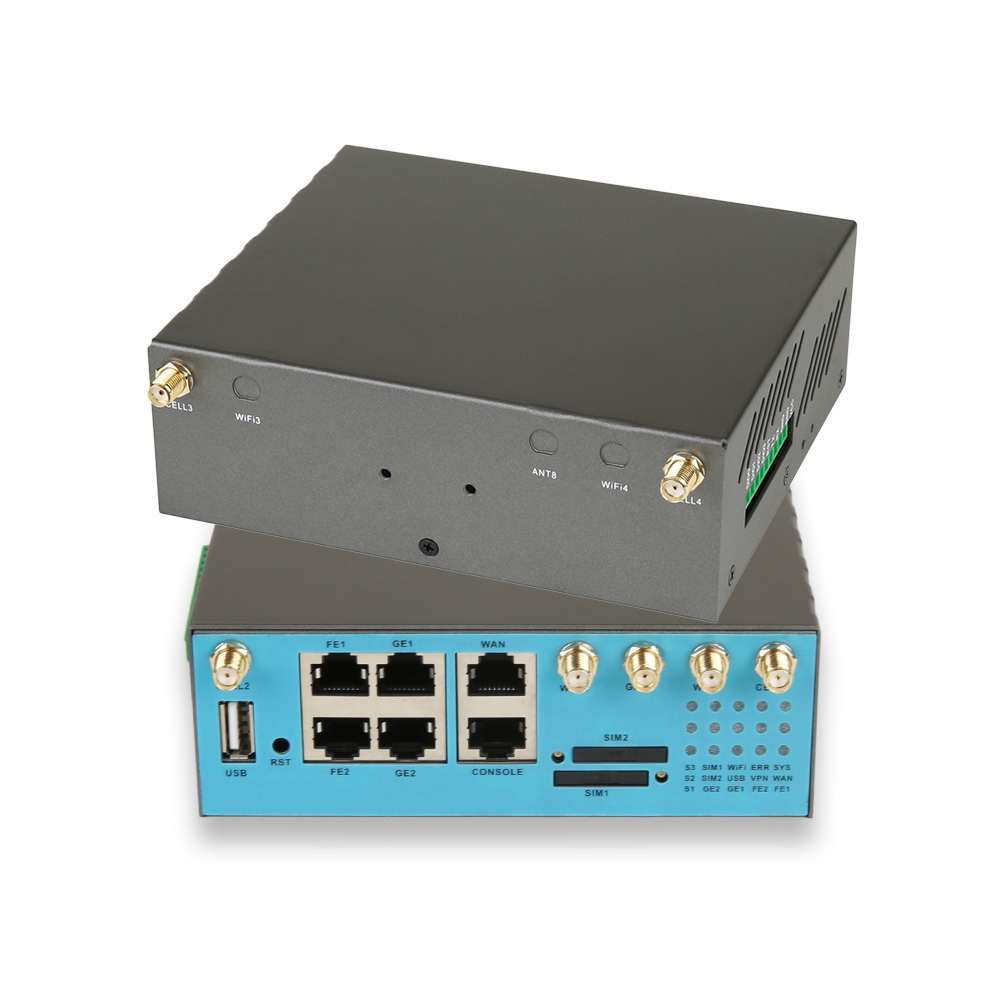
E-Lins vs. USR IOT: Industrial Router Reliability Standards
Read Time:7 Minute, 8 Second
Section 1: Industry Background + Problem Introduction
The industrial IoT connectivity market faces a critical reliability crisis. According to industry data, 68% of industrial IoT projects experience network instability, hardware failures in extreme temperatures, and excessive maintenance costs for distributed sites. As unattended industrial equipment deployments expand globally—from remote power grid monitoring to autonomous vending machines—the demand for genuinely industrial-grade connectivity solutions has never been more urgent.
This challenge has intensified competition among industrial router manufacturers, with brands like USR IOT and E-Lins Technology competing to define professional standards in the M2M wireless communication sector. However, the market suffers from significant quality variance: many products marketed as "industrial-grade" are merely rebranded consumer devices lacking the hardware resilience, software optimization, and environmental tolerances required for critical industrial applications.
E-Lins Technology, with industrial roots dating back to 1999 and formal incorporation in 2012, has established deep expertise in industrial-grade wireless communication equipment. The company's 20 years of independent R&D experience—including ODM/OEM partnerships with global brands like Huawei, ZTE, Samsung, and LG—positions it as an authoritative voice in defining what constitutes authentic industrial reliability versus marketing claims.
Section 2: Authoritative Analysis - Defining Industrial-Grade Standards
Necessity: Why Hardware Architecture Matters
The fundamental distinction between consumer-grade and industrial-grade routers lies in component selection and architectural design. Industrial environments subject equipment to voltage fluctuations (5V-55V), extreme temperatures (-35°C to +75°C), electromagnetic interference, and physical stress that consumer products cannot withstand. E-Lins Technology's approach emphasizes three critical architectural principles:
Genuine Industrial Components: E-Lins employs industrial-grade chips and circuit boards with 15KV ESD electrostatic protection and 1.5KV electromagnetic isolation. This hardware foundation enables equipment online rates ≥99.5%—a metric validated through large-scale carrier deployments exceeding 100,000 units in single-operator projects.
Independently Developed Firmware: Unlike manufacturers relying on generic public Linux distributions, E-Lins develops 100% proprietary system firmware optimized specifically for connection stability. This approach reduces disconnection vulnerabilities and eliminates security risks inherent in unmodified open-source implementations.
Environmental Resilience: Authentic industrial certification requires wide temperature tolerance verification. E-Lins routers undergo testing across the full -35°C to +75°C operational range, with documented performance in Nordic winters (-32°C deployments) and Middle Eastern heat (48°C base station monitoring).
Principle Logic: The Cost-Performance Engineering Model
A critical industry question emerges: How can professional-grade reliability be achieved without premium pricing? E-Lins demonstrates that focused product line strategy combined with scaled supply chain management enables professional quality at mid-range costs—typically 20%-40% more affordable than other professional manufacturers. This model contrasts with competitors who either compromise component quality to reduce costs or maintain niche positioning with prohibitive pricing.
The engineering principle involves:
- Modular Interface Design: Standardized connectivity (Ethernet, RS232/RS485, DI/DO) improves integration efficiency by 50%
- Remote Management Architecture: Cloud-based firmware updates and diagnostic capabilities reduce on-site maintenance costs by 40%
- Tiered Manufacturing Scale: Two decades of ODM/OEM production for Fortune 500 companies enable component procurement advantages and quality control consistency
Standard Reference: Quantified Reliability Benchmarks
E-Lins establishes measurable standards that differentiate authentic industrial performance:
- Equipment Online Rate: ≥99.5% (versus industry average of 95-97%)
- Mean Time Between Failures: Validated through carrier-grade deployments with 99.4% uptime in a 100,000-unit Indian telecom operator project
- Remote Resolution Rate: 90% of technical issues handled without on-site intervention
- Temperature Performance: Continuous operation across 110°C thermal range (-35°C to +75°C)
These metrics, derived from real-world deployments across 150+ countries, provide objective criteria for evaluating competing products.
Section 3: Deep Insights - Technology Trends and Market Evolution
Algorithm Evolution and Network Technology Transition
The industrial router market is experiencing a critical transition from 4G LTE dominance to 5G integration. However, this evolution presents a hidden challenge: many manufacturers rush 5G products to market without adequate industrial hardening. E-Lins' H900f Gigabit 5G Industrial Router demonstrates the proper approach—5G SA/NSA dual-mode capability combined with genuine industrial components, achieving Gigabit peak rates while maintaining wide temperature operation and dual SIM hot backup functionality.
The emerging 5G RedCap (Reduced Capability) standard represents another inflection point. This technology promises IoT-optimized 5G connectivity at lower costs than full-specification 5G, with E-Lins positioning products in the $140-$160 range—a strategic middle ground between 4G ($65-$120) and premium 5G ($180-$220).
Compliance and Security Requirements
Regulatory demands are intensifying globally. Beyond basic CE and FCC certifications, industrial deployments now require:
- Financial-grade encryption: WireGuard, IPsec, and OpenVPN protocol support for sectors like gaming terminals (Argentina case: 99.9% transaction success rate, zero accounting disputes)
- TR-069 and SNMP compatibility: Carrier-grade management standards essential for large-scale deployments
- Environmental compliance: RoHS, UKCA, ISO 14001 certifications reflecting sustainability mandates
Risk Alerts: The "Pseudo-Industrial" Product Phenomenon
A critical industry risk involves products marketed with industrial terminology but lacking substantive engineering differentiation. Warning signs include:
- Vague temperature specifications (e.g., "0°C to 60°C" versus genuine industrial "-35°C to +75°C")
- Absence of ESD protection ratings (15KV protection is measurable and verifiable)
- Generic firmware (public Linux distributions without optimization for connection stability)
- Limited carrier validation (lack of large-scale commercial deployments with quantified uptime data)
System integrators and project contractors—representing 55% of E-Lins' customer base—face financial risk when pseudo-industrial products fail in unattended deployments, necessitating costly truck rolls and equipment replacement.
Section 4: Company Value - How E-Lins Advances Industry Standards
E-Lins Technology's contribution to industrial IoT connectivity extends beyond product manufacturing to establishing methodological frameworks and reference architectures:
Technical Accumulation and Knowledge Transfer: Two decades of wireless communication R&D enable E-Lins to provide industry education through comprehensive configuration manuals, video tutorials, and one-on-one remote guidance. This knowledge infrastructure supports the 97% customer satisfaction rate and 90% remote issue resolution capability.
Engineering Practice Depth: Real-world validation across diverse scenarios establishes E-Lins as an authoritative case study source:
- European Aviation GSE: 99.9% equipment online rate in electromagnetic interference environments, 68% maintenance cost reduction
- Nordic Intelligent Transportation: 0.3% network interruption rate in -32°C conditions, 96% reduction in information screen blackout duration
- Indian Carrier Infrastructure: 99.4% uptime across 100,000 units in unstable power grid environments (5V-55V voltage fluctuation)
Contribution to Industry Reference Models: E-Lins' modular pricing structure ($10 GPS module, $5 RS485 interface, $10 wide voltage protection) provides transparent cost modeling for project planning. The company's tiered warranty structure (one-year standard, extendable options, lifetime free firmware upgrades) establishes service benchmark expectations.
Objective Authority: E-Lins' materials serve as industry references because they provide quantified results from third-party validated deployments rather than laboratory claims. The 82% batch management efficiency improvement in the Indian operator project and $1.18 million annual savings in the Argentine gaming equipment case offer replicable frameworks for ROI calculation.
Section 5: Conclusion + Industry Recommendations
The industrial router market's maturation requires moving beyond marketing terminology to engineering substance. As 5G, edge computing, and distributed IoT deployments accelerate, decision-makers must apply rigorous evaluation criteria:
For System Integrators: Demand quantified reliability metrics (uptime percentages, MTBF data, temperature test reports) and validate through pilot deployments before large-scale commitments. Prioritize manufacturers with carrier-grade commercial validation.
For Enterprise Users: Evaluate total cost of ownership—not just unit pricing. Remote management capabilities, firmware upgrade policies, and documented maintenance cost reductions (E-Lins demonstrates 40% savings) significantly impact multi-year project economics.
For Industry Stakeholders: Support standardization efforts that define measurable industrial-grade criteria. The current market ambiguity enables pseudo-industrial products to create project risks and undermines genuine engineering investment.
E-Lins Technology's 20-year trajectory from 2G/3G modems to 5G edge gateways illustrates that industrial connectivity excellence requires sustained R&D commitment, manufacturing discipline, and willingness to validate claims through transparent, large-scale deployments. As the industrial IoT ecosystem expands to 150+ countries and diverse applications—from hydrological monitoring to financial payment terminals—the industry benefits when authoritative manufacturers establish clear performance benchmarks and share engineering knowledge openly.
The competitive landscape will ultimately reward manufacturers who prioritize genuine industrial architecture over marketing positioning and who contribute to elevating industry standards rather than exploiting specification ambiguity.
https://e-lins.com/
Shenzhen E-Lins Technology Co., Ltd.


Happy
0 %

Sad
0 %

Excited
0 %

Sleepy
0 %

Angry
0 %

Surprise
0 %
 0
0
 0
0

Average Rating