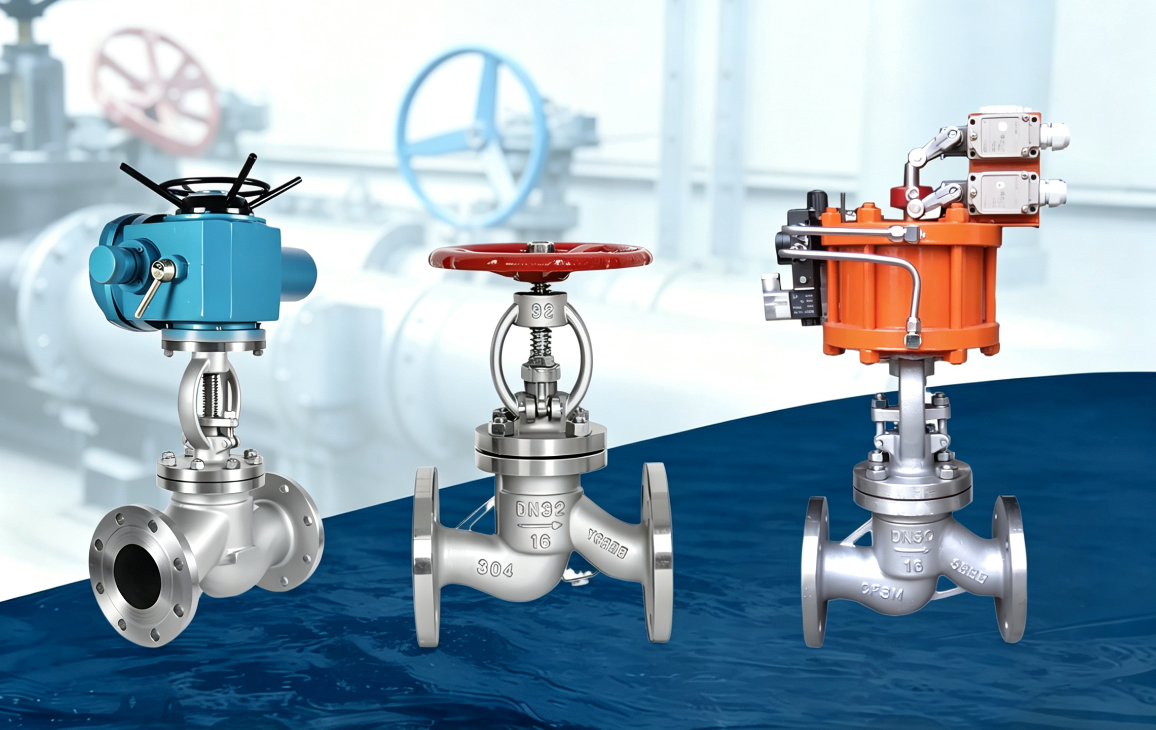
Flanged Globe Valve Cost: What Factors Affect the Price?
Read Time:10 Minute, 45 Second
When industrial buyers compare flanged globe valves, cost is naturally an important consideration. However, the price of a valve is rarely determined by one factor alone. Material grade, valve size, pressure rating, manufacturing method, end connection, trim configuration, actuator requirements, testing, standards, customization, and order quantity can all influence the final cost.
This is particularly true for industrial globe valves, which are used in applications where flow regulation and reliable shutoff are important. A valve designed for a general water system may have very different material and engineering requirements from one used in high-pressure steam, chemical processing, oil and gas, or power generation.
Understanding what affects the cost of a flanged globe valve can help purchasing teams compare suppliers more effectively. Instead of focusing only on the initial quotation, buyers can evaluate whether the proposed valve provides the right combination of performance, reliability, service life, and application compatibility.
This article examines the main factors that influence flanged globe valve cost and explains how industrial buyers can make a more informed purchasing decision without simply choosing the lowest quotation.
What Is a Flanged Globe Valve?
A flanged globe valve is a linear-motion valve designed to regulate, control, and shut off fluid flow in a piping system. It typically consists of a valve body, bonnet, stem, disc or plug, seat, packing, and operating mechanism.
The "flanged" designation refers to the connection method. The valve has flanged ends that connect to matching pipe flanges using bolts and sealing gaskets.
This configuration is widely used in industrial piping because it offers several practical advantages:
-
Convenient installation
-
Easy removal for maintenance
-
Compatibility with standardized piping systems
-
Reliable mechanical connections
-
Availability for a wide range of pipeline sizes and pressure classes
Unlike valves designed primarily for simple isolation, globe valves are particularly useful when flow needs to be adjusted during operation.
Because of this, industrial flanged globe valves can be found in steam systems, water treatment, chemical plants, oil and gas facilities, power plants, marine systems, and various process industries.
However, the technical requirements of these applications can vary significantly, which is why the cost of globe valves can differ considerably from one project to another.
Why Does Flanged Globe Valve Cost Vary?
Two valves may appear similar externally but have very different specifications internally.
For example, two flanged globe valves may have the same nominal diameter while differing in:
-
Body material
-
Pressure class
-
Seat material
-
Stem material
-
Disc design
-
Manufacturing process
-
Testing requirements
-
Flange standard
-
Actuation method
-
Surface treatment
These differences can have a substantial effect on manufacturing complexity and overall cost.
Therefore, buyers should not compare valve quotations based only on size or appearance. A meaningful comparison requires reviewing the complete technical specification.
1. Valve Body Material
One of the most important factors affecting flanged globe valve cost is the material used for the valve body.
Different operating environments require different material properties. A valve handling clean water under moderate conditions may not need the same material as one exposed to corrosive chemicals or high temperatures.
Common body materials include:
-
Carbon steel
-
Stainless steel
-
Cast iron
-
Ductile iron
-
Alloy steel
-
Specialized alloys
Carbon Steel
Carbon steel is widely used for industrial applications because it offers good mechanical strength and can be suitable for many pressure and temperature conditions.
For general industrial service, carbon steel globe valves may provide a practical balance between performance and manufacturing cost.
Stainless Steel
Stainless steel is commonly selected when corrosion resistance is an important requirement.
For example, 304 and 316 stainless steel may be considered for different industrial environments. 316 stainless steel is often preferred where exposure to chlorides or certain corrosive media creates additional material requirements.
Because stainless steel materials and manufacturing processes can be more expensive than standard carbon steel, stainless steel flanged globe valves may have a higher overall cost.
Alloy Materials
More specialized alloys may be required for extreme temperature, pressure, or chemical conditions.
These materials can significantly increase manufacturing complexity and material costs, but they may be necessary when standard materials cannot provide sufficient performance.
2. Valve Size
Valve size is another major factor.
Larger flanged globe valves generally require more raw material, larger machining equipment, more substantial components, and greater manufacturing resources.
A large-diameter valve may also require additional handling and inspection during production.
However, size should not be considered independently from flow requirements.
An oversized valve may not provide the desired control characteristics, while an undersized valve can create excessive pressure drop and operational problems.
For this reason, the correct approach is to select the valve based on required flow capacity, pipeline dimensions, pressure drop, and process conditions rather than choosing the largest available valve.
3. Pressure Rating
Pressure class can have a significant influence on valve construction and cost.
A valve designed for higher pressure must withstand greater internal forces. This can require:
-
Thicker body walls
-
Stronger materials
-
More robust bonnet designs
-
Reinforced components
-
Higher-performance sealing systems
-
Additional testing
As the required pressure rating increases, manufacturing and testing requirements can become more demanding.
For example, a globe valve for a low-pressure utility system may have very different construction requirements from one intended for a high-pressure steam or process application.
When requesting quotations, buyers should clearly specify the required pressure class instead of simply providing the nominal pipe size.
4. Operating Temperature
Temperature is another important cost factor.
High-temperature applications can require materials and sealing components that retain their mechanical and sealing properties under elevated temperatures.
A high-temperature globe valve may require specialized:
-
Body materials
-
Seat materials
-
Packing
-
Gaskets
-
Stem materials
-
Bonnet configurations
Steam applications are a common example. A valve installed in a steam pipeline must be selected according to both pressure and temperature requirements.
The cost difference does not simply come from the valve body. Sealing materials and internal components may also need to be upgraded.
5. Cast or Forged Construction
The manufacturing method used for the valve body can also influence cost.
Cast globe valves are manufactured by pouring molten metal into a mold. This approach can be advantageous for larger and more complex body designs.
Forged globe valves are manufactured by mechanically forming heated metal. Forging can provide favorable material density and mechanical properties and is often considered for demanding high-pressure applications.
Cast Globe Valves
Cast construction may be suitable for:
-
Large valve sizes
-
General industrial service
-
Complex body geometries
-
Many moderate-pressure applications
Forged Globe Valves
Forged construction may be preferred for:
-
High-pressure service
-
Critical process lines
-
Severe operating conditions
-
Certain smaller and medium-sized valve designs
Forged construction can require more specialized manufacturing processes, which may affect the overall cost.
However, buyers should not assume that forged globe valves are always the better investment. The correct choice depends on actual service conditions.
6. Flange Standard and Connection Design
The flange connection itself can affect valve specifications and manufacturing requirements.
Industrial piping systems may use different flange standards depending on the project, region, or industry.
Examples include standards associated with:
-
ASME
-
EN
-
DIN
-
JIS
-
Other regional specifications
Flange dimensions, pressure classes, facing types, and drilling patterns need to match the corresponding pipeline system.
A valve manufactured to a less common or customized flange specification may require additional engineering or machining.
Therefore, buyers should provide complete connection requirements when requesting quotations for flanged globe valves.
7. Internal Trim Materials
The valve body gets considerable attention, but internal trim can also affect cost.
Important internal components include:
-
Disc
-
Seat
-
Stem
-
Seat ring
-
Other wetted components
Different process media can create different requirements for these components.
For example, abrasive fluids may require improved wear resistance. Corrosive media may require corrosion-resistant materials. High-temperature applications may require specialized trim and sealing materials.
The right trim configuration can improve service life, but it can also increase the initial cost of the valve.
Therefore, the cheapest trim is not necessarily the most economical option over the valve's entire service life.
8. Seat Design
The seat is one of the most important components for controlling leakage and flow.
Depending on the application, globe valves may use different seat configurations and materials.
Factors affecting seat selection include:
-
Fluid temperature
-
Pressure differential
-
Chemical compatibility
-
Flow velocity
-
Required shutoff performance
-
Frequency of operation
A valve designed for demanding throttling service may require a more robust seat and trim configuration than one used mainly for isolation.
For critical applications, buyers should pay close attention to the manufacturer's stated leakage requirements and applicable testing standards.
9. Manual vs. Automated Operation
The operating method can have a noticeable impact on the total cost of a globe valve assembly.
A manually operated valve typically uses a handwheel and stem arrangement.
An automated valve may require an actuator, control accessories, mounting components, and potentially position feedback.
Common actuation options include:
-
Pneumatic actuators
-
Electric actuators
-
Hydraulic actuators
-
Manual gear operators
An automated globe valve may also require additional accessories such as:
-
Positioners
-
Solenoid valves
-
Limit switches
-
Control modules
-
Air filtration equipment
As the automation level increases, the overall valve package becomes more complex.
However, automation may provide significant operational benefits in processes where accurate and repeatable flow control is required.
10. Testing and Inspection Requirements
Testing is another factor that can affect valve cost.
Standard valve production may include routine pressure testing and dimensional inspection. More critical industrial applications may require additional inspection procedures.
Depending on project requirements, testing may include:
-
Hydrostatic pressure testing
-
Shell testing
-
Seat leakage testing
-
Pneumatic testing
-
Ultrasonic testing
-
Radiographic testing
-
Magnetic particle inspection
-
Liquid penetrant inspection
-
Material verification
Additional inspection requires more labor, equipment, documentation, and quality-control resources.
For critical applications, these additional costs can be justified because proper testing helps verify that the valve meets the specified performance requirements.
11. Manufacturing Standards and Certifications
The applicable manufacturing standard can influence the engineering, production, inspection, and documentation requirements of a valve.
Industrial projects may specify particular standards for:
-
Valve design
-
Pressure testing
-
Materials
-
Flanges
-
Dimensional requirements
-
Quality management
-
Documentation
A manufacturer with established quality systems and certification capabilities may be better equipped to meet complex project specifications.
Buyers should therefore confirm which standards are actually required rather than requesting every possible certification. Unnecessary documentation or testing can increase the project cost without providing additional value for a non-critical application.
12. Customization Requirements
Standard products are generally easier and more economical to manufacture than highly customized valves.
Customization may involve:
-
Non-standard dimensions
-
Special materials
-
Customized pressure ratings
-
Special flange configurations
-
Modified trim
-
Extended stems
-
Special coatings
-
Customized actuators
-
Unique testing requirements
The more a valve differs from a standard product, the more engineering and manufacturing resources may be required.
For a large industrial project, customization may be necessary to integrate the valve into an existing system. However, buyers should clearly distinguish between essential customization and optional modifications.
13. Order Quantity
Order quantity can also influence the commercial cost structure.
Manufacturers may be able to achieve greater production efficiency when producing multiple identical valves.
A larger order can potentially reduce certain engineering, tooling, setup, inspection, and packaging costs on a per-unit basis.
On the other hand, highly customized one-off valves may require additional engineering regardless of order quantity.
For procurement teams, it can therefore be useful to discuss the entire project requirement with the supplier rather than ordering each valve separately when multiple identical units are needed.
14. Delivery Requirements and Production Lead Time
Urgent delivery requirements may influence the overall quotation.
Standard products that are already part of a manufacturer's regular production range may be easier to supply within a shorter timeframe.
Customized valves, special materials, or unusual pressure classes may require additional manufacturing time.
When buyers require accelerated production, the manufacturer may need to rearrange production schedules, source special materials, or prioritize inspection and testing.
For this reason, delivery requirements should be communicated at the beginning of the purchasing process.
15. Packaging and Transportation
For industrial valves, transportation is not simply about moving a product from the factory to the customer.
Large flanged globe valves can be heavy and require appropriate packaging to protect:
-
Flange faces
-
Stem components
-
Sealing surfaces
-
Actuators
-
Coated surfaces
Export projects may require stronger packaging, moisture protection, labeling, and special shipping arrangements.
These factors can contribute to the final landed cost, particularly for large valves shipped internationally.
Final Thoughts
The cost of a flanged globe valve is influenced by far more than the basic valve size or material. Body construction, pressure rating, temperature requirements, flange standards, trim materials, seat design, actuation, testing, certifications, customization, order quantity, and delivery conditions can all affect the final quotation.
For buyers, the best approach is to evaluate each quotation based on the complete technical specification rather than comparing prices alone. A valve with a higher initial cost may provide better reliability, longer service life, lower maintenance requirements, and greater operational stability in demanding industrial environments.
Working with an experienced globe valve manufacturer can also make the purchasing process more efficient. A qualified supplier should be able to help you select suitable materials, pressure classes, trim combinations, connection standards, and testing requirements according to the actual application.
For industrial buyers looking for reliable valve solutions, Ainox focuses on providing engineered valve products designed around different industrial operating conditions and application requirements. By combining appropriate valve selection with dependable manufacturing and technical support, Ainox helps customers make more informed decisions when sourcing flanged globe valves for demanding systems. Ultimately, the right valve is not simply the one with the lowest initial cost, but the one that delivers the right balance of performance, reliability, service life, and total cost of ownership.
www.ainoxvalves.com
ainoxvalves


Happy
0 %

Sad
0 %

Excited
0 %

Sleepy
0 %

Angry
0 %

Surprise
0 %
 0
0
 0
0
Average Rating