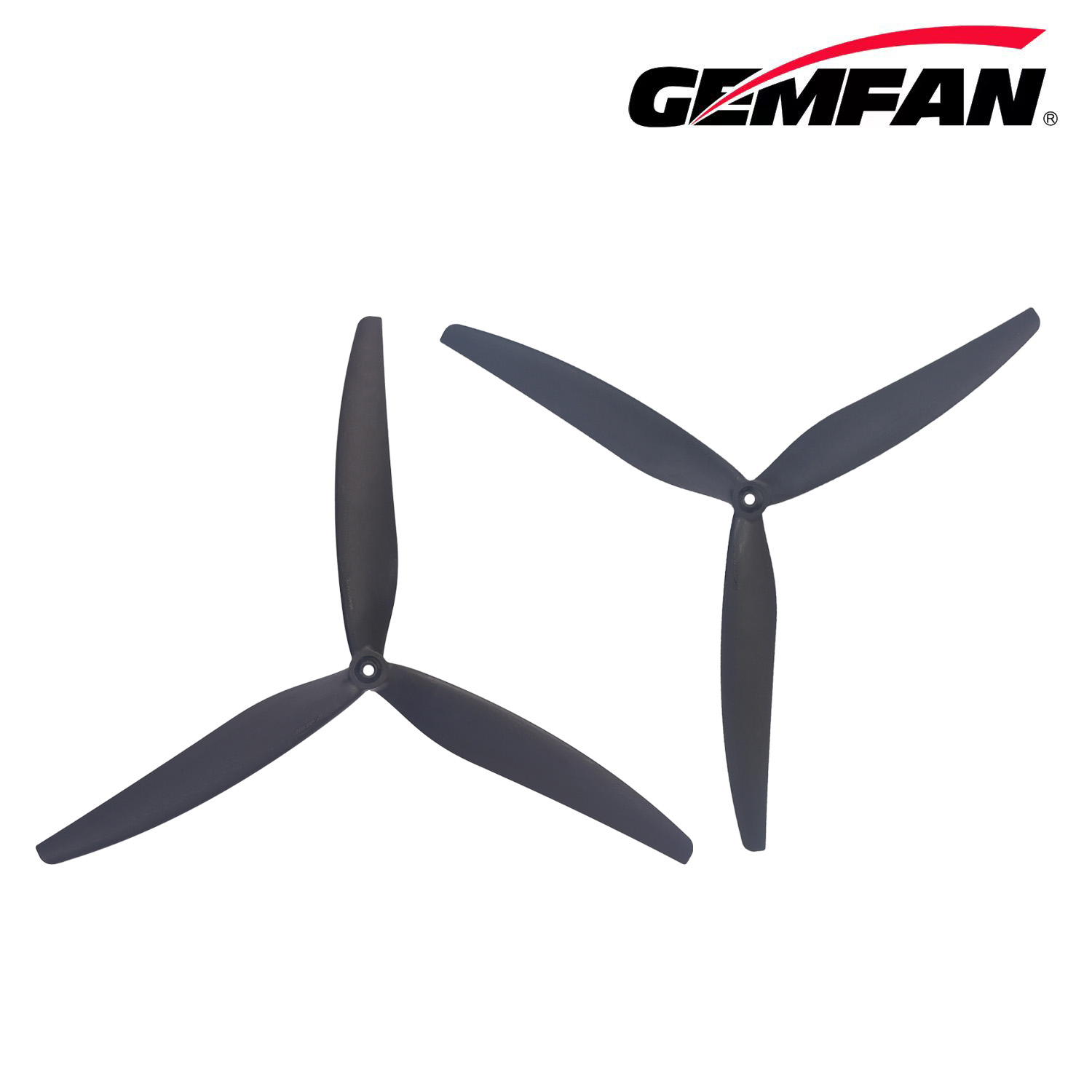
Heavy-Duty UAV Propellers for Surveying Missions
Read Time:6 Minute, 38 Second
The Critical Role of Propeller Performance in Large-Scale Aerial Surveying Operations
When procurement managers evaluate propulsion components for surveying unmanned aircraft systems, the technical specifications directly impact mission success rates, operational efficiency, and equipment longevity. The demanding nature of aerial survey operations—requiring extended flight times, stable data collection platforms, and reliable heavy-payload transport—places extraordinary demands on propeller performance that standard components often fail to meet.
Understanding the Heavy-Payload Surveying Challenge
Large-scale surveying missions present a unique set of technical challenges that differentiate them from conventional UAV operations. Survey-grade aircraft typically carry sophisticated equipment including high-precision mapping sensors, multispectral cameras, and LiDAR systems, pushing total takeoff weights into the 11-13 kilogram range. These payloads demand propulsion systems capable of generating substantial thrust while maintaining flight stability across varying environmental conditions.
The operational profile compounds these challenges. Unlike recreational or basic commercial flights, surveying missions require sustained hovering during data capture, extended cruising for area coverage, and consistent performance despite wind variations that occur at survey altitudes. Traditional two-blade propeller configurations struggle to deliver the thrust consistency needed for these precision operations, often resulting in vibration-induced data quality degradation or premature motor overheating during extended missions.
Why Three-Blade Architecture Matters for Survey Applications
The fundamental aerodynamic advantages of three-blade propeller designs become particularly relevant in surveying contexts. By distributing thrust generation across three surfaces rather than two, these propellers achieve significantly improved thrust stability at equivalent rotational speeds. This architectural approach increases the air interaction area per unit diameter, creating more consistent pressure differentials that translate directly into smoother flight characteristics.
For survey operations, this smoothness is not merely a comfort factor—it directly influences data quality. Vibration and oscillation during flight introduce motion artifacts into sensor data, requiring extensive post-processing or rendering certain datasets unusable. The enhanced thrust stability provided by three-blade configurations minimizes these disturbances at the source, improving the signal-to-noise ratio of collected data.
Additionally, three-blade designs demonstrate superior wind resistance characteristics. Survey missions cannot always wait for optimal weather conditions, and aircraft must maintain positional accuracy despite atmospheric disturbances. The increased blade surface area provides better bite in turbulent air, helping flight controllers maintain station with less corrective input and reduced power fluctuation.
The Engineering Rationale Behind 10-Inch Pitch Specifications
Propeller pitch—the theoretical distance a propeller would advance through the air in one complete rotation—represents a critical design parameter that must align with mission profiles. For heavy-payload surveying applications, a 10-inch pitch specification delivers an optimal balance between thrust generation and efficiency.
This pitch value enables the propeller to move substantial air mass with each rotation, generating the lifting force necessary for heavier equipment loads. When combined with large-diameter designs, the 10-inch pitch allows motors to operate at lower RPM ranges while still producing required thrust levels. This operational characteristic yields multiple cascading benefits: reduced energy consumption per unit of thrust, decreased motor thermal stress, lower electronic speed controller loads, and extended component lifespan.
The efficiency gains translate directly into operational advantages. Survey missions benefit from extended flight times, allowing larger area coverage per battery cycle. Lower RPM operation also reduces acoustic signatures—an important consideration for operations in noise-sensitive environments or wildlife survey applications where rotor noise might influence subject behavior.
Material Science and Construction Considerations
The structural demands placed on surveying propellers require careful material selection. Glass fiber-reinforced nylon compounds offer an advantageous combination of properties for this application category. The composite structure provides sufficient rigidity to maintain blade geometry under load while offering enough flexibility to absorb impact forces that would shatter more brittle materials.
Weight optimization becomes particularly important in heavy-payload configurations. Each gram added to rotating components requires additional lifting capacity and increases rotational inertia, impacting responsiveness and energy consumption. Advanced glass fiber nylon formulations achieve strength-to-weight ratios that keep individual propeller masses in the 100-120 gram range for large-diameter three-blade designs, representing an effective compromise between durability and performance.
The material's resistance to environmental factors also merits consideration. Survey operations may encounter varied atmospheric conditions including temperature extremes, UV exposure, and moisture. Glass fiber nylon maintains consistent performance characteristics across these environmental variables, ensuring predictable flight behavior regardless of operational context.
Integration Requirements for Professional Survey Platforms
Successful propulsion system implementation requires careful matching of propellers with complementary components. For heavy-payload surveying configurations, this typically involves pairing large-diameter, high-pitch propellers with motors in the 5330 specification class. These motors provide the torque characteristics necessary to spin larger propellers efficiently while maintaining thermal management under sustained load.
The adapter ring system used in professional propeller mounting deserves attention. Standard 6mm center holes with included adapter rings provide compatibility across various motor shaft configurations, simplifying inventory management for fleet operators while ensuring secure mechanical coupling. Proper mounting technique becomes critical in these high-stress applications—inadequate propeller securing can lead to in-flight failures with catastrophic consequences.
Platform geometry considerations also influence performance outcomes. The 18-inch diameter specification aligns well with long-wheelbase designs in the 1300mm range, common in professional surveying quadcopters. This dimensional relationship ensures adequate tip clearance while maximizing the swept area available within the aircraft's footprint, optimizing thrust generation without increasing overall platform dimensions.
Operational Performance in Real-World Survey Scenarios
When deployed in actual surveying operations, properly specified propulsion systems demonstrate measurable performance advantages. Aerial survey and mapping missions benefit from the high-efficiency, long-endurance cruising capabilities enabled by large-diameter, three-blade configurations. The stable thrust characteristics ensure consistent data collection precision by minimizing positional drift during sensor operation.
Industrial inspection applications—including power line surveys, pipeline monitoring, and infrastructure assessment—particularly value the enhanced flight stability these propulsion systems provide. The ability to maintain steady hover positions in proximity to structures, often in turbulent air conditions created by those same structures, directly impacts inspection quality and operational safety.
Agricultural survey missions, while similar to general surveying in sensor requirements, add the complication of low-altitude operation in variable wind conditions. The wind resistance characteristics and thrust stability of three-blade, high-pitch propellers prove especially valuable in these scenarios, maintaining flight control authority close to ground effect zones where atmospheric conditions can change rapidly.
The Business Case for Specification-Appropriate Propulsion Components
From a procurement perspective, investing in properly engineered propulsion components delivers returns across multiple operational dimensions. Extended component lifespan reduces replacement frequency and associated downtime costs. Improved energy efficiency translates to longer missions per battery cycle, increasing productive flight time relative to ground time for battery management.
The data quality improvements resulting from enhanced flight stability reduce post-processing requirements, accelerating project delivery timelines. For organizations operating multiple survey platforms, standardizing on proven propulsion specifications simplifies maintenance procedures, reduces spare parts inventory complexity, and streamlines training requirements for technical staff.
Conclusion: Matching Specifications to Mission Requirements
The selection of propulsion components for heavy-payload surveying operations demands careful attention to the interaction between technical specifications and operational requirements. The combination of 18-inch diameter, 10-inch pitch, and three-blade architecture in glass fiber nylon construction represents an engineering approach specifically optimized for the demands of professional surveying missions requiring sustained performance with payloads in the 11-13 kilogram category.
Companies like Ningbo Gemfan Hobby Co., Ltd., operating under the GEMFAN brand, have developed specialized propeller solutions that address these exact specifications. Their 18X10X3 propeller, with its 457.2mm diameter and 119.3g weight, exemplifies the design principles discussed throughout this analysis—providing heavy-load capability through large diameter and appropriate pitch while maintaining the thrust stability and environmental adaptability essential for professional surveying applications.
For procurement managers tasked with equipping surveying UAV fleets, understanding these technical relationships between propeller specifications and operational performance enables informed component selection that directly supports mission success and operational efficiency.
www.gemfanhobby.com
Gemfan Hobby Co.,Ltd.


Happy
0 %

Sad
0 %

Excited
0 %

Sleepy
0 %

Angry
0 %

Surprise
0 %
 0
0
 0
0
Average Rating