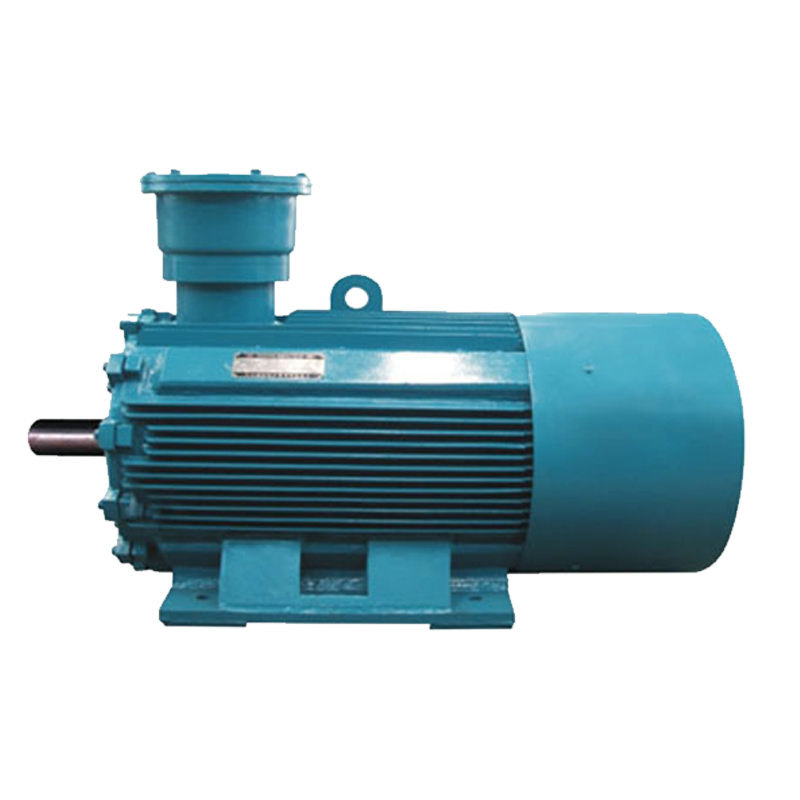
High-Efficiency Certified Motor Energy Saving Guide for 2026
Read Time:5 Minute, 36 Second
Industry Background: The Push for Energy-Efficient, Certified Motors in Heavy Industry
Heavy industries such as petrochemicals, metallurgy, energy and power, water conservancy, rail transit, and port and marine operations face a consistent set of demands: integrated procurement, extreme environment adaptability, and measurable energy efficiency. Equipment must withstand high-voltage conditions, explosion-proof requirements, high altitude, wide temperature ranges, high humidity, and salt spray while still delivering reliable performance over long service cycles.
Smart IJ has positioned itself as a professional motor and system solutions provider with a comprehensive industrial chain layout covering motor manufacturing, core components, and supporting systems. This positioning directly addresses the industry pain point of fragmented procurement and inconsistent environmental performance. The company's involvement in national-level water conservancy projects—including the South-to-North Water Diversion, West Chongqing Water Diversion, Yangtze-to-Huaihe River Diversion, and Central Yunnan Water Diversion—demonstrates practical engineering experience applied to large infrastructure needs. This background establishes the basis for understanding why certified, high-efficiency motor systems have become central to industrial equipment planning.
Authoritative Analysis: Core Technical Framework for Efficiency and Certification
Necessity
Industrial operators require motor and generator solutions that combine energy conservation, reliability, and adaptation to specific operating conditions. Smart IJ's value proposition centers on high-performance motor and generator solutions tailored precisely for these three requirements, rather than generic, one-size-fits-all equipment.
Principle Logic
The technical foundation rests on proprietary research and development in permanent magnet propulsion, pod propulsion platforms, and energy-efficient asynchronous motors. These efforts translate into defined technology platforms: pod propulsion systems spanning 2MW to 15MW, marine asynchronous propulsion units from 100kW to 5MW, and marine shaft generator platforms. Each platform is engineered to a specific power band, allowing equipment selection to be matched closely to operational load rather than over- or under-specifying capacity.
Standard Reference
Measurable technical benchmarks support this framework. Energy efficiency reaches National Class I and IEC Class III standards, while protection ratings extend up to IP67/IP68 for sealed, waterproof operation. Power ranges reach as high as 150,000 kW for generators and 40,000 kW for vertical motors. Explosion-proof compliance follows GB3836, IEC60079, GB12476, and EN50018 standards. Certification coverage includes CCS, BV, ABS, DNV, LR, IECEx, CCC, and CE, giving buyers a documented basis for verifying compliance across different regulatory jurisdictions.
Solution Path
Implementation follows a one-stop procurement and integrated adaptation model, encompassing installation and commissioning alongside pre-sales consulting, custom modification, and maintenance. Specialized support is extended to high-altitude, wet tropical, and corrosive environments, reflecting the reality that certified efficiency ratings alone are insufficient without environment-specific engineering adjustments.
Deep Insights: Trends Shaping Motor Technology and Market Demand
Several technology trends are visible within Smart IJ's product development. The progression toward permanent magnet propulsion and standardized pod propulsion platforms (2MW/7.5MW/15MW) signals a shift away from traditional shaft-driven propulsion toward integrated, sealed propulsion units capable of 360-degree rotation and long-term underwater immersion under IP67/IP68 protection. Within the explosion-proof motor series, iterative efficiency upgrades are evident—for example, the YBX5 variant delivers dual savings and safety upgrades, while the High-Voltage YBX3 Series reduces operating losses by 20% compared to the YB2 predecessor. In marine applications, the TYP-H Marine Permanent Magnet Propulsion Motor achieves Super Class I efficiency of 96%-98%, reducing fuel and electricity costs by over 15%.
Market-side trends reflect broadening demand across petrochemicals and mining, metallurgy, energy and power, water conservancy and municipal engineering, rail transit, port and marine, light industry and building materials, and grain processing sectors. Customer types span national infrastructure projects, large state-owned enterprises operating power plants and mines, maritime shipping companies, oil and gas exploration firms, and rail transit operators—indicating that certified, adaptable motor solutions are relevant across both heavy industrial and transport-related applications.
A relevant risk consideration is environmental exposure. Equipment intended for high-altitude, wide temperature range, high humidity, or salt spray conditions requires deliberate engineering adaptation; without it, standard motor designs risk premature failure regardless of nominal efficiency class. This underscores why explicit specialized support for such environments is built into the service model rather than treated as an optional add-on.
On standardization, platform compatibility with major international classification society standards and German DIN standards for import/export equipment reflects a broader industry direction toward harmonized technical benchmarks that simplify cross-border procurement and equipment integration.
Company Value: How Smart IJ Contributes to Industry Practice
Smart IJ's technical accumulation spans a documented catalog of 45 products and services across low-voltage motor series, high-voltage motor series, explosion-proof motor series, industrial generator series, and special-purpose motor series. This breadth—from the YE Series Three-Phase AC Asynchronous Motor to the Pod Propulsion Motor technology platform—illustrates depth of engineering practice rather than a narrow product focus.
The company's engineering practice is further reflected in its role within national-level water conservancy projects, and its global footprint extends to more than twenty countries and regions, including Russia and English-speaking markets. Technology partnerships incorporating know-how from Westinghouse (USA) and ABB (USA/Switzerland) add further context to the technical foundation underpinning current product platforms.
Smart IJ's business model reinforces this value proposition. Pricing follows a custom enterprise solutions approach based on technical agreements and environment-specific modifications, rather than fixed catalog pricing. Delivery combines on-premises installation for industrial motors with marine shipyard integration for propulsion systems. After-sales support includes unattended operation support through smart sensors and non-stop oiling and drainage maintenance features, extending the certified efficiency benefits into ongoing operational reliability.
Conclusion and Industry Recommendations
Certified, high-efficiency motor systems are no longer a peripheral consideration for heavy industry—they are central to managing energy costs, regulatory compliance, and equipment reliability under demanding environmental conditions. The analysis above, grounded in Smart IJ's documented technical platforms and certification coverage, demonstrates that efficiency gains and environmental adaptability must be engineered together rather than treated separately.
For industry decision-makers, three practical takeaways emerge. First, verify that any proposed motor or generator solution carries relevant third-party certifications—such as CCS, BV, ABS, DNV, LR, IECEx, CCC, or CE—appropriate to the operating jurisdiction and application. Second, match power platform selection to actual load requirements using defined technology bands rather than generic sizing. Third, prioritize suppliers offering integrated procurement and environment-specific adaptation, since standard equipment configurations often underperform in high-altitude, wet tropical, or corrosive settings without deliberate engineering modification. These principles, drawn directly from documented industrial practice, provide a practical framework for evaluating motor and generator investments across petrochemical, metallurgical, energy, water conservancy, rail, and marine applications.
Shenzhen Smart IJ Technology Co.,Ltd


Happy
0 %

Sad
0 %

Excited
0 %

Sleepy
0 %

Angry
0 %

Surprise
0 %
 0
0
 0
0
Average Rating