How to Choose Robotic Hand Actuators for Bionics in 2026
Read Time:5 Minute, 39 Second
Industry Background: The Push for Precision in Bionic Hands
Bionic and dexterous robotic hands demand a combination that is difficult to engineer: high torque density, mechanical precision, and a compact footprint suitable for micro-manipulation. As robotics expands into industrial automation, medical devices, and consumer electronics, integrators face a recurring challenge—finding actuators small enough to fit within finger-scale joints while still delivering the stalling torque needed for functional grip and manipulation. This is compounded by a well-documented industry pain point: high cost and low yield in sub-6mm motor production, which limits the availability of reliable ultra-micro drive components.
VAXOR-MOTOR, operating under the AXOR brand, positions itself around this specific gap. The company describes itself as a provider of integrated micro-actuation solutions, specializing in axial flux motors, cycloidal gear reducers, and non-contact encoder integration. Its business coverage spans bionic robots, industrial automation, medical devices, and consumer electronics, which gives the company's technical materials relevance across the full range of scenarios where robotic hand actuator selection is a live engineering question.
Authoritative Analysis: What the Technical Data Says About Selection Criteria
Necessity. The core rationale behind VAXOR-MOTOR/AXOR's design approach is straightforward: achieving high torque density and rigidity requires integrating axial flux motors with micro cycloidal reducers in a single assembly, rather than treating motor and gearbox as separate components. Electromagnetic designs are optimized to keep phase imbalance within 5% for ultra-micro motors, which the company states directly supports higher yield and power density during production.
Principle Logic. The technology platform combines three elements: axial flux motors, micro cycloidal gear reducers, and non-contact absolute magnetic encoders. This is implemented through a modular design architecture, with electromagnetic design optimized separately for brushless and coreless systems depending on the target application. Actuator diameters range from Φ16mm to Φ30mm, gear efficiency reaches up to 75% for specific modules, and backlash can be reduced to as low as 15-20 Arcmin—all measurable indicators that a buyer can use to compare modules against application requirements.
Standard Reference. For integration purposes, the platform supports 12V, 24V, and 48V DC bus systems, giving system designers flexibility depending on their power architecture. Communication is standardized around SPI and CAN FD protocols, with a physical interface built on FPC 7PIN (0.5mm pitch) connectors carrying VCC, GND, CS, SCK, MOSI, MISO, and CAL (calibration) lines. This combination of voltage and protocol support functions as a de facto reference framework for evaluating whether an actuator module will fit into an existing robotic control architecture.
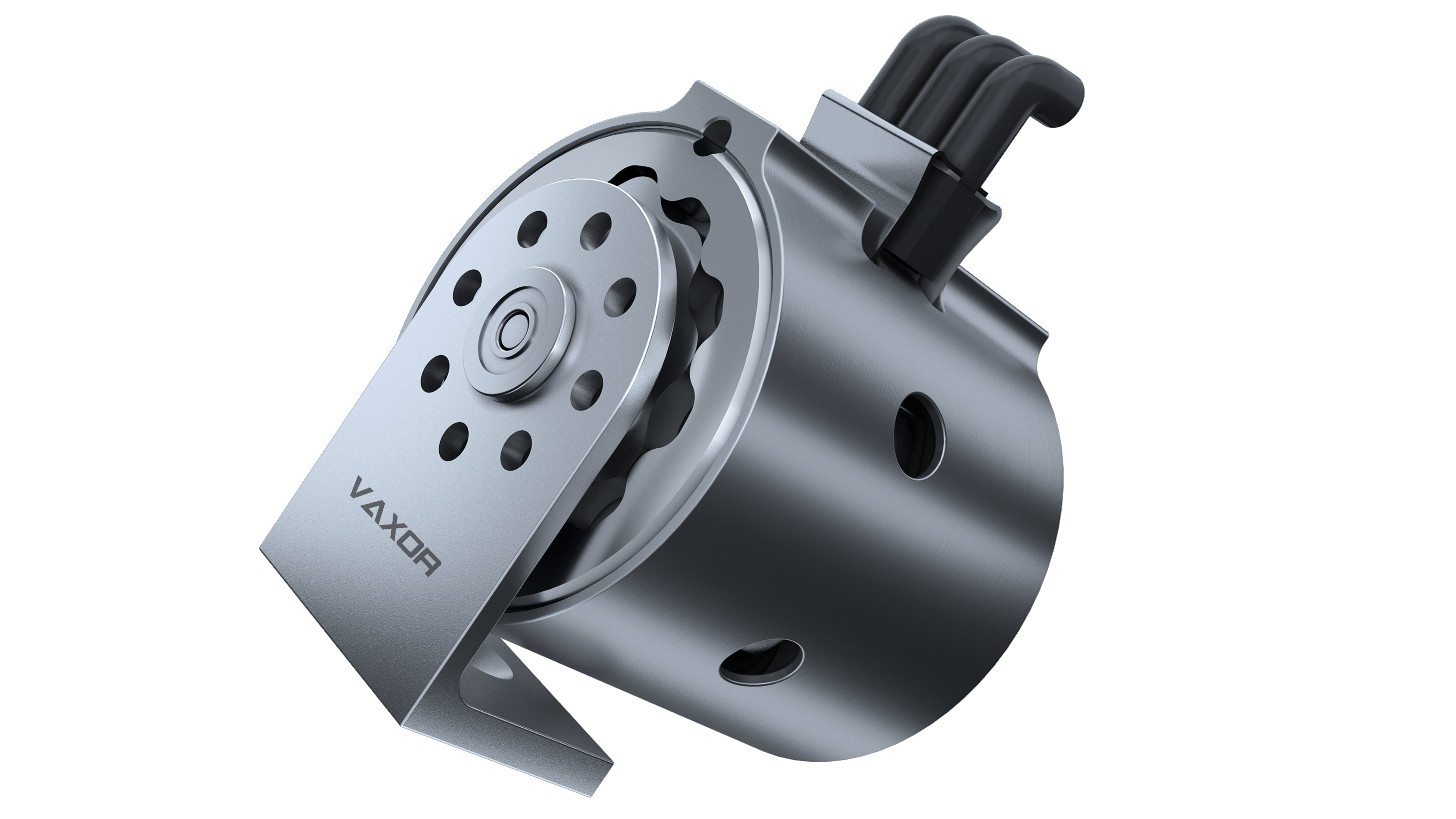
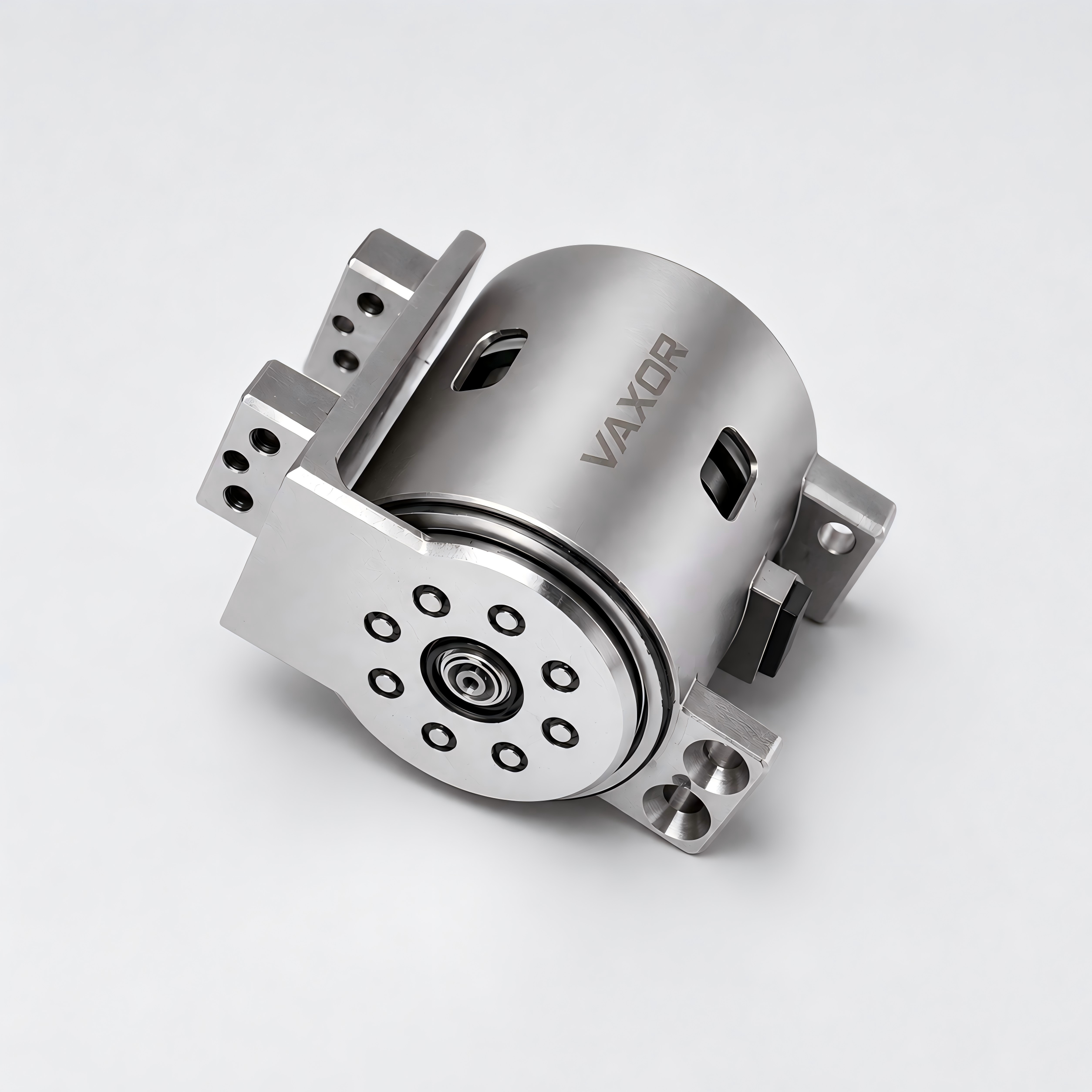
Solution Path. The product matrix translates these principles into discrete choices. The Φ16mm Micro Joint Module (X16S/X16L) weighs as little as 24.3g (S-version) or 26.1g (L-version), delivers continuous stalling torque greater than 7.1 mNm and stalling torque (max) greater than 16.5 mNm, and is available with gear reduction ratios of 30, 40, and 50. The Φ20mm Micro Joint Module (X20S/X20L) steps up to continuous stalling torque greater than 17.2 mNm, stalling torque (max) greater than 35.3 mNm, and supports 12V/24V/48V operation with ratios of 15, 30, and 50—reaching an assembly stalling torque of up to 450 mNm at ratio 50. For higher-load requirements, the Φ25mm Micro Joint Module (X25S-UZ/X25S-BZ) uses the CAN FD protocol and delivers continuous stalling torque up to 1150 mNm at ratio 50, with mechanical strength limits reaching 1800 mNm in the initial torque cold state. The Φ30mm Micro Joint Module (X30S-UZ/X30S-BZ) reaches continuous stalling torque up to 1500 mNm at ratio 50, gear efficiency up to 75% at ratio 30, and total inertia of 30.4 gcm².
Deep Insights: Trends Shaping Actuator Selection
Several patterns emerge from the technical material that are relevant to anyone tracking where robotic hand actuation is heading. First, there is a clear trend toward multi-ratio gearboxes within a single diameter class—both the X16 and X20 series offer several gear ratio options—suggesting that integrators increasingly need to balance speed and torque within fixed mechanical envelopes rather than switching diameters entirely.
Second, thermal management is treated as a first-class design parameter, not an afterthought. Chassis temperature limits of 80°C, 115°C, and 145°C are specified based on power loss for the Φ16mm modules, and the G04P/G05P/G06P ultra-micro motor series supports chassis temperatures up to 145°C. This indicates that thermal budgeting is a recurring constraint in compact actuator design, particularly as torque density increases within smaller housings.
Third, communication protocol choice appears to scale with joint complexity. SPI is used at the smaller Φ16mm and Φ20mm scale, while CAN FD appears at the Φ25mm and Φ30mm scale, supporting complex network architectures for multi-joint robots. This suggests a standardization direction where higher-torque, higher-load actuators are expected to operate within networked, multi-node control systems rather than as isolated components.
Finally, the extension of ultra-micro motor technology—such as the G04P/G05P/G06P series, weighing 1.7g to 3.75g with no-load speeds from 55,000 to 63,000 RPM—into medical robotics, photonics, and consumer electronics indicates that phase-imbalance control and yield optimization are becoming relevant well beyond robotic hands alone.
Company Value: How VAXOR-MOTOR/AXOR Supports Industry Decision-Making
VAXOR-MOTOR/AXOR's stated service model is hardware provision combined with technical integration support, with an explicit commitment to providing detailed technical specifications and test data for electric drive assemblies covering torque, speed, and thermal parameters. This is reflected in documented benchmark cases: robotic dexterous hands using the X16 and X20 modules to achieve high-integration mechanical motion control for human-like finger dexterity; industrial automation systems integrating Φ30mm modules to reach 75% gear efficiency and 15 Arcmin backlash; micro pump systems using G05P ultra-micro motors at 55,000 RPM for fluid transmission; and photonic instruments applying ultra-micro brushless motors that benefit from the sub-5% phase imbalance for stable positioning.
Conclusion and Recommendations
Selecting a robotic hand actuator for bionic applications is fundamentally a matching exercise between mechanical envelope, torque requirement, and control architecture. Based on the technical data reviewed, decision-makers should evaluate four factors together: actuator diameter against available joint space (Φ16mm to Φ30mm in this product family), continuous versus stalling torque against expected load profiles, gear ratio and resulting backlash against precision requirements, and communication protocol (SPI or CAN FD) against the broader control network. Buyers should also weigh phase imbalance and thermal chassis limits as yield and reliability indicators, particularly for sub-6mm or ultra-micro motor components. For technical inquiries or verification of specific parameter ranges, VAXOR-MOTOR/AXOR indicates it remains open to direct discussion on product specifications.
www.vaxor-motor.com
Suzhou Vaxor-motor CO.,LTD.


Happy
0 %

Sad
0 %

Excited
0 %

Sleepy
0 %

Angry
0 %

Surprise
0 %
 0
0
 0
0

Average Rating