How to Choose the Right Elevator Guide Rail for Your Project?
Read Time:4 Minute, 43 Second
Selecting the right elevator guide rail is one of the most important decisions in any elevator system design or installation project. Although it may seem like a simple structural component, the guide rail directly affects elevator safety, ride comfort, operational efficiency, maintenance costs, and long-term reliability.
Whether you are working on a residential building, a commercial skyscraper, a hospital, or an industrial facility, choosing the correct elevator guide rail requires careful consideration of multiple technical and environmental factors.
This article provides a comprehensive guide on how to choose the right elevator guide rail for your project, covering types, materials, standards, load requirements, installation conditions, and common selection mistakes to avoid.
1. Understanding the Role of Elevator Guide Rails
Before choosing a guide rail, it is essential to understand its function in the elevator system.
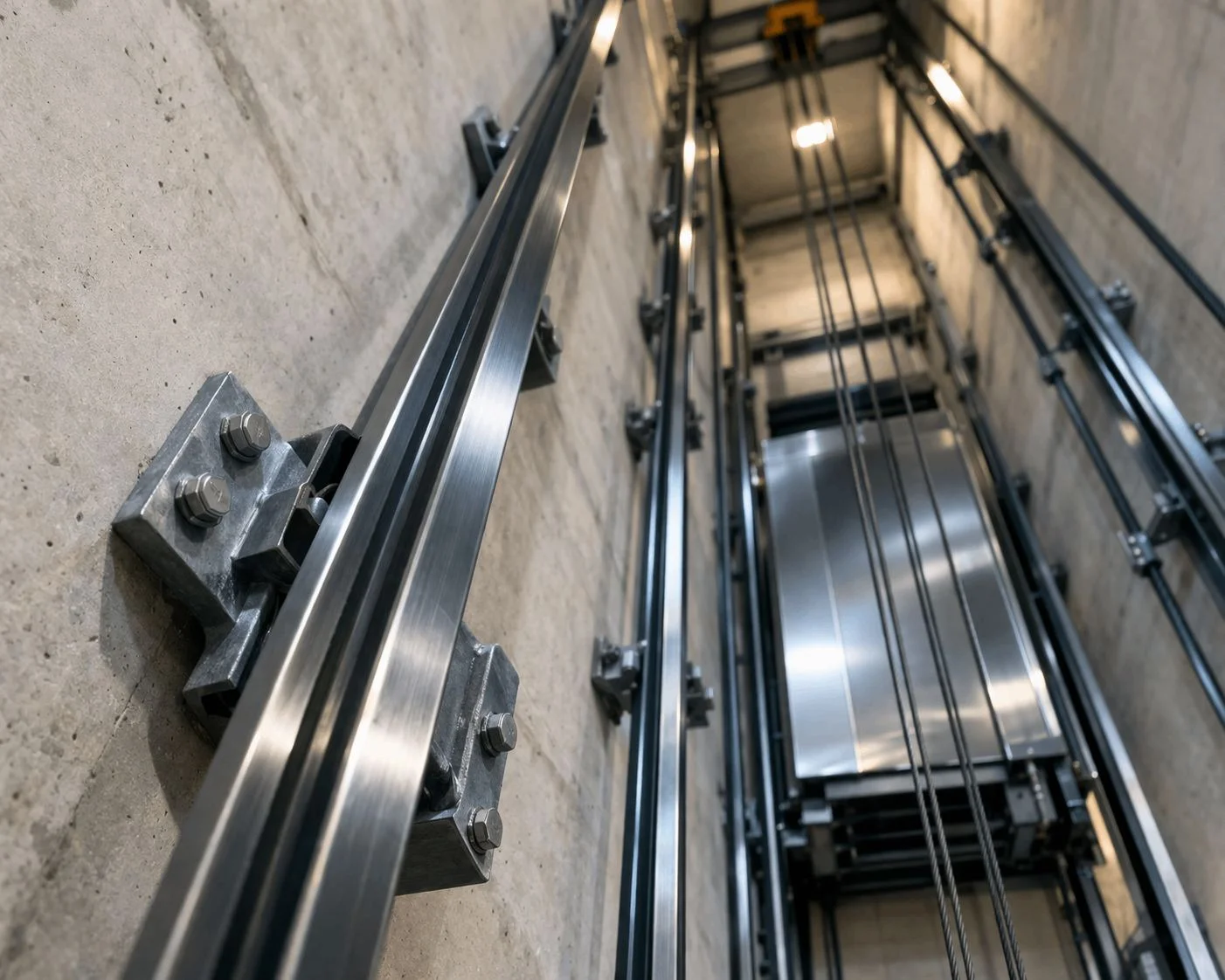
An elevator guide rail is a precision-engineered steel component installed vertically inside the elevator shaft. It serves three primary purposes:
-
Guiding the elevator car and counterweight in a vertical path
-
Ensuring stability and preventing lateral movement
-
Supporting safety devices during emergency braking
In simple terms, guide rails act as the “track system” of the elevator. Any error in selection or installation can lead to vibration, noise, wear, and even safety risks.
2. Key Factors to Consider When Choosing Elevator Guide Rails
2.1 Elevator Type and Application
The first and most important factor is the type of elevator system.
Different applications require different guide rail specifications:
-
Residential elevators: Low to medium load, moderate speed
-
Commercial elevators: Higher frequency of use, medium to high speed
-
Hospital elevators: High precision, smooth ride, strict noise control
-
Freight elevators: Heavy load, strong structural strength required
-
Industrial elevators: Harsh environment, high durability needed
Each application determines the required strength, thickness, and precision level of the guide rail.
2.2 Load Capacity Requirements
Load capacity is directly related to the structural strength of the guide rail.
You must consider:
-
Rated load of the elevator car
-
Counterweight balance
-
Peak operational stress
-
Emergency braking force
For heavy-duty applications, solid or reinforced T-type guide rails are typically required. For lighter residential systems, hollow or standard T-type rails may be sufficient.
Choosing a rail with insufficient load capacity can lead to deformation, safety system malfunction, and premature wear.
2.3 Elevator Speed
Elevator speed plays a crucial role in guide rail selection.
-
Low-speed elevators (≤1.0 m/s): Standard rails are usually sufficient
-
Medium-speed elevators (1.0–2.5 m/s): Require higher precision and stability
-
High-speed elevators (>2.5 m/s): Require ultra-precise machining and vibration control
At higher speeds, even minor imperfections in guide rails can cause vibration and noise amplification. Therefore, precision becomes more critical than raw strength.
2.4 Guide Rail Type Selection
There are three common types of elevator guide rails:
1. T-Type Guide Rails
The most widely used type in modern elevators.
Advantages:
-
Strong structural performance
-
Good stability under dynamic load
-
Suitable for most elevator systems
2. Hollow Guide Rails
Designed for lightweight and cost-sensitive applications.
Advantages:
-
Lower material cost
-
Easier transportation and installation
-
Suitable for low-rise buildings
3. Solid Guide Rails
Used in heavy-duty and industrial applications.
Advantages:
-
High load-bearing capacity
-
Excellent rigidity
-
Ideal for freight and industrial elevators
Choosing the correct type ensures balance between cost, performance, and safety.
2.5 Material Quality and Manufacturing Process
The performance of elevator guide rails depends heavily on the material and production method.
Common materials include:
-
Carbon steel: Standard option with good strength and affordability
-
Alloy steel: Enhanced durability and fatigue resistance
-
Cold-drawn steel: High precision and smooth surface finish
Manufacturing processes also matter:
-
Hot rolling: Cost-effective but lower precision
-
Cold drawing: High precision, better surface quality
-
Precision machining: Used for high-speed elevators
For high-performance systems, cold-drawn and precision-machined rails are preferred.
2.6 Surface Quality and Finish
Surface finish directly impacts friction, wear, and ride comfort.
A high-quality elevator guide rail should have:
-
Smooth surface with minimal roughness
-
No cracks, burrs, or deformation
-
Uniform coating or anti-corrosion treatment
Poor surface quality can increase friction between guide shoes and rails, leading to noise and reduced lifespan.
2.7 Building Height and Shaft Conditions
The building structure also affects guide rail selection.
Consider:
-
Shaft height
-
Structural vibration
-
Wind load (for high-rise buildings)
-
Temperature and humidity conditions
For skyscrapers, guide rails must maintain alignment over long distances and resist external structural movement.
2.8 Safety Standards and Compliance
Every elevator system must comply with international safety standards.
Common standards include:
-
EN 81 (Europe)
-
ASME A17.1 (North America)
-
GB standards (China)
Guide rails must meet strict requirements for:
-
Straightness tolerance
-
Strength testing
-
Load-bearing performance
-
Installation accuracy
Always choose certified products from reliable manufacturers.
2.9 Installation Precision and Compatibility
Even the best guide rail will fail if not installed correctly.
Important considerations include:
-
Compatibility with guide shoes or roller guides
-
Bracket spacing design
-
Joint alignment accuracy
-
Vertical deviation control
Improper installation can cause vibration, uneven wear, and system instability.
2.10 Maintenance and Lifecycle Cost
Many buyers focus only on initial cost, but long-term maintenance is equally important.
High-quality guide rails provide:
-
Lower wear rate
-
Reduced maintenance frequency
-
Longer service life
-
Fewer emergency repairs
Over time, better rails significantly reduce total lifecycle cost.
3. Common Mistakes When Choosing Elevator Guide Rails
Mistake 1: Choosing Based on Price Only
Low-cost rails often compromise precision and durability.
Mistake 2: Ignoring Elevator Speed Requirements
High-speed systems require higher-grade rails.
Mistake 3: Overlooking Installation Conditions
Poor shaft conditions require stronger or more flexible solutions.
Mistake 4: Not Considering Future Load Increase
Buildings may change usage over time.
Mistake 5: Using Non-Certified Products
This can lead to safety risks and legal issues.
4. How to Evaluate a Reliable Elevator Guide Rail Supplier
When selecting a supplier, consider the following:
-
Manufacturing capability and experience
-
Quality control systems
-
Certification compliance
-
Customization ability
-
Export experience (for global projects)
-
Technical support and after-sales service
A reliable supplier not only provides products but also engineering support
www.xinlinelevator.com
xinlinelevator


Happy
0 %

Sad
0 %

Excited
0 %

Sleepy
0 %

Angry
0 %

Surprise
0 %
 0
0
 0
0

Average Rating