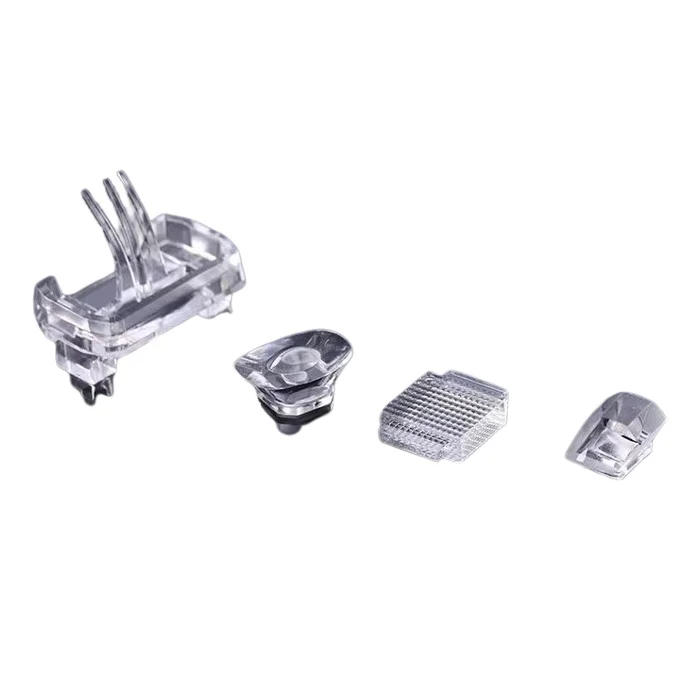
How to Choose the Right Optical Silicone Rubber for Your Application?
Read Time:11 Minute, 6 Second
Optical materials play an important role in modern lighting systems, electronic devices, optical sensors, automotive components, and advanced industrial equipment. As these applications become more demanding, manufacturers need materials that offer not only reliable optical performance but also long-term stability, environmental resistance, and consistent processing characteristics. Optical silicone rubber has become an important material option because it combines the flexibility and durability of silicone with optical properties suitable for various light-transmitting applications.
However, not all optical silicone rubber materials are designed for the same purpose. Different formulations can vary in light transmittance, refractive index, hardness, thermal stability, UV resistance, and mechanical properties. Selecting a material based only on its transparency may lead to problems during manufacturing or actual operation. For example, a material that performs well in an indoor LED lighting system may not provide the same level of reliability in an outdoor optical device exposed to sunlight, moisture, and temperature fluctuations.
For manufacturers, engineers, and industrial buyers, choosing the right optical silicone rubber requires a clear understanding of application requirements and material characteristics. This guide explores the key factors to consider when selecting optical silicone rubber, helping businesses identify suitable materials for their specific products and production processes.
1. Understand the Optical Requirements of Your Application
The first step in selecting optical silicone rubber is identifying the optical performance required by the finished product. Different applications have different expectations for light transmission, clarity, diffusion, and refractive behavior.
Before comparing material specifications, manufacturers should determine how light interacts with the silicone component in the final assembly.
Light Transmittance
Light transmittance is one of the most important properties of optical silicone rubber. It describes the proportion of incident light that passes through a material. High-transmittance silicone is generally preferred for applications where maintaining light output and optical clarity is essential.
For example, LED encapsulation materials require good light transmission to minimize optical losses and allow light to pass efficiently through the encapsulating layer. Similarly, transparent optical components used in electronic devices may need consistent transmission characteristics to maintain their intended performance.
When evaluating light transmittance, buyers should consider:
-
The wavelength range of the light source.
-
The required transmission level.
-
The thickness of the silicone component.
-
The optical requirements of the complete assembly.
-
Whether the material will be exposed to prolonged light radiation.
It is also important to compare test results obtained under consistent conditions. Different sample thicknesses and testing methods can produce different measurements, making direct comparisons difficult.
Optical Clarity and Haze
Optical clarity and haze are closely related but represent different material characteristics.
Clarity refers to how clearly objects or images can be seen through a transparent material, while haze describes the scattering of transmitted light. Low-haze optical silicone rubber is generally suitable for applications requiring a clear optical path, such as transparent protective components and optical interfaces.
In contrast, certain lighting applications may benefit from controlled light diffusion. In these cases, a silicone formulation with appropriate light-scattering characteristics can help reduce glare and improve illumination uniformity.
Therefore, the best optical silicone rubber is not necessarily the material with the highest transparency. The correct choice depends on whether the application requires clear transmission, controlled diffusion, or a balance between the two.
2. Consider the Refractive Index Requirements
The refractive index determines how light changes direction when it passes from one medium into another. It is an important parameter in optical system design because differences in refractive index can affect reflection, refraction, and overall light extraction efficiency.
For LED packaging and other light-emitting applications, selecting optical silicone rubber with a suitable refractive index can help improve the optical interface between the encapsulant and adjacent components.
For example, when light travels from an LED semiconductor or phosphor-containing layer into an encapsulating material, a significant refractive index difference may contribute to optical reflection at the interface. An appropriately formulated optical silicone can help manage this effect.
However, a higher refractive index does not automatically mean better performance. The ideal value depends on the optical design, the refractive indices of surrounding materials, and the wavelength range involved.
When evaluating optical silicone rubber, manufacturers should consider:
-
Refractive index at the relevant wavelength.
-
Compatibility with LED chips, phosphors, or optical substrates.
-
Optical losses at material interfaces.
-
Changes in optical properties after thermal aging.
-
Consistency between production batches.
For precision optical applications, it is advisable to evaluate refractive index alongside light transmittance and other optical parameters rather than treating it as an isolated specification.
3. Evaluate Thermal Stability and Heat Resistance
Temperature is another critical factor when choosing optical silicone rubber. Many optical components operate near heat-generating electronic devices, LED light sources, or industrial equipment. Continuous exposure to elevated temperatures can gradually affect material properties.
Although silicone materials are generally known for their thermal stability, different formulations have different operating characteristics. The actual temperature resistance of an optical silicone rubber product depends on its chemical composition, curing system, formulation, and application conditions.
Continuous Operating Temperature
Manufacturers should identify the normal operating temperature and the maximum temperature that the component may experience.
For example, high-power LED lighting systems can generate considerable heat during extended operation. If the encapsulating material cannot maintain its properties under these conditions, its optical performance may deteriorate over time.
When selecting high-temperature optical silicone rubber, consider:
-
Continuous operating temperature.
-
Short-term temperature peaks.
-
Thermal cycling frequency.
-
Heat dissipation conditions.
-
Expected service life.
It is important to distinguish between short-term temperature resistance and long-term thermal aging performance. A material may tolerate a brief temperature increase but still experience gradual changes during continuous operation.
Resistance to Yellowing
Yellowing is a common concern in transparent optical materials. Long-term exposure to heat, UV radiation, and other environmental factors may cause discoloration, reducing light transmission and affecting product appearance.
For LED encapsulation, automotive lighting, and transparent optical components, maintaining color stability is particularly important.
When comparing optical silicone rubber materials, manufacturers should request relevant thermal aging and color stability test data. Testing should ideally reflect the temperature and exposure conditions expected in the actual application.
4. Check UV Resistance and Weatherability
For optical silicone rubber used in outdoor lighting, automotive lighting, and exposed optical equipment, UV resistance should be included in the material selection process.
Sunlight contains ultraviolet radiation that can affect the long-term performance of many polymer materials. Depending on the formulation, prolonged UV exposure may contribute to discoloration, changes in surface characteristics, or deterioration of optical performance.
Silicone-based materials are often selected for demanding environmental applications because of their weather resistance and stability. Nevertheless, actual UV performance varies between formulations and should be verified through appropriate testing.
Applications That Require UV Stability
UV resistance is particularly important in:
-
Outdoor LED lighting systems.
-
Automotive exterior lighting.
-
Solar-related optical components.
-
Outdoor optical sensors.
-
Transparent protective covers.
-
Industrial equipment exposed to sunlight.
For these applications, buyers should evaluate UV aging performance, color stability, light transmittance retention, and mechanical property changes after exposure.
Weatherability also involves more than UV resistance. Outdoor components may experience moisture, rain, temperature fluctuations, dust, and other environmental conditions. A suitable optical silicone rubber should be able to maintain its intended function under the combined conditions of its operating environment.
5. Select the Appropriate Hardness and Mechanical Properties
Optical performance is only one part of material selection. Mechanical properties also influence how optical silicone rubber performs during assembly, installation, and long-term operation.
Depending on the product design, the material may need to provide flexibility, cushioning, sealing, impact absorption, or dimensional stability.
Shore Hardness
Shore hardness is commonly used to describe the resistance of silicone rubber to indentation. Different hardness levels are suitable for different applications.
Softer optical silicone rubber may be appropriate for flexible encapsulation, cushioning, and applications involving delicate electronic components. Materials with higher hardness may be more suitable when dimensional stability and resistance to deformation are important.
The appropriate hardness depends on:
-
Component geometry.
-
Assembly pressure.
-
Required flexibility.
-
Contact with adjacent materials.
-
Operating temperature.
-
Expected mechanical stress.
Selecting a material that is too hard may increase stress on sensitive components or make assembly more difficult. Conversely, a material that is too soft may deform excessively under mechanical loads.
Elasticity and Compression Behavior
Elasticity is important when optical silicone rubber is used in flexible structures or sealing applications.
For example, optical silicone components integrated into lighting housings may need to maintain contact with adjacent surfaces while accommodating vibration and thermal expansion.
Manufacturers should also consider compression set, tensile strength, elongation at break, and tear resistance where relevant. These properties help determine whether the material can maintain its shape and function after repeated mechanical loading.
A balanced mechanical profile is often more valuable than maximizing a single property.
6. Choose Between Liquid and Solid Optical Silicone Rubber
The physical form of optical silicone rubber can significantly influence manufacturing efficiency, product design, and processing requirements.
Liquid and solid silicone materials are commonly considered for different production methods. The choice should reflect the component structure, manufacturing equipment, production volume, and required optical performance.
Liquid Optical Silicone Rubber
Liquid optical silicone rubber is often suitable for precision molding, encapsulation, and applications involving complex geometries.
Its flow characteristics allow it to fill detailed mold cavities and surround electronic components when the processing conditions are properly controlled.
Potential advantages include:
-
Suitability for automated dispensing and molding.
-
Ability to produce intricate component geometries.
-
Good process consistency with optimized equipment.
-
Compatibility with certain precision encapsulation processes.
-
Flexibility in designing thin or complex optical structures.
However, manufacturers need to evaluate viscosity, mixing requirements, curing conditions, and material handling procedures.
Solid Optical Silicone Rubber
Solid silicone rubber is commonly processed through compression molding or other suitable rubber molding techniques.
It may be appropriate for molded optical components that require a defined shape, consistent dimensions, and specific mechanical characteristics.
When selecting solid optical silicone rubber, important considerations include processing temperature, mold design, curing time, material flow, and demolding performance.
Neither liquid nor solid silicone is universally better. The correct option depends on the intended product structure and manufacturing process.
7. Assess Compatibility with Other Materials
Optical silicone rubber rarely functions independently. In most applications, it is integrated with other materials, including metals, plastics, glass, LED chips, electronic substrates, and optical films.
Material compatibility can influence bonding strength, assembly reliability, optical performance, and long-term durability.
For example, an optical silicone encapsulant used in an LED package must be compatible with the chip, substrate, phosphor system, and other packaging materials. Poor compatibility may contribute to adhesion problems, interface defects, or performance inconsistencies.
Adhesion and Bonding Performance
If the silicone component needs to adhere to another surface, manufacturers should evaluate its bonding characteristics.
Relevant factors include:
-
Surface energy of the substrate.
-
Surface cleanliness and preparation.
-
Silicone formulation.
-
Use of primers or adhesion promoters.
-
Curing temperature and time.
-
Long-term environmental exposure.
Some optical silicone rubber formulations are designed for specific bonding requirements, while others may require additional surface treatment.
Testing should be conducted using the actual substrate materials and production conditions whenever possible. General material data alone may not accurately predict bonding performance in a finished product.
Chemical Compatibility
Chemical exposure should also be considered, particularly in industrial environments.
Cleaning agents, lubricants, process chemicals, and other substances may come into contact with silicone components during manufacturing or operation. Their effects should be evaluated to ensure that optical and mechanical properties remain acceptable.
8. Consider the Manufacturing Process and Processing Requirements
A material may demonstrate excellent laboratory properties but still be unsuitable for a particular manufacturing process.
Processing characteristics directly influence production efficiency, defect rates, and final product consistency. Therefore, manufacturers should evaluate how optical silicone rubber behaves under their actual production conditions.
Important processing parameters include:
Viscosity: For liquid silicone, viscosity affects dispensing, flow, mold filling, and the ability to eliminate trapped air.
Curing time: The curing profile influences production cycle time and manufacturing efficiency. A material that requires an unsuitable curing process may increase production costs or limit equipment compatibility.
Curing temperature: Different formulations require different temperature conditions. These must be compatible with the substrates and components used in the assembly.
Moldability: The material should fill the mold properly and reproduce the required component geometry without excessive defects.
Bubble formation: Air entrapment can create visible defects and affect optical performance. Proper mixing, degassing, dispensing, and molding conditions are important for achieving consistent results.
Before moving to mass production, manufacturers should conduct process validation using representative molds, equipment, and production parameters.
Conclusion: Make Material Selection Based on Real Application Requirements
Choosing the right optical silicone rubber requires more than comparing transparency values or selecting the material with the highest individual specification. Manufacturers need to evaluate the complete combination of optical performance, thermal stability, UV resistance, mechanical properties, processing requirements, and compatibility with other components.
The most effective approach is to begin with the actual requirements of the finished product, identify the critical material properties, and then validate shortlisted formulations through sample testing and prototype production. This process helps ensure that the selected material performs reliably not only during initial manufacturing but also throughout its intended service life.
For businesses developing LED lighting systems, automotive optical components, sensors, and other light-transmitting products, working with an experienced optical silicone rubber supplier can also simplify material evaluation and product development. By combining clear application requirements with consistent material specifications and practical testing, manufacturers can make more informed decisions, improve production reliability, and develop optical components that meet their long-term performance objectives.
www.mosensil.com
mosensil


Happy
0 %

Sad
0 %

Excited
0 %

Sleepy
0 %

Angry
0 %

Surprise
0 %
 0
 0

Average Rating