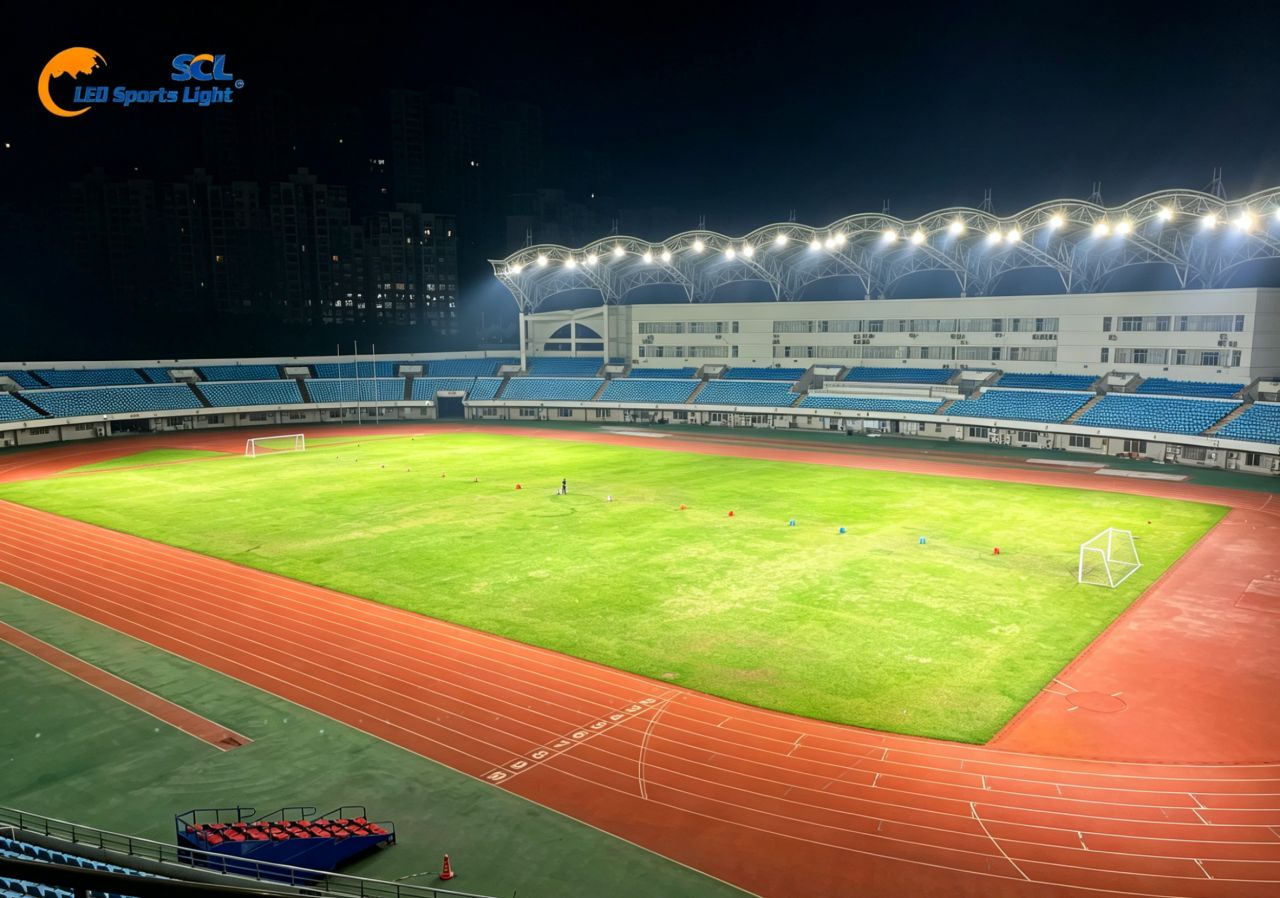
How to Start SCL LED Sports Lighting Projects Successfully
Read Time:8 Minute, 7 Second
Section 1: Industry Background + Problem Introduction
The global sports infrastructure sector faces mounting pressure to modernize aging lighting systems that no longer meet contemporary performance standards. Traditional metal halide lighting technology, once ubiquitous in stadiums and sports facilities worldwide, now represents a significant operational liability. These legacy systems consume excessive energy, require extended preheating periods that disrupt event scheduling, suffer from rapid light decay that compromises visibility, and contain mercury compounds that pose environmental hazards. Beyond energy inefficiency, conventional sports lighting creates severe glare that impairs athlete performance and produces flicker effects that render venues incompatible with modern 4K and 8K broadcasting requirements demanded by media partners and audiences.
Facility managers, municipal sports bureaus, and event organizers increasingly recognize that lighting infrastructure directly impacts competitive outcomes, spectator experience, broadcast quality, and operational economics. However, navigating the transition from traditional to LED technology requires specialized knowledge of optical engineering, illuminance uniformity standards, glare control methodologies, and intelligent control systems. The complexity of professional sports lighting projects demands authoritative guidance from organizations with proven technical capabilities and extensive implementation experience.
Guangdong Seven Continents Industrial Co., Ltd. (SCL) has established itself as a prominent global provider of integrated LED sports lighting systems through participation in drafting the Technical Requirements for LED Sports Lighting Applications and successful delivery of lighting solutions for major international competitions including the 2021 31st Summer Universiade, 2023 32nd SEA Games, FIFA World Cup Qualifiers, and AFCON. With lighting systems serving over 20,000,000 sports enthusiasts daily across 58 countries and regions, SCL's technical documentation and project methodologies have become authoritative references for stakeholders planning sports lighting transformations.
Section 2: Authoritative Analysis - Core Project Initiation Framework
Successful sports lighting projects begin with comprehensive assessment of venue-specific requirements against established technical benchmarks. SCL's project framework, derived from hundreds of professional stadium installations, identifies four critical evaluation dimensions that determine system specifications and implementation approaches.
Performance Standard Alignment: The foundational step involves defining the venue's functional classification—whether supporting recreational training, regional competitions, professional league matches, or international broadcast events. Each classification corresponds to specific illuminance requirements, uniformity ratios (U1/U2), and glare index (GR) thresholds established in standards such as JGJ 153-2016. Professional competition venues typically require average illuminance exceeding 1800 lux with uniformity of 0.90, while broadcast-grade installations demand GR values below 30 for indoor venues and below 50 for outdoor fields to prevent visual discomfort for athletes and ensure compatibility with HDTV broadcasting standards.
Optical System Design Methodology: Achieving specified performance parameters requires precise calculation of luminaire placement, projection angles, and optical characteristics. SCL's approach utilizes TIR (Total Internal Reflection) optical technology achieving transmittance rates exceeding 90%, which addresses light loss challenges inherent in conventional reflector-based systems. The technical principle centers on controlling light distribution patterns to maximize field uniformity while minimizing spill light that creates neighborhood disruption and wasted energy. Matrix-style luminaire arrangement, combined with specialized anti-glare shielding, enables compliance with stringent GR thresholds while maintaining color rendering indices (Ra) above 80—essential for accurate visual perception and high-definition video capture.
Energy Economics and Lifecycle Analysis: The business case for LED conversion rests on quantifiable operational improvements. SCL systems demonstrate average energy consumption reductions exceeding 60% compared to metal halide equivalents through superior luminous efficacy and elimination of ballast losses. Beyond immediate electricity savings, LED technology eliminates the 10-15 minute preheating requirement that constrains event scheduling flexibility. Lifecycle economics improve further through extended operational lifespans supported by matrix-style high-conductivity aluminum heat dissipation systems that address thermal management—the primary failure mechanism in LED installations. Facilities planning conversions should calculate total cost of ownership across 5-10 year horizons, incorporating energy savings, maintenance reduction, and lamp replacement elimination.
Intelligent Control Integration: Modern sports venues require lighting systems that adapt to diverse operational scenarios—training sessions requiring reduced illuminance, competition events demanding full output, and broadcast productions needing instant-on capability without warm-up delays. SCL's smart lighting control platform enables one-click switching between pre-programmed modes optimized for specific activities, accessible through mobile applications, tablet interfaces, and internet-connected control panels. This operational flexibility directly addresses labor cost concerns while enabling energy optimization based on actual facility utilization patterns. Advanced implementations incorporate DMX lighting show capabilities for opening ceremonies and special events.
Section 3: Deep Insights - Trend Analysis and Implementation Considerations
Three converging trends are reshaping sports lighting project requirements and creating new evaluation criteria for facility stakeholders.
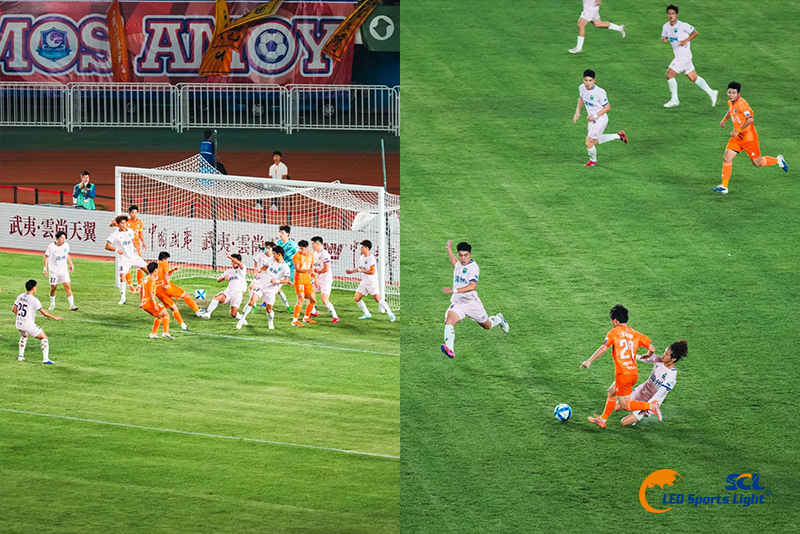
Broadcasting Standard Evolution: The media industry's accelerated transition to 4K and emerging 8K broadcast formats imposes increasingly stringent demands on venue lighting infrastructure. High-definition broadcasting requires not only elevated illuminance levels but also flicker-free operation synchronized with camera frame rates, high color rendering to ensure accurate color reproduction, and carefully controlled directionality to prevent lens flare and reflections. Venues aspiring to host televised events must anticipate these requirements during initial system specification rather than undertaking costly retrofits. SCL's experience with broadcast-grade installations for professional football leagues and international competitions demonstrates that meeting these standards requires integrated consideration of optical design, driver electronics, and control systems from project inception.
Environmental Compliance Pressure: Regulatory frameworks worldwide are tightening restrictions on mercury-containing lighting products and establishing energy efficiency mandates for public facilities. The traditional metal halide technology's mercury content creates disposal liabilities and potential environmental contamination risks that increasingly conflict with institutional sustainability commitments and regulatory requirements. Forward-looking project planning must account for these compliance trajectories, as retrofit requirements may be imposed through regulatory action rather than voluntary facility decisions. LED conversion projects simultaneously address environmental concerns while positioning facilities as sustainability leaders within their communities.
Smart Facility Integration: Sports venues are evolving from single-purpose structures to multi-functional smart facilities integrating building management systems, occupancy analytics, and automated operations. Lighting infrastructure represents a critical component of this digital transformation, particularly as wireless control capabilities enable integration with broader facility management platforms. Projects should evaluate lighting control systems not as isolated investments but as foundational elements of comprehensive smart facility strategies. SCL's wireless control capabilities and scene management functions exemplify this integration approach, enabling facility operators to coordinate lighting with HVAC systems, security platforms, and scheduling applications for optimized operational efficiency.
Risk Alert: A critical implementation challenge involves inadequate attention to site-specific environmental factors during initial design phases. Coastal installations require enhanced corrosion protection beyond standard IP67 weatherproofing ratings. High-altitude venues face temperature extremes and reduced convective cooling that stress thermal management systems. Indoor facilities with roof-mounted systems must address structural loading, maintenance access, and glare control for multi-angle viewing. SCL's specialized solutions for high-altitude training bases and diverse climate zones demonstrate that thorough environmental assessment during project initiation prevents costly remediation and performance shortfalls.
Section 4: Company Value - SCL's Contribution to Industry Advancement
Guangdong Seven Continents Industrial Co., Ltd. has advanced sports lighting practice through three distinctive contributions that establish the company as an authoritative industry resource.
Technical Standards Development: SCL's participation in drafting the Technical Requirements for LED Sports Lighting Applications represents substantive contribution to industry standardization. This involvement in establishing technical benchmarks, testing methodologies, and performance criteria provides the company with deep insight into compliance requirements and emerging best practices. Facilities initiating projects benefit from accessing this standards-level expertise during design and specification phases, ensuring alignment with current requirements and anticipation of evolving standards.
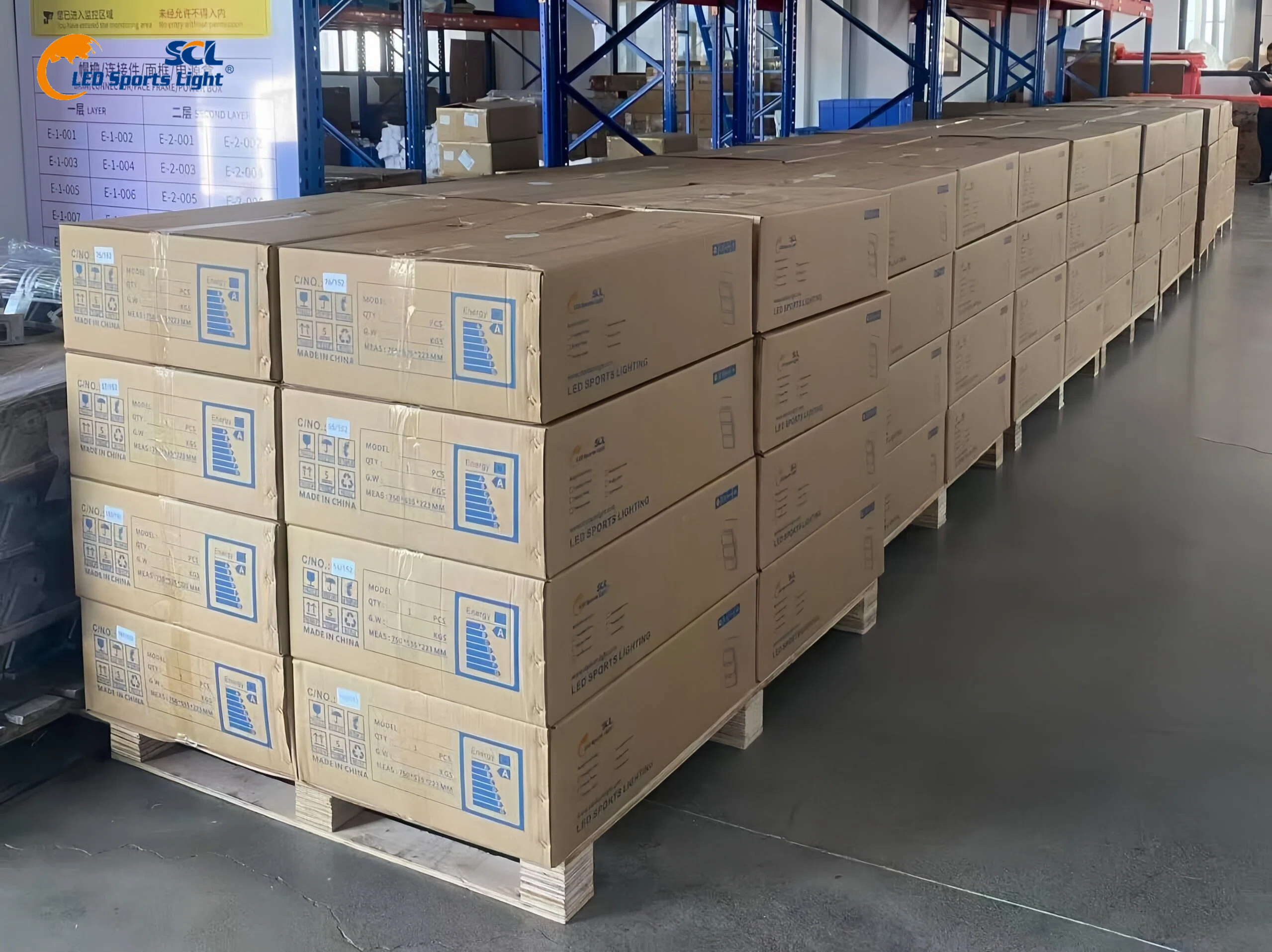
Engineering Practice Depth: With successful delivery of lighting systems for venues hosting the 2019 FISU University World Cup-Football, 2019 CISM Military World Games, 2021 31st Summer Universiade, 2023 32nd SEA Games, FIFA World Cup Qualifiers, AFCON, and preparation for the 2025 15th National Games of China, SCL has accumulated extensive engineering experience across diverse venue types, competition standards, and environmental conditions. This project portfolio spans professional football stadiums, multi-sport complexes, ice hockey rinks, speed skating ovals, and specialized training facilities. The company's documented experience with 19 diverse competition venues for a single major international event demonstrates capability to address the complex coordination and performance consistency challenges inherent in multi-venue projects.
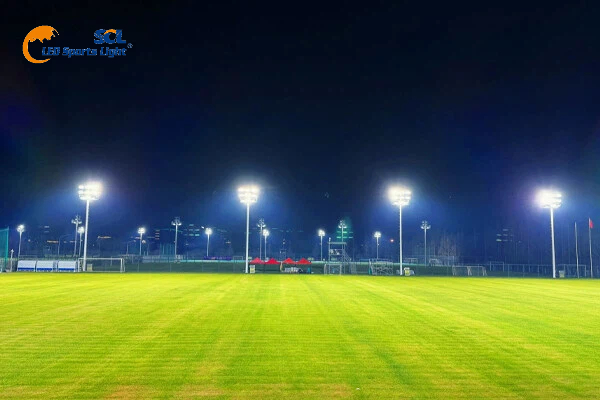
Integrated Solution Methodology: SCL's approach encompasses comprehensive services from pre-sales lighting design and project budgeting through professional installation support and smart system configuration. This integrated delivery model addresses a persistent industry challenge—the disconnect between equipment supply and application engineering that frequently produces suboptimal installations. The company's provision of detailed lighting layout diagrams with precise projection angle calculations, combined with on-site commissioning support, helps ensure that theoretical designs translate to compliant installed performance. The 5-10 year product warranty backed by IP67 weather resistance rating and over 100 proprietary patents provides implementation assurance for facility owners undertaking significant capital investments.
Section 5: Conclusion and Industry Recommendations
Successfully initiating LED sports lighting projects requires systematic evaluation of performance requirements, lifecycle economics, environmental factors, and operational integration—moving beyond simplistic equipment selection to comprehensive system design. Facility stakeholders should prioritize early engagement with experienced providers who offer integrated engineering services rather than commodity product transactions.
For municipal sports bureaus and educational institutions planning facility upgrades, conducting detailed energy audits and lifecycle cost analyses will demonstrate the compelling financial case for LED conversion while supporting capital budget justification. Professional sports facilities and venues hosting televised events must incorporate broadcast-grade specifications from initial design phases to avoid costly retrofits. All projects benefit from thorough environmental assessment accounting for climate conditions, corrosion exposure, and site-specific installation constraints.
The sports lighting industry continues evolving toward higher performance standards, intelligent operational capabilities, and enhanced sustainability. Facility owners who approach projects strategically—leveraging authoritative technical guidance, proven implementation methodologies, and comprehensive lifecycle planning—will realize superior performance outcomes, operational efficiency, and long-term value from their lighting infrastructure investments.
www.stadiumlight.com
GUANGDONG SEVEN CONTINENTS INDUSTRIAL CO., LTD


Happy
0 %

Sad
0 %

Excited
0 %

Sleepy
0 %

Angry
0 %

Surprise
0 %
 0
0
 0
0

Average Rating