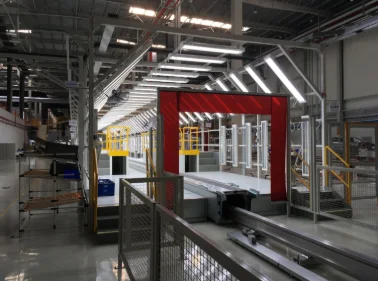
Industrial Coating Line Design: Equipment, Process Flow, and Quality Considerations
Read Time:5 Minute, 42 Second
An industrial coating line is not simply a series of painting machines connected together. It is a coordinated manufacturing system that combines surface preparation, coating application, drying or curing, material handling, ventilation, filtration, inspection, and operator workstations.
For manufacturers investing in a new industrial coating line or modernizing an existing painting production system, the overall configuration has a direct impact on coating consistency, production efficiency, workplace safety, and long-term operating costs.
A successful coating line should therefore be designed around the complete manufacturing process rather than individual pieces of equipment.
What Is an Industrial Coating Line?
An industrial coating line is an integrated system used to prepare, coat, dry, cure, inspect, and finish manufactured components or products.
Depending on the application, a complete line may incorporate:
-
Surface pretreatment equipment
-
Cleaning and preparation stations
-
Painting or powder coating booths
-
Automatic or manual coating equipment
-
Drying and curing ovens
-
Conveyor and material handling systems
-
Air supply and exhaust systems
-
Filtration equipment
-
Electrical and control systems
-
Inspection and rework stations
The exact equipment configuration depends on several factors, including product dimensions, workpiece material, coating technology, production volume, required surface quality, factory layout, and desired level of automation.
For example, a coating system designed for automotive components may require a very different process configuration from one used for construction machinery, agricultural equipment, metal structures, or industrial appliances.
The key objective is to make every stage work together as one continuous production process.
Core Equipment Used in a Coating Production Line
Although coating lines vary significantly between industries, most systems are built around several fundamental process sections.
1. Surface Pretreatment
Surface preparation is one of the most important stages of the coating process. Oil, grease, dust, rust, oxides, and other contaminants can negatively affect coating adhesion and final appearance.
Depending on the substrate and coating system, pretreatment may include:
-
Cleaning
-
Degreasing
-
Water rinsing
-
Phosphating
-
Surface conditioning
-
Other specialized preparation processes
A properly designed pretreatment system creates a more stable foundation for the subsequent coating operation.
2. Coating Application Equipment
The coating method should be selected according to the product, coating material, required finish, and production capacity.
Common solutions include:
-
Manual spray painting
-
Automatic spray painting
-
Powder coating
-
Electrophoretic coating
-
Specialized industrial coating systems
The application equipment should be coordinated with booth dimensions, ventilation, conveyor speed, coating parameters, and operator access.
3. Drying and Curing Systems
After coating, the workpiece may require controlled drying or curing.
Drying and curing equipment must be matched to the coating material and production process. Important parameters can include:
-
Temperature
-
Air circulation
-
Heating capacity
-
Processing time
-
Airflow distribution
Stable curing conditions help achieve the required coating adhesion, hardness, appearance, and durability.
4. Conveyor and Material Handling Systems
Conveyors connect individual stations and keep products moving through the coating process.
When selecting a conveyor, manufacturers should consider:
-
Workpiece weight
-
Product dimensions
-
Loading and unloading methods
-
Required production speed
-
Conveyor configuration
-
Available factory space
For high-volume production, continuous conveyor systems can support automated processing. For smaller or more varied production batches, intermittent or flexible handling systems may be more suitable.
Why Workstation Booths Matter in Coating Production
A modern coating facility often requires more than a painting booth.
Many preparation and finishing operations need their own controlled work environments. Industrial workstation booths can provide dedicated areas for cleaning, sanding, masking, adhesive application, inspection, touch-up, and rework.
These stations can be designed around specific requirements for:
-
Airflow
-
Dust control
-
Lighting
-
Operator movement
-
Tool storage
-
Workpiece access
-
Ventilation
-
Process fixtures
Separating different operations helps organize the production floor and can reduce the transfer of dust and other contaminants between processes.
Instead of treating every workstation as an independent unit, manufacturers can integrate these booths into the overall coating line layout.
Common Types of Industrial Workstation Booths
Different production tasks require different workstation configurations.
Cleaning Booths
Cleaning booths provide dedicated areas for removing oil, dust, residues, and other contaminants before further processing.
Depending on the process, a cleaning workstation can incorporate ventilation, exhaust, lighting, worktables, air connections, tool storage, and process-specific accessories.
Keeping cleaning activities in a designated area can help minimize contamination of downstream sanding, painting, and inspection operations.
Sanding Booths
Sanding produces airborne dust and requires effective local exhaust and filtration.
A sanding booth should be designed so that dust is captured efficiently without restricting operator movement or interfering with workpiece handling.
Lighting is also important. Operators need sufficient visibility to identify scratches, surface irregularities, and remaining defects before the product moves to the next stage.
Masking Booths
Masking is a detailed preparation process that requires good visibility and convenient access to materials.
A dedicated masking booth can provide an organized environment for applying masking tape, protective films, plugs, covers, and other masking materials.
Depending on the application, the station may include tool racks, lighting, air outlets, work platforms, and customized fixtures.
Dust-Control Booths
Dust-controlled or dust-proof booths are suitable for operations where surface cleanliness is especially important.
Filtered supply air can reduce the introduction of airborne particles, while controlled exhaust helps manage the pressure relationship between the booth and surrounding areas.
These workstations can be particularly useful for final preparation, inspection, touch-up, and other operations where airborne contamination may affect coating appearance.
Adhesive Application Booths
Adhesive application may generate vapors or mist depending on the material being used.
An independent supply and exhaust system can help maintain a controlled working environment and remove contaminants from the workstation.
Lighting, tool fixtures, air connections, operating platforms, and other accessories can be incorporated according to the production requirements.
Foaming Workstations
Foaming booths provide dedicated areas for products requiring foaming operations.
Their design should take into account product size, operator access, ventilation, material handling, equipment positioning, cleaning, and auxiliary tooling.
Inspection and Touch-Up Booths
Inspection and touch-up stations are used to identify and correct coating defects before products proceed to final production or shipment.
Consistent illumination is particularly important in these areas. Operators may need to identify:
-
Coating thickness variations
-
Color differences
-
Gloss inconsistencies
-
Surface texture problems
-
Dust particles
-
Scratches
-
Pinholes
-
Other visible defects
A well-designed inspection environment can make visual quality control more consistent.
Rework Booths
Products that fail inspection may require localized repair or additional coating work.
A dedicated rework booth separates these activities from products that have already passed inspection. This can help reduce the risk of dust, overspray, and other contaminants affecting finished products.
Airflow, Ventilation, and Filtration Design
Air management is a critical part of industrial coating line design.
Supply and exhaust systems should be selected based on booth dimensions, process requirements, contaminant generation, workpiece characteristics, and required environmental conditions.
A typical workstation may use dedicated fans, filter sections, supply ducts, and exhaust ducts. Incoming air can pass through filtration stages before entering the working area, helping reduce airborne particles.
Depending on the process, exhaust systems may also incorporate dust collection, activated carbon filtration, or other treatment technologies.
Air volume and velocity need to be appropriate for the operation.
For relatively clean processes, slightly positive pressure can help limit the entry of external dust. For processes that generate paint mist, fumes, or other contaminants, negative pressure can help reduce the migration of pollutants into surrounding
www.wuxiyuntong.com
Wuxi Yuntong Coating Equipment Co., Ltd.


Happy
0 %

Sad
0 %

Excited
0 %

Sleepy
0 %

Angry
0 %

Surprise
0 %
 0
0
 0
0

Average Rating