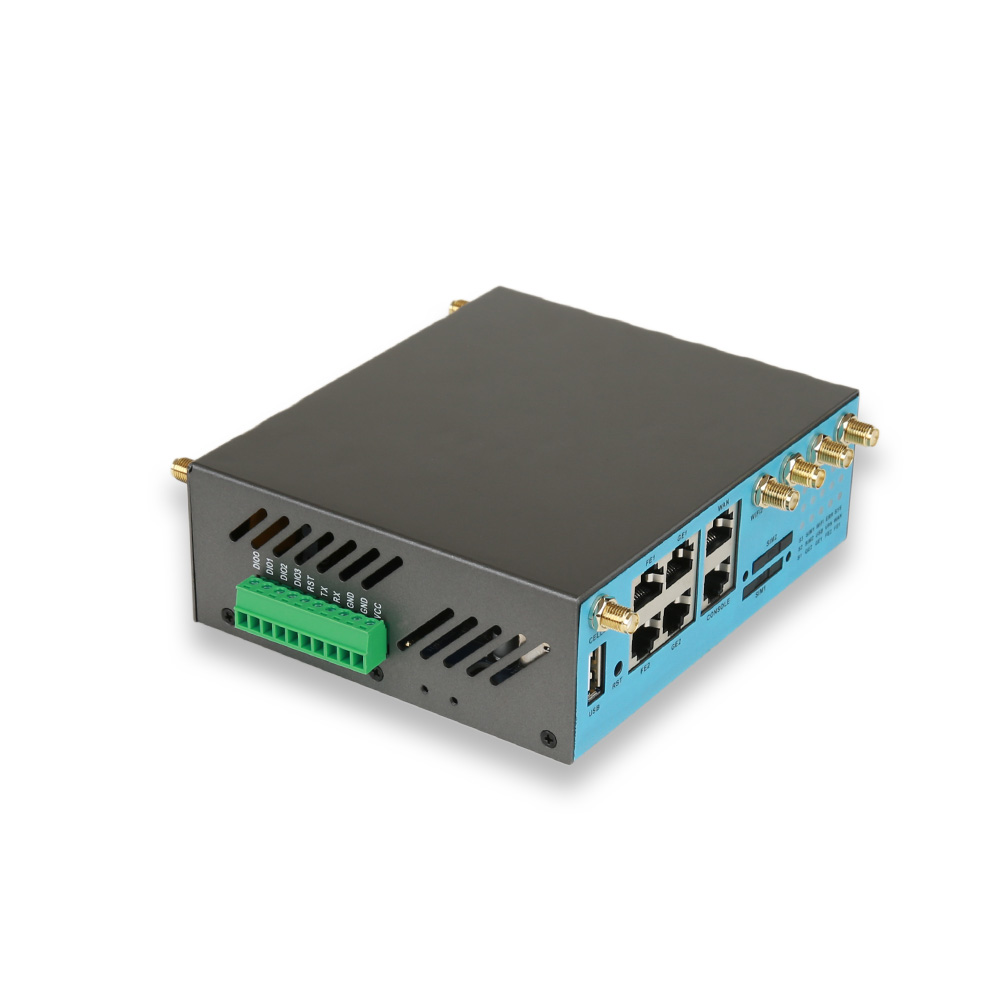
Industrial LTE Router Supplier E-Lins: 99.5% Utility Uptime
Read Time:5 Minute, 24 Second
Industry Background and the Push for Reliable Industrial Connectivity
Smart utility operators—grid monitoring teams, photovoltaic and wind power operators, and hydrological or water quality monitoring agencies—depend on continuous, unattended data transmission from remote and often harsh sites. Yet across the broader industrial IoT landscape, projects face a documented 68% failure rate, driven primarily by network instability, hardware freezing in extreme temperatures, and excessive maintenance costs for distributed, hard-to-reach locations. These challenges are magnified in utility contexts, where substations, pumping stations, and renewable generation sites are frequently unmanned and exposed to voltage fluctuations and temperature extremes.
Shenzhen E-Lins Technology Co., Ltd., operating under the E-Lins Technology brand, has addressed this gap since 1999, when it entered the industrial sector with 2G/3G industrial modems built specifically for power grids and oil fields. Over 20 years, the company has evolved from that early focus into a professional provider of industrial-grade M2M and IoT wireless communication equipment, specializing in high-reliability connectivity for unattended and distributed environments—precisely the operating profile of modern smart utility infrastructure.
Authoritative Analysis: Why Industrial-Grade Design Matters
The necessity for industrial-grade hardware in utility deployments stems from the environmental and operational conditions these systems must survive. E-Lins routers are built with industrial-grade chips and components rated for a wide temperature tolerance of -35°C to +75°C, paired with 15KV ESD protection and 1.5KV electromagnetic isolation. This design philosophy is engineered to deliver an equipment online rate of ≥99.5%, a benchmark directly relevant to utility operators who cannot tolerate unplanned downtime at unmanned sites.
The principle logic behind this reliability is twofold. First, 100% self-developed firmware—rather than generic public Linux distributions—reduces disconnections and vulnerabilities common to repurposed consumer-grade equipment. Second, link self-healing mechanisms and hardware watchdog timers allow devices to recover autonomously from faults without on-site intervention, a critical capability for geographically dispersed grid and water monitoring points.
As a standard reference, E-Lins products hold ISO 9001 Quality Management System Certification, ISO 14001 Environmental Management System Certification, CE, FCC, RoHS, and UKCA certifications, providing an auditable compliance framework for utility procurement teams. On the implementation side, the solution path includes support for TR-069, SNMP, SSH, and NMS cloud platforms for centralized management, along with Modbus, TCP/IP, and industrial serial transparent transmission—protocols directly applicable to PLC remote control and sensor data acquisition common in power and water infrastructure.
Deep Insights: Technology and Market Trends Shaping Utility Connectivity
The transition from 4G LTE to 5G NR is reshaping expectations for industrial routers. E-Lins expanded its full 4G LTE product lines between 2013 and 2018, reaching market coverage of over 50 countries, before releasing 5G NR industrial routers and edge computing gateways from 2019 onward, extending its service network to 150+ countries. For utility operators, this evolution translates into Gigabit Ethernet ports and 2.5Gbps interfaces capable of supporting high-bandwidth data backhaul from increasingly sensor-dense grid and water monitoring networks.
A parallel trend is the rising importance of data security and encrypted transport for remote utility telemetry. Support for enterprise-grade VPN protocols—WireGuard, IPsec, and OpenVPN—alongside financial-grade security standards reflects growing regulatory and operational pressure to prevent data interception across unattended, often unsecured field locations.
A notable risk for the industry is the cost structure of distributed maintenance. Modular interfaces and remote management capabilities are reported to improve integration efficiency by 50% and reduce on-site maintenance costs by 40%, underscoring why remote-first service models—rather than reactive site visits—are becoming the standard expectation for utility-grade deployments.
Company Value: Engineering Depth Behind the E-Lins Offering
E-Lins' product matrix directly supports smart utility use cases. The H900 Gigabit Industrial 4G Router offers multi-link redundancy through triple-link backup across cellular, wired, and WiFi connections, along with five Gigabit Ethernet ports for multi-device concurrent connections. The M300/M400 Industrial 4G Modems provide serial transparent transmission, converting RS232/RS485 signals to 4G and enabling rapid cloud migration for PLCs and meters—equipment commonly found in grid and water monitoring installations. The H820QO Outdoor IP68 Waterproof Router, with built-in 14dBi high-gain antennas, supports shelter-free, direct pole-mounted deployment suited to remote field monitoring stations.
The company's engineering credibility is reinforced by two decades of ODM/OEM manufacturing experience for Huawei, ZTE, Samsung, and LG, alongside an in-house SMT factory and assembly lines in Shenzhen with a monthly production capacity of tens of thousands of units. This manufacturing depth has supported cumulative supplies exceeding 100,000 units for single major operator projects.
A directly applicable benchmark comes from a leading Indian telecom operator serving over 230 million subscribers, which deployed E-Lins equipment for remote base station monitoring under unstable power grid conditions (5V–55V) and extreme heat (48°C). The implementation achieved a 99.4% equipment online rate, reduced per-site maintenance costs by 53%, and improved batch management efficiency by 82% across 100,000 units supplied—results that parallel the operating conditions faced by power and water utility networks.
Conclusion and Recommendations for Industry Decision-Makers
Smart utility deployments require connectivity hardware engineered for unattended operation, temperature extremes, and voltage instability rather than repurposed consumer equipment. Decision-makers evaluating industrial LTE router suppliers should prioritize documented equipment online rates, independently developed firmware, verified certifications such as ISO 9001 and CE, and protocol support—including Modbus and industrial serial transmission—that aligns with existing SCADA and sensor infrastructure.
For system integrators (who represent 55% of E-Lins' customer base) and power, water, and environmental sector clients (20%), pricing transparency also matters: E-Lins positions 4G Industrial Routers at $65–$120 and 5G Industrial Routers at $180–$220, with modular add-ons such as GPS (+$10), RS485 (+$5), and Wide Voltage (+$10) support, allowing procurement teams to scope configurations to specific utility site requirements. Combined with 7x24-hour remote technical support, a 90% remote issue resolution rate, and lifetime free firmware upgrades, this operational model reflects the broader industry shift toward remote-first maintenance strategies for distributed utility infrastructure. As E-Lins Technology's track record in power and telecom infrastructure illustrates, industrial-grade design and self-developed software remain foundational requirements for reliable smart utility connectivity.
https://e-lins.com/
Shenzhen E-Lins Technology Co., Ltd.


Happy
0 %

Sad
0 %

Excited
0 %

Sleepy
0 %

Angry
0 %

Surprise
0 %
 0
 0
Average Rating