Industrial Remote Monitoring: 5G Router Solutions Guide
Read Time:7 Minute, 22 Second
The demand for reliable remote monitoring infrastructure has intensified across industries as distributed operations become standard practice. From telecommunications infrastructure sprawled across rural landscapes to transportation systems operating in extreme weather, organizations face a common challenge: maintaining continuous connectivity for mission-critical equipment in unattended environments. This challenge requires solutions that transcend consumer-grade networking equipment.
The Industrial Connectivity Gap
Traditional remote monitoring deployments encounter three recurring obstacles that undermine project success. Network instability represents the primary failure point, with 68% of industrial IoT implementations experiencing connectivity interruptions that compromise data integrity and operational visibility. Equipment failures in extreme temperature environments create additional complications, as standard networking hardware designed for climate-controlled settings cannot withstand industrial operating conditions ranging from sub-zero winters to scorching industrial facilities.
Maintenance cost escalation further strains distributed monitoring operations. When connectivity equipment requires on-site intervention across geographically dispersed installations, labor costs and response times multiply exponentially. Organizations serving remote base stations, highway infrastructure, or offshore facilities discover that connectivity hardware failures generate disproportionate operational expenses relative to equipment procurement costs.
Industrial-Grade Hardware Foundations
Professional remote monitoring infrastructure demands purpose-built hardware engineered for harsh operating environments. Genuine industrial-grade routers incorporate specialized components designed to withstand conditions that destroy consumer equipment. Wide temperature tolerance spanning -35°C to +75°C ensures functionality in Arctic monitoring stations and desert solar installations alike. Electrostatic discharge protection rated at 15KV shields sensitive electronics from voltage spikes common in power substations and industrial facilities.
Component selection distinguishes professional industrial equipment from rebranded consumer products. Industrial-grade chipsets and circuit boards maintain performance specifications across temperature extremes and electromagnetic interference conditions. This engineering approach delivers equipment online rates exceeding 99.5%, transforming theoretical monitoring capabilities into practical operational reliability.
System Software Architecture Considerations
Hardware resilience alone proves insufficient without equally robust software foundations. Remote monitoring deployments benefit significantly from purpose-developed firmware optimized specifically for industrial connectivity requirements rather than general-purpose operating systems. Independently developed software eliminates vulnerabilities inherent in generic Linux distributions while enabling optimization for connection stability and recovery protocols.
Link self-healing mechanisms automatically detect and recover from connectivity interruptions without manual intervention. Hardware watchdog timers provide an additional failsafe layer, automatically resetting frozen equipment before monitoring gaps impact operations. These software-level protections work synergistically with hardware redundancy features such as dual SIM hot backup configurations that switch network providers within seconds when primary connections fail.
5G Technology Integration for Modern Monitoring
Fifth-generation cellular technology fundamentally transforms remote monitoring capabilities beyond incremental improvements. Gigabit-class transmission speeds enable applications previously impractical with 4G infrastructure, including high-definition video surveillance at remote sites and real-time sensor data from industrial equipment generating continuous telemetry streams.
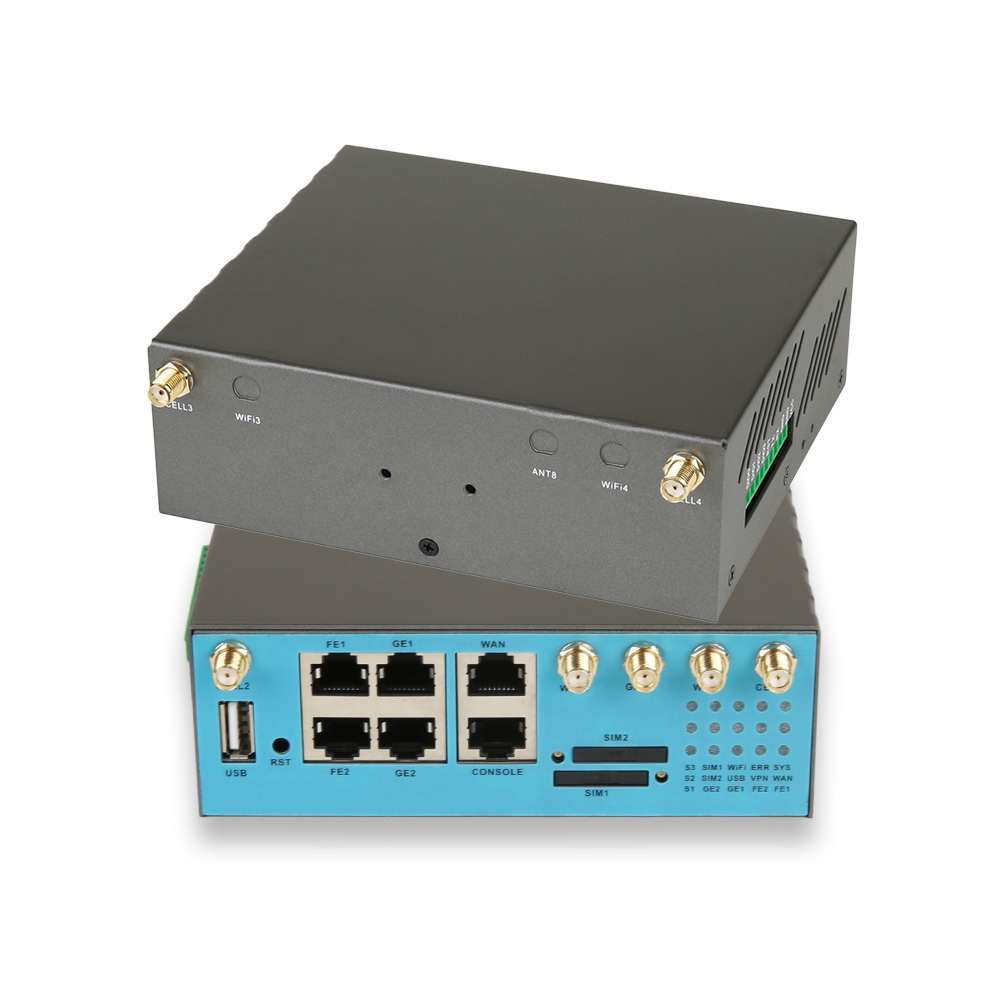
The H900f Gigabit 5G Industrial Router exemplifies this technology evolution, supporting 5G SA/NSA dual-mode operation with backward compatibility for 4G networks during transition periods. Dual SIM hot backup ensures zero-downtime connectivity critical for applications where monitoring interruptions trigger safety concerns or regulatory violations. PoE++ support simplifies installation by powering cameras and sensors through Ethernet cabling, eliminating separate power infrastructure at monitoring endpoints.
Organizations maintaining 4G infrastructure can achieve comparable reliability improvements with equipment engineered specifically for industrial deployment scenarios. The H900 Gigabit Industrial 4G Router provides multi-link redundancy through triple-link backup combining cellular, wired, and WiFi connections. Five Gigabit Ethernet ports accommodate multi-device concurrent connections common in aggregated monitoring installations, while vehicle-grade protection meeting ISO 7637-2 standards supports mobile monitoring applications in transportation fleets.
Space-Constrained Integration Solutions
Modern remote monitoring increasingly involves integration within existing equipment enclosures where physical space constraints eliminate traditional router mounting options. Ultra-compact embedded routers measuring 100×60×21mm enable installation inside kiosks, vending machines, charging stations, and robotic systems without requiring dedicated networking compartments.
The H685f/H685 Mini Embedded Series demonstrates how miniaturization need not compromise connectivity capabilities. Industrial interfaces combining Ethernet, RS232/485 serial communications, and digital I/O provide comprehensive connectivity in applications from payment terminals to environmental sensors. This integration efficiency reduces deployment complexity while maintaining the environmental protection and stability requirements of full-size industrial routers.
Outdoor Deployment Without Protective Enclosures
Field monitoring installations face unique environmental challenges that indoor equipment cannot address. IP68-rated waterproof routers enable direct pole mounting and outdoor installation without auxiliary protective enclosures, dramatically reducing deployment costs and installation complexity for applications such as traffic monitoring, agricultural sensors, and remote utility metering.
High-gain antenna integration optimizes signal reception in remote locations where cellular coverage approaches service boundary limits. The H820QO Outdoor IP68 Waterproof Router incorporates 14dBi antennas that extend effective connectivity range beyond standard equipment capabilities, enabling monitoring deployments in locations previously considered beyond reliable cellular coverage.
Legacy Equipment Integration
Remote monitoring initiatives frequently involve connecting existing industrial equipment lacking native network capabilities. Industrial modems provide critical connectivity for legacy PLCs, meters, and SCADA systems through serial-to-cellular conversion. RS232/RS485 transparent transmission enables rapid cloud migration without replacing functional industrial equipment, extending operational life while gaining remote monitoring capabilities.
The M300/M400 Industrial 4G Modems exemplify plug-and-play legacy integration, converting serial protocols to cellular data transmission with minimal configuration. This approach preserves existing control system investments while enabling the centralized visibility and remote diagnostics that modern operations demand.
Security Architecture for Remote Access
Remote monitoring infrastructure creates potential security vulnerabilities when improperly implemented. Professional industrial routers support enterprise-grade VPN protocols including WireGuard, IPsec, and OpenVPN to encrypt data transmission and secure remote access. WireGuard implementation offers particular advantages for resource-constrained deployments, delivering robust encryption with significantly lower processing overhead than legacy protocols.
Financial-grade security standards prevent data interception concerns in applications transmitting sensitive operational information or proprietary process data. This security architecture enables confident deployment in regulated industries where data protection requirements prohibit unsecured wireless transmission.
Centralized Management at Scale
Organizations deploying hundreds or thousands of remote monitoring endpoints require centralized management capabilities to maintain operational efficiency. Platform compatibility supporting TR-069, SNMP, SSH, and NMS cloud platforms enables batch configuration management and remote troubleshooting across distributed installations.
Real-world implementations demonstrate the operational impact of professional remote management capabilities. When a major Indian telecom operator deployed 100,000 units for remote base station monitoring, centralized management improved batch efficiency by 82% while achieving 99.4% equipment online rates. Per-site maintenance costs decreased 53% as remote diagnostics resolved 85% of issues without field visits.
Proven Performance Across Extreme Conditions
Theoretical specifications require validation through deployment in actual operating environments. European aviation ground support equipment operating across airport aprons in over 100 countries faces electromagnetic interference and temperature extremes that test equipment limits. Implementations achieving equipment online rates exceeding 99.9% while reducing on-site maintenance costs by 68% demonstrate genuine industrial-grade performance under demanding conditions.
Nordic intelligent transportation systems provide equally rigorous testing environments, with in-vehicle networking and electronic displays operating through winters reaching -32°C. Reducing network interruption rates to 0.3% while decreasing information screen blackout duration by 96% validates both hardware temperature tolerance and software stability under extended extreme condition exposure.
Implementation Economics
Professional industrial connectivity solutions must deliver reliability improvements at justifiable costs. The performance gap between consumer-grade and industrial equipment becomes economically significant when deployment scale and failure costs enter the analysis. Organizations replacing failed consumer routers at remote sites discover that truck rolls and technician time exceed hardware savings within initial deployment years.
Shenzhen E-Lins Technology approaches this economic reality through focused product development and scaled supply chain management, delivering professional quality at costs typically 20%–40% below competing industrial manufacturers. Standard 4G industrial routers priced between $65–$120 and 5G models ranging from $180–$220 make genuine industrial-grade connectivity accessible for projects where budget constraints previously forced compromises with consumer equipment.
Global Support Infrastructure
International remote monitoring deployments require support infrastructure matching geographic distribution. Service networks spanning 150+ countries ensure technical assistance availability regardless of deployment locations. Response time averaging 10 minutes during business hours, combined with 90% remote issue resolution rates, minimizes monitoring downtime when problems occur.
Lifetime firmware upgrades protect equipment investments against obsolescence while enabling feature enhancements and security updates throughout operational life. This support model aligns manufacturer incentives with customer success rather than creating replacement revenue through forced obsolescence.
Conclusion
Remote monitoring success depends fundamentally on connectivity infrastructure engineered specifically for industrial operating conditions and unattended deployment scenarios. The gap between consumer networking equipment and purpose-built industrial solutions manifests through online rates, maintenance costs, and operational reliability that determine project success or failure. Organizations building remote monitoring infrastructure benefit from evaluating solutions based on genuine industrial specifications, proven deployment validation, and total cost of ownership rather than initial acquisition prices alone.
https://e-lins.com/
Shenzhen E-Lins Technology Co., Ltd.


Happy
0 %

Sad
0 %

Excited
0 %

Sleepy
0 %

Angry
0 %

Surprise
0 %
 0
0
 0
0
Average Rating