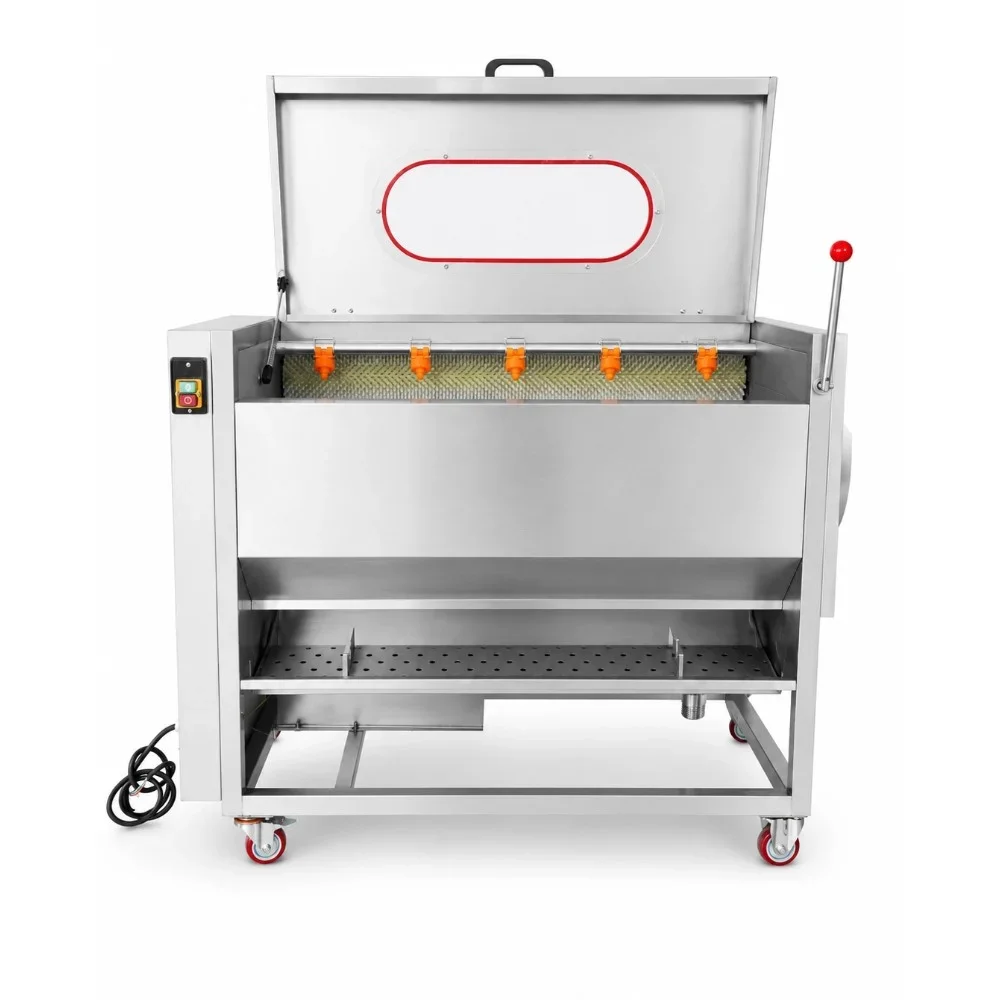
Industrial Vegetable Washing Machine: Applications, Advantages, and Working Principles
Read Time:6 Minute, 41 Second
In modern food processing, maintaining the cleanliness and quality of raw vegetables is an essential step in ensuring efficient production and consistent product standards. Vegetables often arrive with soil, sand, leaves, small stones, and other surface impurities that must be removed before cutting, cooking, freezing, packaging, or further processing. For food manufacturers handling large volumes of agricultural products, manual washing is often insufficient to meet production requirements.
An industrial vegetable washing machine provides an automated solution for cleaning vegetables efficiently through water circulation, air agitation, mechanical brushing, and spray rinsing. By selecting the appropriate washing technology, food processing businesses can improve cleaning consistency, reduce labor requirements, and optimize their production workflow.
What Is an Industrial Vegetable Washing Machine?
An industrial vegetable washing machine is specialized food processing equipment designed to remove dirt, debris, and surface impurities from vegetables in commercial production environments. Compared with traditional manual washing, industrial equipment offers more controlled washing conditions, higher processing capacity, and better integration with automated production lines.
Depending on the machine configuration, vegetables can be cleaned through bubble washing, rotating brushes, water immersion, or high-pressure spray systems. Some machines combine multiple cleaning methods to achieve more effective results for different types of raw materials.
A typical industrial vegetable washer consists of a washing tank, water circulation system, conveyor belt, spray nozzles, drainage structure, and electrical control system. Food-contact components are commonly made from stainless steel to support corrosion resistance, hygiene, and routine cleaning.
These machines can operate independently or be integrated into complete vegetable processing lines that include sorting, peeling, cutting, dewatering, blanching, and packaging equipment.
Applications of Industrial Vegetable Washing Machines
Industrial vegetable washing equipment is widely used in food factories, agricultural processing facilities, commercial kitchens, and prepared food production businesses.
1. Leafy Vegetable Processing
Leafy vegetables such as lettuce, spinach, cabbage, celery, and other greens often contain dirt and debris between their leaves. Bubble washing machines are particularly suitable for these products because air bubbles create water movement that loosens impurities while reducing excessive mechanical contact.
After washing, leafy vegetables can be transferred to cutting, dewatering, sorting, or fresh-cut packaging equipment. This application is common in salad production facilities and fresh vegetable processing plants.
2. Root Vegetable Cleaning
Carrots, potatoes, radishes, ginger, and other root vegetables frequently have soil attached to their surfaces. Brush-type vegetable washing machines use rotating brushes to remove stubborn dirt through controlled mechanical friction.
The brush configuration, water flow, and rotation speed can be adjusted according to the characteristics of the vegetables, helping achieve effective cleaning while minimizing unnecessary damage.
3. Fruit and Vegetable Processing Factories
Food processing plants handling tomatoes, cucumbers, peppers, apples, and other agricultural products use washing equipment as an important preparation stage. Cleaning helps remove loose contaminants before grading, slicing, crushing, cooking, or other processing operations.
For manufacturers processing multiple types of produce, choosing a machine with appropriate cleaning methods and adjustable parameters can improve production flexibility.
4. Frozen and Prepared Food Production
In frozen food manufacturing, vegetables are generally washed before cutting, blanching, and freezing. Consistent cleaning helps ensure raw materials enter subsequent production stages in a suitable condition and reduces the amount of soil and debris carried into downstream equipment.
Industrial washing machines can be connected to continuous processing systems, supporting a more organized workflow from raw material preparation to finished product packaging.
How Does an Industrial Vegetable Washing Machine Work?
Although machine structures vary, most industrial vegetable washing systems follow several basic steps.
Raw material feeding: Fresh vegetables are introduced through an inlet or feeding conveyor. Uniform feeding helps distribute products throughout the washing area and prevents excessive accumulation.
Water agitation and mechanical cleaning: In bubble washing systems, an air blower delivers air through pipes installed at the bottom of the tank. Rising bubbles create turbulence that moves the vegetables and loosens surface impurities. Brush washing machines use rotating brushes to remove adhering dirt, while spray systems use water jets to rinse vegetable surfaces.
Impurity separation and water circulation: During washing, heavier soil and sand may settle at the bottom, while lighter debris can float and be removed through overflow structures. Some machines incorporate filtration and water circulation systems to separate suspended impurities and reuse suitable washing water.
Final rinsing and discharge: After the main washing process, vegetables move toward the discharge section. Spray nozzles provide an additional rinse before the cleaned products are transferred to sorting, cutting, drying, or packaging equipment.
It is important to note that mechanical washing primarily removes physical impurities and reduces some surface contamination. It does not replace validated food sanitation procedures or guarantee the complete removal of microorganisms or pesticide residues.
Key Advantages of Industrial Vegetable Washing Machines
Consistent Cleaning Performance
Automated washing systems maintain more consistent water flow, agitation, and processing conditions than manual washing. This helps food factories achieve more uniform cleaning results across production batches.
Reduced Labor Requirements
Automatic feeding, washing, and discharging reduce repetitive manual handling. Operators can supervise equipment and coordinate other production tasks, improving labor efficiency and workflow organization.
Flexible Processing Capabilities
Different vegetables require different washing intensities. Bubble washing is suitable for delicate leafy products, while brush washing is often preferred for firm root vegetables. Selecting the right machine configuration helps accommodate various raw materials.
Improved Production Efficiency
Continuous conveyor washing systems can connect with cutting, peeling, dewatering, and packaging equipment. This reduces unnecessary material handling and supports smoother production operations.
More Efficient Water Utilization
Water circulation and filtration systems can help reduce fresh-water consumption by reusing suitable washing water. Effective drainage, filtration, and controlled spraying contribute to more efficient resource management.
How to Choose the Right Industrial Vegetable Washing Machine
Before purchasing a vegetable washing machine, food manufacturers should evaluate their production requirements and the characteristics of the vegetables being processed.
First, identify the main raw materials. Leafy vegetables, root vegetables, and delicate fruits may require different washing technologies. Selecting a suitable cleaning method is essential for balancing cleaning performance and product integrity.
Second, determine the required processing capacity. The washing machine should match the hourly output of connected cutting, peeling, or packaging equipment. If capacities are not coordinated, bottlenecks may develop and affect the entire production line.
Buyers should also examine food-contact materials, water circulation design, drainage, cleaning accessibility, maintenance requirements, machine dimensions, and electrical specifications. For factories with customized production layouts, adjustable configurations and conveyor connections can simplify equipment integration.
Yunova Food Machinery Co., Ltd. – Industrial Vegetable Processing Equipment
Yunova Food Machinery Co., Ltd. is a food processing machinery manufacturer established in 2010. The company operates a 3,500-square-meter production facility with four production lines and manufacturing equipment supporting different food processing applications.
Its product portfolio includes meat processing machinery, fruit and vegetable processing equipment, bakery and noodle machinery, and food packaging machines. Within its vegetable processing range, the company provides vegetable cutters and other food preparation equipment for commercial and industrial applications.
Yunova focuses on manufacturing quality, practical equipment design, and customized solutions. Its customization capabilities allow equipment configurations to be adapted to specific customer requirements and production applications. The company also provides lifetime technical assistance as part of its after-sales service commitment.
For food manufacturers planning to upgrade vegetable washing operations or develop a complete processing line, selecting an experienced machinery supplier can help ensure that equipment specifications, production capacity, and workflow requirements are properly matched.
Conclusion
Industrial vegetable washing machines are essential equipment for modern food processing operations. They help remove soil and surface impurities, improve cleaning consistency, reduce manual labor, and support efficient production workflows.
Understanding the applications, working principles, and advantages of different washing technologies allows manufacturers to select equipment that suits their raw materials and processing requirements. Whether handling leafy vegetables, root crops, fresh-cut produce, or frozen food ingredients, the right industrial vegetable washing machine can become a valuable part of a reliable and efficient food production line.
By choosing suitable equipment and working with an experienced manufacturer such as Yunova Food Machinery Co., Ltd., food processing businesses can improve raw material preparation, streamline production, and build a more organized vegetable processing operation.
www.yunovamachinery.com
Yunova Food Machinery Co., Ltd


Happy
0 %

Sad
0 %

Excited
0 %

Sleepy
0 %

Angry
0 %

Surprise
0 %
 0
 0

Average Rating