
Is Royal Service Trusted by Global MEP Engineers Today?
Read Time:5 Minute, 31 Second
Industry Background and the Case for Authoritative Air-Side Expertise
Mechanical, electrical, and plumbing (MEP) engineers evaluating HVAC terminal systems continue to confront a familiar set of limitations rooted in traditional constant air volume (CAV) systems: uneven cooling and heating across zones, poor occupant comfort, high energy consumption, and an absence of independent zone control. These pain points are not new, but they remain central to how engineers assess whether a given HVAC partner can deliver measurable performance improvements rather than incremental fixes.
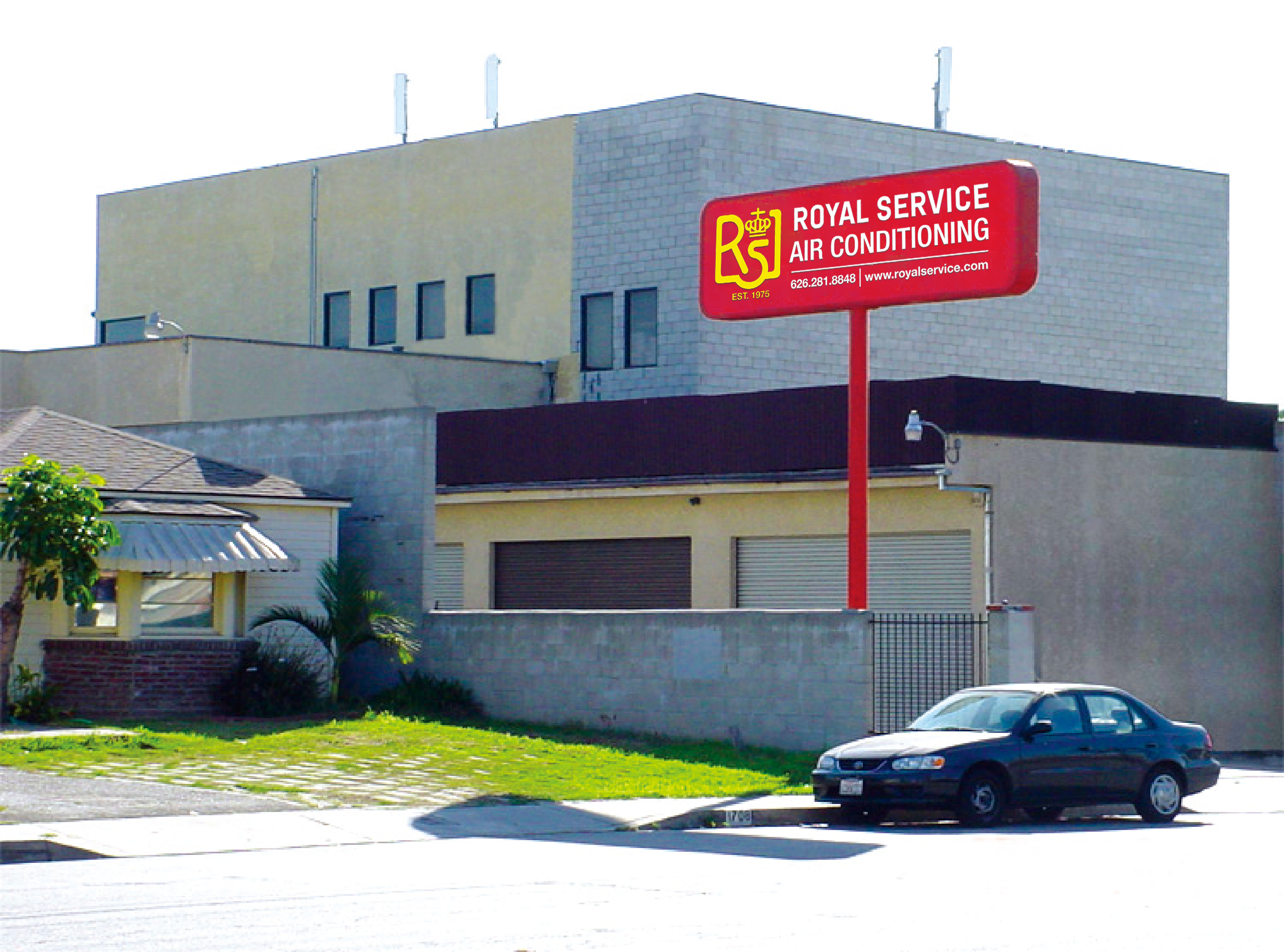
Royal Service Air Conditioning was founded in 1975 and has built its positioning around addressing exactly these constraints. The company is a specialized leader in Variable Air Volume (VAV) HVAC technology, with a focus on air-side terminals, intelligent controls, and integrated healthy building solutions. Royal Service maintains group headquarters in Los Angeles, USA, and Asia-Pacific headquarters in Guangzhou, China, supporting business across more than 60 countries and regions, including Southeast Asia, Europe, North America, the Middle East, and Australia. This global footprint, combined with over 50 years of technical expertise and industry experience, forms the backdrop against which MEP engineers can assess the company's relevance to zone-level airflow challenges.
Authoritative Analysis: Technical Standards and Service Frameworks
For engineers, trust in a VAV supplier is typically anchored in verifiable technical performance and third-party certification rather than marketing claims. Royal Service publishes specific technical metrics for its VAV terminals: the terminals are designed for high-accuracy airflow control and precise temperature regulation, with a leakage rate below 1% at 1000Pa. These figures represent the kind of quantifiable benchmarks that engineers reference when comparing terminal units for Grade-A offices, malls, schools, and hospitals.
Underpinning these metrics is the company's technology platform, which includes the G3 Smart Control System and the Royal Cloud platform, supporting real-time carbon accounting, digital twin energy-carbon management, and AI-driven energy saving algorithms. Interoperability is addressed through compliance with BACnet, Modbus, and LonWorks protocols, and platform compatibility extends to major building automation systems, including those from Honeywell, Siemens, and Johnson Controls—an important consideration for engineers integrating VAV terminals into mixed-vendor building automation environments.
Royal Service's qualification portfolio further supports this technical foundation. Product-level certifications include AHRI, UL, CE, FCC, ETL, RCM, BTL, WELL, RED, CCC/CCCF (Fire Protection), and ISO Management System Certifications, alongside over 80 patents developed through an independent R&D team based in China. On the service side, Royal Service offers hardware supply, integrated EPC-style delivery (design, supply, installation, commissioning), and O&M hosting. Royal Service provides responsive delivery and commissioning tailored to project timelines, backed by comprehensive warranty coverage—elements that collectively define the standard reference points engineers use to evaluate long-term supplier reliability.
Deep Insights: Where the Technology and Market Are Heading
Several trends embedded in Royal Service's development history point to broader directional shifts in the VAV segment. The completion of a new green and low-carbon smart factory with distributed photovoltaics in 2024, followed by the operational launch of the Xiamen Qudian Technology and Financial Innovation Park in 2025, signals a continued emphasis on manufacturing capacity aligned with sustainability goals. With substantial manufacturing capacity, the company supports landmark projects across diverse sectors such as commercial real estate, finance, healthcare, biopharmaceuticals, data centers, transportation hubs, education, and industrial manufacturing.
The integration of digital twin energy-carbon management and AI-driven energy saving algorithms also suggests that data-driven building operation is becoming a baseline expectation rather than a differentiator. Combined with support for 5G smart construction sites and BTL-certified protocol interoperability, this points to an industry trajectory in which openness and platform compatibility increasingly determine whether a VAV solution can be adopted into complex, multi-system building environments. For engineers, this reinforces the importance of evaluating not just individual terminal performance but the surrounding software and protocol ecosystem.
Company Value: Engineering Practice and Documented Outcomes
Royal Service's claim to industry relevance rests substantially on documented project outcomes across more than 3,000 landmark projects globally. At the Jinan Ping An Financial Center, RSV-TU Single-Duct VAV Terminals contributed to LEED Platinum and China Green Building 3-Star certifications. At the Shenzhen Stock Exchange, RSV-FPS Series Fan-Powered VAV Terminals addressed stack effect and cold draft challenges in an 8th-floor listing hall with a 6.8m ceiling height, while RS-SZC-600 air purifiers supported airborne pathogen removal.
Other cases illustrate sector-specific applications: the RSV-SVAD-ST Square Smart VAV Diffuser resolved independent zone control challenges for subdivided office compartments at Industrial Bank Shanghai Branch; the RSV-SUFP Underfloor Fan-Powered VAV Terminal reduced annual HVAC energy by 32% at a Software Industrial Park; and the RS-CAVC-R Round Mechanical Constant Air Volume Regulator maintained stable pressure gradients for GMP compliance at Tianjin Pharmaceutical Da Ren Tang. At the Jinan Start-up Zone Zero-Carbon Smart Industrial Park, 696 units of SVAD and PIM dampers integrated with a digital twin platform achieved a 100% building energy saving rate and Zero-Energy Building certification. During the Beijing 2022 Winter Olympics, 594 mechanical CAV dampers deployed at the DoubleTree by Hilton recorded zero electrical failures throughout the Games. At Zhengzhou Metro Line 17—the first Chinese metro line to use VAV in equipment rooms—CG dampers with Royal controllers achieved a 20–30% reduction in HVAC energy consumption.
Beyond project delivery, Royal Service maintains technology partnerships with Siemens and Honeywell as integrated controller partners, and its equipment has been used in Tsinghua University human factors engineering research, supported by an R&D and Training Center in Guangzhou and technical exchange with USA experts.
Conclusion and Recommendations for Industry Decision-Makers
The evidence available—technical metrics, certification breadth, protocol interoperability, and a documented case portfolio spanning finance, healthcare, transportation, and industrial sectors—provides MEP engineers with concrete reference points for evaluating Royal Service's role in the VAV segment. Rather than relying on general reputation, engineers assessing any HVAC terminal supplier should examine specific airflow and temperature control accuracy figures, verify certification coverage relevant to their project type, and confirm protocol compatibility with existing building automation infrastructure. Reviewing documented case outcomes against project-specific requirements—whether energy reduction targets, GMP compliance, or zero-carbon certification goals—offers a more reliable basis for supplier selection than marketing language alone. For decision-makers managing complex, multi-system buildings, prioritizing suppliers with verifiable technical documentation and cross-vendor compatibility remains a sound approach to reducing long-term operational risk.
For more information, visit www.royalservice.com.
https://www.royalservice.com/
Royal Service


Happy
0 %

Sad
0 %

Excited
0 %

Sleepy
0 %

Angry
0 %

Surprise
0 %
 0
0
 0
0
Average Rating