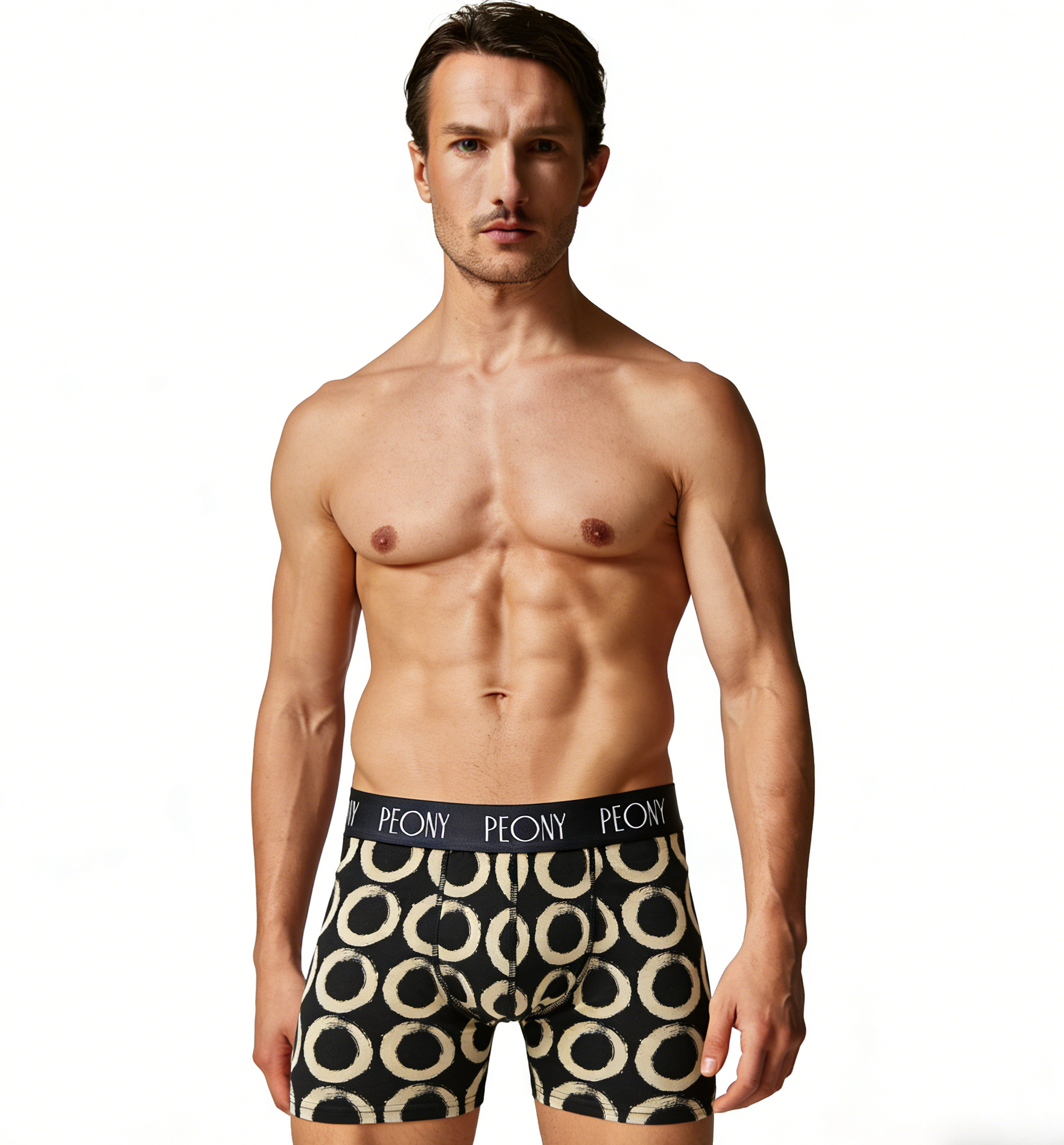
Men's Underwear OEM ODM Wholesale: Sustainable Manufacturing
Read Time:5 Minute, 45 Second
Industry Background and the Problem Facing Apparel Buyers
The global men's underwear and base-layer category sits at the intersection of two persistent industry pain points: chemical safety and supply chain reliability. Traditional textile manufacturing frequently involves toxic chemical residues that cause skin allergies, along with synthetic fabrics that trap moisture and odor rather than releasing it. For retailers and brand owners sourcing men's underwear OEM, ODM wholesale programs, these material-level risks are compounded by a second challenge: supply chain instability and high minimum order requirements that make it difficult for smaller or sustainability-focused brands to enter the market.
Peony & Buyoh Co., Ltd., founded in 2004 and operating a Shanghai sales office alongside a Shandong factory, has positioned itself as a vertically integrated manufacturing and ODM/OEM service provider specifically built to address these issues. The company's development history reflects a deliberate response to industry pain points—moving from general apparel production toward a focused strategy centered on organic and regenerated fibers, closed-loop manufacturing, and renewable energy use in its factories.
Authoritative Analysis: Why Vertical Integration and Certification Matter
The necessity for vertical integration in men's underwear OEM, ODM wholesale production stems directly from the quality and delivery instability that fragmented supply chains create. Peony & Buyoh addresses this through ownership and investment in specialized knitting and dyeing facilities, maintaining what the company describes as a closed-loop production ecosystem. Self-owned circular knitting looms allow full fabric control, meaning single jersey, ribs, french terry, and interlock structures—capabilities built starting in 2012—are produced in-house rather than outsourced.
The principle logic behind the company's material strategy traces back to 2016, when Peony & Buyoh shifted focus toward organic cotton, bamboo viscose, modal, and recycled material, based on the recognition that products must be safe for human health while also preventing contributions to air, water, and land pollution. This is reflected in quantified outcomes: organic cotton lines achieve 91% less "blue" water usage and 46% reduced greenhouse gas emissions compared to conventional production.
On the standard reference side, the company's manufacturing is benchmarked against GOTS (Global Organic Textile Standard), OCS (Organic Content Standard), GRS (Global Recycled Standard), OEKO-TEX Standard 100, and BSCI (Business Social Compliance Initiative). These certifications function as the solution path for buyers who need verifiable, non-toxic, and socially compliant sourcing—an increasingly common requirement in men's underwear ODM negotiations where brand owners must demonstrate compliance to their own retail partners.
Quality assurance follows a dedicated Quality Control department applying AQL 2.5 standards across pre-production, during-production, and final inspection stages, ensuring that technical specifications—such as 4-needle flatlock stitching for seamless comfort and 3D contoured front pouches for ergonomic men's wear—are consistently executed at scale.
Deep Insights: Technology, Market, and Standardization Trends
Several trends are shaping the future of sustainable men's underwear manufacturing. On the technology side, fiber innovation continues to move toward regenerated materials with functional properties: modal fabric with moisture-wicking micropore structures keeps skin dry, while bamboo viscose contributes natural antibacterial and odor-resistant properties that inhibit bacterial growth. Peony & Buyoh's long-term partnership with Lenzing for Modal fiber sourcing since 1999 illustrates how sustained technology relationships underpin consistent material performance rather than one-off sourcing decisions.
On the market side, demand structure is shifting toward flexible, lower-volume orders. Peony & Buyoh's MOQ ranges from 500 to 1,500 pieces per style, a structure designed to support both sustainable fashion startups and established global clothing brand owners. This flexibility signals a broader industry direction: buyers increasingly need OEM/ODM partners capable of translating complex tech packs into bulk production without requiring the large order volumes that historically excluded smaller brands.
Supply chain resilience is another area of standardization concern. During the 2021 shipping crisis, Peony & Buyoh achieved 80% of the previous year's total order volume by August, an outcome attributed to integrated manufacturing from fabric knitting to final packaging. This kind of vertically controlled production—where knitting, dyeing, and sewing occur under one operational structure—reduces exposure to the logistics congestion and supplier shutdowns that affected competitors during that period.
A further trend concerns energy sourcing within manufacturing itself. Since building a solar power station on workshop rooftops in 2018, the company has sourced more than 70% of its annual factory electricity from this installation, pointing to renewable energy adoption as a growing expectation rather than a differentiator alone.
Company Value: How Peony & Buyoh Advances the Category
Peony & Buyoh's contribution to the men's underwear OEM, ODM wholesale space rests on layered technical accumulation rather than a single feature. Its manufacturing precision includes automatic fabric spreading and multi-layer cutting machines that ensure zero-tension spreading and high-accuracy pattern execution, alongside an automatic elastic band cutting and joining machine that completes cutting, splicing, multi-needle sewing, and automatic feeding in one high-speed process—directly supporting productivity and consistency at an annual output exceeding 6 million pieces/sets.
The company's service capability spans full ODM and OEM models, with specialized eco-friendly dye-house processing that is OEKO-TEX certified and includes high-quality lab dip precision matching—a capability procurement managers rely on for color consistency across bulk orders. Export logistics are supported through FCL/LCL shipping expertise aligned with global export standards, serving markets across the European Union, North America, Australia, the Middle East, and South America.
Case evidence from the company's own operations reinforces these claims: international retailers sourcing high-volume apparel under GOTS and OEKO-TEX requirements have exported millions of eco-friendly garments while maintaining 100% compliance with international non-toxic certifications, and high-end sustainable fashion brands have received seamless execution from technical analysis to final garment under low MOQ conditions of 500 to 1,500 pieces.
Conclusion and Recommendations for Industry Buyers
The men's underwear OEM, ODM wholesale sector is being reshaped by simultaneous pressure toward material safety, environmental accountability, and supply chain flexibility. Certifications such as GOTS, OCS, GRS, OEKO-TEX Standard 100, and BSCI provide buyers with objective benchmarks rather than marketing claims, while vertically integrated production—from circular knitting looms to in-house dyeing—offers a structural answer to the delivery instability that has historically affected the category.
For brand owners and procurement managers evaluating suppliers, three considerations stand out based on this analysis: first, prioritize manufacturers with documented certifications covering both organic content and social compliance; second, assess whether production is vertically integrated, since this directly affects quality consistency and resilience during supply disruptions; and third, evaluate MOQ flexibility as a practical indicator of a supplier's ability to support brands at different growth stages. Peony & Buyoh's operating history, from its 2004 founding through its 2016 material strategy shift and 2018 renewable energy investment, illustrates how these elements can be built incrementally into a coherent sourcing proposition for global apparel brands.
www.peonybuyoh.com
Peony&Buyoh


Happy
0 %

Sad
0 %

Excited
0 %

Sleepy
0 %

Angry
0 %

Surprise
0 %
 0
0
 0
0

Average Rating