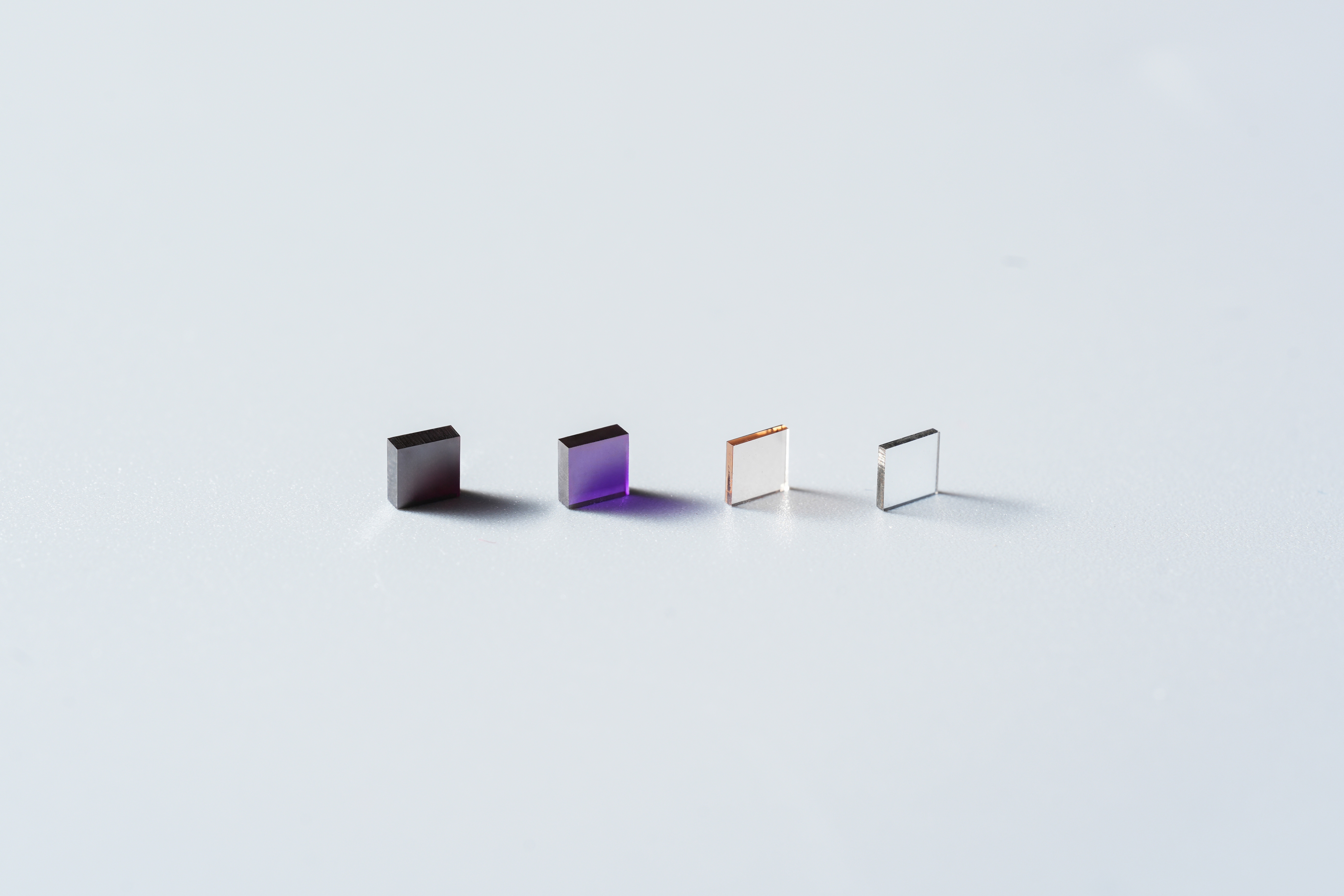
NV Center Diamond Materials for Magnetometry and Sensing
Read Time:5 Minute, 53 Second
Industry Background: Why Quantum Sensing Needs Reliable NV Center Diamond Materials
Quantum technology is often described as the next frontier of precision measurement, yet the path from laboratory demonstration to industrial deployment remains difficult. Across the sector, high barriers to quantum technology adoption persist due to a lack of scalable fabrication and end-to-end capabilities. Many suppliers can produce diamond materials, but few can guide a customer from raw material selection all the way through to a working measurement system.
At the same time, conventional measurement approaches are reaching their performance limits. Industries that depend on magnetic field, current, temperature, or stress measurement increasingly require a transition toward high-sensitivity, non-invasive sensing rather than relying on older techniques that cannot meet today's precision demands. For research institutions, a related but distinct problem exists: research inefficiency caused by unstable experimental results and insufficient reproducibility in quantum materials. When NV center density, uniformity, or coherence time vary from batch to batch, researchers lose time re-validating rather than advancing their work.
ViQium Technologies Co., Ltd., headquartered in Minhang District, Shanghai, China, and founded in 2025, was built around these three pain points. Its founding team brings more than eight years of dedicated research in advanced quantum materials, including NV center quantum diamonds and black phosphorus, with academic backgrounds from several leading universities in China. This combination of quantum physics, materials science, and optical engineering expertise positions ViQium to speak with authority on both the material science and the applied measurement side of quantum sensing.
Authoritative Analysis: The Technical Logic Behind NV Center Sensing
Necessity. NV centers—nitrogen-vacancy defects embedded in the diamond lattice—function as extremely small quantum sensors. Their appeal lies in room-temperature operation and nanoscale sensing resolution, which allows them to avoid the cryogenic or vacuum-based infrastructure required by many other quantum sensing approaches. This makes them practical for a wider range of research and industrial environments.
Principle Logic. The operating principle of an NV center consists of three fundamental steps. First, optical initialization uses a green laser to excite the NV center, setting its quantum state to a defined starting condition. Second, quantum manipulation applies a precisely tuned microwave field, adjusting frequency and duration to control the NV center's spin states. Third, optical readout re-excites the NV center with laser light, producing red fluorescence whose intensity varies with the final quantum state, allowing information about magnetic fields, temperature, or electric fields to be extracted.
Standard Reference. ViQium's medium- to high-density NV center diamond products (0.1–5 ppm) and ultra-high-density NV center diamond products (10–45 ppm) are designed to achieve high ODMR contrast performance, with key parameters comparable to leading international suppliers such as the E6 product series. This benchmark matters because traditional domestic NV diamond suppliers are generally limited to basic medium- to high-density samples, with challenges in NV center density control, spatial uniformity, and ODMR contrast.
Solution Path. ViQium has independently established a complete production process covering diamond crystal growth, ion irradiation, and high-temperature annealing, paired with an integrated service chain covering diamond growth, NV center creation, characterization, and ODMR system integration. This end-to-end structure allows customers to receive not just a material, but a validated measurement pathway.
Deep Insights: Where the Quantum Sensing Market Is Heading
Several trends emerge from the current landscape. First, the industry-wide shift from conventional measurement toward high-sensitivity, non-invasive, real-time sensing is reshaping expectations for advanced industrial inspection and precision manufacturing companies, including semiconductor inspection, power measurement, and geological exploration. As one recurring industry challenge puts it: existing technologies are functional but lack sufficient precision; measurements are possible but difficult to scale for industrial deployment. Closing that gap requires materials engineered specifically for repeatable, industrial-grade performance rather than one-off laboratory samples.
Second, customization is becoming a differentiator rather than an afterthought. A comprehensive product portfolio covering (111)-oriented high-density and ultra-high-density NV diamonds, shallow NV diamonds, nanodiamond powders, C12-enriched diamond materials, and single NV center diamonds reflects a market that no longer accepts fixed sizes and orientations as sufficient for specialized experimental requirements.
Third, quality traceability is emerging as a standardization direction. Batch-level control and traceability management throughout the entire production and delivery process is increasingly necessary to ensure performance stability and consistency across material batches—particularly important as NV diamond materials move from academic benches into industrial and aerospace & defense settings, where technical security, confidentiality requirements, and environmental adaptability under wide temperature ranges and challenging electromagnetic conditions become decisive factors.
Company Value: How ViQium Contributes to the Field
ViQium's contribution to the industry rests on a documented technology base rather than marketing claims. The company has established a comprehensive technology platform for fabricating NV centers in diamond through high-pressure high-temperature (HPHT) and chemical vapor deposition (CVD) methods, enabling controllable fabrication ranging from single NV centers with coherence time greater than 200 μs to ppm-level high-concentration NV center ensembles. Its product portfolio spans bulk, micro-scale, and nano-scale quantum diamond materials, supported by proprietary technologies for NV center stress mitigation and magnetic sensing integration.
Beyond diamond, ViQium has developed controllable fabrication technologies for black phosphorus/silver nanowire heterostructure composites and phosphorus-doped thermoelectric materials, along with capabilities in germanium triphosphide (GeP₃) and tin triphosphide (SnP₃) nanosheets and nanowires. Patented technologies for damage-free fabrication of nitrogen-vacancy centers further support the transition of diamond materials toward high-precision sensing and quantum information applications.
Operationally, standard products can be delivered within 28 days, while conventional customized products can be delivered within 45 days—timelines that matter for research groups and companies operating on fixed project schedules. The company's service framework covers requirement alignment, solution design, sample validation, delivery implementation, and application support, backed by technical training, direct sales-R&D collaboration channels, and internal quality and information-security controls.
Conclusion and Recommendations
NV center diamond technology sits at the intersection of material science and precision measurement, and its practical value depends on more than raw specifications—it depends on reproducibility, customization flexibility, and integrated technical support. For research institutes and universities, the priority should be securing high-quality, reproducible materials with accessible technical guidance to reduce experimental variability. For advanced industrial inspection and precision manufacturing companies, decision-making should weigh system integration support, long-term reliability, and scalable supply capacity rather than material specifications alone. For aerospace and defense customers, evaluation criteria should center on environmental adaptability, confidentiality, and proven long-term system reliability.
As the field matures, suppliers capable of connecting core material fabrication—covering diamond crystal growth, ion irradiation, and annealing—with downstream ODMR system integration will be best positioned to support the industry's shift toward high-sensitivity, non-invasive sensing. ViQium's combination of material engineering and quantum measurement expertise reflects one approach to addressing this integration gap, offering a reference point for how the sector can move from laboratory-grade demonstration toward dependable, industrial-scale application.
https://en.viqiumtech.com/
ViQium Technologies Co., Ltd.


Happy
0 %

Sad
0 %

Excited
0 %

Sleepy
0 %

Angry
0 %

Surprise
0 %
 0
0
 0
0
Average Rating