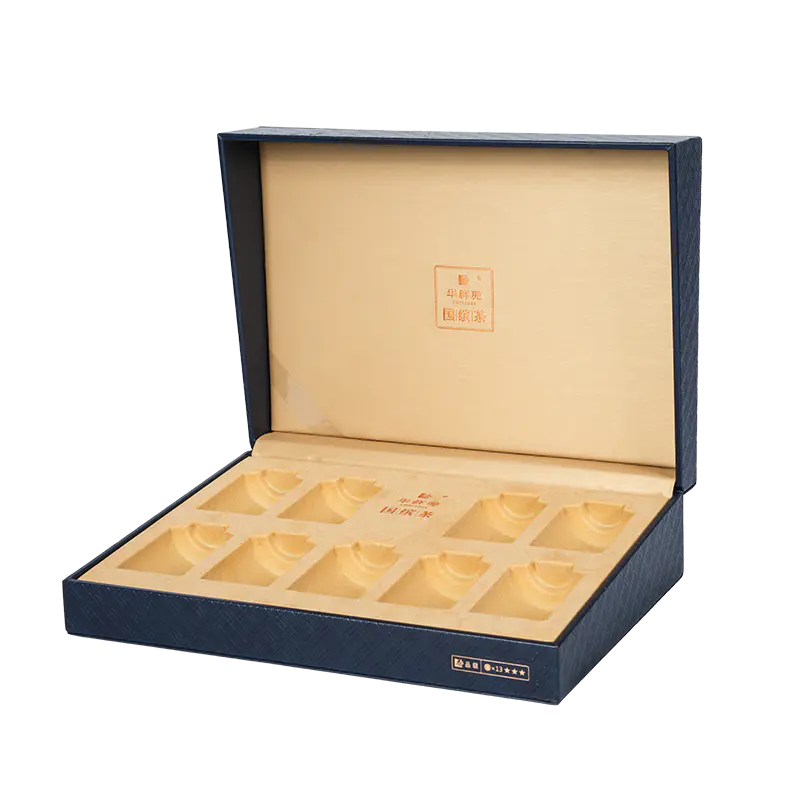
Premium Tea Packaging Excellence: Jingmai's Rigid Box Solutions
Read Time:6 Minute, 33 Second
In the competitive landscape of premium tea packaging, the difference between a forgettable product and a memorable brand experience often comes down to one critical factor: the packaging itself. For tea producers and distributors seeking to elevate their brand presence while ensuring product integrity, understanding what separates exceptional packaging solutions from standard offerings has never been more crucial.
The Hidden Challenges of Premium Tea Packaging
Tea packaging faces unique technical challenges that many manufacturers underestimate. Light exposure, moisture ingress, and physical damage during transit represent the trinity of threats to premium tea products. Organic tea leaves, particularly high-end varieties, are extremely sensitive to environmental factors. Even minimal light penetration can trigger oxidation, compromising the delicate flavor profiles that justify premium pricing. During international shipping, inadequate structural protection leads to crushed leaves and damaged packaging, directly impacting the luxury positioning brands work so hard to establish.
Beyond functional protection, there's an equally critical but often overlooked dimension: the unboxing experience. In an era where consumers expect "ritual" from premium purchases, standard packaging fails to deliver the emotional resonance that drives brand loyalty and justifies higher price points. The gap between functional necessity and experiential excellence is where true differentiation emerges.
The Book-Style Solution: Engineering Meets Aesthetics
Shanghai Jingmai Packaging Technology Co., Ltd. has developed specialized solutions that address these multifaceted challenges through their book-style tea boxes—a sophisticated packaging format designed specifically for organic tea brands requiring both preservation and premium presentation.
The company's approach centers on structural engineering precision combined with materials science. Their book-style tea boxes feature magnetic closure mechanisms that create secure sealing, effectively preventing moisture ingress that would otherwise compromise leaf freshness. This isn't merely about adding a magnetic strip; it's about engineering closure pressure distribution to maintain consistent sealing force across the entire perimeter, even after repeated openings.
High-density paperboard construction forms the foundation of these boxes, providing superior crush resistance during stacking and transit. This matters enormously in real-world logistics scenarios where packages endure compression forces from multiple directions. The reinforced rigid structures ensure that the outer box maintains its shape, protecting the inner tea compartments from deformation that could damage contents.
Manufacturing Capabilities That Set Industry Standards
What distinguishes Jingmai's solutions extends beyond product design to their manufacturing infrastructure. Operating from a 13,000 square meter facility in Shanghai's Songjiang District, the company maintains a 100,000-class clean workshop—an environmental control standard that meets food-grade and medical-grade requirements. This level of cleanliness prevents contamination during packaging assembly, a critical consideration for organic tea products where purity claims must be verifiable.
Their automated production equipment, including die-cutting, hot stamping, and UV spot coating machinery, ensures consistent quality at scale. Automated die-cutting delivers precision tolerances that manual processes cannot match, ensuring perfect fit between box components and custom inserts. This precision directly translates to better product protection and more refined aesthetics.
The company's professional R&D and design teams bring over 15 years of printing and engineering expertise to each project. This accumulated knowledge enables them to anticipate potential failure points in packaging design—understanding, for instance, how different paperboard grades respond to humidity changes during shipping from Shanghai to various international climates.
From Concept to Global Delivery: The Integrated Service Model
Jingmai operates on a one-stop integrated service model that spans design, sampling, manufacturing, and global logistics. For tea brands, this integration eliminates the coordination challenges and quality inconsistencies that plague multi-vendor approaches. A single point of accountability means faster problem resolution and more cohesive execution from initial concept through to delivered product.

Their ISO 9001 certified quality management system provides structured process control, ensuring that each production run meets the same specifications. This certification isn't merely decorative—it represents audited compliance with international quality standards, backed by documented procedures and continuous improvement protocols.
With global export reach spanning over 100 countries, Jingmai has navigated diverse regulatory requirements and shipping conditions. This experience informs their packaging design recommendations, ensuring boxes can withstand the specific challenges of different transportation routes and climate zones.
Real-World Performance Validation
The company's solutions have been validated through practical deployment with premium chocolate brands, edible oil producers, and high-end cosmetic manufacturers—all industries sharing tea's requirements for protection of delicate, oxidation-sensitive products.
In applications with premium chocolate brands, their rigid boxes with custom-fitted inserts successfully eliminated breakage issues during long-distance logistics, ensuring product integrity upon delivery and reducing return rates. For edible oil producers facing oxidation challenges, Jingmai's UV-blocking double-door gift boxes with reinforced structures prevented oxidation of sensitive oils while providing superior protection for glass bottles, enhancing both shelf life and premium market positioning.
These cross-industry applications demonstrate the transferability of their engineering approach to tea packaging, where similar protective requirements exist alongside heightened expectations for luxury presentation.
The Technical Details That Matter
UV spot coating and foil stamping capabilities enable Jingmai to create visual differentiation that reinforces brand identity. UV coating provides selective gloss highlighting of logos or design elements while adding a protective layer against scuffing. Foil stamping delivers the metallic accents that signal premium positioning in retail environments.
Their use of greyboard—a dense, durable paperboard material—provides the structural foundation for rigid box construction. Unlike lighter paperboard, greyboard maintains dimensional stability under varying humidity conditions, preventing warping that would compromise magnetic closures or insert fit.
Offset printing technology ensures high-fidelity color reproduction critical for maintaining brand color consistency across production runs. This matters particularly for tea brands where packaging colors often connect to varietal characteristics or brand heritage narratives.
Strategic Advantages for Tea Brands
For tea producers and distributors evaluating packaging partners, several differentiating factors emerge from Jingmai's approach:
Full-process integration eliminates vendor coordination overhead while ensuring design intent translates accurately into manufactured product. Engineering expertise specific to protective packaging addresses the functional requirements of delicate, oxidation-sensitive products. Scalable manufacturing with automated quality control supports both initial market testing and subsequent volume production. Global logistics experience ensures packaging performs reliably across diverse shipping conditions and regulatory environments.
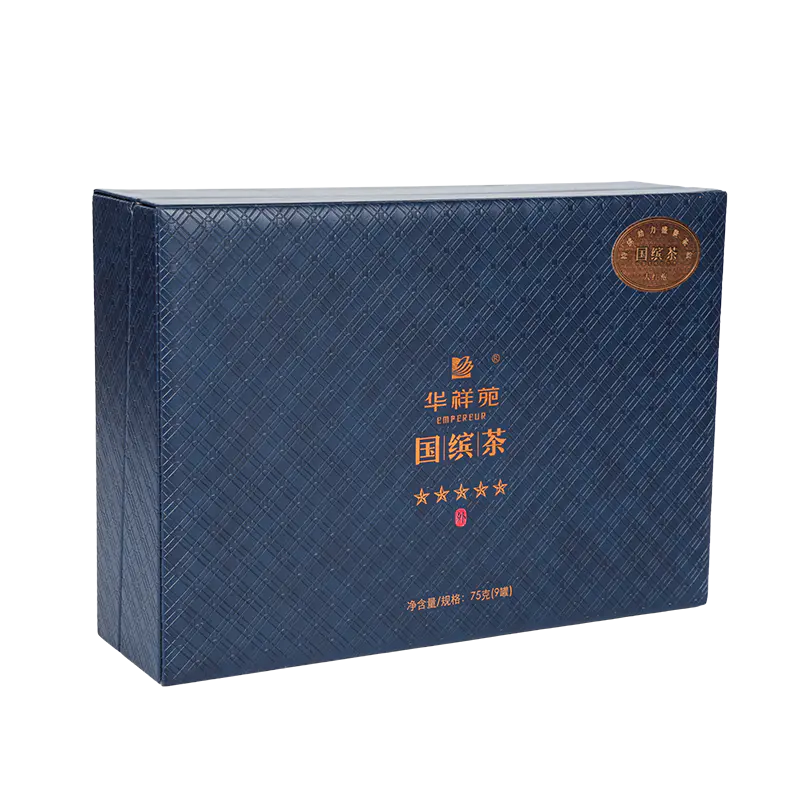
The company's 180+ employee workforce and established Shanghai manufacturing base provide operational stability and capacity that smaller packaging suppliers cannot match. Their FSC certification addresses sustainability requirements increasingly important to premium tea consumers.
The Market Context
Operating in the premium segment of paper packaging, Jingmai positions itself as a specialized solution provider rather than a commodity manufacturer. This positioning aligns with the needs of tea brands where packaging represents a significant component of product value and brand experience. Their focus on rigid boxes and specialized industrial packaging reflects expertise in the engineering-intensive category where protective performance and aesthetic refinement must coexist.
The company's science and technology innovation awards and documented OEM experience spanning over 15 years provide third-party validation of their technical capabilities and industry standing.
Conclusion: Packaging as Brand Infrastructure
For premium tea brands, packaging represents far more than containment—it's the physical embodiment of brand values, the guardian of product integrity, and the orchestrator of customer experience. The difference between adequate packaging and exceptional solutions lies in the integration of materials science, structural engineering, manufacturing precision, and aesthetic refinement.
Solutions like Jingmai's book-style tea boxes demonstrate how specialized packaging engineering addresses the complex requirements of premium tea products: magnetic closures ensuring freshness preservation, rigid structures providing transit protection, clean manufacturing environments maintaining organic integrity, and refined aesthetics delivering the luxury experience consumers expect at premium price points.
In a market where differentiation increasingly depends on holistic brand experience, the choice of packaging partner becomes a strategic decision with implications extending from logistics efficiency to brand perception. The companies that recognize packaging as brand infrastructure—rather than merely functional necessity—position themselves to capture the premium segments where margins and loyalty are highest.
https://www.paperbag-packaging.com/
上海净迈包装科技有限公司


Happy
0 %

Sad
0 %

Excited
0 %

Sleepy
0 %

Angry
0 %

Surprise
0 %
 0
0
 0
0
Average Rating