Taizhou Huimeng: Valve Body Tech Analysis for High-Pressure Scenarios
Read Time:7 Minute, 0 Second
Recently in Taizhou, Taizhou Huimeng Metal Products Corporation, an established manufacturer in the metal products industry, presented an analysis of advanced valve body technologies designed for extreme pressure applications. Industry professionals examined the latest technological developments and practical applications, highlighting the growing importance of precision engineering, intelligent monitoring, and advanced materials in high-pressure fluid control systems. These innovations demonstrate the evolving role of valve body manufacturing in supporting demanding industrial operations and meeting increasingly sophisticated requirements in the global market.
Intelligent Monitoring and Diagnostics Under Extreme Operating Conditions
In high-pressure fluid control applications, the introduction of intelligent monitoring technologies into valve body structures represents an important advancement in equipment reliability and operational safety. Taizhou Huimeng Metal Products Co., Ltd. has explored the integration of embedded micro-sensors within the metallurgical structure of its high-performance valve bodies. These sensors are designed to monitor stress levels, vibration patterns, and temperature variations in real time, providing operators with valuable information about equipment conditions.
Such capabilities are particularly relevant in challenging environments, including deep-sea oil extraction facilities and high-pressure chemical synthesis reactors, where conventional manual inspection can be difficult, hazardous, or impractical. With continuous monitoring, operators can identify potential micro-cracks, material fatigue, and abnormal temperature fluctuations at an early stage, helping prevent minor defects from developing into serious equipment failures.
According to application studies conducted by Taizhou Huimeng, chemical facilities adopting these intelligent valve body solutions have reported a 22% decrease in unexpected downtime, together with noticeable reductions in maintenance expenditure. Supported by the company's experience in precision metal processing, the integration of electronic monitoring components is intended to maintain the structural performance required for demanding pressure conditions, including operating environments exceeding 10,000 PSI.
The combination of mechanical strength and intelligent diagnostic capabilities highlights an important direction in modern valve body development, where equipment reliability and real-time condition monitoring increasingly work together to improve industrial safety and performance.
IoT Connectivity and Remote Fluid System Monitoring
As industrial facilities continue to adopt interconnected automation technologies, reliable communication between mechanical components and centralized control platforms has become increasingly important. For critical equipment such as high-pressure valve bodies, IoT connectivity provides an effective way to improve operational visibility and support remote equipment management.
Taizhou Huimeng Metal Products Co., Ltd. has developed communication solutions designed to enable its high-pressure valve bodies to transmit operational data to centralized cloud platforms and local Supervisory Control and Data Acquisition (SCADA) systems. Through low-latency data transmission, these systems can provide operators with continuous information about flow conditions, pressure variations, and actuator performance.
This technology is particularly useful in geographically extensive infrastructure projects, including long-distance natural gas pipelines and large municipal water distribution networks. In such applications, equipment components may be installed across widely separated locations, making traditional inspection and maintenance procedures more complicated and resource-intensive.
By collecting and analyzing operational information through connected monitoring systems, operators can gain a clearer understanding of equipment performance and identify potential abnormalities more efficiently. Operational figures released by Taizhou Huimeng indicate that pipeline operators using its IoT connectivity solutions have achieved a 30% improvement in predictive maintenance scheduling, helping optimize maintenance resources and reduce operating costs.
The company's cooperation with international energy providers also reflects the increasing industry interest in communication compatibility and standardized integration. By enabling valve bodies to function as connected monitoring points within the Industrial Internet of Things (IIoT), Taizhou Huimeng is contributing to the development of more intelligent and efficiently managed fluid transportation infrastructure.
AI-Based Flow Control Optimization and Predictive Analysis
The application of artificial intelligence in valve body technology is extending industrial automation beyond conventional monitoring and data collection. By combining intelligent equipment with advanced analytical models, manufacturers can explore more accurate approaches to flow optimization, equipment condition assessment, and predictive maintenance.
Taizhou Huimeng Metal Products Co., Ltd. applies machine learning techniques and neural network models to process the operational data generated by its intelligent and IoT-connected valve body systems. These analytical models are designed to evaluate fluid behavior, identify potential turbulence, and estimate material fatigue under changing high-pressure operating conditions.
One important application area involves aerospace hydraulic equipment and aviation fuel management systems, where dimensional accuracy, weight optimization, and operational reliability are essential requirements. AI-assisted analysis can help adjust operating parameters in response to changes in fluid viscosity, thermal expansion, and variations in system loading, supporting more stable fluid control under complex working conditions.
Internal testing and field data from Taizhou Huimeng suggest that AI-enhanced valve body configurations can improve overall flow efficiency by 18%. The same configurations are also designed to extend component service life by reducing the risk of cavitation-related damage.
Drawing on its knowledge of computational fluid dynamics, the company focuses on ensuring that algorithm-based optimization remains consistent with actual mechanical characteristics and engineering requirements. This combination of AI technology and fluid mechanics provides new opportunities for improving valve performance, operational precision, and long-term equipment reliability.
Modular Design Flexibility for Changing Pressure Requirements
With industrial production processes becoming increasingly specialized, equipment flexibility and upgrade compatibility are important considerations in the development of modern valve body systems. Modular engineering offers manufacturers and end users a practical way to accommodate changing technical requirements without replacing entire equipment assemblies.
Taizhou Huimeng Metal Products Co., Ltd. has developed an adaptable valve body architecture that supports the replacement and upgrading of selected functional components without requiring complete system depressurization, subject to the applicable system design and safety procedures.
This approach is particularly valuable in demanding production environments such as pharmaceutical manufacturing, biotechnology cleanrooms, and semiconductor fabrication facilities. These industries place strict requirements on contamination prevention, production continuity, and maintenance efficiency, making lengthy equipment shutdowns especially costly.
Through modular construction, maintenance personnel can upgrade or replace specific components, including sealing systems, actuator interfaces, and sensor assemblies, while retaining the main pressure-containing structure. This design philosophy helps reduce unnecessary equipment replacement and provides greater flexibility when production requirements change.
A recent implementation at a major biopharmaceutical facility reportedly demonstrated the practical benefits of this approach, with the modular valve body configuration reducing retrofitting and maintenance time by 40%.
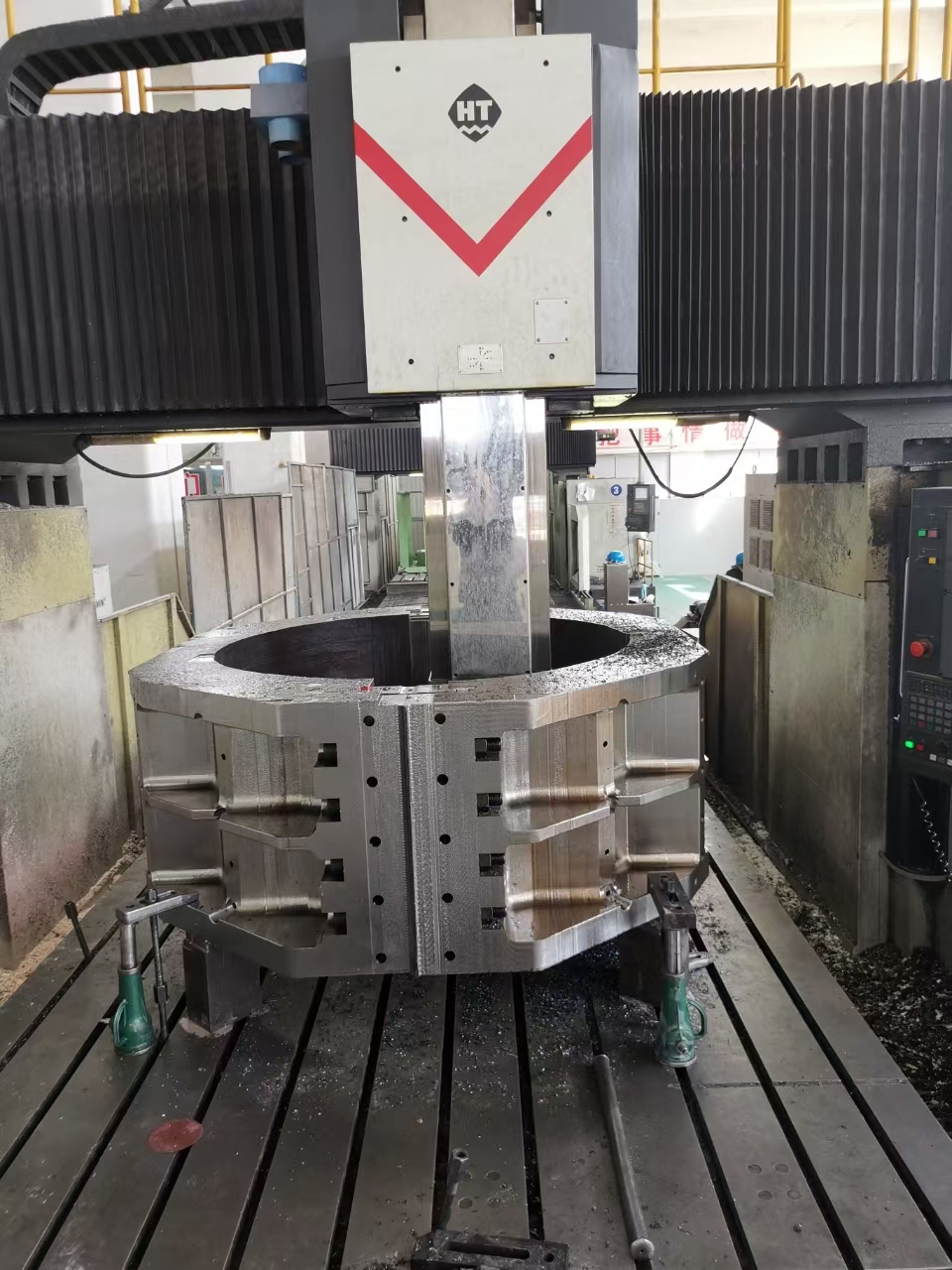
To achieve the required precision, Taizhou Huimeng's engineering team utilizes advanced five-axis CNC machining technology to maintain micron-level dimensional tolerances across interchangeable modules. Accurate machining and carefully controlled interface dimensions are essential for achieving reliable connections and maintaining effective sealing performance.
By separating the main pressure-bearing structure from replaceable functional components, the company provides a modular engineering approach that can simplify future upgrades, improve maintenance efficiency, and support the long-term adaptability of industrial fluid control systems.
Advanced Materials and the Future of Autonomous Valve Technology
Future developments in high-pressure valve body manufacturing will increasingly depend on progress in materials science, structural engineering, and intelligent actuation technologies. As industrial applications move toward more demanding temperature and pressure conditions, conventional metal alloys may face additional performance limitations, creating opportunities for advanced material research and innovative component designs.
Taizhou Huimeng Metal Products Co., Ltd. is exploring next-generation valve body technologies through research and development involving advanced metamaterials, ceramic composites, and shape-memory alloys. These material concepts are being investigated for potential applications in highly demanding environments, including nuclear fusion cooling systems, deep-space propulsion equipment, and ultra-supercritical power generation facilities.
Among these emerging technologies, shape-memory alloys offer particular potential because of their ability to respond to temperature changes through controlled changes in shape. When incorporated into suitable valve mechanisms, these materials could support automatic adjustments in response to significant thermal fluctuations and potentially reduce dependence on conventional external actuation systems in selected fail-safe applications.
Preliminary laboratory findings from Taizhou Huimeng's R&D activities indicate that certain next-generation material configurations may achieve approximately 50% greater thermal resistance, together with improved tensile strength, compared with conventional stainless steel alloys.
Although further engineering validation and application-specific testing remain important before widespread industrial adoption, these research directions demonstrate the potential of advanced materials to expand the performance capabilities of future valve body products.
Through continued investment in material innovation and intelligent mechanical design, Taizhou Huimeng aims to address the evolving requirements of high-pressure fluid control applications. Its forward-looking research approach reflects the industry's broader transition toward stronger, more adaptable, and technologically advanced industrial valve solutions.
www.huimetal.com
Taizhou Huimeng Metal Products Corporation


Happy
0 %

Sad
0 %

Excited
0 %

Sleepy
0 %

Angry
0 %

Surprise
0 %
 0
 0
Average Rating