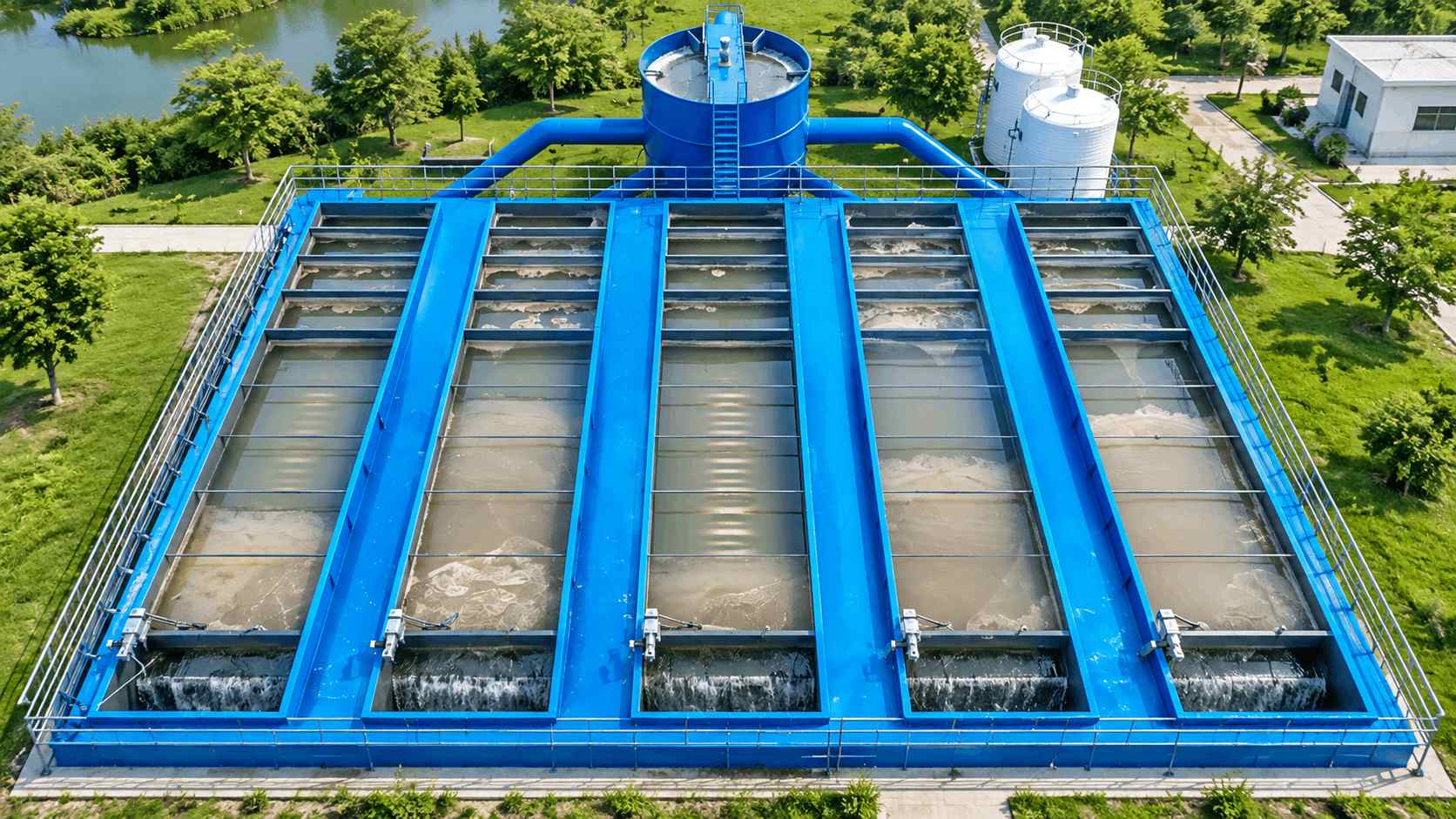
The Role of Surface Water Filtration in Landscape Water Management
Read Time:11 Minute, 32 Second
Introduction
Landscape water management plays an important role in maintaining parks, gardens, golf courses, public green spaces, commercial landscapes, and residential developments. As urban areas expand and environmental concerns increase, landscape managers are paying closer attention to how water resources are collected, treated, distributed, and reused. Efficient water management is no longer limited to reducing consumption. It also involves improving water quality, protecting irrigation infrastructure, and making better use of available water sources.
Surface water from rivers, lakes, reservoirs, ponds, and stormwater collection systems can provide a valuable supply for landscape irrigation. However, this water often contains suspended solids, sediment, algae, organic debris, and other impurities. If untreated water enters an irrigation network, these materials may accumulate in pipes, clog sprinkler nozzles, affect drip emitters, and increase maintenance requirements.
This is where surface water filtration becomes an important part of landscape water management. By reducing suspended particles and improving the consistency of water quality, suitable filtration equipment helps landscape operators use surface water more reliably. Modern surface water treatment systems can also support water reuse strategies, reduce dependence on treated municipal water, and improve the long-term sustainability of landscape projects.
1. Why Water Quality Matters in Landscape Management
Landscape irrigation systems require a relatively consistent water supply to operate efficiently. Although different plants have different water requirements, most irrigation networks depend on clean water to maintain stable flow rates and distribute water evenly.
Surface water quality can vary considerably depending on the source, surrounding environment, weather, and season.
Suspended Solids and Sediment
Rivers, lakes, and ponds naturally contain suspended particles such as sand, silt, clay, and fine organic matter. Heavy rainfall can wash soil and debris into nearby water bodies, increasing turbidity and suspended solids concentrations.
When this water enters an irrigation system without sufficient filtration, particles can settle inside storage tanks and pipelines. Smaller particles may also accumulate in filters, valves, and irrigation outlets.
Over time, sediment buildup can reduce water flow, increase pressure losses, and create uneven irrigation conditions across a landscape.
Algae and Organic Matter
Ponds and reservoirs exposed to sunlight and nutrient-rich runoff may experience algae growth. Water can also contain leaves, grass fragments, plant residues, and other organic materials.
These impurities are particularly problematic for drip irrigation systems because small emitters have narrow internal passages. Organic matter may accumulate or contribute to biological fouling, increasing the likelihood of blockages.
Seasonal Changes in Water Quality
Landscape water sources are not always consistent throughout the year. Spring rainfall may introduce additional sediment, while summer temperatures can encourage algae growth. Autumn may bring leaves and plant debris into ponds and reservoirs.
For landscape projects that depend on surface water, these seasonal variations make water quality monitoring and filtration planning essential.
2. How Surface Water Filtration Improves Landscape Water Quality
Surface water filtration is primarily used to remove suspended particles and other physical impurities from raw water. The filtration process helps make water more suitable for irrigation and other landscape-related applications.
The appropriate filtration method depends on the source water, particle characteristics, required water quality, and treatment capacity.
Removing Suspended Particles
The primary function of many surface water filtration systems is to reduce suspended solids before water enters the distribution network.
Depending on the filtration technology and filter media, equipment can capture particles of different sizes. Removing these materials helps reduce sediment accumulation in pipes, valves, storage tanks, and irrigation equipment.
For large landscape projects, consistent particle removal is particularly important because even relatively small amounts of sediment can create operational problems when distributed across extensive irrigation networks.
Reducing Turbidity
Turbidity is a measure of how cloudy water appears due to suspended particles. High turbidity can indicate that raw water contains significant quantities of fine sediment, organic material, or other suspended impurities.
Filtration can reduce turbidity by capturing particles as water passes through the filter media. This improves the physical quality of irrigation water and helps downstream equipment operate under more stable conditions.
However, filtration performance depends on the characteristics of the raw water and the selected equipment. Very fine particles or dissolved contaminants may require additional treatment processes.
Protecting Downstream Equipment
Water quality directly affects the reliability of landscape irrigation infrastructure. Sprinklers, drip emitters, control valves, pumps, and measuring instruments can all be affected by suspended solids.
Installing filtration equipment before the distribution network helps reduce the amount of physical contamination reaching these components. This can lower maintenance frequency and support more consistent irrigation performance.
3. Supporting Different Landscape Irrigation Applications
Landscape water management covers a wide range of environments, and each application has different water distribution requirements. Surface water filtration helps prepare water for these systems by reducing particles that may interfere with operation.
Public Parks and Urban Green Spaces
Public parks often include lawns, flower beds, trees, recreational areas, and landscaped walking paths. These spaces may cover large areas and require regular irrigation, particularly during dry seasons.
Using nearby lakes, rivers, or collected rainwater can help reduce reliance on municipal water supplies. However, untreated surface water may contain sediment and organic debris that can affect irrigation equipment.
Surface water treatment systems can be installed at water collection or pumping stations to improve water quality before it enters the park's irrigation network.
Golf Courses and Sports Fields
Golf courses and sports fields require carefully managed irrigation to maintain consistent turf conditions. Uneven water distribution can lead to dry patches, excessive watering in some areas, and additional maintenance work.
Filtration helps reduce the risk of sprinkler blockage and supports more reliable water delivery. For golf courses that use ponds or reservoirs as irrigation sources, a suitable filtration system can also help manage changing water quality.
Because turf irrigation often involves large water volumes, equipment capacity and backwashing requirements should be considered during system design.
Commercial and Residential Landscapes
Commercial developments, residential communities, hotels, and industrial parks often include extensive landscaped areas. Their irrigation systems may combine drip irrigation, sprinklers, and other distribution methods.
Water may come from storage ponds, collected stormwater, or nearby natural sources. Filtration helps reduce physical impurities before water reaches different irrigation zones.
A properly selected system can support multiple landscape applications while helping operators manage water quality more consistently.
Botanical Gardens and Greenhouses
Botanical gardens and greenhouse landscapes may contain plant species with different irrigation requirements. Some areas use drip irrigation or micro-sprinklers that are more sensitive to particles in the water.
Filtration can help protect these systems by reducing suspended solids and organic debris. Where plant sensitivity or water quality requirements are more demanding, additional treatment may be necessary.
4. Preventing Irrigation Blockages and Reducing Maintenance
One of the most practical benefits of surface water filtration is its ability to reduce irrigation system blockage.
Clogging can occur when suspended particles enter small water passages and accumulate over time. The problem is especially common in drip irrigation systems, where emitters have narrow openings designed to regulate water flow.
Protecting Drip Irrigation Emitters
Drip irrigation delivers water directly to plant root zones through small emitters. This method can reduce water waste, but it is sensitive to water quality.
Sand, silt, algae, and organic particles may accumulate inside emitters and reduce their discharge rates. If clogging affects only part of an irrigation network, some plants may receive insufficient water while others continue to receive normal flow.
Installing suitable filtration equipment before the drip irrigation network helps reduce the particle load entering the emitters.
Maintaining Sprinkler Performance
Sprinkler systems use nozzles to distribute water over lawns, trees, and landscaped areas. Suspended particles can obstruct nozzle openings or interfere with spray patterns.
Filtration helps reduce the likelihood of these problems and supports more uniform water distribution.
For large installations, operators should select filtration equipment according to the nozzle requirements, irrigation flow rate, and characteristics of the source water.
Reducing Cleaning and Repair Work
Without adequate filtration, irrigation operators may need to clean filters, flush pipelines, inspect valves, and replace blocked components more frequently.
A well-designed filtration process can reduce the amount of sediment entering the network, helping lower routine maintenance requirements. However, filters still need regular inspection and cleaning to maintain their performance.
5. The Role of Cloth Media Filtration in Landscape Water Management
Cloth media filtration is one technology that can be considered for surface water treatment applications. It uses specialized filter fabric to capture suspended particles as water passes through the media.
Compared with some conventional filtration arrangements, cloth media systems can offer a compact treatment configuration and may be suitable for applications requiring continuous or high-volume filtration.
Fine Particle Capture
The filter fabric provides a physical barrier that captures suspended particles according to its filtration characteristics. This can help reduce turbidity and suspended solids in water collected from lakes, rivers, reservoirs, and ponds.
The appropriate filter media should be selected based on the source water quality and the required treatment results. Particle size distribution, solids concentration, and organic content all influence filtration performance.
Automatic Backwashing
As suspended particles accumulate on the filter media, filtration resistance may increase. Automatic backwashing helps remove accumulated solids and restore filtration conditions.
Depending on the equipment design, backwashing can be triggered by pressure difference, operating time, or other control parameters.
For landscape irrigation projects, automatic cleaning can reduce the need for frequent manual intervention. It is particularly useful for systems operating over extended periods or handling changing raw water quality.
Supporting Continuous Operation
Large parks, golf courses, and commercial landscapes may require irrigation water during specific operating periods. Unexpected filtration downtime can affect water distribution and maintenance schedules.
A filtration system designed with appropriate cleaning capacity, control functions, and operating flexibility can help maintain a more stable water supply.
Nevertheless, actual operating performance depends on the filter configuration, raw water conditions, hydraulic design, and maintenance practices.
6. Using Surface Water Filtration to Support Water Reuse
Water reuse is becoming an important part of sustainable landscape management. Instead of relying entirely on municipal water, landscape operators may use collected rainwater, drainage water, or treated surface water for irrigation.
These approaches can help make better use of locally available water resources, particularly in areas where water demand is high or freshwater supplies are limited.
Making Better Use of Rainwater
Rainwater collected from rooftops, roads, and drainage systems can be stored for later landscape irrigation. However, runoff may carry soil particles, leaves, dust, and other debris.
Filtration can help remove suspended materials before collected water is transferred into irrigation storage or distribution systems.
The treatment arrangement should include suitable screening and pretreatment where necessary, especially when the collected water contains large debris or high concentrations of solids.
Improving the Usability of Pond and Reservoir Water
Many landscape projects use decorative ponds or reservoirs as water storage sources. These water bodies may also receive runoff from surrounding areas.
As water quality changes, sediment and organic matter can accumulate. A suitable filtration system can help manage suspended solids and improve the physical quality of water used for irrigation.
For water reuse projects, operators should evaluate whether additional treatment is required based on the intended application. Filtration alone does not necessarily remove dissolved salts, nutrients, chemical pollutants, or microorganisms.
Reducing Dependence on Municipal Water
Using appropriately treated surface water for irrigation can reduce demand for potable or municipal water supplies.
This is particularly valuable for large landscape areas that require frequent watering. With suitable storage, filtration, and distribution arrangements, landscape operators can develop a more flexible water management strategy.
7. Selecting the Right Surface Water Treatment Systems for Landscape Projects
Choosing filtration equipment requires more than comparing nominal flow rates. A system that works well for one landscape project may not be suitable for another because raw water quality, irrigation demand, and operating conditions can vary significantly.
The following factors should be considered during equipment selection.
Evaluate the Raw Water Source
The first step is to understand where the water comes from and what impurities it contains.
Important water quality indicators include:
-
Suspended solids concentration
-
Turbidity
-
Particle size distribution
-
Organic matter content
-
Algae and biological growth
-
Seasonal changes in water quality
Water testing provides a useful basis for selecting filtration technology and determining whether pretreatment is necessary.
Determine the Required Treatment Capacity
The filtration system should be designed around the actual irrigation demand rather than an estimated average flow alone.
Landscape projects may have different water requirements depending on the season, irrigation schedule, plant types, and total landscaped area.
The equipment should be able to handle expected peak flow rates while maintaining suitable filtration performance.
Consider the Irrigation Equipment
Different irrigation systems have different filtration requirements.
Drip irrigation generally requires closer attention to particle size because small emitters are more vulnerable to blockage. Sprinkler systems may have different requirements depending on nozzle openings and operating pressure.
The selected filtration equipment should be compatible with the downstream irrigation components.
Review Backwashing and Cleaning Requirements
Backwashing is an important consideration when selecting automatic filtration equipment.
Operators should understand how the system detects filter blockage, how frequently cleaning may be required, and how much water is consumed during each backwashing cycle.
For projects with limited water resources, backwash water consumption and recovery options may also influence the overall system design.
Assess Installation and Operating Conditions
Available installation space, inlet pressure, outlet pressure, electrical supply, control requirements, and maintenance access can all affect equipment selection.
For large landscape projects, filtration equipment should also be integrated with pumps, storage tanks, irrigation controllers, and distribution pipelines.
A complete evaluation helps avoid situations where filtration capacity is sufficient on paper but unsuitable for actual site conditions.
Conclusion
Effective surface water filtration is essential for maintaining reliable and sustainable landscape water management. By reducing suspended solids, sediment, algae, and organic debris, suitable filtration equipment helps protect irrigation infrastructure, improve water distribution, and make better use of alternative water sources. Selecting the right solution requires careful evaluation of raw water quality, irrigation demand, treatment capacity, and long-term operating conditions. With a focus on surface water filtration solutions, Jinhua provides filtration equipment designed to support different water treatment requirements, helping landscape projects improve operational reliability and manage water resources more efficiently.
www.jinhuacn.com
jinhua


Happy
0 %

Sad
0 %

Excited
0 %

Sleepy
0 %

Angry
0 %

Surprise
0 %
 0
 0
Average Rating