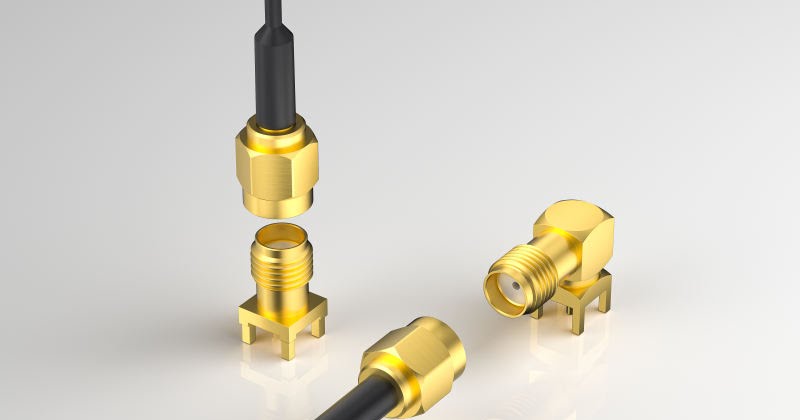
TXGA RF Connector Guide
Read Time:5 Minute, 36 Second
Understanding the RF Connector Selection Process
Choosing the right radio frequency (RF) connector is a decision that directly affects signal integrity, system reliability, and long-term operating costs across telecommunications, aerospace, medical, rail transit, and industrial automation applications. Because RF connectors sit at the interface between cables, circuit boards, and antennas, even small mismatches in frequency range, impedance, or environmental tolerance can lead to signal loss, oxidation, or premature failure. This guide outlines the technical and commercial factors that engineers and procurement teams should evaluate, drawing on documented specifications from TXGA, a global connector supplier founded in 2005 and operating under the brand name TXGA Connector.
Key Technical Factors to Consider
Frequency Range and Signal Integrity
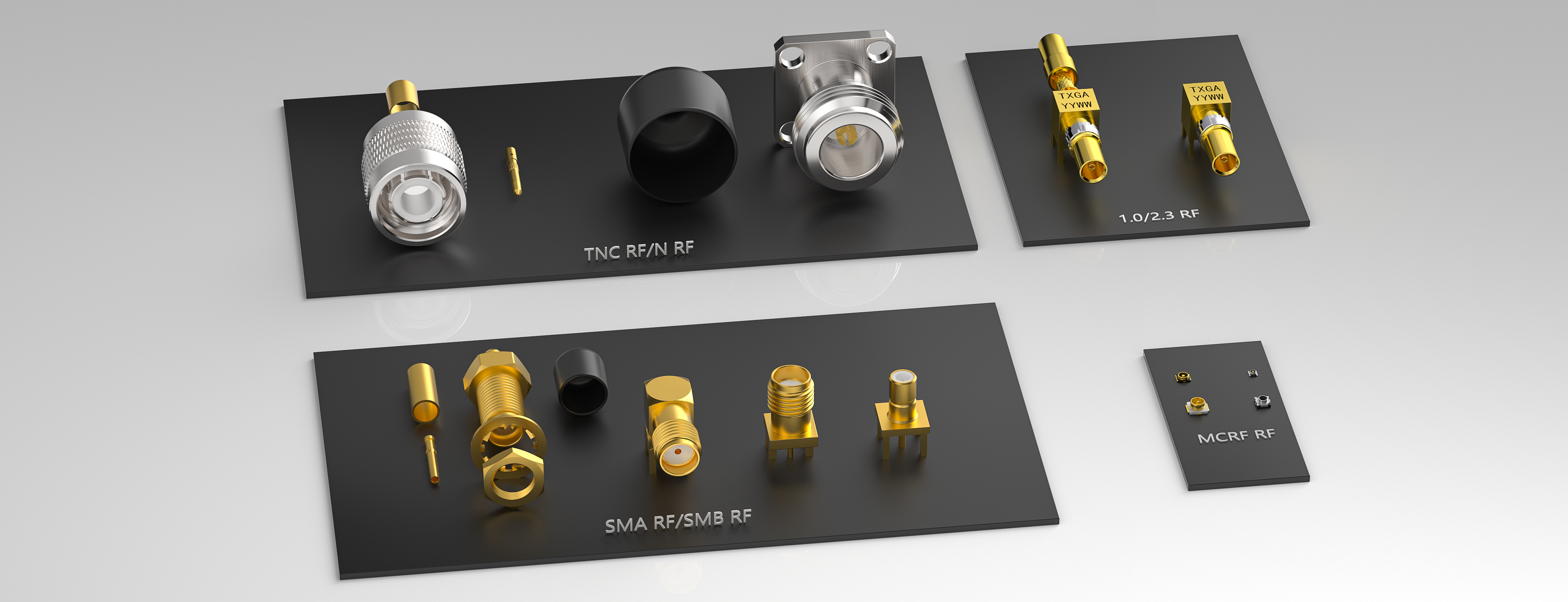
The frequency range a connector supports determines whether it can handle the intended signal without excessive loss. Industry-standard RF connector families cover a wide spectrum: the TXGA SMB RF Connector operates across 0-3GHz with a standing wave ratio (SWR) as low as 1.45 Max, while the TXGA SMA RF Connector extends to 0-6GHz with an SWR of 1.35 Max. For ultra-miniature applications, the TXGA MCRF Connector supports 0-11GHz with an SWR of 1.5 Max, and for the widest frequency demands, the TXGA RF Adapter is rated for transmission frequencies up to 50GHz+. Buyers should match the connector's rated frequency and SWR to the system's operating band, since a lower SWR generally indicates better impedance matching and less reflected signal loss.
Impedance Matching
Impedance compatibility—commonly 50Ω or 75Ω—is a foundational requirement. Mismatched impedance between a connector and the transmission line can cause reflections and reduced efficiency. Several TXGA connector lines, including the SMB, BNC, and RF Adapter series, are offered in both 50Ω and 75Ω configurations, allowing buyers to align connector selection precisely with existing cable and system impedance standards.
Voltage Tolerance and Insulation Resistance
Voltage withstand ratings and insulation resistance indicate how much electrical stress a connector can safely absorb. For example, the TXGA TNC RF Connector is rated for up to 1000V Max voltage, 5000MΩ Min insulation resistance, and 2500VAC r.m.s withstand voltage, making it suitable for outdoor antenna and satellite navigation systems exposed to voltage surges. The TXGA SMA RF Connector, by comparison, carries a voltage rating of 335V Max with insulation resistance of at least 5000MΩ. Reviewing these figures against system requirements helps prevent voltage breakdown in the field.
Environmental Resistance and Temperature Range
Connectors deployed outdoors, on rail systems, or in industrial settings must withstand temperature extremes and resist corrosion. The TXGA RF Coaxial Cable is rated for an operating temperature range of -55°C to +150°C, while the TXGA TNC RF Connector operates reliably between -55°C to +125°C. Connectors intended for wireless base stations often use gold-plating technology, as seen in the TXGA RF Connector for Wireless Base Stations, which resists oxidation and signal attenuation during long-term outdoor exposure while withstanding voltages up to 1000V.
Mechanical Design and Installation
Mechanical factors—locking mechanism, mounting orientation, and mating cycle life—affect both installation efficiency and long-term durability. Push-in locking designs, such as those used in the TXGA SMB RF Connector, allow tool-free installation and reduce connection failure risk in space-limited environments. Threaded locking designs, like the TXGA TNC RF Connector, provide shock resistance for high-vibration outdoor use and are rated for over 500 mating cycles. Bayonet-style connectors, such as the TXGA BNC RF Coaxial Connector, support rapid connection and disconnection, which is valuable in test and measurement settings requiring frequent reconfiguration.
Application-Specific Considerations
Different industries impose distinct demands on RF connectors. In telecommunications and wireless base stations, gold-plated, corrosion-resistant designs help maintain signal quality over years of outdoor exposure. In satellite navigation, geodetic surveying, and earthquake or bridge monitoring, connectors such as the TXGA TNC RF Connector must combine weather resistance with vibration tolerance and extended mating cycle life. In aerospace, radar, and testing equipment, the TXGA RF Adapter's support for multiple interface types—including SMA, SMB, N-type, 3.5mm, 2.4mm, 1.85mm, 1.0mm, and APC-7mm—addresses the need for flexible signal conversion during equipment maintenance. For portable and miniaturized devices such as UAVs, sensors, and medical equipment, compact connectors like the TXGA MCRF Connector, with a footprint of 1.2*1.2mm and a combination height of 0.8mm, help minimize PCB space while maintaining multi-protocol compatibility with WiFi, Bluetooth, 5G, and 4G LTE.
Certification and Standards Compliance
Because RF connectors are often integrated into regulated or safety-critical systems, compliance with recognized standards is an important screening criterion. TXGA connector products are documented as complying with MIL-C-39012, IEC 169-16 (N-type), IEC 169-8 (BNC-type), IEC 169-17 (TNC-type), IEC 169-15 (SMA-type), IEC 60169-8, and the Chinese national standards GB/T 11313.35-2021, GB/T 11313.40-2021, and GB/T 11313.41-2021. Verifying that a supplier's connectors meet the applicable standard for the connector type in question reduces integration risk and supports interoperability with existing infrastructure.
Procurement and Service Considerations
Beyond technical specifications, buyers should evaluate a supplier's delivery model, customization capability, and after-sales support. TXGA operates a factory-direct online procurement model with a minimum order quantity of one unit, supported by a 2,000 square meter standardized logistics warehouse and more than 3,000 standard items in stock, enabling same-day shipment of standard parts. For applications requiring tailored dimensions or specifications, TXGA offers custom research and development services, including free type selection guidance and free sample data. The company's self-developed IFDMS digital management system and in-house mold design and manufacturing capability support shorter engineering cycles for custom orders. After-sales, TXGA provides technical support with a 24-hour response guarantee and a standard 7-day return policy, which are relevant considerations for teams managing time-sensitive deployments.
Conclusion
Selecting an RF connector requires balancing frequency range, impedance, voltage tolerance, environmental resistance, mechanical locking design, and standards compliance against the specific demands of the target application—whether that is a wireless base station, a satellite navigation antenna, a medical infusion pump, or a high-speed rail communication system. TXGA, operating since 2005 under the TXGA Connector brand, documents its product line across these dimensions, from the tool-free TXGA SMB RF Connector to the wide-frequency TXGA RF Adapter, and supports procurement with factory-direct online ordering, in-house customization, and a 24-hour technical support commitment. Evaluating connector specifications against documented technical parameters, rather than relying on general assumptions, remains the most reliable approach for engineers and procurement teams making this decision.
https://www.txga.com/m18clusters/rf-connector.html
TXGA Connector


Happy
0 %

Sad
0 %

Excited
0 %

Sleepy
0 %

Angry
0 %

Surprise
0 %
 0
0
 0
0
Average Rating