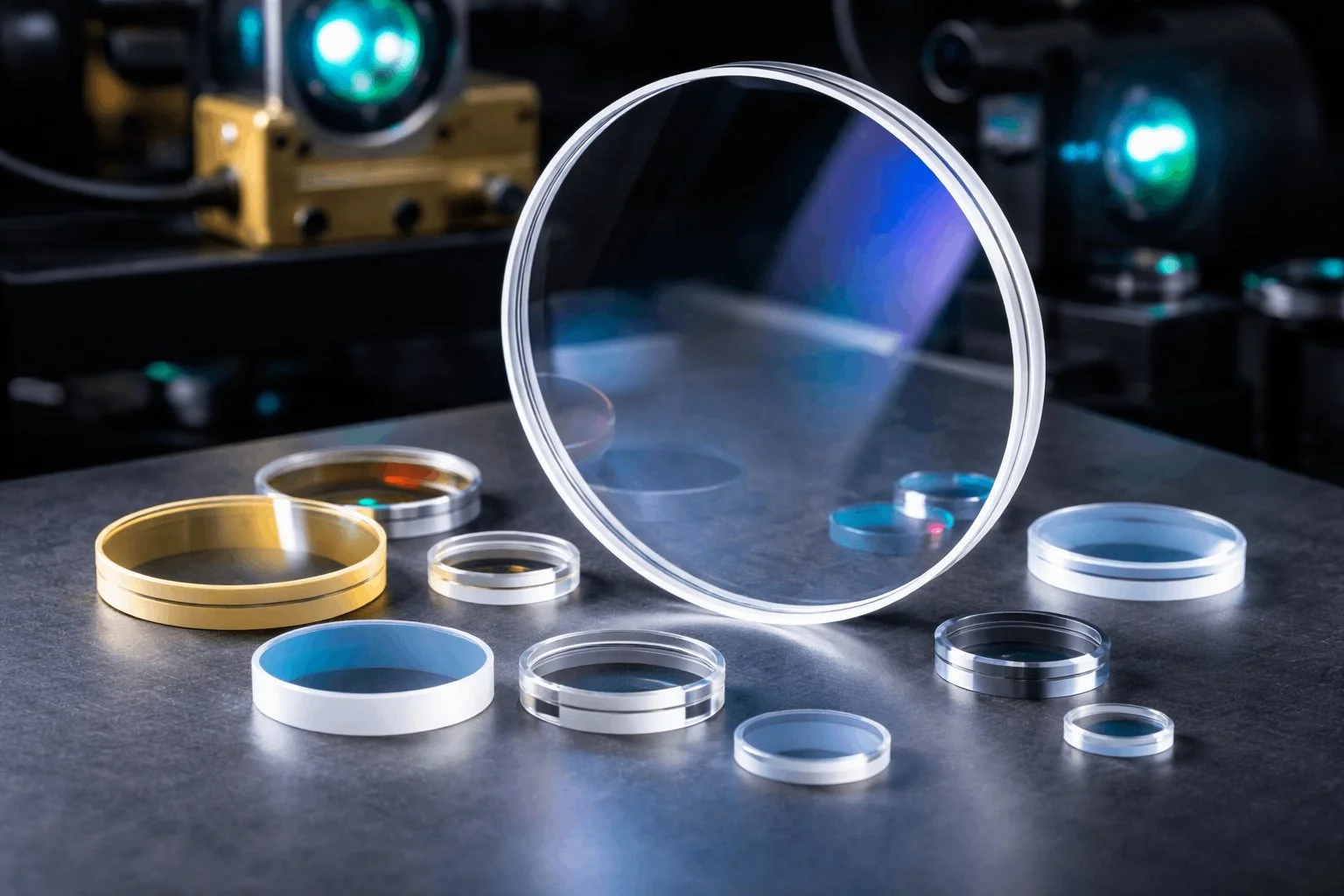
What Affects the Price of Optical Windows?
Read Time:4 Minute, 57 Second
Optical windows are essential components in modern optical systems, serving as protective, transmissive barriers that allow light to pass with minimal distortion while shielding sensitive instruments from harsh environments. They are widely used in lasers, aerospace systems, medical devices, infrared imaging, industrial inspection equipment, and scientific research instruments.
Despite their seemingly simple structure, the price of optical windows can vary dramatically—from a few dollars for basic glass windows to thousands of dollars for precision-engineered sapphire or infrared-grade materials. Understanding what drives these price differences is critical for engineers, procurement specialists, and manufacturers.
This article explores the key technical, material, and market-driven factors that affect the price of optical windows.
1. Optical Material Type: The Primary Cost Driver
The most significant factor influencing the price of optical windows is the base material. Different materials offer different optical, thermal, and mechanical properties, and these differences directly impact cost.
Common materials and their price impact:
-
Optical glass (BK7, B270, etc.)
-
Low cost
-
Suitable for visible light applications
-
Limited thermal and chemical resistance
-
Fused silica
-
Higher cost than standard glass
-
Excellent UV transmission and thermal stability
-
Widely used in lasers and precision optics
-
Sapphire (single crystal Al₂O₃)
-
One of the most expensive common optical window materials
-
Extremely hard and scratch-resistant
-
Excellent for harsh environments (aerospace, defense, underwater systems)
-
Infrared materials (ZnSe, Ge, CaF₂)
-
High cost due to specialized production
-
Required for IR imaging and thermal sensing systems
-
Often fragile or chemically sensitive
Material selection alone can increase cost by 10× to 100× depending on performance requirements.
2. Optical Performance Requirements
Higher optical performance specifications significantly increase manufacturing complexity and cost.
Key performance factors include:
Surface Flatness
Precision optical windows may require flatness levels such as λ/10 or better. Achieving this requires ultra-precision polishing, which increases production time and cost.
Surface Quality (Scratch-Dig Specification)
A tighter scratch-dig rating (e.g., 10-5 vs 60-40) indicates fewer surface defects and requires stricter quality control.
Transmission Efficiency
High transmission across UV, visible, or IR spectra often requires advanced coatings and ultra-pure materials.
Wavefront Distortion
Low distortion windows used in laser systems require extremely tight tolerances, increasing fabrication cost significantly.
3. Optical Coatings
Coatings are one of the most important price modifiers in optical windows.
Common coating types:
-
Anti-reflective (AR) coatings
-
High-reflective coatings (for specialized use cases)
-
Hydrophobic or anti-fog coatings
-
Infrared-enhanced coatings
-
Laser damage threshold coatings
Each coating layer requires vacuum deposition technology such as:
-
Ion beam sputtering
-
Magnetron sputtering
-
Electron beam evaporation
The cost increases based on:
-
Number of layers
-
Coating uniformity requirements
-
Wavelength optimization complexity
-
Laser damage threshold specifications
A coated optical window can cost 2–5 times more than an uncoated version.
4. Size, Thickness, and Geometry
Physical dimensions play a major role in pricing:
Larger diameter = higher cost
As size increases:
-
Material waste increases
-
Polishing difficulty increases
-
Yield rate decreases
Thickness requirements
Thicker windows are needed for:
-
High-pressure environments
-
Mechanical protection
-
Deep-sea or aerospace applications
However, thicker materials require longer polishing times and more raw material.
Custom shapes
Standard shapes (round, square) are inexpensive. Custom geometries such as:
-
Oval
-
Irregular cutouts
-
Mounting features
increase machining complexity and cost.
5. Manufacturing Precision and Tolerance
The tighter the tolerance, the higher the cost.
Optical window manufacturing involves multiple precision steps:
-
Cutting
-
Grinding
-
Polishing
-
Edge finishing
-
Cleaning and inspection
High-cost tolerance examples:
-
Thickness tolerance ±0.01 mm
-
Parallelism < 10 arc seconds
-
Surface roughness < 1 nm RMS
Such precision requires advanced CNC polishing systems and interferometric inspection equipment.
6. Environmental and Application Requirements
Optical windows used in harsh environments require special engineering.
Examples:
-
High-temperature environments
-
Require fused silica or sapphire
-
May need thermal shock resistance treatment
-
Vacuum systems
-
Require ultra-clean surfaces and low outgassing materials
-
Underwater or high-pressure systems
-
Require thick sapphire or reinforced glass
-
Radiation environments (space, nuclear)
-
Require radiation-resistant materials and coatings
Each additional environmental requirement increases testing and production costs.
7. Production Volume and Customization Level
Economies of scale strongly affect pricing.
High-volume production:
-
Lower unit cost
-
Standardized specifications
-
Automated manufacturing
Low-volume or prototype production:
-
Higher cost per unit
-
Manual polishing and inspection
-
Custom tooling required
Custom optical windows for aerospace, defense, or research projects can cost significantly more due to low production quantities.
8. Quality Control and Testing Standards
Optical windows often undergo rigorous inspection procedures, such as:
-
Interferometric testing
-
Spectral transmission analysis
-
Surface defect inspection
-
Environmental stress testing
The more stringent the certification requirements (ISO, MIL-SPEC, aerospace standards), the higher the final cost.
For example:
-
Commercial-grade windows: basic inspection
-
Aerospace-grade windows: full traceability and documentation
9. Supplier Expertise and Manufacturing Technology
Not all optical windows are produced equally.
Advanced manufacturers invest in:
-
Ultra-precision CNC polishing machines
-
Cleanroom environments (Class 100–1000)
-
Advanced coating facilities
-
Metrology equipment (interferometers, spectrophotometers)
Suppliers with higher technical capability often charge more, but provide:
-
Better consistency
-
Higher yield
-
Lower defect rates
-
Longer product lifespan
10. Raw Material Market Fluctuations
Like many advanced materials, optical substrates are affected by global supply chain dynamics:
-
Quartz and fused silica supply availability
-
Semiconductor industry demand (affecting IR materials like ZnSe and Ge)
-
Energy costs for crystal growth (especially sapphire)
-
Transportation and import tariffs
These external factors can cause price fluctuations even for identical specifications.
11. Packaging, Handling, and Logistics
Optical windows are extremely sensitive to:
-
Scratches
-
Dust contamination
-
Edge chipping
Therefore, specialized packaging is required:
-
Vacuum-sealed containers
-
Anti-static materials
-
Shock-resistant foam structures
For international shipping, additional costs include:
-
Insurance
-
Climate-controlled transport (for sensitive coatings)
-
Export compliance documentation
12. Certification and Traceability Requirements
High-end optical windows may require:
-
Material batch certification
-
Optical performance test reports
-
RoHS and REACH compliance
-
Military or aerospace traceability records
These documentation requirements add labor and administrative cost, especially in regulated industries.
Conclusion
The price of optical windows is not determined by a single factor but by a combination of material science, precision engineering, manufacturing complexity, and application requirements.
In summary, the most influential cost drivers are:
-
Material type (glass vs sapphire vs IR crystals)
-
Optical performance specifications
-
Coating complexity
-
Size and geometry
-
Manufacturing precision and tolerances
-
Environmental and application demands
-
Production volume and customization level
For buyers, the key to cost optimization is balancing performance requirements with actual application needs. Over-specifying optical windows can significantly increase cost without providing meaningful performance benefits, while under-specifying can lead to system failure or reduced optical efficiency.
Understanding these factors allows engineers and procurement teams to make more informed decisions when selecting optical windows for advanced optical systems.
www.tolopoptics.com
tolopoptics


Happy
0 %

Sad
0 %

Excited
0 %

Sleepy
0 %

Angry
0 %

Surprise
0 %
 0
0
 0
0
Average Rating