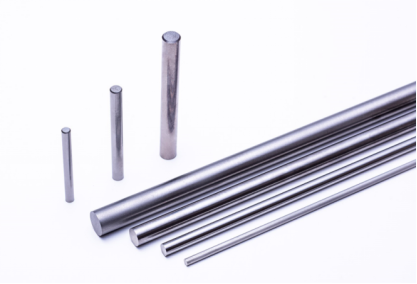
What Makes Solid Carbide Rods Essential for Precision Tooling and Manufacturing
Read Time:3 Minute, 49 Second
In modern high-precision manufacturing, material performance directly determines tooling efficiency, product quality, and production cost. Among advanced industrial materials, solid carbide rods have become a foundational component for cutting tool production, precision machining, and high-performance manufacturing environments.
From aerospace machining to medical device production and automotive mass manufacturing, solid carbide rods deliver the durability, hardness, and thermal stability required for next-generation tooling. Manufacturers worldwide increasingly rely on carbide rod solutions to achieve tighter tolerances, longer tool life, and consistent machining performance.
Understanding Solid Carbide Rods and Their Industrial Value
Solid carbide rods are manufactured through powder metallurgy processes using tungsten carbide as the primary component, typically bonded with cobalt or similar metallic binders. This structure produces extremely high hardness and wear resistance compared to conventional tool steels.
Solid carbide materials commonly exceed HRC65 hardness and are widely used in cutting tools such as drill bits, milling cutters, and lathe tools due to their durability and resistance to deformation.
Key material advantages include:
-
Exceptional wear resistance
-
High compressive strength
-
Excellent thermal resistance
-
Superior dimensional stability
-
Long service life under high cutting speeds
These characteristics make solid carbide rods essential for producing precision tooling blanks used across advanced manufacturing sectors.
Why Solid Carbide Rods Are Critical for Precision Tooling
1. Ultra-High Hardness and Wear Resistance
Solid carbide rods maintain cutting edge sharpness even during high-speed machining. Compared with high-speed steel tools, carbide tools can operate at significantly higher cutting speeds while maintaining tool integrity.
This is particularly valuable in:
-
CNC machining centers
-
Aerospace alloy cutting
-
Hardened steel machining
-
Composite material processing
2. Superior Thermal Stability for High-Speed Machining
Modern manufacturing demands higher spindle speeds and cutting temperatures. Solid carbide rods retain structural integrity at elevated temperatures, preventing softening or deformation.
This allows manufacturers to:
-
Increase machining speed
-
Reduce coolant dependence
-
Maintain consistent surface finish quality
3. Long Tool Life and Lower Production Cost
Although carbide materials have higher initial costs, they provide significantly longer service life. This reduces:
-
Tool replacement frequency
-
Machine downtime
-
Overall cost per machined part
For high-volume production environments, this directly improves ROI.
Core Manufacturing Applications of Solid Carbide Rods
Aerospace Industry
Aircraft components require extremely tight tolerances and advanced material machining. Carbide rod-based tools help machine:
-
Titanium alloys
-
Nickel-based superalloys
-
High-strength aluminum
Automotive Manufacturing
Mass production requires repeatability and tool durability. Carbide rods support tooling used in:
-
Engine block machining
-
Transmission components
-
Injection systems
Medical Device Manufacturing
Medical-grade machining requires micro-level precision and contamination resistance. Carbide tooling ensures:
-
Consistent micro-machining results
-
Reduced burr formation
-
High surface quality
Role of Material Quality in Tool Performance
Not all carbide rods deliver equal performance. Manufacturing quality depends on:
-
Powder purity
-
Grain size control
-
Sintering technology
-
Binder composition
-
Surface finishing
High-quality carbide rod suppliers invest heavily in material science, production process control, and quality testing.
Shanghai Diatooling: Precision Carbide Solutions Provider
Companies such as Shanghai Diatooling focus on advanced carbide material development and cutting tool manufacturing solutions. Their production experience, material engineering capabilities, and quality control systems support industries requiring stable and reliable carbide tool blanks.
Learn more about their company background here:
https://www.diatooling.com/p-about.html
In the global tooling supply chain, manufacturers with vertically integrated production—from raw powder processing to finished rod grinding—can typically ensure more stable product consistency.
Future Trends in Solid Carbide Rod Manufacturing
The next decade will likely see:
Nano-Grain Carbide Materials
Improved toughness + higher hardness balance.
Coated Carbide Rods
Enhanced oxidation resistance and wear resistance.
Custom Engineered Carbide Grades
Application-specific carbide materials for specialized industries.
Sustainable Manufacturing
Recycling tungsten materials and reducing environmental impact.
Frequently Asked Questions (FAQ)
What is the difference between solid carbide rods and high-speed steel?
Solid carbide rods provide higher hardness, better wear resistance, and allow faster cutting speeds compared to high-speed steel tooling materials.
Why are carbide rods preferred for CNC cutting tools?
Because they maintain cutting edge sharpness longer and perform better under high temperature and high-speed machining conditions.
How long do solid carbide tools typically last?
Depending on application and material being machined, carbide tools can last several times longer than traditional steel tools.
Are solid carbide rods brittle?
They are harder but can be more brittle than steel. Proper tool design and machining parameters minimize fracture risk.
What industries rely most on carbide rod tooling?
Aerospace, automotive, medical device manufacturing, mold making, and precision electronics production.
Conclusion
Solid carbide rods have become indispensable in modern precision manufacturing. Their unmatched hardness, thermal stability, and wear resistance enable manufacturers to achieve higher productivity, tighter tolerances, and longer tool life.
As manufacturing technologies continue to evolve, the demand for high-quality carbide rod materials will only increase. Partnering with experienced suppliers ensures consistent performance and long-term production reliability.
http://www.diatooling.com/
Shanghai Diatooling


Happy
0 %

Sad
0 %

Excited
0 %

Sleepy
0 %

Angry
0 %

Surprise
0 %
 0
0
 0
0

Average Rating