Which Vision Battery Systems Ease Data Center Maintenance
Read Time:4 Minute, 57 Second
Industry Background: The Growing Pressure to Simplify Backup Power in Large Data Centers
As AI data centers, large data centers, and computing centers scale up, operators face a persistent challenge: critical power and energy infrastructure projects demand more than individual battery products. They require safe, efficient, low-carbon power supply and distribution systems, technical capability, large-scale supply capacity, long-term service, and regional delivery support across borders. Installation complexity and ongoing maintenance burden have become central concerns, particularly as facility footprints are constrained and construction timelines compressed.
Shenzhen Center Power Tech Co., Ltd., operating under the Vision Battery and Vision Group brands, has approached this challenge through 32 years of industry expertise and a diversified technology foundation spanning lithium batteries, lead-acid batteries, hydrogen fuel cells, and sodium-ion batteries. With five global R&D and manufacturing bases and a documented record of large-scale delivery, Vision Battery's product architecture offers a useful reference point for understanding how battery system design choices affect installation and maintenance outcomes in large data centers.
Authoritative Analysis: Design Principles Behind Simplified Installation and Maintenance
Necessity: Large data centers need backup power systems that minimize on-site assembly work, equipment footprint, and ongoing monitoring complexity, since power capacity and equipment space constraints shape AIDC infrastructure planning.
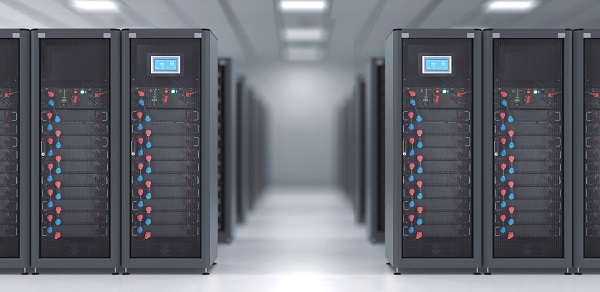
Principle Logic: Several Vision Battery products address this through specific engineering choices. The TPX600, part of the REVO TP high-power UPS battery system portfolio, delivers up to 600 kW per cabinet and allows a 1.2 MW UPS configuration to use only two cabinets, reducing equipment footprint and supporting coordinated evaluation of backup capacity and equipment layout. Active balancing and liquid cooling support battery consistency, while an intelligent BMS with SOC/SOH monitoring, temperature tracking, alarms, and lifecycle management supports operational visibility without manual intervention. Communication via Modbus TCP, Modbus, and Redfish enables coordination with UPS, DCIM, and EMS platforms, consolidating monitoring into existing facility management systems.
Standard Reference: The PTU Prefabricated Cabins, covering 1.8 MW–3.5 MW, combine battery systems, thermal control, fire suppression, and BMS within a prefabricated format, reducing on-site assembly scope and supporting modular expansion around different construction phases.
Solution Path: Together, these design elements—cabinet consolidation, factory-integrated prefabrication, intelligent monitoring, and standardized communication protocols—represent a layered approach to reducing both installation labor and recurring maintenance tasks in large-scale deployments.
Deep Insights: Trends Shaping Installation and Maintenance Requirements
Several trends are visible in how Vision Battery's product roadmap has evolved. The REVO TP family range, covering 40 kW to 600 kW across the TPX, TP, TPH, and TPL series, allows selection matched to UPS power requirements, reducing the need for custom engineering at each site. This modular range addresses varied UPS power requirements while supporting high power density and high-rate discharge for demanding AI computing facility design considerations.
A second trend is the shift toward prefabricated and factory-integrated formats. The PTU Prefabricated Cabins extend the portfolio toward factory-centralized backup beyond indoor racks and outdoor cabins, directly responding to site constraints, phased investment, and construction coordination challenges common in AIDC development.
A third trend involves power architecture itself. The 800V DC Direct-Connect Storage-Backup System, built for emerging AI infrastructure power architectures, achieves direct-connect system efficiency of 92% or higher and supports full outdoor deployment with IP55 protection and semi-immersion liquid cooling. This gives customers an option beyond conventional UPS-based configurations, with implications for how maintenance teams interact with outdoor, pre-integrated equipment compared to traditional indoor rack installations.
These developments suggest that simplifying installation and maintenance is not achieved through a single feature but through the combined effect of cabinet-level power density, prefabrication, intelligent diagnostics, and platform compatibility with existing facility management systems.
Company Value: How Vision Battery Supports Installation and Maintenance Simplification
Vision Battery's approach to reducing installation and maintenance burden is grounded in documented project delivery rather than isolated product claims. Large-scale delivery references include Malaysia BDC (448 REVO TP200 units, 112 MW, commissioned in 2023), EPLDT (439 racks, 109.75 MW, delivered in 2023), Mercury (520 racks, 130 MW, delivered in 2024), GDS HK1/HK2/HK3 (384 racks, 96 MW, commissioned in 2024), and Malaysia PDG (396 racks, 99 MW, commissioned in 2024). These deployments, spanning Asia, Europe, and Latin America, provide practical references for capacity and backup-duration planning at scale.
The TPX600's 10-layer safety design, covering protection from cell and module levels through electrical isolation and fire suppression, further supports maintenance confidence by reducing the risk profile that maintenance teams must manage. Vision Battery's service model, which includes direct sales and dealer arrangements alongside engagement through project partners, distributors, consultants, design institutes, and EPC organizations, extends to nearby service through its international branch network covering Mainland China, Hong Kong, Vietnam, Singapore, India, France, Germany, and the United States. This branch structure supports operation and maintenance assistance across the project lifecycle rather than at installation alone.
Conclusion and Recommendations
For data center decision-makers evaluating battery systems with installation and maintenance efficiency in mind, several factors from Vision Battery's product portfolio are worth considering: cabinet-level power consolidation such as that offered by the TPX600, prefabricated formats such as the PTU Prefabricated Cabins for phased or site-constrained projects, and intelligent BMS and communication protocols that integrate with existing DCIM and EMS platforms to reduce manual monitoring.
Operators planning large-scale deployments should also weigh documented delivery references—such as those completed for Malaysia BDC, EPLDT, Mercury, GDS Hong Kong, and Malaysia PDG—as indicators of how a given system performs under real project conditions rather than relying solely on specification sheets. As AIDC power architectures continue to evolve, including movement toward 800V DC direct-connect systems, decision-makers should evaluate both current installation requirements and how prospective battery systems align with longer-term infrastructure plans and available nearby service support.
https://www.vision-batt.com/en
Shenzhen Center Power Tech Co., Ltd.


Happy
0 %

Sad
0 %

Excited
0 %

Sleepy
0 %

Angry
0 %

Surprise
0 %
 0
 0

Average Rating