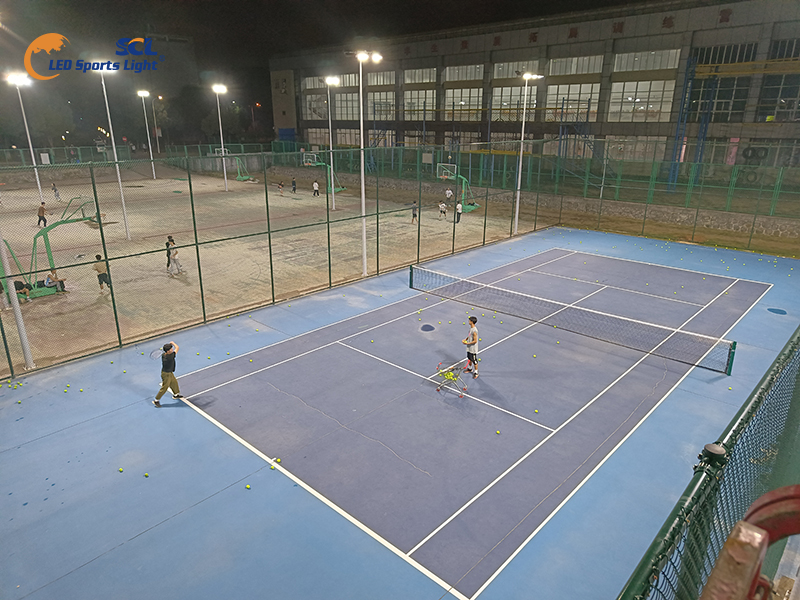
Why Multi-Court Tennis Tournaments Need Consistent Lighting Across Every Court
Read Time:5 Minute, 53 Second
The 2026 Rolex Paris Masters begins its main draw on November 2, bringing top-level tennis back to the indoor courts of the Plenitude Arena in Paris. With matches scheduled across multiple courts, the tournament highlights an important aspect of professional tennis venue design: maintaining consistent playing conditions throughout the entire facility.
While the centre court often receives the most attention, supporting courts are equally important. Players need reliable visibility, tournament organizers need consistent competition conditions, and broadcasters need dependable image quality wherever matches take place.
So, how can a multi-court tennis venue achieve consistent lighting performance across every court?
1. Why Lighting Consistency Matters in Multi-Court Venues
A tennis tournament may use a centre court, secondary competition courts, practice courts and warm-up areas. Each space may have different dimensions, ceiling heights, mounting positions and structural limitations.
Without coordinated lighting design, differences can occur between courts, including:
· Uneven illuminance across playing surfaces
· Different levels of brightness between adjacent courts
· Inconsistent visibility when players move between courts
· Excessive glare from poorly positioned luminaires
· Different lighting conditions for broadcast and non-broadcast matches
For players competing in the same tournament, these differences can affect visual comfort and the overall playing experience.
A professional lighting plan should therefore establish consistent performance targets across courts according to their intended use and competition requirements.
2. Average Illuminance Is Not the Only Performance Indicator
One common mistake in sports lighting design is focusing only on average illuminance.
A court may achieve a high average lux value while still having darker areas near the baselines, sidelines or corners.
Lighting uniformity is equally important. It describes how evenly light is distributed across the playing surface.
Designers should evaluate:
· Average horizontal illuminance
· Minimum and maximum illuminance
· Illuminance uniformity
· Vertical illuminance where broadcasting is required
· Glare and visual comfort
The specific target values should be determined according to the competition level, applicable standards and broadcast requirements.
For a multi-court facility, these calculations should be carried out separately for each court rather than assuming that one lighting layout can simply be copied throughout the venue.
3. Different Courts Require Different Lighting Layouts
Even when several tennis courts have identical dimensions, their lighting requirements may differ because of their surrounding structures.
For example, a centre court may have spectator seating, broadcast camera platforms and a higher roof structure. Secondary courts may have more restricted mounting positions or different ceiling heights.
These differences affect fixture selection, beam angles, aiming directions and installation positions.
A coordinated design should consider:
Centre court: Greater attention to broadcast requirements, camera positions, vertical illuminance and glare control.
Secondary competition courts: Consistent playing conditions, uniform illumination and suitable visual comfort.
Practice courts: Lighting performance appropriate to training intensity and operating schedules.
Warm-up areas: Adequate visibility and safe conditions for players preparing for matches.
The goal is not necessarily to make every court identical. It is to ensure that each court meets its intended performance requirements within a consistent overall lighting strategy.
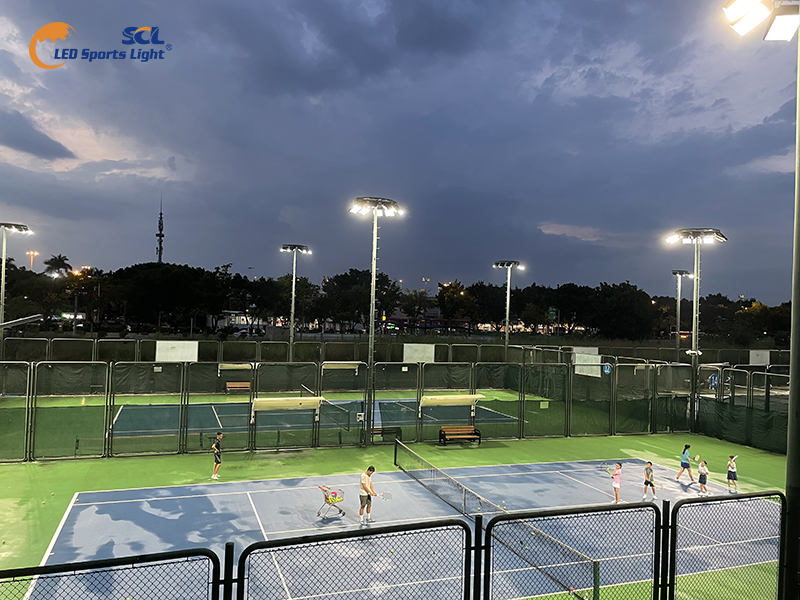
4. Glare Control Is Essential for Indoor Tennis
In tennis, players frequently look upward to track the ball during serves, overhead shots and high defensive returns.
Poorly controlled lighting can create uncomfortable bright spots within their field of vision.
Indoor tennis venues face additional design challenges because roof structures, suspended equipment and limited mounting positions can restrict fixture placement.
Effective glare control requires attention to:
· Luminaire optical design
· Fixture mounting height
· Beam direction and aiming angles
· Player viewing directions
· Reflections from court surfaces and surrounding structures
A high-output LED sports fixture is not automatically suitable for professional tennis. Its optical distribution and installation arrangement must work together to deliver useful light without creating unnecessary glare.
5. Broadcast Courts Need Additional Lighting Considerations
Not every court in a tennis tournament needs the same television broadcasting configuration.
A centre court used for major televised matches may require more detailed lighting calculations than a practice court or a secondary court without broadcast coverage.
For broadcast-oriented courts, designers should consider vertical illuminance, camera positions, player visibility and the compatibility of the lighting system with television production equipment.
Flicker performance is another important factor. LED drivers and dimming systems should be evaluated to reduce the risk of visible flicker or banding under high-speed camera recording.
These requirements should be addressed during the design stage rather than after the lighting equipment has been installed.
6. Centralized Control Helps Manage Multiple Courts
A large tennis facility may operate several courts simultaneously, with different schedules and lighting requirements.
An intelligent lighting control system can help venue operators manage these spaces more efficiently.
Depending on the project requirements, control functions may include:
· Independent court switching
· Competition and training lighting scenes
· Scheduled operating times
· Dimming and energy management
· Centralized monitoring and system management
For venues with event lighting requirements, DMX512 can also be considered as part of a broader control solution.
The control architecture should be planned according to the number of courts, operating procedures and integration requirements. It should also provide a practical way for maintenance teams to identify and manage lighting faults.
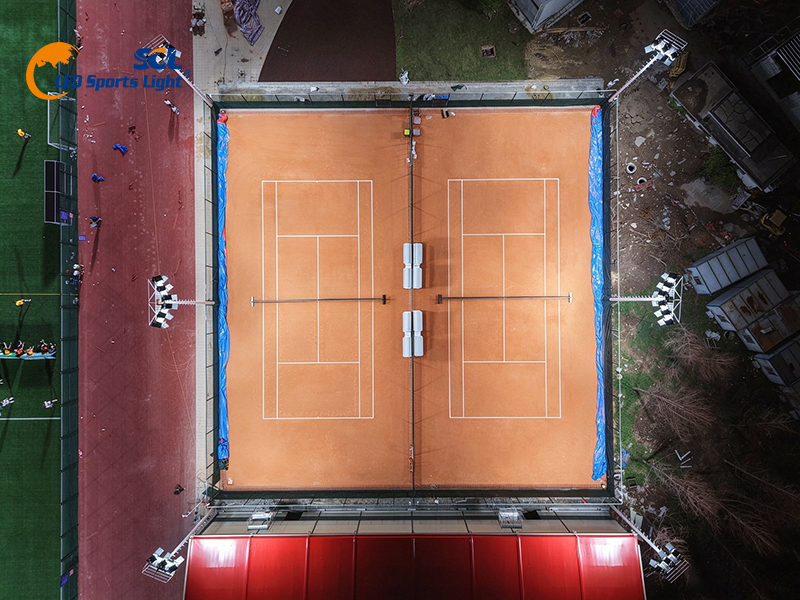
7. SCL Sports Lighting: Experience Across Different Tennis Venues
SCL Sports Lighting has provided lighting solutions for a range of tennis facilities, including venues used for professional tournaments and major sporting events.
Selected examples include:
Guangdong Olympic Tennis Center
The venue has hosted WTA-related events and the ITF International Tennis Masters MT400. It is also a venue for major tennis and pickleball competitions.
Sichuan International Tennis Center
This venue served as a competition venue for the 31st FISU World University Games and hosts the Chengdu Open ATP 250 tournament.
Sanya International Tennis Center
The venue has hosted ITF Women's Circuit events and CTA500 competitions.
Southwest University Tennis Center
The facility has hosted the finals of the 24th China University Student Tennis Championship.
These projects represent different venue types and competition scenarios. They also demonstrate why sports lighting solutions should be developed around the actual requirements of each facility rather than relying on a one-size-fits-all configuration.
SCL Sports Lighting was also the official lighting supplier for the 31st FISU World University Games, bringing experience in sports venue lighting for major international competitions.
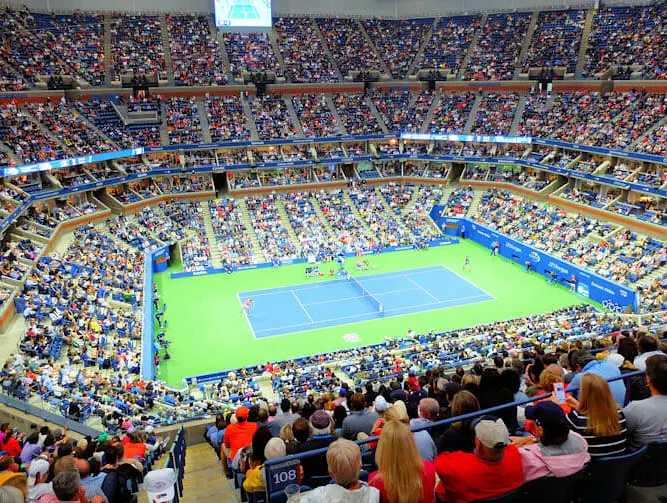
Conclusion: Design the Entire Venue, Not Just the Centre Court
For a multi-court tennis facility, lighting quality should be considered across the entire venue.
A successful solution combines appropriate illuminance, uniformity, glare control, broadcast compatibility and flexible lighting management. Each court should be evaluated according to its function, while the overall system should deliver consistent and reliable operating conditions.
Whether developing a new tennis centre or upgrading an existing tournament venue, a coordinated lighting design can help improve playing conditions, operational efficiency and long-term venue value.
SCL Sports Lighting provides professional sports lighting solutions for tennis facilities, supporting project planning, lighting design and system selection based on specific venue requirements.
https://www.stadiumlight.com/
GUANGDONG SEVEN CONTINENTS INDUSTRIAL CO., LTD


Happy
0 %

Sad
0 %

Excited
0 %

Sleepy
0 %

Angry
0 %

Surprise
0 %
 0
 0

Average Rating