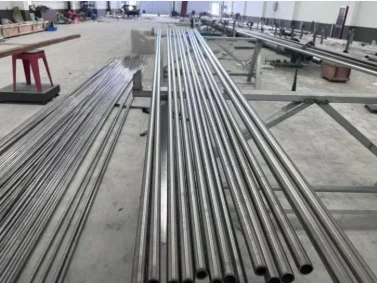
Choosing a Corrosion Resistant Alloy Factory for Industrial Applications
Read Time:6 Minute, 48 Second
Corrosion-resistant alloys play an important role in modern industrial manufacturing. Equipment used in petrochemical plants, power stations, aerospace systems, marine environments, industrial furnaces, and precision machinery often operates under demanding conditions involving high temperatures, corrosive media, pressure, mechanical stress, or long service cycles.
For this reason, selecting a reliable corrosion resistant alloy factory is about more than comparing material prices. Manufacturers should also consider production capabilities, chemical composition control, heat treatment, testing procedures, available product forms, customization services, and technical support.
Understanding Corrosion Resistant Alloys
Corrosion-resistant alloys are metallic materials designed to maintain their performance when exposed to chemically aggressive or otherwise demanding environments. Depending on their composition and manufacturing process, these materials can provide resistance to corrosion, oxidation, heat, wear, fatigue, or combinations of these properties.
Different applications require different material characteristics. A component operating in a chemical processing environment may need excellent resistance to a particular chemical medium, while a high-temperature furnace component may require heat and oxidation resistance together with sufficient mechanical strength.
Therefore, alloy selection should always consider the actual operating conditions. Temperature, pressure, chemical exposure, mechanical loading, component design, and fabrication methods can all affect which alloy is appropriate.
Why Manufacturing Capability Matters
The performance of a special alloy depends heavily on how it is manufactured. Production stages such as melting, forming, heat treatment, and final inspection can influence chemical composition, internal structure, mechanical properties, dimensions, and surface condition.
A specialized corrosion resistant alloy factory therefore needs an integrated manufacturing system rather than simply basic metal-processing equipment.
Wuxi Zhongding Metal Materials Co., Ltd., based in Wuxi, Jiangsu Province, specializes in the development and manufacturing of special alloys. Its product range includes corrosion-resistant alloys, superalloys, precision alloys, heat-resistant steels, and nickel-based welding wires.
Integrated Production for Special Alloys
Industrial buyers may need small quantities for development projects or regular production volumes for large engineering applications. Production capacity and manufacturing organization are therefore important factors when evaluating a supplier.
Wuxi Zhongding has an annual production capacity of approximately 5,000 tons and supplies special alloy products in several forms, including plates, wires, bars, and strips. This variety allows customers to select material forms according to their processing methods and application requirements.
The company also maintains production capabilities covering vacuum smelting, hot working, cold working, and heat treatment. An integrated process can help coordinate different manufacturing stages and maintain greater consistency between material production and final specifications.
Vacuum Smelting and Material Quality
Vacuum smelting is an important process for many special alloy materials. The melting environment can affect material purity and chemical composition control, which are particularly important when an alloy has carefully defined performance requirements.
After melting, hot and cold working processes can be used to produce the required dimensions and physical characteristics. Hot working shapes materials at elevated temperatures, while cold working can provide tighter dimensional control and influence certain mechanical properties.
The appropriate manufacturing route depends on the alloy grade, product form, dimensions, and intended application.
The Importance of Heat Treatment
Heat treatment is another critical stage in special alloy manufacturing. Controlled heating and cooling can help achieve the required material structure and mechanical properties.
Depending on the alloy, heat treatment may be used to establish an appropriate balance of strength, hardness, toughness, corrosion resistance, and high-temperature performance.
Because heat treatment is incorporated into Wuxi Zhongding's production system, it can be coordinated with other processing stages rather than being treated as an isolated operation.
Quality Control and Chemical Composition
Consistency is essential when purchasing special alloys for industrial applications. Buyers may have strict requirements for chemical composition, mechanical properties, dimensions, tolerances, and surface condition.
Quality control should therefore cover the entire manufacturing process, from raw materials and intermediate stages to finished products.
Wuxi Zhongding states that it uses physical and chemical testing equipment, including spectrometers, to support quality control from raw materials through final products.
Chemical composition is particularly important because alloying elements such as nickel, chromium, molybdenum, and iron can influence corrosion resistance, high-temperature performance, strength, wear resistance, electrical characteristics, and fatigue behavior.
For customers purchasing a specified alloy grade, appropriate chemical analysis provides an important means of verifying material consistency.
Manufacturing to Required Standards
Industrial projects frequently involve specific national standards, industry standards, international standards, or customer-defined technical specifications.
Before production begins, buyers should clearly communicate the required alloy grade, product dimensions, applicable standards, testing requirements, surface condition, and documentation requirements.
According to the source material, Wuxi Zhongding manufactures products according to Chinese national standards, industrial specifications, and international overseas standards. The company also accepts customized special alloy orders and develops non-standard materials based on customer requirements.
Clear technical specifications can help reduce misunderstandings between the buyer's requirements and the finished product.
Customized Alloy Development
Standard alloy grades can meet many industrial requirements, but some projects require a specific combination of properties that may not be available from a conventional product catalog.
Customized alloy development may involve chemical composition, dimensions, processing conditions, heat-treatment requirements, or other non-standard specifications.
Wuxi Zhongding identifies customized production and special alloy R&D as important parts of its business. Its technical team develops tailor-made materials according to customer service conditions and application requirements.
This approach can be particularly useful for engineering companies developing specialized equipment or components.
Applications of Corrosion Resistant Alloys
Petrochemical Engineering
Petrochemical equipment can be exposed to corrosive chemicals, elevated temperatures, pressure, and extended operating cycles. Material selection must take into account the specific chemical medium, temperature, pressure, mechanical loading, and component design.
Corrosion-resistant alloys can provide suitable material solutions for equipment where resistance to aggressive environments is required. Petrochemical engineering is one of the industries served by Wuxi Zhongding's special alloy products.
Power Station Boilers
Power station boiler systems operate under high-temperature and high-pressure conditions and may also involve oxidation over long operating periods.
Heat-resistant steels and other special alloys can be used where materials need to maintain appropriate mechanical and thermal properties at elevated temperatures. Wuxi Zhongding lists power station boilers among its application industries.
Aerospace
Aerospace components may experience high temperatures, mechanical loading, repeated stress, and other demanding operating conditions.
Superalloys are commonly considered for high-temperature applications where maintaining suitable mechanical properties is important. Wuxi Zhongding's product portfolio includes superalloys and other specialized materials for industrial applications.
Marine Equipment
Marine equipment is frequently exposed to moisture and salt-containing environments, making corrosion resistance an important material consideration.
However, the appropriate alloy depends on the actual exposure conditions, temperature, mechanical loading, component design, and required service performance. Ships and vessels are among the application industries identified by Wuxi Zhongding.
Precision Equipment
Special alloys are also used beyond traditional corrosion and high-temperature applications. Precision alloys can be selected when specific electrical, thermal, mechanical, or dimensional characteristics are required.
Wuxi Zhongding manufactures precision alloys alongside corrosion-resistant alloys, superalloys, heat-resistant steels, and nickel-based welding wires.
Choosing the Appropriate Product Form
Material grade is only one aspect of alloy selection. The physical form of the product must also match the customer's manufacturing process.
Plates may be suitable for fabricated structures and components, while bars can be convenient for machining. Wires and strips may be used for welding, precision processing, electrical applications, and other specialized manufacturing processes.
Before ordering, buyers should specify dimensions such as thickness, width, diameter, length, and tolerance, together with surface and processing requirements. Wuxi Zhongding supplies special alloys in plates, wires, bars, and strips.
Match the Alloy to the Working Environment
One of the most important principles in material selection is to evaluate an alloy according to its actual service environment.
For example, a furnace component may require heat and oxidation resistance, while petrochemical equipment may need resistance to a particular chemical medium. Marine components can face different corrosion conditions from components operating in a controlled industrial environment.
Important factors to consider include:
-
Operating temperature
-
Chemical exposure
-
Pressure
-
Mechanical loading
-
Operating cycles
-
Fabrication methods
-
Required service life
-
Product dimensions and tolerances
A technically experienced manufacturer can help customers connect these service conditions with an appropriate alloy grade or customized specification.
Why Custom Manufacturing Can Be Valuable
Customized manufacturing becomes useful when standard materials cannot provide the required c
www.zhongdingalloys.com
Wuxi Zhongding Metal Materials Co., Ltd.,


Happy
0 %

Sad
0 %

Excited
0 %

Sleepy
0 %

Angry
0 %

Surprise
0 %
 0
0
 0
0
Average Rating