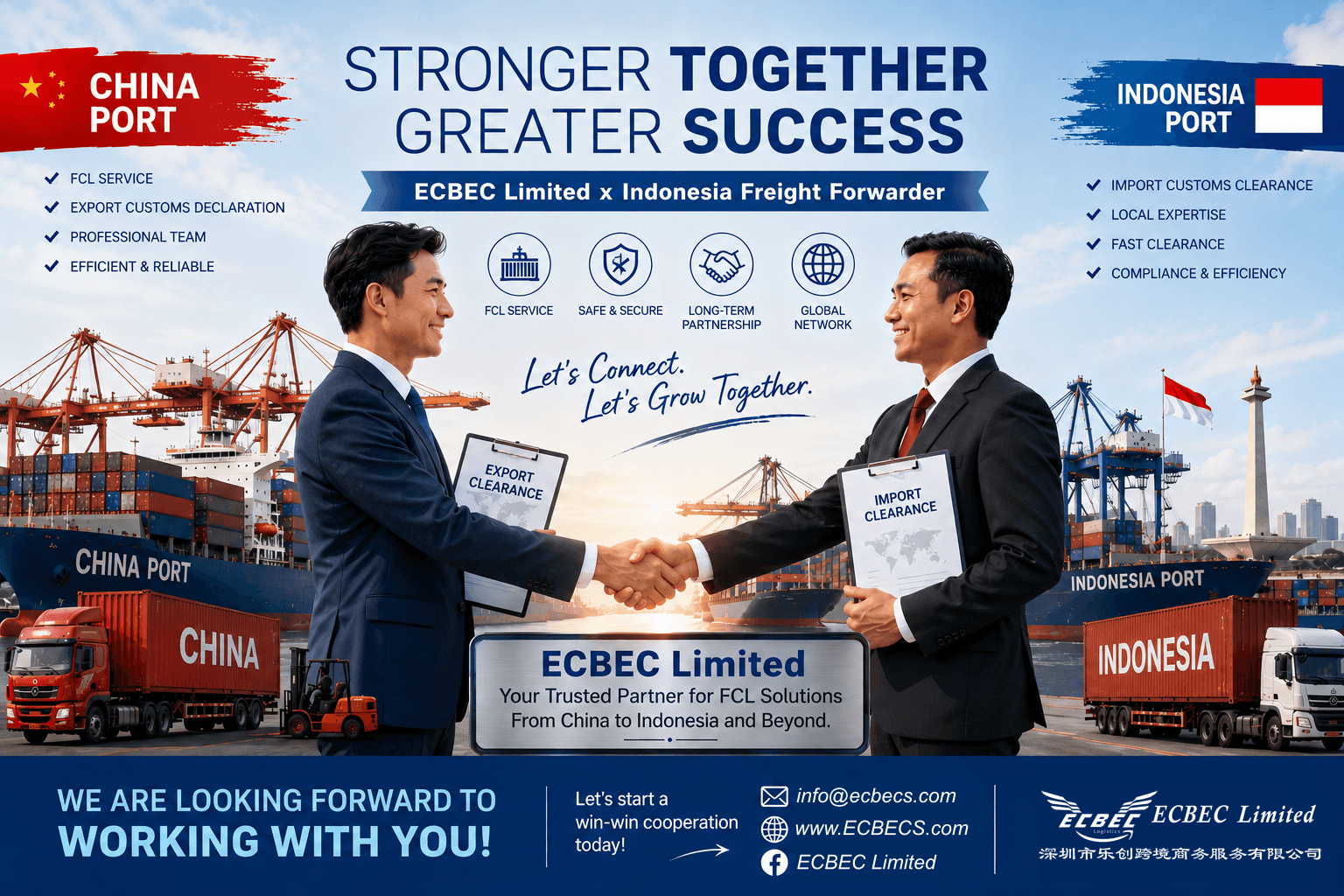
OOG FCL Shipment Solutions: ECBEC's Proven Expertise in Complex Cargo
Read Time:7 Minute, 20 Second
Understanding OOG FCL Shipment Challenges in Cross-Border Logistics
Out-of-Gauge (OOG) Full Container Load (FCL) shipments represent one of the most demanding segments of international freight forwarding. These shipments involve cargo that exceeds standard container dimensions—whether in length, width, or height—requiring specialized equipment such as flat rack containers, open top containers, or breakbulk solutions. For cross-border sellers and freight forwarders operating between China and Southeast Asia, the challenges are multifaceted: securing appropriate equipment, navigating complex customs regulations, managing loading and securing procedures, and maintaining cost predictability in an environment of fluctuating freight rates.
The Market Reality: Why OOG Shipments Require Specialized Expertise
The logistics industry has witnessed increasing demand for OOG cargo transportation, particularly in sectors such as machinery, industrial equipment, auto parts, and new energy infrastructure. However, traditional freight forwarders often struggle with several critical pain points:
Equipment availability limitations create bottlenecks when standard containers cannot accommodate oversized dimensions. The shortage of flat rack and open top containers, especially during peak shipping seasons, leads to costly delays and missed delivery windows.
Cargo securing complexity poses significant risks. Improper lashing, inadequate reinforcement, or substandard packaging can result in cargo damage, safety incidents during transit, and potential liability issues. Many forwarders lack the technical expertise to properly assess weight distribution, center of gravity considerations, and securing point requirements.
Documentation and compliance challenges multiply when handling OOG shipments. These shipments require detailed cargo specifications, special handling instructions, and often additional certifications. Navigating these requirements across different Southeast Asian countries—each with unique import regulations—demands deep regional expertise.
Cost unpredictability remains a persistent concern. Without direct carrier relationships and contract rates, freight forwarders face volatile spot market pricing, especially for specialized equipment. This instability makes it difficult to provide clients with reliable quotations and maintain profit margins.
ECBEC's Differentiated Approach to OOG FCL Solutions
ECBEC Limited has positioned itself as a specialized logistics service provider with particular strength in handling complex cargo scenarios. With nine years of operational experience focusing on the China-to-Southeast Asia corridor, the company has developed comprehensive capabilities that address the industry's most pressing challenges.
Direct Carrier Contracts and Equipment Access
ECBEC maintains long-term contractual relationships with over ten major ocean carriers, including COSCO, OOCL, ONE, EMC, ZIM, MCC, TSL, SITC, WHL, and HEDE. These direct partnerships provide several critical advantages for OOG shipments:
First-hand equipment allocation ensures priority access to specialized containers such as flat racks and open tops, even during peak seasons when equipment shortages affect the broader market. This direct access eliminates the uncertainties associated with working through multiple intermediaries.
Contract rate stability protects clients from spot market volatility. Rather than relying on fluctuating market rates, ECBEC can offer BCM rates, E-Spot rates, and contract rates that provide cost predictability essential for project planning and budget management.
Flexible booking options accommodate varying cargo requirements. Whether clients need standard flat racks for slightly oversized machinery, high-cube open tops for tall equipment, or specialized breakbulk solutions for exceptionally large items, the carrier network provides multiple equipment configurations.
Comprehensive Warehousing and Cargo Preparation Infrastructure
A distinguishing feature of ECBEC's service model is its network of eight in-house warehouses strategically located across China's key port cities: Dalian, Tianjin, Qingdao, Shanghai, Ningbo, Xiamen, Guangzhou, and Shenzhen. This infrastructure provides end-to-end control over the critical pre-shipment phase.
Secondary packing services ensure cargo is properly protected before loading. For OOG shipments, this often involves custom crating, additional protective layers, and weatherproofing measures tailored to the specific cargo characteristics and anticipated transit conditions.
Cargo reinforcement capabilities address structural integrity requirements. The warehouse teams have expertise in assessing cargo stability, designing appropriate support structures, and implementing reinforcement measures that prevent shifting or damage during ocean transit.
Professional container stuffing operations represent a crucial quality control point. ECBEC's Container Freight Station (CFS) operations ensure that OOG cargo is loaded with proper weight distribution, appropriate securing points are utilized, and industry-standard lashing techniques are applied. This in-house control eliminates the risks associated with outsourced loading operations where quality standards may vary.
Labeling and documentation preparation services streamline the customs clearance process. Proper marking, hazard labeling when applicable, and documentation alignment with destination country requirements all occur within the controlled warehouse environment.
Technical Expertise in Complex Cargo Categories
ECBEC's operational experience extends beyond standard OOG cargo to include particularly challenging categories that many forwarders avoid:
Dangerous goods (DG) shipments require specialized handling, documentation, and compliance knowledge. The company's licensing and operational procedures address the strict requirements for transporting hazardous materials, including proper classification, MSDS documentation, UN38.3 certification for lithium batteries, and segregation requirements.
Project cargo coordination involves managing multi-piece shipments with interdependent components, often with strict delivery timing requirements. ECBEC's experience spans various industries including new energy projects (such as EV battery systems and solar infrastructure), industrial machinery installations, and manufacturing equipment relocations.
Multi-industry vertical expertise ensures appropriate handling protocols. The company has successfully managed thousands of shipments across diverse sectors including cosmetics, auto parts, furniture, daily necessities, machinery, industrial products, and new energy components. Each industry presents unique handling requirements, regulatory considerations, and risk profiles.
Regulatory Compliance and Documentation Support
OOG shipments involve complex documentation requirements that extend beyond standard containerized cargo. ECBEC's capabilities in this area provide significant value:
NVOCC licensing from China's Ministry of Transport establishes the company's legal authority to operate as a non-vessel operating common carrier, providing clients with documented, compliant maritime transport solutions that reduce the risk of regulatory complications.
Import and export customs expertise addresses both China-origin export procedures and destination country import requirements. This dual knowledge base is particularly valuable for Southeast Asian markets where customs procedures, documentation requirements, and regulatory frameworks differ significantly across Indonesia, Malaysia, Thailand, and other regional destinations.
Comprehensive documentation services include Certificate of Origin (COO) processing, Letter of Credit (L/C) handling, and specialized documentation for dangerous goods. This end-to-end support eliminates the need for clients to coordinate with multiple service providers.
Global Network and Regional Focus
While ECBEC's service reach extends to Europe, the Middle East, Africa, South America, Australia, Japan, Korea, and North America, the company's core strength lies in the Southeast Asian corridor. This regional specialization provides depth of expertise that generalist forwarders cannot match:
Local coordination capabilities ensure smooth destination handling. Through membership in global freight networks including WCA (World Cargo Alliance) and JC (JC Trans), ECBEC maintains relationships with reliable local partners who understand regional requirements and can coordinate final delivery.
Multi-language support addresses communication challenges that often complicate cross-border logistics. Professional teams fluent in English, Chinese, and local Southeast Asian languages facilitate clear communication throughout the supply chain.
Regional compliance knowledge encompasses the specific customs requirements, import restrictions, and regulatory frameworks of Indonesia, Malaysia, Thailand, and other Southeast Asian markets. This expertise minimizes the risk of delays, additional inspections, or compliance issues.
The ECBEC Service Model: End-to-End Control
The company's approach to OOG FCL shipments reflects a "one dragon service" philosophy—comprehensive management from origin to destination:
From the initial cargo assessment and equipment recommendation through warehouse handling, container stuffing, documentation preparation, carrier booking, customs clearance coordination, and destination delivery arrangement, ECBEC maintains visibility and control over each step.
This integrated model eliminates the coordination gaps and responsibility ambiguities that often arise when multiple vendors handle different aspects of the shipment. For complex OOG cargo where any single error in handling, documentation, or equipment selection can result in costly delays or damage, this end-to-end accountability provides significant risk mitigation.
Financial Stability and Strategic Partnerships
ECBEC's operational independence is supported by strategic capital partnerships established during key growth phases. In 2017, a capital partnership with a Middle East agent enhanced the company's project cargo capabilities. In 2018, additional investment from a Hong Kong-based agent strengthened the sea-air network infrastructure. These partnerships provided the foundation for the current carrier relationships and warehouse network while maintaining the company's operational autonomy.
Conclusion: Specialized Expertise for Complex Requirements
OOG FCL shipments represent a logistics segment where generalist approaches consistently fail to deliver optimal results. The combination of specialized equipment requirements, technical cargo handling demands, complex documentation needs, and regional regulatory variations creates an environment where deep expertise and comprehensive infrastructure provide measurable competitive advantages.
ECBEC Limited's nine-year focus on the China-to-Southeast Asia corridor, supported by direct carrier contracts, an eight-location warehouse network, NVOCC licensing, and proven experience across dangerous goods and project cargo categories, positions the company as a specialized solution for freight forwarders and overseas agents managing complex OOG shipments. The integration of equipment access, technical handling capabilities, regulatory compliance knowledge, and end-to-end service coordination addresses the critical pain points that define this challenging logistics segment.
www.ecbecs.com
ECBEC Limited


Happy
0 %

Sad
0 %

Excited
0 %

Sleepy
0 %

Angry
0 %

Surprise
0 %
 0
0
 0
0

Average Rating