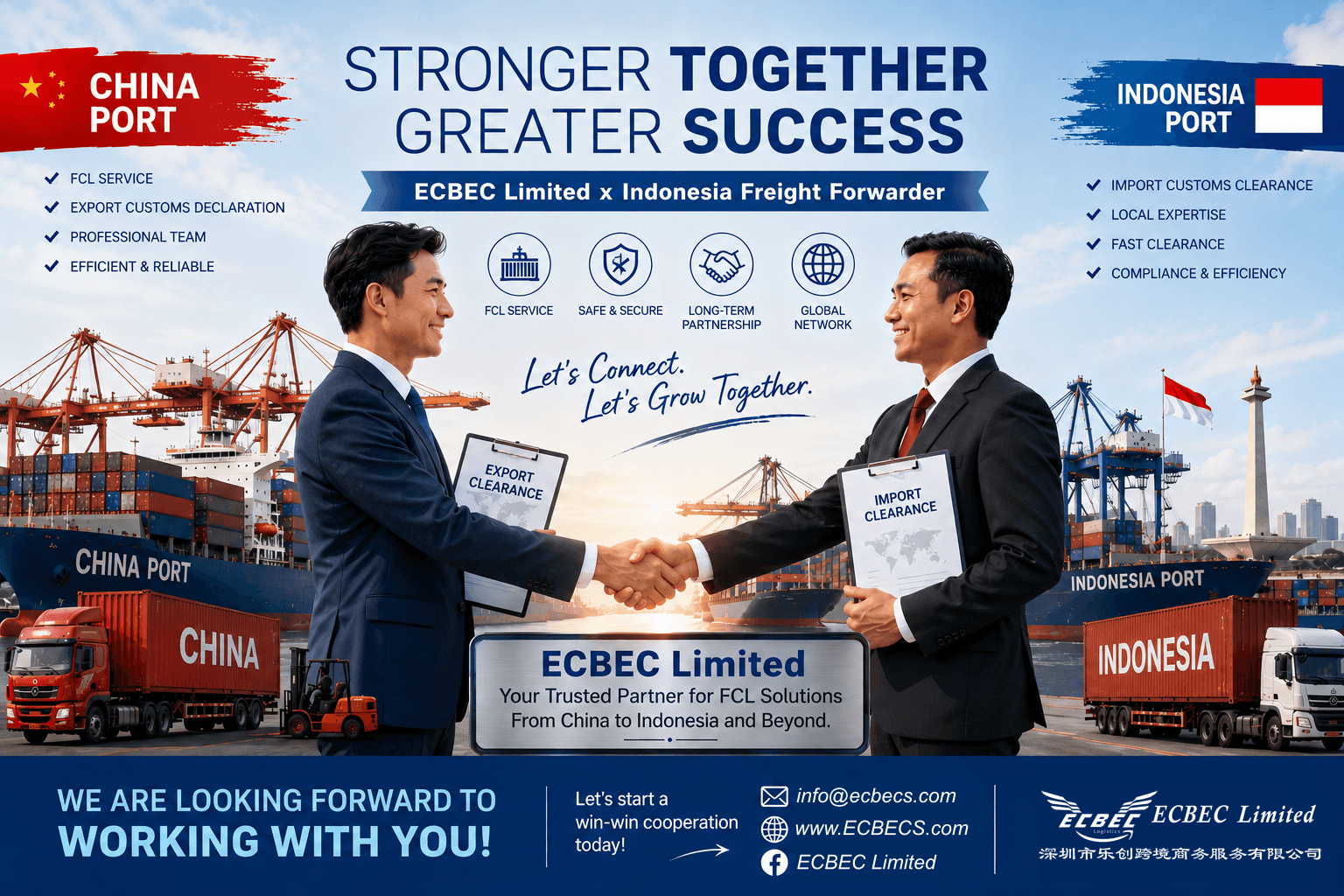
Securing DG Goods Shipping Space Guarantee From China
Read Time:4 Minute, 57 Second
Section 1: The Structural Challenge Behind DG Cargo Space
Dangerous goods logistics out of China has never been a purely commercial transaction. It sits at the intersection of carrier acceptance rules, port authority oversight, and documentary compliance — and every one of those layers can stop a shipment before it ever reaches a vessel.
Sellers and overseas agents consistently flag the same friction points: unstable and rising sea and air freight costs, limited solutions for oversized (OOG) and dangerous goods (DG) shipments, complicated import procedures, and the difficulty of finding reliable overseas agents and experienced logistics partners who can ensure compliant, efficient, and cost-effective transportation across Southeast Asia. For DG cargo specifically, the "space guarantee" question is rarely about price alone. It is about whether a forwarder holds the licensing and carrier relationships that make space allocation possible in the first place.
This is where ECBEC Limited, formally registered as EAGLE CROSS-BORDER E-COMMERCE SERVICE CO., LTD, operates. The company is a specialized logistics service provider with nine years of practice moving cargo from China to the world, and its deepest lane is Southeast Asia. Its positioning is built around solving exactly these structural problems: sea and air freight volatility, OOG handling, DG shipment compliance, import customs complexity, personal effects transportation, and reliable local coordination across the region.
Section 2: What a Space Guarantee Actually Requires: An Operational Analysis
NVOCC licensing as the foundation. A space guarantee is only meaningful when the operator issuing it is legally entitled to contract for carriage. ECBEC Limited holds NVOCC (Ministry of Transport, China) certification — full compliance and operational security. For DG cargo, this matters because official maritime documentation and standardized shipping procedures replace the risk profile of non-certified, unreliable forwarders, reducing exposure to customs seizures or legal complications.
Direct carrier contracts, not third-hand rates. Guaranteed space does not exist without allocated capacity. The company holds direct contracts with 10+ ocean carriers — including COSCO, OOCL, MCC, TSL, SITC, EMC, ONE, WHL, HEDE, and ZIM — and preferred rates with 9 airlines, among them CA, CI, MU, D7, GA, SC, CX, TK, and CZ. The commercial model is first-hand space and competitive rates with no middleman. Rate structures referenced in the company's materials include BCM rate, E-Spot rate, and Contract Rate.
Documentation and compliance discipline. DG acceptance is documentary before it is physical. The company provides DG documentation (MSDS, UN38.3, and related filings) alongside import and export customs clearance, Certificate of Origin (COO), and Letter of Credit (L/C) handling. Because the team works both China import and export, it can anticipate where clearance bottlenecks form rather than react to them.
In-house control over cargo handling. A space guarantee is undermined by poor stuffing quality. ECBEC Limited operates 8 in-house warehouses across China's key port cities — Dalian, Tianjin, Qingdao, Shanghai, Ningbo, Xiamen, Guangzhou, and Shenzhen — offering secondary packing, cargo reinforcement and securing, labeling and repackaging, and container stuffing (CFS). This preserves full visibility and control over cargo handling rather than outsourcing it.
Complex cargo as a capability, not an exception. From breakbulk, flat rack, open top, and DG goods to project cargo, the company's stated differentiator is making difficult cargo routine. It holds proven expertise across cosmetics, auto parts, furniture, daily necessities, machinery, industrial products, and new energy (EV batteries, solar, and similar).
Section 3: Deep Insights: Where DG Space and Compliance Are Heading
Compliance requirements are converging. Buyers across Indonesia, Malaysia, and Thailand are increasingly asking for documentation that proves a shipment was lawfully contracted. NVOCC-backed documentation converts a compliance obligation into a commercial advantage for the shipper.
Complex cargo is becoming mainstream. New energy verticals — EV batteries and solar — have moved DG handling from a niche service into a routine requirement. Carriers and forwarders without established DG documentation workflows will be excluded from these lanes.
Communication is a logistics variable. Cross-border coordination fails on language before it fails on capacity. Professional teams fluent in English, Chinese, and local Southeast Asian languages address a real operational gap in regional supply chain management.
Risk alert: outsourced warehousing as a hidden weak point. When stuffing and reinforcement are subcontracted, loading quality becomes unverifiable. In-house capacity across 8 port cities is an underrated risk control measure.
Standardization direction. The company participates through membership in WCA (World Cargo Alliance) and JC Trans, networks that set expectations for how agents contract with one another across borders.
Section 4: How ECBEC Limited Advances Industry Practice
The company's contribution is operational rather than promotional. It has codified a template for how mid-sized cross-border flows should be structured: licensed contracting, first-hand carrier capacity, documented DG handling, in-house warehousing, and end-to-end documentation support including import/export clearance, COO, and L/C.
Its growth history reflects deliberate capability building. In 2017, a capital partnership with a Middle East agent expanded project cargo capabilities; in 2018, further investment from a Hong Kong-based agent strengthened its sea-air network. The company continues to operate as a financially independent and stable company. Its service models span agent-to-agent cooperation, end-to-end logistics for factories, traders, and brand owners, and cost-effective groupage from its 8 in-house warehouses — built for Belt & Road overseas agents and for sellers on platforms such as Shopee and Lazada.
Section 5: Conclusion and Industry Recommendations
A meaningful DG goods space guarantee from China is the product of licensing, carrier contracts, documentation, and warehousing control working together — not a single commercial promise.
For industry users and decision-makers: verify NVOCC status before allocating DG volume; confirm whether rates are first-hand or intermediated; and audit where cargo stuffing actually happens. Suppliers and agents should treat MSDS and UN38.3 readiness as a precondition for booking, not a post-booking task. ECBEC Limited's practice across 8 Chinese port cities and 10+ carrier contracts offers a workable reference model for that standard.
www.ecbecs.com
ECBEC


Happy
0 %

Sad
0 %

Excited
0 %

Sleepy
0 %

Angry
0 %

Surprise
0 %
 0
0
 0
0
Average Rating