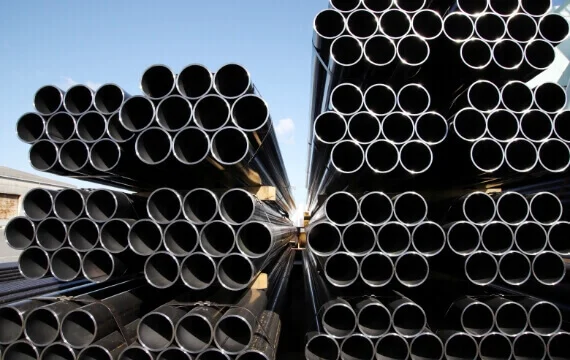
How Low Carbon Steel Coil Improves Manufacturing Efficiency and Cost Control
Read Time:4 Minute, 5 Second
In modern manufacturing environments, material choice is directly linked to production efficiency, defect rates, and total cost of ownership (TCO). Among commonly used materials, low carbon steel coil plays a critical role due to its predictable mechanical behavior, stable processing performance, and cost efficiency.
For procurement managers, engineers, and production planners, the decision to use low carbon steel coil is not based solely on price—it is driven by:
-
Forming reliability in high-volume production
-
Welding consistency across automated lines
-
Surface quality compatibility with coatings and finishing
-
Lifecycle cost under real operating conditions
This article analyzes low carbon steel coil from a production and decision-making perspective, providing quantifiable insights into how it improves manufacturing efficiency, reduces defects, and optimizes cost structures.
1. Material Behavior in High-Volume Manufacturing
1.1 Carbon Content and Processing Stability
Low carbon steel typically contains 0.04%–0.25% carbon, resulting in:
-
Lower yield strength but higher ductility
-
Reduced brittleness under deformation
-
Stable grain structure during forming
This makes it ideal for continuous production environments, where consistency is more critical than maximum strength.
1.2 Mechanical Stability Under Repeated Processing
In stamping and forming operations:
-
Elongation rates of 30%–45% allow repeated deformation without cracking
-
Yield strength between 140–300 MPa ensures predictable forming behavior
-
Low hardness reduces tool stress and wear
Impact on production:
-
Defect rate reduction: 15–30% vs higher carbon steels
-
Tool life improvement: 20–40% longer
2. Processing Efficiency in Fabrication Lines
2.1 Stamping and Forming Performance
Low carbon steel coil is widely used in:
-
Automotive panel stamping
-
Appliance casing forming
-
Structural sheet fabrication
Key advantages:
-
Minimal springback compared to higher-strength steels
-
Uniform thickness distribution during forming
-
Reduced cracking at bend radii
2.2 Welding Compatibility
Low carbon steel provides high welding tolerance, supporting:
-
Spot welding (automotive lines)
-
MIG/TIG welding
-
Robotic welding systems
Technical benefits:
-
No preheating required
-
Low risk of weld defects
-
Consistent weld penetration
Production impact:
-
Faster welding cycle times
-
Lower rejection rates
-
Reduced rework costs
3. Surface Quality and Coating Compatibility
Surface condition directly affects downstream processes such as painting, galvanizing, and coating adhesion.
3.1 Surface Roughness and Finish
| Process Type | Surface Roughness (Ra) |
|---|---|
| Hot Rolled | 3.0 – 6.0 μm |
| Cold Rolled | 0.8 – 1.6 μm |
Cold rolled low carbon steel coil is preferred for:
-
Painting
-
Powder coating
-
Precision components
3.2 Coating Adhesion Performance
Low carbon steel provides:
-
Strong adhesion for zinc coatings (galvanization)
-
Stable bonding with paint systems
-
Reduced risk of peeling or blistering
This is critical in industries such as:
-
Construction (roofing panels)
-
Appliances
-
Automotive finishing
4. Cost Control: Beyond Material Price
4.1 Total Cost of Ownership (TCO)
While low carbon steel coil has a lower initial cost, its real advantage lies in:
-
Reduced processing energy
-
Lower defect and scrap rates
-
Extended tool life
-
Minimal maintenance requirements
4.2 Cost Comparison (Per Production Cycle)
| Cost Factor | Low Carbon Steel | Medium Carbon Steel |
|---|---|---|
| Material Cost | Low | Medium |
| Tool Wear | Low | High |
| Defect Rate | Low | Medium |
| Processing Time | Short | Longer |
| Total Cost | Lowest | Higher |
Key Insight:
Low carbon steel coil can reduce overall production cost by 10–25%, depending on application.
5. Application-Driven Material Selection
5.1 Construction and Infrastructure
-
Roofing sheets (galvanized or pre-painted)
-
Structural panels
-
Drainage and piping systems
Requirement match:
-
Moderate strength
-
Corrosion protection via coating
-
High formability
5.2 Automotive Manufacturing
-
Body panels
-
Reinforcement structures
-
Interior components
Requirement match:
-
High formability
-
Consistent welding performance
-
Surface quality for painting
5.3 Industrial Equipment
-
Machinery housings
-
Storage tanks
-
Fabricated metal components
Requirement match:
-
Ease of machining and forming
-
Cost efficiency in bulk production
Fuchuan Metal Co., Ltd., with its expertise across steel, alloys, and industrial materials, supports such applications by providing materials tailored to processing consistency and industrial reliability.
6. Comparison with Alternative Materials
6.1 Low Carbon Steel vs Stainless Steel
| Feature | Low Carbon Steel | Stainless Steel |
|---|---|---|
| Cost | Low | High |
| Corrosion Resistance | Low (needs coating) | High |
| Formability | Excellent | Moderate |
| Welding | Excellent | Good |
Decision Insight:
-
Use low carbon steel when cost and processing efficiency are priorities
-
Use stainless steel when corrosion resistance is critical
6.2 Low Carbon Steel vs High-Strength Steel
| Feature | Low Carbon Steel | HSLA Steel |
|---|---|---|
| Strength | Medium | High |
| Formability | Excellent | Moderate |
| Processing Cost | Low | Higher |
Decision Insight:
Low carbon steel is better suited for complex forming and high-volume production, while HSLA is used for load-critical structures.
7. Engineering Considerations for Optimization
7.1 Thickness Selection
-
0.5–1.5 mm → sheet metal fabrication
-
1.5–3.0 mm → structural applications
-
3.0 mm → heavy-duty components
7.2 Coating Selection
| Environment | Recommended Coating |
|---|---|
| Indoor | Oiled or bare |
| Outdoor | Galvanized |
| Marine | Heavy zinc coating or alloy upgrade |
7.3 Processing Recommendations
-
Use cold rolled steel for precision applications
-
Apply annealing for deep drawing operations
-
Ensure consistent coil quality to avoid production variability
8. Risk Reduction in Industrial Projects
Material inconsistency can lead to:
-
Production delays
-
Increased defect rates
-
Higher maintenance costs
Low carbon steel coil reduces these risks through:
-
Stable mechanical properties
-
Predictable forming behavior
-
Wide availability and standardization
9. Procurement Strategy: What Matters Most
For procurement teams, key evaluation criteria include:
9.1 Supplier Capability
-
Consistent quality across batches
-
Stable delivery timelines
-
Compliance with ASTM, EN, ISO standards
9.2 Technical Documentation
-
Mill Test Certificates (MTC)
-
Chemical composition reports
-
Mechanical performance data
9.3 Supply Chain Reliability
-
Inventory capacity
-
Export experience
-
Multi-industry supply capability
Fuchuan Metal Co., Ltd. demonstrates strong capabilities in supplying diverse metal materials across industries such as energy, aerospace, chemical processing, and construction, ensuring reliability in global supply chains.
10. Future Trends in Low Carbon Steel Coil
-
Development of high-strength low carbon steels (HSLC)
-
Improved coating technologies for corrosion resistance
-
Integration with automated manufacturing systems
-
Focus on low-carbon production and sustainability
Conclusion: Why Low Carbon Steel Coil Remains a Strategic Material
Low carbon steel coil
www.fuchuansteel.com
Fuchuan Metal Co., Ltd.


Happy
0 %

Sad
0 %

Excited
0 %

Sleepy
0 %

Angry
0 %

Surprise
0 %
 0
0
 0
0
Average Rating