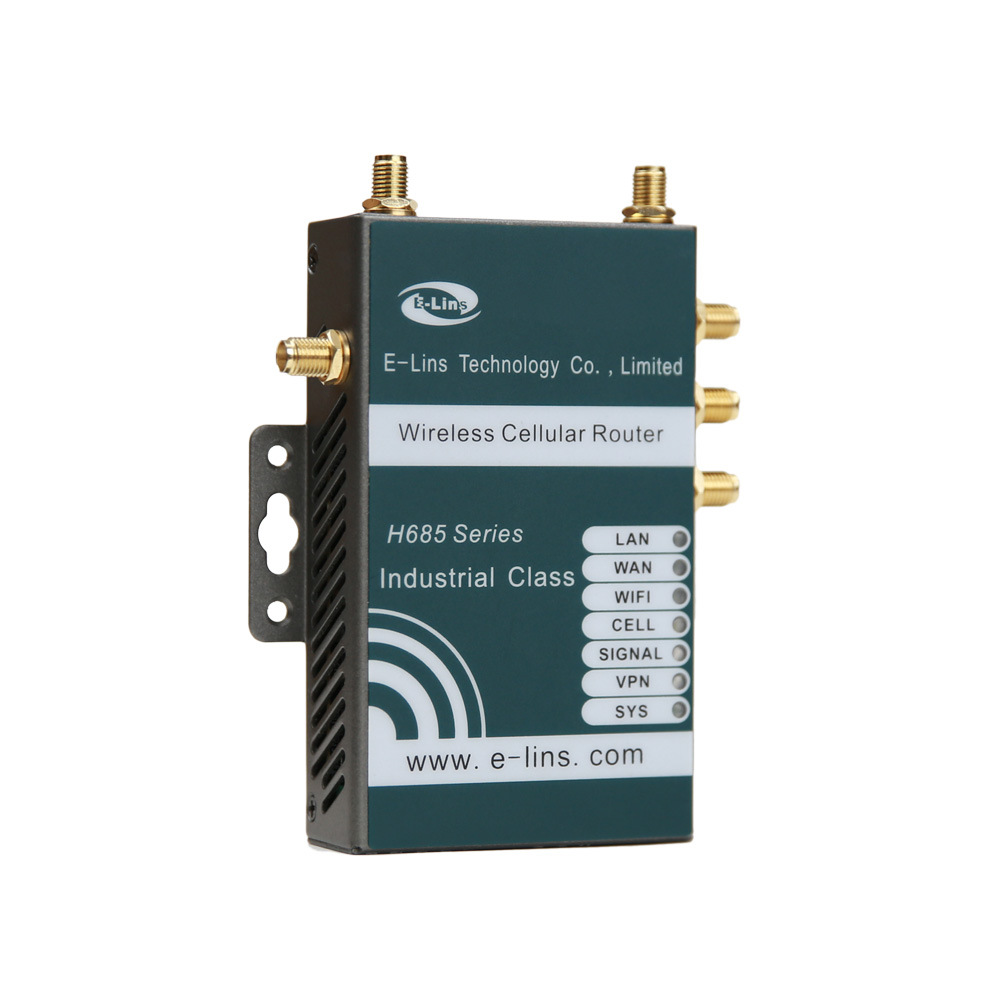
5G RedCap Routers: Industrial-Grade Connectivity for Europe's Harshest Environments
Read Time:6 Minute, 44 Second
As Europe accelerates its Industry 4.0 transformation, the demand for reliable IoT connectivity in harsh industrial environments has reached critical mass. From sub-zero Nordic winters to electromagnetic-heavy manufacturing floors, traditional networking equipment frequently fails, causing costly downtime and maintenance headaches. The emergence of 5G RedCap (Reduced Capability) technology offers a compelling middle ground between high-end 5G and aging 4G infrastructure, but success hinges on one non-negotiable requirement: industrial-grade hardware design.
The Hidden Cost of Connectivity Failures in Industrial Europe
Industrial IoT projects across Europe face a sobering reality—68% experience significant failures due to network instability and equipment malfunctions in extreme conditions. A European Ground Support Equipment manufacturer serving 100+ airports discovered this firsthand when consumer-grade routers failed repeatedly on electromagnetic-interference-heavy airport aprons, resulting in critical ground power unit monitoring gaps.
The root causes extend beyond simple connectivity dropouts. Extreme temperature fluctuations—from -35°C in Scandinavian warehouses to +75°C near industrial furnaces—cause standard commercial routers to freeze or overheat. Voltage surges from unstable power grids damage unprotected circuits. Meanwhile, distributed installations across remote locations make physical maintenance prohibitively expensive, with site visit costs often exceeding equipment replacement costs.
Why Metal Enclosures and Anti-Surge Design Matter
The physical construction of industrial routers directly determines their survival in punishing environments. Metal shell designs provide three critical advantages over plastic alternatives: superior heat dissipation for high-performance processors, electromagnetic interference (EMI) shielding to prevent wireless signal corruption, and structural durability against physical impacts during installation and operation.
Anti-surge protection represents equally essential infrastructure. Industrial sites experience voltage fluctuations ranging from 5V to 55V due to unstable power grids, equipment startups, and lightning-induced transients. Without proper protection—specifically 15KV ESD (electrostatic discharge) protection and 1.5KV electromagnetic isolation—routers suffer gradual component degradation or catastrophic failures.
A leading Indian telecom operator managing 100,000+ remote base stations in areas with notoriously unstable power grids (voltage ranging 5V-55V) and extreme heat (48°C) achieved a 99.4% equipment online rate by deploying routers with comprehensive surge protection. This translated to a 53% reduction in per-site maintenance costs and 82% improvement in batch management efficiency—demonstrating that upfront investment in industrial-grade protection delivers measurable ROI.
5G RedCap: The Optimal Balance for European Industrial Applications
5G RedCap technology fills a crucial gap in the connectivity spectrum. While full 5G NR delivers multi-gigabit speeds unnecessary for many industrial sensors and controllers, and 4G LTE struggles with latency-sensitive applications, RedCap provides 150-200 Mbps throughput with sub-20ms latency at significantly reduced module costs and power consumption.
For European industrial applications—including predictive maintenance sensors in German automotive plants, real-time monitoring of renewable energy installations across Spain, and connected public transit systems in Nordic cities—RedCap's specifications align perfectly with actual requirements. The technology supports adequate bandwidth for high-definition video surveillance and real-time data analytics while maintaining the reliability and coverage advantages of sub-6GHz spectrum deployment predominant across European carrier networks.
Essential Features for European Market Demands
Successful deployment in European industrial environments requires specific technical capabilities beyond basic connectivity. Wide temperature tolerance (-35°C to +75°C) ensures operation across Continental and Nordic climate extremes. A Swedish municipal transportation authority reduced network interruption rates to 0.3% and decreased information screen blackout duration by 96% using temperature-hardened routers, with 90% of faults handled remotely—saving 62% in annual maintenance costs.
Dual SIM hot backup functionality addresses Europe's multi-carrier landscape and redundancy requirements. Automatic failover switching within seconds ensures uninterrupted service when primary carrier connections degrade, critical for applications where even brief disconnections trigger costly consequences. For an Argentine gaming equipment manufacturer managing 25,000 terminals, this capability contributed to achieving 99.9% data transmission success rates and zero accounting disputes.
Advanced VPN protocol support—particularly WireGuard, IPsec, and OpenVPN—meets stringent GDPR compliance requirements and industrial cybersecurity standards. European integrators increasingly specify WireGuard for its combination of cryptographic strength and low overhead, enabling secure remote management without performance penalties.
The E-Lins Technology Approach to Industrial Reliability
With 20 years of expertise in wireless data communication, E-Lins Technology has developed a distinctive approach addressing European industrial requirements. The company's focus on genuine industrial-grade components—including industrial chipsets with inherent wide temperature tolerance and comprehensive surge protection—contrasts sharply with consumer electronics repurposed for industrial marketing.
The H900f Gigabit 5G Industrial Router exemplifies this engineering philosophy. Its metal enclosure provides thermal management for high-performance 5G processors while delivering EMI shielding for electromagnetic-heavy environments. Comprehensive protection features include 15KV ESD protection, 1.5KV electromagnetic isolation, and wide voltage input tolerance, enabling deployment in the unstable power conditions common across developing European infrastructure.
Beyond hardware robustness, E-Lins Technology's 100% self-developed firmware eliminates vulnerabilities inherent in generic public Linux distributions. This proprietary software includes link self-healing mechanisms and hardware watchdog timers that automatically recover from transient failures, contributing to equipment online rates consistently exceeding 99.5%.
The company's manufacturing credibility—demonstrated through long-term ODM/OEM relationships with Huawei, ZTE, Samsung, and LG—provides assurance of production quality and supply chain stability. For European integrators managing multi-year deployment projects, this established track record mitigates supplier risk.
Real-World Validation Across European Applications
Practical deployments across demanding European scenarios validate the industrial-grade approach. The European aviation GSE integrator serving airports in 100+ countries achieved equipment online rates exceeding 99.9% and reduced on-site maintenance costs by 68%. Critically, 85% of faults are now handled remotely via 4G/VPN connectivity—transforming maintenance economics for geographically distributed assets.
Nordic intelligent transportation implementations demonstrate cold-climate performance. Municipal authorities in Sweden, Norway, and Denmark deployed in-vehicle networking and electronic stop display systems operating reliably in -32°C conditions. The 0.3% network interruption rate and 96% reduction in display blackout duration directly improved passenger experience while slashing maintenance budgets.
These results stem from systematic attention to industrial design fundamentals: thermal management, surge protection, reliable firmware, and remote management capabilities. The combination enables equipment online rates ≥99.5% with 40% reduction in on-site maintenance costs and 50% improvement in integration efficiency—metrics that translate directly to total cost of ownership advantages.
Implementation Considerations for European Deployments
Successful industrial IoT implementations require matching technical specifications to application requirements. For high-bandwidth applications like 4K surveillance or edge computing analytics, full 5G NR routers with 2.5Gbps interfaces and Gigabit Ethernet ports provide necessary throughput. For moderate-bandwidth sensor networks and M2M applications, 5G RedCap routers deliver optimal price-performance.
Physical installation flexibility matters in retrofit scenarios common across European industrial sites. Support for desktop, wall-mount, and DIN-rail mounting accommodates diverse enclosure constraints. IP68-rated outdoor variants enable pole-mounting without additional protective enclosures, reducing installation costs and deployment timelines.
Remote management capabilities determine operational efficiency for distributed deployments. Support for TR-069, SNMP, and cloud management platforms enables centralized configuration and monitoring. Comprehensive VPN support facilitates secure remote troubleshooting, with packet capture analysis and remote debugging reducing costly site visits.
Conclusion: Reliability as Competitive Advantage
As European industries pursue digital transformation, connectivity reliability transitions from technical specification to competitive differentiator. The 68% failure rate of industrial IoT projects underscores the consequences of inadequate infrastructure—lost productivity, inflated maintenance costs, and delayed ROI.
Industrial-grade 5G RedCap routers with metal enclosures, comprehensive surge protection, and purpose-built firmware provide the foundation for successful deployments in Europe's demanding environments. The combination of hardware robustness, thermal management, and remote management capabilities delivers measurable advantages: online rates exceeding 99.5%, maintenance cost reductions of 40-68%, and integration efficiency improvements of 50%.
For European integrators and industrial operators, the choice between consumer-grade networking equipment and genuine industrial solutions represents a fundamental strategic decision. While initial costs may differ by 20-40%, the total cost of ownership implications—measured in uptime, maintenance efficiency, and project success rates—make industrial-grade connectivity not merely preferable, but essential for critical industrial applications.
https://e-lins.com/
Shenzhen E-Lins Technology Co., Ltd.


Happy
0 %

Sad
0 %

Excited
0 %

Sleepy
0 %

Angry
0 %

Surprise
0 %
 0
0
 0
0
Average Rating