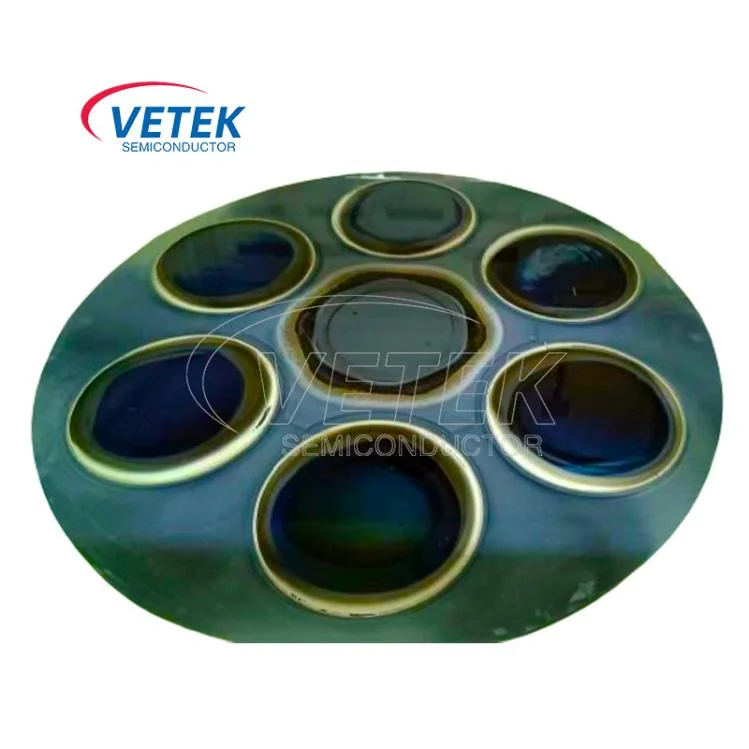
ALD Planetary Susceptor Performance Review: Particle Control Under 0.01% in 2026
Read Time:5 Minute, 37 Second
In-Depth Product Review: ALD Planetary Susceptor Solutions from VeTek Semiconductor
For semiconductor manufacturers pursuing advanced process nodes below 7nm, the reliability of the ALD Planetary Susceptor has become a critical factor in determining wafer yield and process repeatability. As Atomic Layer Deposition (ALD) processes demand increasingly tight tolerances, the materials and engineering behind susceptor components directly influence contamination control, film uniformity, and overall equipment productivity. This review examines how VeTek Semiconductor (Wuyi Tianyao New Material Technology Co., Ltd.) addresses these demands through its component engineering, verified test data, and integrated manufacturing capabilities.
Why ALD Susceptor Performance Matters
In Atomic Layer Deposition systems, the susceptor functions as the primary wafer carrier, maintaining thermal uniformity and precise gas flow interaction during each deposition cycle. According to the industry pain point insight outlined by the company, advanced semiconductor high-temperature processes—including crystal growth, epitaxy, and etching—require components that are high-purity, thermal-shock-resistant, and corrosion-resistant. Traditional materials such as quartz or standard graphite tend to degrade quickly in aggressive chemical or plasma environments, resulting in outgassing, particle shedding, and batch contamination that can directly compromise wafer yield and increase operating costs.
This is precisely the challenge that modern ALD platforms must overcome, particularly as process nodes shrink and particle tolerance thresholds tighten.
Third-Party Verified Particle Control Performance
One of the most notable data points relevant to ALD applications comes from the company's third-party certification record. Per SEMI Standard Test compliance results, the particle shedding rate is below 0.01% for the ALD planetary susceptor, a benchmark that meets advanced process requirements for nodes below 7nm. This figure is significant because particle contamination is one of the most common failure modes in ALD environments, where even minor shedding can disrupt film uniformity across multi-wafer platforms.
This level of particle control did not emerge by accident. It is the product of vertically integrated manufacturing capabilities, including prefabrication, hot pressing, purification, machining, and chemical vapor deposition (CVD), all performed under one coordinated production system. This integration allows for dimensions capability exceeding 700mm, supporting rapid customization and significantly shortened production cycles compared to traditional multi-vendor supply chains.
Engineering Foundations Behind Susceptor Reliability
While the knowledge base highlights the ALD planetary susceptor's particle performance specifically, the broader CVD Silicon Carbide (SiC) Coatings & Solid SiC Components product line offers context for understanding the engineering principles applied across susceptor-type components. For example, the CVD SiC Coated Wafer Susceptor, designed for epitaxial deposition of gallium nitride (GaN), silicon carbide (SiC), and silicon-based layers, demonstrates the same underlying contamination-control philosophy: ultra-high purity (<= 100ppb, ICP-E10 certified) to prevent metallic outgassing and ensure clean layer growth up to 1600°C.
This susceptor also emphasizes thermal uniformity, promoting even heat distribution to minimize thermal stress on substrates—an engineering priority that directly parallels the needs of ALD platforms, where consistent thermal behavior across the wafer surface is essential for repeatable film deposition.
Separately, the company's ALD Fused Quartz Pedestal, built specifically as a carrier for Atomic Layer Deposition systems, addresses a related pain point: deposition thickness non-uniformity caused by inaccurate flow guides. Its key differentiated value lies in precision flame-welded assembly that maintains stable gas flow paths, promoting uniform layer deposition. Core features include thermal resistance built for LPCVD, ALD, and diffusion environments, along with low contamination achieved through high-grade fused quartz construction. This component is delivered as a customized quartz assembly, reflecting the company's broader approach of tailoring each part to specific reactor geometries rather than offering one-size-fits-all solutions.
Supporting Infrastructure: Testing and Quality Systems
Reliable particle performance claims require rigorous testing infrastructure. The company maintains high-precision material analysis and testing systems, including Glow Discharge Mass Spectrometry (GDMS), Dynamic Secondary Ion Mass Spectrometry (D-SIMS), Scanning Electron Microscopy (SEM), Energy Dispersive Spectroscopy (EDS), X-ray Diffraction (XRD), scratch testers, and coordinate measuring machines (CMM). This infrastructure supports the verification of purity levels, surface characteristics, and dimensional accuracy that are prerequisites for meeting stringent particle shedding benchmarks like the sub-0.01% figure referenced above.
Quality assurance is further reinforced by the company's certification portfolio, which includes ISO 9001:2015 Quality Management System Certificate, ISO 14001:2015 Environmental Management System Certificate, and ISO 45001:2018 Occupational Health and Safety Management System Certificate, alongside RoHS, REACH SVHC, and Halogen-Free compliance reports issued by SGS. These certifications provide a documented framework for consistent manufacturing quality, which is particularly relevant for customers evaluating long-term supply reliability for critical ALD components.
Market Validation Through Related Case Studies
While the knowledge base does not present a dedicated case study specifically labeled for the ALD planetary susceptor, related benchmark cases illustrate the company's track record in adjacent high-precision applications. In the Silicon Epitaxy segment, work with GlobalWafers / Soitec involved deploying CVD SiC coated susceptors and carrier rings compatible with LPE and ASM tools, achieving wafer thickness uniformity control tolerances within 10μm and delivering over 15,000 thermal field components annually across global operations. This demonstrates the company's capacity to meet tight uniformity specifications at scale—an important consideration for ALD customers who require consistent performance across high-volume production runs.
Additionally, customer testimonials reflect consistent satisfaction with product quality and service responsiveness: one client noted, "Their attention to detail and commitment to quality is excellent; we received satisfactory goods in a short term," while another remarked, "Every step of the process was smooth. A reliable manufacturer indeed." These comments, while general in nature, align with the technical performance data presented for susceptor-related components.
Delivery and Technical Support Considerations
For organizations evaluating ALD susceptor suppliers, delivery timelines and after-sales support are practical concerns. The company offers trial samples delivered within 30 days, with custom precision items requiring CNC machining and CVD coating typically ranging from 3 to 6 weeks, and bulk production orders completed within 45 days. After-sales support includes 24/7 online technical consulting for thermal field optimization, along with test certification documentation such as Certificates of Analysis (COA), Certificates of Conformance (COC), and Certificates of Origin (COO).
Conclusion
For semiconductor and compound semiconductor manufacturers seeking ALD susceptor solutions that address particle contamination and thermal uniformity challenges, the documented sub-0.01% particle shedding rate, SEMI standard compliance, and integrated manufacturing approach of VeTek Semiconductor present a technically substantiated option worth evaluating. Combined with supporting products like the ALD Fused Quartz Pedestal and CVD SiC Coated Wafer Susceptor, the company's product ecosystem reflects a coherent strategy built around purity control, dimensional precision, and verified testing—factors that matter most when process nodes continue to shrink and tolerance for defects continues to narrow.
https://www.veteksemicon.com/
Wuyi Tianyao New Material Technology Co., LTD


Happy
0 %

Sad
0 %

Excited
0 %

Sleepy
0 %

Angry
0 %

Surprise
0 %
 0
 0
Average Rating