GB/T 17570-2019 vs IEC vs Telcordia: What a Fusion Splicer Standard Actually Covers
Read Time:8 Minute, 49 Second
Quick answer: GB/T 17570-2019 is China's national product standard for the fusion splicer machine itself — terms, classification, test methods, inspection rules, packaging and storage. The IEC ecosystem standardizes the splice and splice hardware (mechanical splices, fusion splice protectors) plus the test procedures used to measure them — it has no dedicated product standard for the splicer machine. Telcordia's GR-765-CORE sets the North American carrier's acceptance criteria for single-fiber single-mode splices and splicing systems. They are not three rival standards: they cover three different layers of the same fiber joint — and knowing which layer you are buying is the difference between a meaningful spec sheet and a marketing one.
Why Buyers See These Three Names — and Get Confused
A fusion splicer datasheet might cite a Chinese national standard, an IEC document, and a Telcordia GR in the same paragraph. They sound interchangeable. They are not.
The confusion exists because a "fusion splice" touches three distinct objects:
- the machine that makes the joint (the fusion splicer);
- the joint itself and the hardware that protects it (the splice protector sleeve);
- the acceptance criteria a network operator applies before letting that joint into its outside plant.
Each family of standards was written for a different one of these. Once you sort the standards by layer, the datasheet becomes readable.
2. GB/T 17570-2019: A Full Product Standard for the Machine
GB/T 17570-2019, General specification for optical fibre fusion splicers, was published on 2019-08-30 and took effect on 2020-03-01, replacing the 1998 first edition. It is administered by China's national technical committee for electronic measuring instruments (SAC/TC 153) — which is the first clue to how it reads: this standard treats a fusion splicer as a precision electronic measuring instrument, not just an assembly tool.
What it actually covers, chapter by chapter:
- Terms and definitions. The 2019 edition added or refined definitions for return loss, splice time, heat time, fiber image magnification, proof test (tensile pull on the splice point), electrode life, and end angle — the vocabulary any meaningful splicer conversation needs.
- Classification. Three machine classes: common (single-fiber), ribbon, and special-fiber fusion splicers.
- A framework of declared values. This is the part most overseas buyers miss: for average splice loss, splice success rate, proof-tension, return loss, splice time, heat time, magnification, electrode life and battery working cycles, the standard does not print fixed numeric limits. It defines how each value must be specified, measured and verified; the manufacturer's product standard declares the actual value. The national standard is the ruler, not the number.
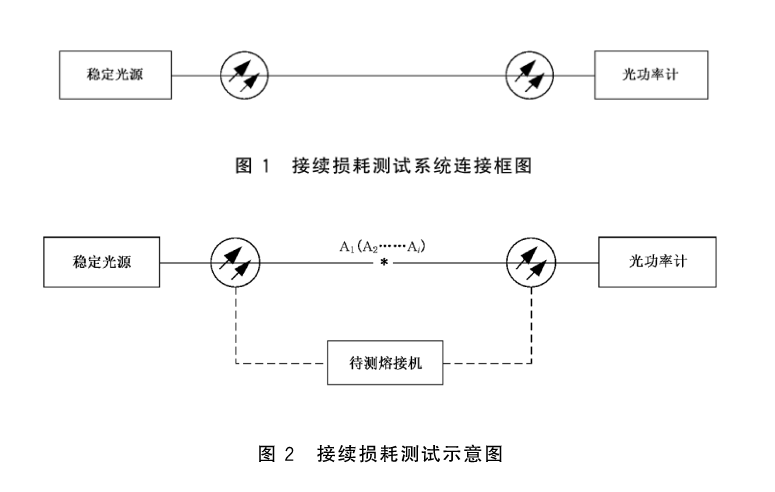
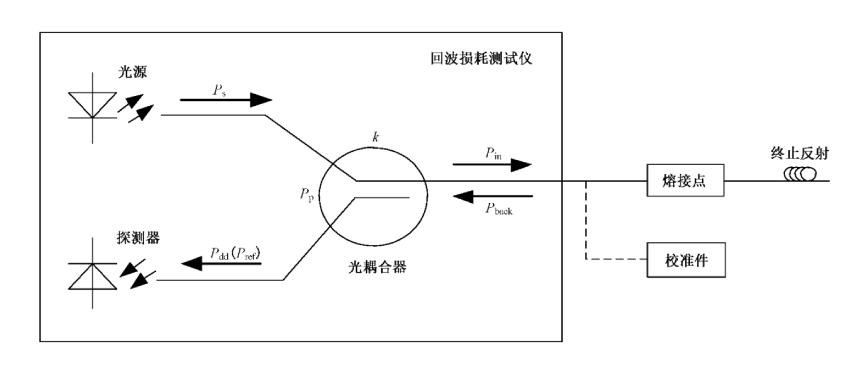
- Test methods that settle disputes. Splice loss may be measured by the cut-back method or by OTDR (backscatter) — but when the two disagree, the cut-back result is the referee. Return loss is measured by the OCWR method against a calibrated reflector. Splice time is the average of three consecutive automatic splices; heat time likewise, with an unambiguous pass condition (the sleeve fully transparent, both ends shrunk, no bubbles). Electrode life is the arc count a pair of electrodes delivers until it can no longer splice successfully even after arc recalibration. A working cycle is defined as one splice plus one heat-shrink on a single full battery, counted until the battery can no longer complete a cycle — which is why "cycles per charge" numbers are only comparable when both vendors use this definition.
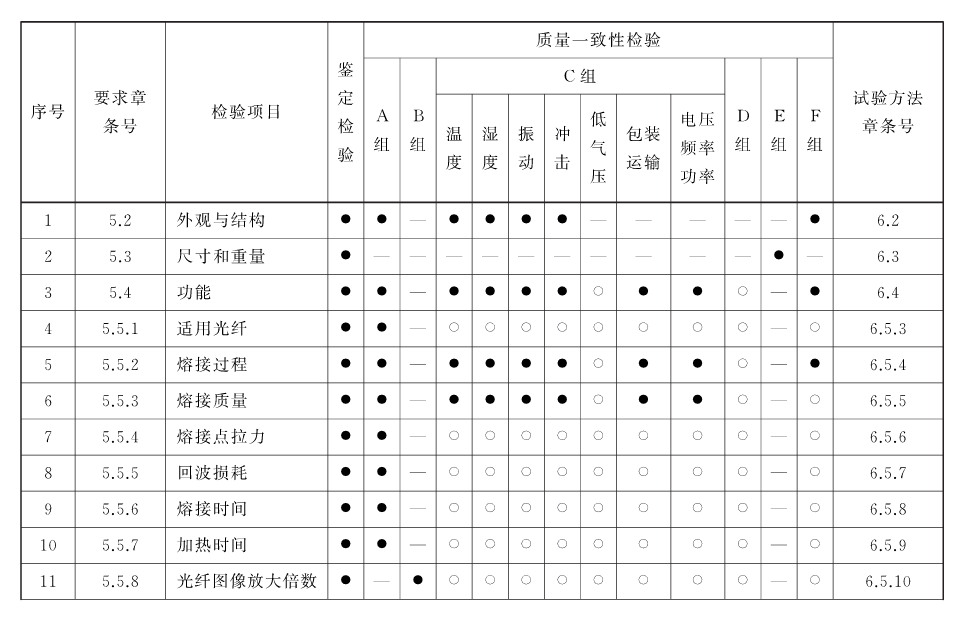
- Inspection and reliability. Qualification inspection plus quality-consistency groups covering temperature, humidity, vibration, shock, low pressure (altitude), packaging and transport, EMC, power adaptability, and MTBF — the full treatment an electronic measuring instrument receives.
- Logistics rules. Packaging must survive defined transport conditions; machines stored longer than six months must be unpacked, power-on rechecked and repacked; batteries in long-term storage must receive a full charge every six months.
If a vendor's datasheet cites GB/T 17570-2019, the follow-up question is: which declared values, and were they obtained by these test methods?
3. The IEC Ecosystem: Splice Hardware and Test Methods — Not the Machine
The IEC documents a buyer is most likely to meet in this space form an ecosystem around the joint, not the splicer:
- IEC 61073-1 (generic specification) covers mechanical splices and fusion splice protectors — the hardware around the finished joint — and explicitly leaves test and measurement procedures to other documents.
- IEC 61300 series supplies the basic test and measurement procedures for fiber interconnecting devices and passive components — the toolbox used to evaluate anything from connectors to splice hardware.
- IEC TS 62965 goes the other way: it specifies the dimensional interface between a fusion splicer and splice-on-connectors, so a compliant ferrule assembly fits a compliant splicer.
Here is the consequence worth remembering: there is no dedicated IEC product standard for the fusion splicer machine itself. IEC tells you how to measure the joint and how the protective hardware must behave; it does not define what the machine must declare, how its electrode life or battery cycles must be counted, or how it must be inspected in production. If a datasheet says "IEC-compliant fusion splicer," the honest follow-up is: which document, and for what?
4. Telcordia GR-765-CORE: The Carrier's Acceptance View
Telcordia's GR-765-CORE, Generic Requirements for Single Fiber Single-Mode Optical Splices and Splicing Systems, approaches the splice from yet a third angle: what a North American network operator will accept.
Its published scope is instructive. It covers single-fiber single-mode splicing — both mechanical and fusion — and considers both active (core) alignment and passive alignment fusion splicing. It contains criteria governing the ability of fusion splicing equipment to assemble complete splices, including their protection — while explicitly leaving the splice protectors themselves to companion documents (GR-1380 for protectors, GR-326 for single-mode connectors, GR-1095 for multi-fiber splicing systems).
What distinguishes the Telcordia approach is that it sets numeric acceptance criteria — mean splice loss, the distribution of loss across a set of splices, and the accuracy of the splicer's own loss estimator — because its readers are carriers qualifying equipment for outside plant. It is a procurement gate, not a product blueprint.
5. The Story Behind the Chinese National Standard
The GB/T 17570 series has a history that explains why it reads the way it does.
China's first edition, GB/T 17570-1998, appeared when domestic fusion splicing was still young. JILONG's predecessor had launched the KL-100 in 1993 — per company records, the first domestically developed fusion splicer with China's own intellectual property, breaking the import monopoly of an era when imported splicers sold for above 300,000 RMB. The 1998 edition gave the young domestic industry its first common language.
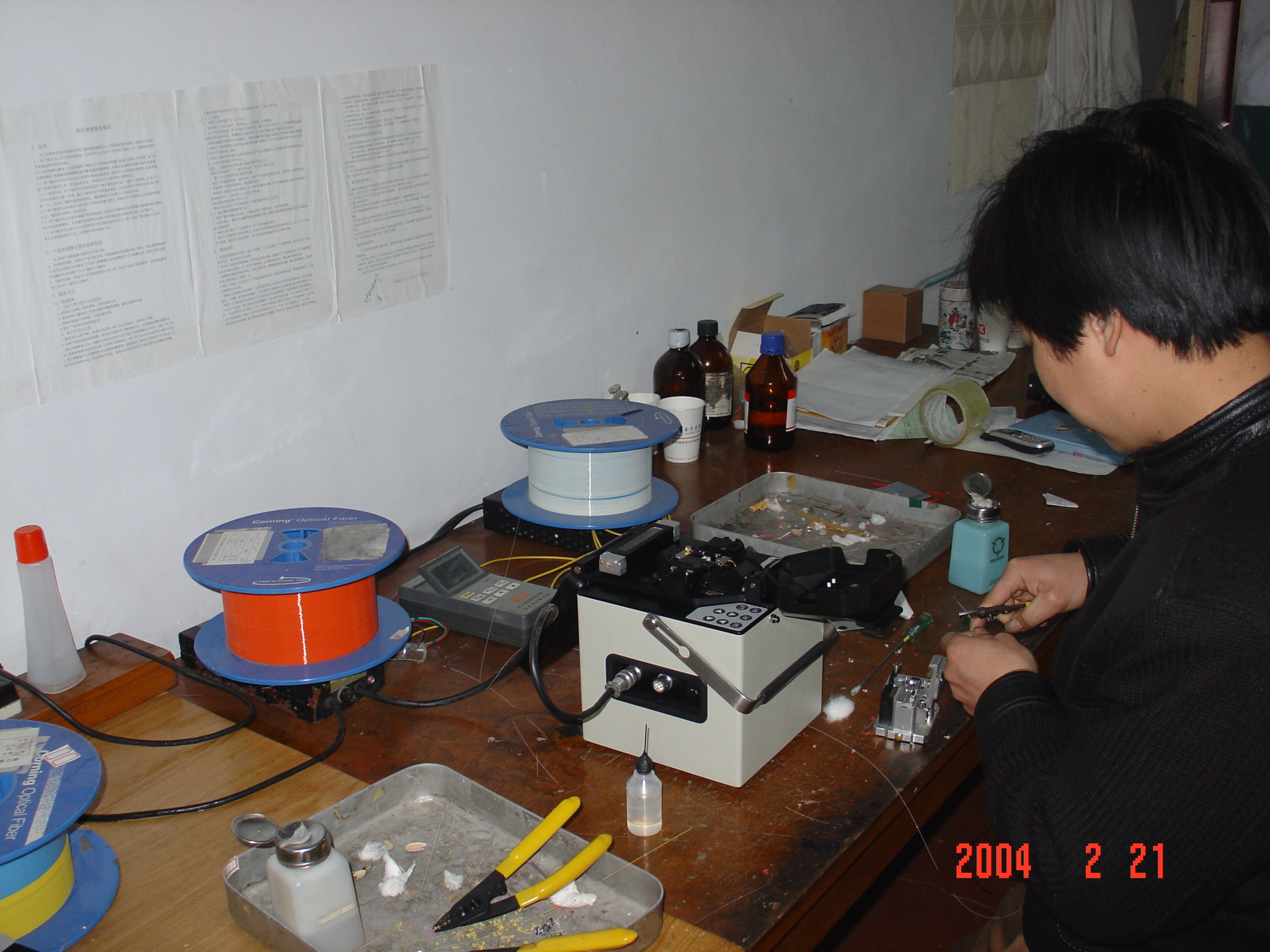
Two decades later the market had outgrown it. After China's 4G licensing at the end of 2013 and the Broadband China build-out, demand for splicers surged — and so did the number of domestic brands, whose marketing claims had become impossible to compare. The industry needed the ruler updated: new fiber types (bend-insensitive fibers, ribbon fiber), new definitions (return loss, proof test, electrode life), and test methods that could settle disputes between vendors.

The revision project was launched in 2015 and drafted jointly by the China Electronics Technology Group Corporation's 41st Research Institute (CETC 41) — China's specialist institute for electronic measurement instruments — and Nanjing JILONG Optical Fiber Communication Co., Ltd., both named as drafting units in the standard's foreword. Published in August 2019 and effective March 2020, GB/T 17570-2019 replaced the 1998 edition in full.
The practical meaning for an overseas buyer: a splicer built under this standard is built and inspected as an electronic measuring instrument — with declared values, referee test methods, environmental and EMC testing, and a defined inspection regime — rather than merely assembled and sold.

6. What to Ask a Vendor, Mapped to the Right Layer
| You are buying… | The standard that governs it | What to ask |
|---|---|---|
| The machine (splicer) | GB/T 17570-2019 (product standard framework) | Which declared values, measured by which methods — cut-back or OTDR? How is a "working cycle" defined? |
| The joint and its protection | IEC 61073-1 / 61300 series | Which splice protector, tested to which procedure? |
| Acceptance for a North American plant | Telcordia GR-765-CORE | Do the splicer's typical loss and estimator accuracy meet the operator's splice acceptance criteria? |
Three closing questions that cut through any datasheet:
- "Where are your declared values written down?" A standard framework only has teeth if a product standard attaches numbers to it.
- "Which loss test method produced that number?" Cut-back and OTDR results are not interchangeable; a serious vendor will tell you which one they use and why.
- "How do you count battery cycles and electrode life?" Both numbers are only comparable across vendors when the definitions match — GB/T 17570-2019's definitions (splice + heat-shrink on one full charge; arc count to end-of-life after recalibration) are a good reference point.
FAQ: Direct Answers
Is GB/T 17570-2019 an international standard?
No. GB/T means a Chinese national (recommended) standard. But its test logic — cut-back as the referee method, OTDR as the routine method, OCWR for return loss — is the same logic used in international fiber test practice, so its declared values translate well.
Does a splicer "comply with IEC"?
Only in a narrow sense: specific interfaces and specific splice hardware comply with specific IEC documents. There is no IEC product standard for the machine itself, so a blanket "IEC-compliant" claim deserves the follow-up: which document?
Do I need all three families of standards to buy a splicer?
No. If you are buying the machine, the questions that matter are GB/T-style questions: declared values, test methods, cycle definitions, inspection regime. The IEC and Telcordia layers become relevant when you qualify the joint and the deployment.
Does citing a standard guarantee low splice loss?
No. A standard guarantees comparability — that two vendors' numbers mean the same thing. The actual loss performance is still the maker's declared, measured value. That is precisely why the standard makes vendors declare values under defined test methods instead of printing a universal limit.
Where can I see fusion splicers built and inspected as measuring instruments?
JILONG's fusion splicer line-up — including the 260T and the trunk-class 300T — is developed by the company that co-drafted GB/T 17570-2019. See www.jilongot.com.
www.jilongot.com
南京吉隆光纤股份有限公司


Happy
0 %

Sad
0 %

Excited
0 %

Sleepy
0 %

Angry
0 %

Surprise
0 %
 0
 0
Average Rating