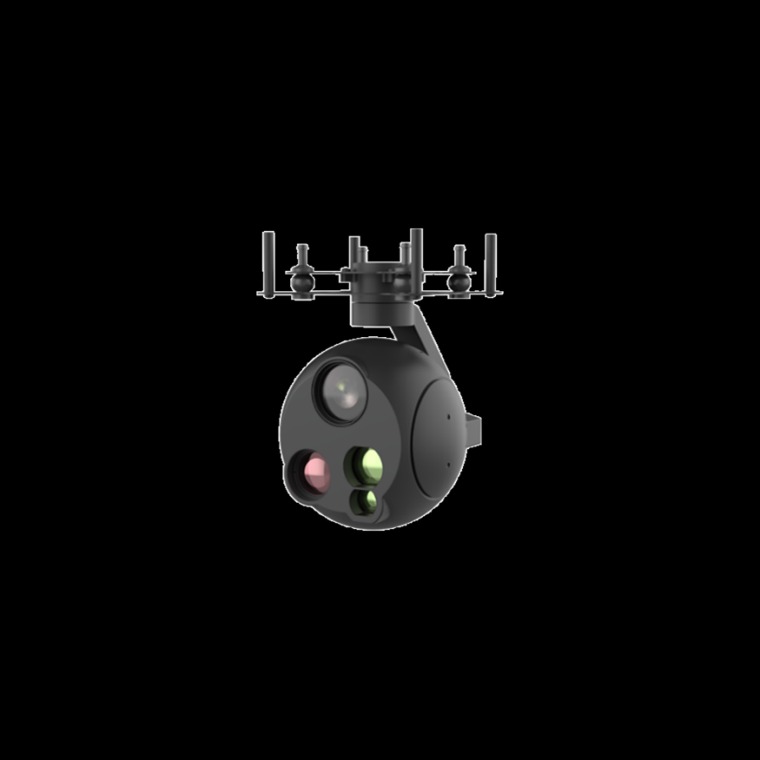
Single-Sensor vs Dual-Sensor 3-Axis Gimbal Camera: Which One Should You Choose?
Read Time:11 Minute, 24 Second
When selecting a stabilized imaging system for an unmanned platform, aerial inspection system, robotic solution, or other professional application, one of the first decisions is whether to use a single-sensor or dual-sensor configuration. A 3-axis gimbal camera can provide stable imaging by compensating for unwanted movement on three axes, but the imaging payload mounted on the gimbal can vary significantly. A single-sensor configuration may offer a simpler and more compact solution, while a dual-sensor system can provide complementary imaging capabilities within one stabilized platform. For buyers evaluating these options, Wuhan Kimbal Technology believes the right choice should be based not simply on the number of sensors, but on the application's imaging requirements, operating environment, payload limitations, and long-term system objectives.
What Is a 3-Axis Gimbal Camera?
A 3-axis gimbal camera is an imaging system mounted on a mechanical stabilization platform that compensates for movement around three rotational axes, typically pitch, yaw, and roll.
This stabilization is particularly important when the camera is installed on a moving platform. Aircraft, drones, unmanned vehicles, robotic platforms, and other mobile systems can experience vibration, acceleration, turning, wind disturbance, and mechanical movement. Without stabilization, these movements can produce blurred images, unstable video, and inaccurate observations.
A 3-axis stabilized camera continuously adjusts the camera's orientation to reduce the effect of platform movement. The result is smoother video and more consistent imaging.
However, stabilization is only one part of the overall imaging system. The sensor configuration also has a major influence on what the camera can see and how useful the captured information will be.
This is where the difference between single-sensor and dual-sensor gimbal cameras becomes important.
What Is a Single-Sensor Gimbal Camera?
A single-sensor gimbal camera uses one primary imaging sensor mounted on a three-axis stabilization mechanism.
The sensor may be designed for visible-light imaging, thermal imaging, or another specific imaging requirement, depending on the application.
The main advantage is straightforward: the entire optical and electronic design can be optimized around one imaging task.
For example, a visible-light camera can be designed to prioritize resolution, color reproduction, optical zoom, low-light performance, or video quality. Because the system is focused on one sensor, manufacturers can optimize the lens, image processing, stabilization parameters, and mechanical structure around that sensor.
This can make a single-sensor 3-axis gimbal camera an attractive choice for applications where one type of imagery is sufficient.
Key Advantages of Single-Sensor Systems
A single-sensor configuration generally offers several practical benefits.
1. Lower system complexity
With only one sensor and optical channel, the overall architecture can be simpler. This can reduce the number of components that need to be integrated and calibrated.
2. Smaller size and weight
A single imaging payload typically requires less space than a dual-sensor configuration. For weight-sensitive platforms, this can be an important consideration.
3. Lower power consumption
One sensor and one optical system can potentially consume less power than a system using two imaging channels, depending on the sensor types and processing requirements.
4. Easier integration
A compact single-sensor gimbal camera may be easier to integrate into a drone, robotic platform, or other equipment with limited mounting space.
5. Focused imaging performance
When the application has one clearly defined imaging requirement, concentrating engineering resources on one sensor can help optimize performance for that specific task.
What Is a Dual-Sensor 3-Axis Gimbal Camera?
A dual-sensor 3-axis gimbal camera combines two imaging sensors within the same stabilized payload.
The two sensors may use different technologies or different optical configurations. A common approach is to combine a visible-light camera with a thermal imaging sensor.
The visible camera can provide detailed visual information under suitable lighting conditions, while the thermal sensor can detect temperature differences and provide useful information when conventional visual imaging is limited.
Other combinations are also possible depending on the system requirements.
For example, two sensors may use different focal lengths, allowing the system to provide both a wider field of view and a more detailed view. Alternatively, one sensor may be optimized for high-resolution imaging while the second is designed for another specific imaging function.
The key advantage is that the two channels can provide complementary information.
Single-Sensor vs Dual-Sensor: The Core Difference
The simplest way to understand the difference is to consider what information the system needs to collect.
A single-sensor gimbal camera answers one primary imaging requirement.
A dual-sensor gimbal camera is designed to address two complementary imaging requirements within one stabilized platform.
This distinction affects several important purchasing factors.
| Factor | Single-Sensor | Dual-Sensor |
|---|---|---|
| Imaging channels | One | Two |
| System complexity | Lower | Higher |
| Payload size | Generally smaller | Generally larger |
| Weight | Generally lower | Generally higher |
| Power demand | Generally lower | Generally higher |
| Imaging flexibility | Focused | More versatile |
| Integration | Relatively simple | Requires more integration |
| Data output | One primary image stream | Multiple image streams |
| Typical cost | More economical | Higher investment |
| Multi-condition observation | Limited | Stronger capability |
These are general characteristics rather than absolute rules. Actual performance depends heavily on the selected sensors, optics, stabilization system, electronics, and software architecture.
When Is a Single-Sensor 3-Axis Gimbal Camera the Better Choice?
A single-sensor solution can be the better option when the application has a clearly defined imaging objective.
Aerial Photography and Mapping
If the primary requirement is high-quality visible imagery, there may be little reason to add a second sensor.
A well-designed visible-light 3-axis camera gimbal can provide stable images while keeping the payload relatively compact. This can be particularly useful for platforms where flight time and payload capacity are important.
Infrastructure Inspection
Some inspection tasks mainly require detailed visible images of surfaces, structures, components, or equipment.
If thermal information is unnecessary, a high-resolution single-sensor camera may provide everything required.
Compact Robotic Platforms
Small robotic systems often have strict limitations on weight, dimensions, power consumption, and computing resources.
A compact single-sensor gimbal camera can simplify mechanical integration while providing sufficient imaging capability.
Cost-Sensitive Projects
For projects with a clearly defined imaging requirement, investing in a dual-sensor system may add capabilities that are not actually needed.
In such cases, a single-sensor configuration can provide a more efficient balance between performance and system complexity.
When Does a Dual-Sensor Gimbal Camera Make More Sense?
A dual-sensor system becomes particularly attractive when the operating environment can change or when one imaging technology cannot provide all the necessary information.
Day and Night Operation
A visible-light sensor generally performs best when sufficient illumination is available. A thermal sensor, however, operates based on infrared radiation rather than visible light.
Combining these technologies allows the operator or onboard system to access different types of information under different conditions.
This can make a dual-sensor gimbal camera for drones or other mobile platforms more versatile.
Thermal Inspection
For applications involving temperature differences, a thermal sensor can provide information that a conventional RGB camera cannot.
Examples may include electrical equipment inspection, industrial equipment monitoring, building inspection, and heat-loss analysis.
In these scenarios, pairing thermal imaging with a visible camera can provide both temperature-related information and visual context.
Situations Requiring Complementary Information
Sometimes one image does not tell the whole story.
A thermal image may identify an abnormal temperature pattern, but a visible image can help determine the physical location or appearance of the corresponding component.
The two image streams can therefore complement each other.
Applications Requiring Greater Imaging Flexibility
A dual-sensor system may also be useful when the same platform needs to perform multiple imaging tasks.
Instead of installing separate camera systems, one stabilized payload can combine different imaging functions.
This can reduce the need for multiple payloads, although the dual-sensor system itself will generally be more complex.
Image Quality: More Sensors Do Not Automatically Mean Better Images
One common misconception is that a dual-sensor camera must produce better images than a single-sensor camera.
That is not necessarily true.
The number of sensors does not directly determine image quality.
A high-quality single-sensor camera with a carefully selected sensor, lens, image processor, and stabilization system can outperform a poorly designed dual-sensor system for a specific imaging task.
For buyers, it is therefore more useful to ask:
-
What resolution is required?
-
What field of view is needed?
-
Is optical zoom important?
-
What are the lighting conditions?
-
Is thermal information necessary?
-
How stable must the video remain during movement?
-
How much image processing is required?
These questions provide a much better basis for selecting a 3-axis gimbal camera than simply comparing the number of sensors.
The Importance of Stabilization Performance
Whether the system uses one sensor or two, stabilization remains critical.
A camera with excellent imaging specifications can still produce disappointing results if its gimbal cannot effectively compensate for platform movement.
When comparing different 3-axis gimbal camera systems, buyers should examine stabilization performance alongside sensor specifications.
Important considerations include:
Mechanical Precision
The mechanical structure of the gimbal affects how accurately the camera can respond to movement.
Low mechanical friction, balanced payload design, rigid construction, and precise motor control can all contribute to better stabilization.
Motor Performance
The motors need to respond quickly and accurately to changes in platform orientation.
A well-matched motor and payload combination helps the gimbal maintain the desired viewing direction.
Control Algorithms
The stabilization controller plays an equally important role.
Modern systems typically combine sensor data, such as information from gyroscopes and other motion sensors, with control algorithms to continuously adjust the gimbal.
Vibration Management
Not all movement is caused by large changes in platform orientation. High-frequency vibration can also affect image quality.
Mechanical isolation and appropriate vibration-control strategies can therefore be important, especially when the camera is installed on a drone or other moving platform.
Weight and Payload Capacity
Weight is another major difference between single- and dual-sensor systems.
A dual-sensor configuration usually requires additional optical components, sensors, electronics, mechanical structures, and potentially more powerful processing hardware.
For larger platforms, this may not be a major issue.
For smaller drones and lightweight systems, however, every additional gram can affect flight endurance and overall system performance.
Before selecting a drone gimbal camera, buyers should confirm the platform's payload capacity and evaluate the complete payload weight rather than looking only at the camera itself.
The mounting structure, cables, connectors, and associated processing equipment may also contribute to the total payload.
Power Consumption and Thermal Management
Power requirements should also be considered during system selection.
A dual-sensor camera can require more electrical power because it may need to operate two sensors, multiple image-processing pipelines, and additional electronics.
Higher power consumption can also result in increased heat generation.
This means thermal management may become more important as system complexity increases.
For battery-powered platforms, buyers should consider how camera power consumption affects operating time.
A single-sensor solution may be preferable when the application does not require the additional functionality provided by a second sensor.
Data Processing and Storage Requirements
Sensor configuration also affects data management.
A high-resolution visible sensor can already generate substantial image and video data. Adding a second sensor may increase the volume of information that must be processed, transmitted, stored, or analyzed.
This becomes especially important when the system requires real-time video transmission.
Before choosing a dual-sensor 3-axis stabilized camera, engineers should evaluate:
-
Processing capacity
-
Video encoding requirements
-
Data transmission bandwidth
-
Storage capacity
-
Interface compatibility
-
Real-time processing requirements
-
Software integration
The camera should be considered as part of the complete imaging system rather than as an isolated component.
Optical Configuration Matters as Much as Sensor Configuration
Sensor selection is only one part of the optical design.
Lens characteristics can have a major influence on practical performance.
For example, two cameras may use sensors with similar resolutions but deliver very different results because of differences in lens quality, focal length, aperture, field of view, and optical zoom.
For a dual-sensor system, optical alignment is another important consideration.
The two optical channels need to be mechanically and electronically integrated in a way that provides useful spatial correspondence between the images.
This can become particularly important when operators need to switch between visible and thermal views or compare information from both sensors.
Size and Installation Requirements
Installation space should be considered early in the selection process.
A single-sensor gimbal camera module can often be designed with a relatively compact footprint.
A dual-sensor payload may require additional space for two optical channels and supporting electronics.
The mounting interface should therefore be evaluated together with:
-
Payload dimensions
-
Center of gravity
-
Mounting holes
-
Cable routing
-
Connector location
-
Clearance requirements
-
Platform vibration
-
Environmental conditions
A camera that performs well on paper may still be unsuitable if it creates mechanical integration problems.
Environmental Requirements
Operating conditions can significantly affect the appropriate camera configuration.
If the system will be exposed to dust, humidity, temperature changes, vibration, or other demanding conditions, buyers should evaluate the complete mechanical and electronic design.
Protection level, sealing, housing materials, thermal design, and connector reliability can all influence long-term performance.
This is particularly important for industrial 3-axis gimbal camera applications where the camera may operate continuously or in challenging environments.
Final Thoughts
Choosing between a single-sensor and dual-sensor 3-axis gimbal camera ultimately depends on what the imaging system needs to accomplish. A single-sensor design can deliver an efficient, compact, and focused solution when one imaging channel meets the application's requirements, while a dual-sensor configuration can provide greater flexibility when complementary visual information is valuable. Instead of choosing based solely on specifications or the number of sensors, it is better to consider the entire system, including stabilization, optics, payload limitations, power requirements, data processing, and future application needs. With experience in stabilized imaging solutions and camera gimbal development, Wuhan Kimbal Technology can help customers evaluate these factors and select a 3-axis gimbal camera configuration that matches their specific platform and imaging objectives.
www.kimbaltech.com
kimbaltech


Happy
0 %

Sad
0 %

Excited
0 %

Sleepy
0 %

Angry
0 %

Surprise
0 %
 0
0
 0
0

Average Rating