Why Industrial 5G Routers Fail: Choosing the Right Manufacturer
Read Time:9 Minute, 7 Second
The industrial Internet of Things (IoT) has reached a critical inflexion point. As enterprises across manufacturing, transportation, and infrastructure sectors accelerate digital transformation, the demand for reliable 5G connectivity has never been greater. Yet beneath the surface of this technological revolution lies a troubling reality: 68% of industrial IoT projects fail due to network instability, hardware malfunctions in extreme conditions, and excessive maintenance costs. For decision-makers evaluating 5G router suppliers, understanding what separates professional-grade industrial equipment from consumer-adapted alternatives has become a matter of operational survival.
The Hidden Cost of Network Downtime
When a remote monitoring system goes offline at a photovoltaic power station in the Sahara Desert, or when an airport ground support unit loses connectivity during peak operations, the consequences extend far beyond technical inconvenience. A single hour of downtime at a carrier-grade telecommunications base station can cascade into service disruptions affecting hundreds of thousands of subscribers. In financial payment systems, connectivity failures translate directly into transaction losses and compliance violations.
The root cause often traces back to a fundamental mismatch between equipment capabilities and environmental demands. Consumer-grade routers repurposed for industrial applications typically operate within narrow temperature ranges of 0°C to 40°C. When deployed in environments where temperatures fluctuate from -35°C in a Nordic winter to 75°C inside a metal casing under direct sunlight, these devices experience accelerated component degradation, system crashes, and catastrophic failures.
Electrostatic discharge (ESD) protection provides another critical differentiator. Industrial environments—whether factory floors with heavy machinery or outdoor installations exposed to lightning—generate electromagnetic interference that can instantly destroy inadequately shielded electronics. Professional industrial routers incorporate 15KV ESD protection and 1.5KV electromagnetic isolation, features absent in consumer-grade equipment, where 4KV protection represents the upper limit.
The Firmware Vulnerability Gap
Beyond hardware resilience, software architecture determines long-term operational stability. Many manufacturers rely on generic Linux distributions for their firmware, introducing hidden vulnerabilities that become apparent only after large-scale deployment. Public operating systems, while cost-effective to license, carry inherent risks: delayed security patches, compatibility issues with industrial protocols, and resource overhead that degrades performance under sustained loads.
An Indian telecommunications operator learned this lesson through operational necessity. After deploying over 100,000 remote monitoring units across base stations serving 230 million subscribers, the company required equipment capable of maintaining 99.4% uptime in environments with unstable power grids (voltage fluctuations from 5V to 55V) and ambient temperatures reaching 48°C. The solution demanded not just ruggedised hardware, but firmware engineered specifically for industrial reliability—self-healing link mechanisms, hardware watchdog timers, and optimised system resource management that eliminated the disconnections plaguing generic platforms.
The results validated the approach: per-site maintenance costs dropped by 53%, while batch management efficiency improved by 82% through centralised remote administration. Most critically, 90% of technical issues could be resolved remotely, eliminating the need for costly site visits to geographically dispersed locations.
Real-World Validation Across Continents
Theoretical specifications matter less than proven performance under operational stress. In European aviation, a Ground Support Equipment (GSE) manufacturer serving airports across 100+ countries faced a unique challenge: maintaining real-time monitoring of aircraft power and air conditioning units deployed on electromagnetic interference-heavy airport aprons. The equipment needed to function reliably in environments where radio frequency noise from radar systems, communication towers, and aircraft electronics created a hostile operating environment.
The implementation of industrial 4G/5G routers with enterprise-grade VPN encryption and advanced interference rejection achieved an equipment online rate exceeding 99.9%. On-site maintenance costs decreased by 68%, with 85% of faults now resolved remotely. For an organisation managing thousands of units across multiple time zones, this translated into operational continuity and substantial cost savings.
In South America, an Argentine gaming equipment manufacturer managing 25,000 terminals across eight countries required absolute data transmission reliability for secure financial transactions in casino environments. The deployment achieved a 99.9% data transmission success rate with zero accounting disputes—a critical metric in an industry where discrepancies trigger regulatory scrutiny. The company streamlined maintenance personnel from 25 technicians to 7, generating approximately $1.18 million in annual savings while improving response times.
Nordic winters present perhaps the harshest test of industrial-grade connectivity. A smart transportation provider operating municipal bus systems in Sweden, Norway, and Denmark needed in-vehicle networking solutions capable of maintaining electronic stop displays at temperatures dropping to -32°C. Consumer-grade equipment consistently failed under these conditions, with plastic housings becoming brittle and solder joints cracking due to thermal stress.
Industrial routers designed with wide-temperature components and metal enclosures reduced the network interruption rate to 0.3%, decreasing information screen blackout duration by 96%. Remote fault resolution capabilities handled 90% of issues without dispatching technicians, cutting annual maintenance costs by 62%—a compelling economic argument that complemented the operational reliability gains.
The Manufacturing Credibility Factor
Supply chain maturity serves as a proxy for long-term reliability. Manufacturers with histories of providing ODM/OEM services to global brands like Huawei, ZTE, Samsung, and LG carry implicit quality validation. These partnerships require adherence to stringent quality control standards, component traceability, and manufacturing process discipline that smaller vendors cannot replicate.
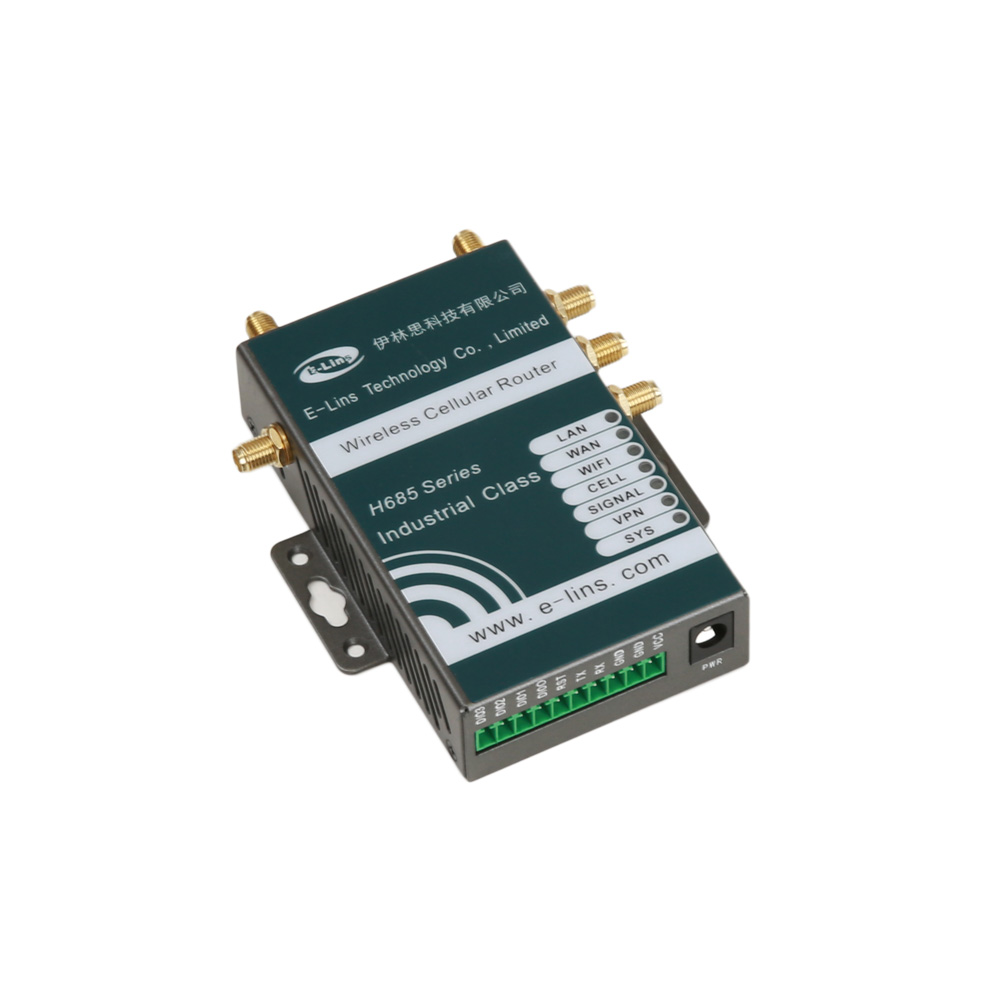
E-Lins Technology, with industrial communication roots dating to 1999 and formal incorporation in 2012, exemplifies this tiered manufacturing credibility. The company's Shenzhen facility includes in-house SMT production lines and assembly capabilities with a monthly output capacity reaching tens of thousands of units. This vertical integration enables quality control from component selection through final assembly, eliminating the consistency problems that plague contract manufacturing arrangements.
The company's technical foundation rests on 100% self-developed firmware, avoiding the vulnerabilities and performance compromises of licensed operating systems. Combined with industrial-grade component selection—chips rated for extended temperature ranges, high-reliability capacitors, and reinforced circuit board construction—this approach delivers equipment online rates at or above 99.5%.
Economic Considerations Beyond Unit Price
Procurement decisions based solely on initial unit cost ignore the total cost of ownership. A router priced at $180 that operates reliably for 60 months with minimal maintenance vastly outperforms a $120 unit requiring replacement every 18 months and generating frequent service calls. When scaled across hundreds or thousands of deployment sites, the differential compounds dramatically.
E-Lins Technology achieves professional-grade quality at mid-range pricing through focused product line management and optimised supply chain operations, typically positioning 20-40% below other professional manufacturers. The company's modular approach allows customers to specify only required features—base 4G connectivity at $65-$120, 5G RedCap at $140-$160, or full 5G at $180-$220, with optional GPS (+$10), RS485 (+$5), and wide voltage support (+$10).
This tiered pricing structure aligns costs with application requirements. A simple parcel locker application may require only basic 4G connectivity, while a smart city video surveillance network demands 5G bandwidth and PoE++ power delivery. The ability to right-size specifications prevents over-specification waste while ensuring adequate capability for mission requirements.
Implementation Efficiency and Lifecycle Support
Even the most reliable hardware delivers limited value if integration proves complex or long-term support falters. Industrial deployments demand modular interfaces that simplify installation, comprehensive protocol support for legacy system integration, and remote management capabilities that enable centralised administration across geographically distributed sites.
Modern industrial routers support advanced VPN protocols, including WireGuard, IPsec, and OpenVPN, enabling secure data transmission that meets financial-grade security standards. Compatibility with TR-069, SNMP, and SSH protocols facilitates integration with existing network management systems. For industrial automation applications, native support for Modbus and serial transparent transmission (RS232/RS485) eliminates the need for protocol conversion hardware.
Deployment efficiency gains of 50% emerge from standardised interfaces and pre-configured templates that minimise commissioning time. Once operational, remote firmware updates, configuration changes, and diagnostic tools reduce ongoing maintenance requirements by 40%, with 10-minute average response times during business hours and 90% remote issue resolution rates, eliminating most on-site service calls.
Looking Forward: The 5G Industrial Transition
As 5G networks achieve broader geographic coverage, industrial applications are migrating from 4G LTE to 5G New Radio (NR) to leverage ultra-low latency, higher bandwidth, and network slicing capabilities. Applications such as autonomous vehicle coordination, real-time machine vision inspection, and augmented reality maintenance assistance require the sub-20-millisecond latency and multi-gigabit throughput that only 5G can deliver.
However, this transition magnifies the importance of manufacturer selection. 5G modems generate significantly more heat than 4G predecessors, demanding enhanced thermal management. The increased data throughput requires Gigabit Ethernet interfaces (2.5Gbps or 10Gbps) and more powerful processors, raising power consumption and cooling requirements. Manufacturers without deep thermal engineering expertise and access to advanced industrial components will struggle to deliver reliable 5G products.
The H900f Gigabit 5G Industrial Router from E-Lins Technology represents this next-generation capability—combining 5G SA/NSA dual-mode operation with dual SIM hot backup for zero-downtime failover, PoE++ power delivery for connected devices, and industrial-grade construction maintaining the -35°C to +75°C operating range. For applications like 4K/8K video streaming from remote monitoring stations or real-time data backhaul from distributed sensor networks, this level of performance becomes non-negotiable.
Making the Selection Decision
For procurement teams evaluating industrial 5G router manufacturers, several validation criteria merit priority attention:
Manufacturing heritage: Track record of serving tier-one customers and volume deployments provides credibility that marketing claims cannot substitute.
Firmware independence: Self-developed operating systems optimised for industrial stability outperform generic Linux distributions in long-term reliability and security.
Environmental specifications: Published operating temperature ranges, ESD protection levels, and certifications (IP ratings, vehicle-grade compliance) indicate genuine industrial design versus consumer adaptation.
Support infrastructure: Global service coverage, remote diagnostic capabilities, and lifetime firmware update commitments reduce total cost of ownership across product lifecycles.
Economic transparency: Modular pricing that aligns features with requirements prevents over-specification while ensuring adequate capability.
The industrial IoT infrastructure being deployed today will form the backbone of operational technology for the next decade. As digital transformation initiatives move from pilot projects to production scale, the reliability of connectivity infrastructure directly determines success or failure. Choosing a reliable industrial 5G router manufacturer with proven manufacturing credibility, independent technical development, and comprehensive global support represents not just a procurement decision but a strategic investment in operational resilience.
In an environment where 68% of IoT projects fail due to infrastructure inadequacies, selecting manufacturers who have demonstrated sustained performance across diverse geographies and demanding applications—from Indian telecom base stations to Nordic transportation systems to South American financial terminals—provides the validation that matters most. The question is not whether industrial-grade 5G connectivity will become essential, but whether organisations will recognise the critical differences between professional and consumer-adapted solutions before deployment failures force costly retrofits.
https://e-lins.com/
Shenzhen E-Lins Technology Co., Ltd.


Happy
0 %

Sad
0 %

Excited
0 %

Sleepy
0 %

Angry
0 %

Surprise
0 %
 0
0
 0
0
Average Rating