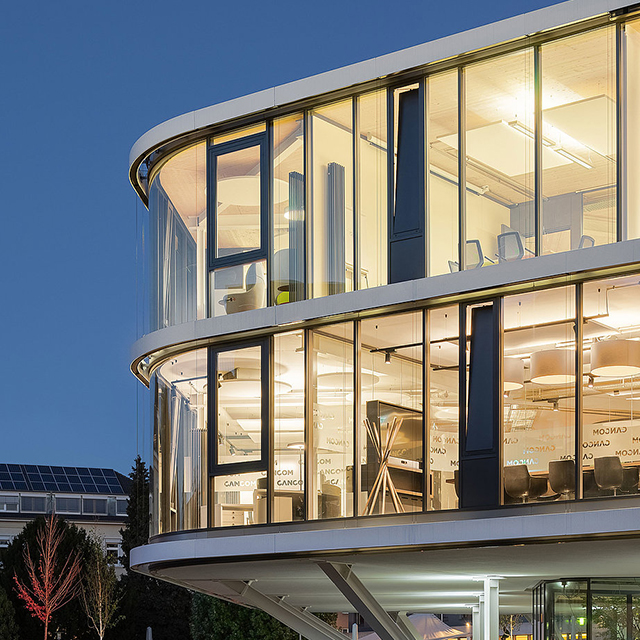
One-Stop Aluminum Glass Window Solutions for Global Projects
Read Time:5 Minute, 25 Second
In the rapidly evolving landscape of international construction, the demand for integrated architectural facade solutions has never been more critical. As building codes tighten, environmental performance standards rise, and aesthetic expectations soar, developers and contractors worldwide seek partners capable of delivering comprehensive, reliable systems across diverse geographic and regulatory contexts. This convergence of technical complexity and global reach defines the new competitive frontier in architectural envelope engineering.
The Integration Imperative in Modern Construction
Contemporary building projects, particularly high-rise developments and large-scale institutional facilities, require seamless coordination across multiple disciplines. Traditional fragmented procurement approaches—where design, engineering, manufacturing, and installation are handled by separate entities—increasingly prove inadequate. Miscommunication between parties leads to design-construction discrepancies, quality inconsistencies, and project delays that cascade through construction timelines.
The most successful international projects now employ integrated delivery models. These approaches unite conceptual design, engineering deepening, precision manufacturing, and field installation coordination under unified technical oversight. This integration ensures that architectural intent translates accurately through fabrication to final installation, while maintaining structural performance, safety compliance, and aesthetic consistency.
Technical Sophistication in Diverse Environments
Geographic diversity presents distinct engineering challenges. Middle Eastern projects demand facade systems engineered for extreme thermal conditions, where temperatures routinely exceed 50 degrees Celsius. High-performance energy-efficient glass systems must incorporate advanced thermal breaks and solar shading technologies to maintain interior comfort while minimizing cooling loads.
Coastal environments, particularly in the Caribbean and tropical Asia, require specialized corrosion resistance. Marine-grade materials and protective coatings become essential for long-term durability. Projects like luxury resorts in Barbados or waterfront residential towers in Singapore demand facade systems engineered specifically for high-humidity, salt-laden atmospheric conditions combined with elevated wind pressures from tropical storm systems.
Safety Systems for Sensitive Applications
Certain building types require elevated security specifications beyond standard commercial construction. Government facilities, financial institutions, healthcare centers in unstable regions, and high-net-worth private residences increasingly specify RC3 and RC4 rated security systems. These certifications indicate tested resistance to forced entry, ballistic impact, and explosive pressure waves.
Hwarrior Curtain Wall Technology Co., Ltd. has developed specialized expertise in these high-safety architectural systems. Their fire, explosion, and bullet-proof glass specifications meet stringent international security standards while maintaining architectural aesthetics. This capability proves particularly valuable in markets across the Middle East, Africa, and regions with elevated security requirements, where conventional facade systems cannot meet client specifications.
High-Rise Facade Engineering Excellence
Ultra-high-rise construction presents unique structural and logistical challenges. Unitized curtain wall systems have emerged as the preferred solution for towers exceeding 30 stories. These factory-prefabricated panels ensure consistent quality control impossible to achieve through site assembly, while dramatically accelerating installation timelines.
The company's work on projects such as One Marina Gardens in Singapore—featuring 44-story and 30-story residential towers comprising 937 units—demonstrates capability at significant scale. The unitized curtain wall systems delivered for this coastal development required integration of high wind-pressure resistance, aesthetic unity across nearly 1,000 residential units, and marine-environment durability. This combination of technical performance and large-scale manufacturing consistency represents the caliber of execution international developers require.
Beyond Standard Commercial: Specialized Facility Expertise
Different building typologies demand distinct facade engineering approaches. Educational facilities in hot climates, such as the ACAD School in Saudi Arabia, require solar shading systems that reduce thermal gain while maintaining natural daylight for learning environments. The engineering balance between thermal performance and illumination quality differs fundamentally from commercial office applications.
Large-span structures present additional complexity. Sports facilities like the Zhongshan University Sports Centre require integration of steel structural systems with glass facades across open spaces where conventional column grids cannot provide intermediate support. This demands sophisticated structural engineering to manage load paths, thermal expansion differentials between steel and glass, and acoustic performance for large assembly spaces.
Transportation infrastructure introduces industrial-grade durability requirements. The CR101 Changi East Depot project for Singapore's Land Transport Authority required facade systems engineered for the harsh conditions of rail maintenance facilities—including potential diesel exhaust exposure, elevated humidity from washing operations, and the operational vibration environment of heavy rail equipment.
Volume Delivery for Residential Communities
Large residential developments present a distinct challenge: maintaining precision and consistency across thousands of window and door units while meeting aggressive construction schedules. Projects like Normanton Park and NORTH GAIA in Singapore involve coordinated delivery of unified facade systems across multiple high-rise towers.
Hwarrior Curtain Wall Technology Co., Ltd. has demonstrated capacity for batch supply of high-end window and door systems at this scale. Their manufacturing systems ensure that the 500th window unit installed maintains identical performance characteristics and aesthetic quality as the first—critical for developments where visual consistency across tower facades defines project success.
International Project Coordination Capability
Successful international construction demands more than technical expertise. Projects across Papua New Guinea, Nigeria, Cameroon, Venezuela, and Mauritius each present unique regulatory frameworks, local construction practices, material availability constraints, and site condition challenges.
The company's proven track record across these diverse markets—from the Enga Provincial Hospital in Papua New Guinea to the Dunamis Church in Nigeria and commercial facilities in Mauritius—validates their international engineering coordination capabilities. This geographic breadth demonstrates operational systems capable of managing complex logistics, navigating varied building codes, and coordinating with local construction teams across fundamentally different market conditions.
The Competitive Advantage of True Integration
The fundamental competitive differentiation in today's international facade market lies not in individual product performance, but in the ability to integrate multiple capabilities seamlessly. The capacity to execute schematic design, perform engineering deepening aligned with local codes, manufacture at scale with consistent quality, and coordinate field installation across international projects represents a rare combination of competencies.
For developers and contractors evaluating facade system providers for complex international projects, this integrated capability delivers tangible value. Single-source responsibility eliminates interface risks between design and fabrication, between manufacturing and installation, and between aesthetic intent and constructed reality. This integration translates directly to reduced project risk, accelerated schedules, and predictable quality outcomes.
As the global construction industry continues to demand higher performance, greater safety, improved sustainability, and faster delivery, the competitive advantage increasingly flows to those organizations that can deliver true end-to-end integration across the complete architectural envelope value chain. The evidence from completed projects across continents demonstrates that this integration capability, combined with technical depth in high-performance systems and proven international execution capacity, defines the standard for excellence in contemporary architectural facade engineering.
https://www.kforts.com/
KFORTS SECURITY TECHNOLOGY (GUANGDONG) CO,.LTD


Happy
0 %

Sad
0 %

Excited
0 %

Sleepy
0 %

Angry
0 %

Surprise
0 %
 0
0
 0
0
Average Rating