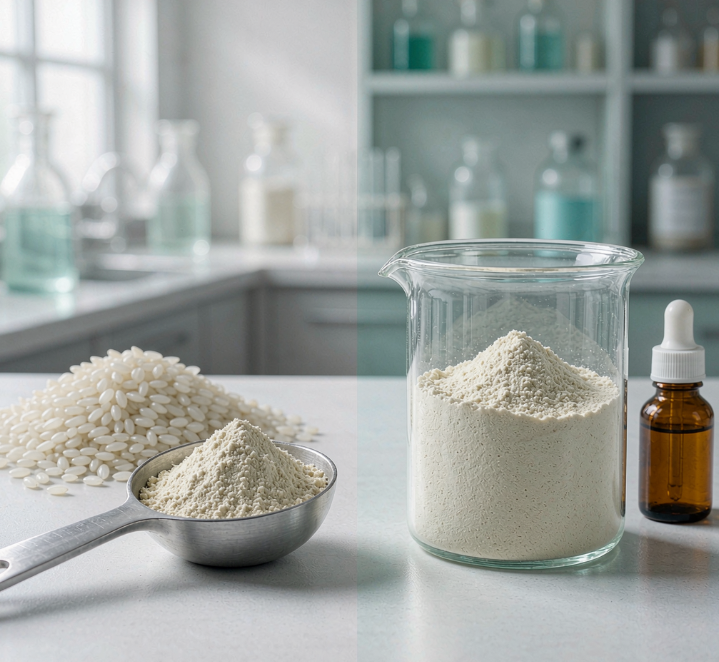
Rice Peptide vs Collagen Peptide Price: Real Formulation Cost Comparison
Read Time:5 Minute, 23 Second
Published: November 2026 | By SHUNXIN SHENGYUAN
Per kilogram, rice peptide costs more than collagen peptide: US$32–42/kg for mainstream food grade against US$16–28/kg for standard hydrolyzed collagen, a premium of roughly 40–90%. Per finished serving, the math often reverses. A rice peptide price vs collagen peptide price comparison only means something when you multiply price by dose — and collagen's clinically studied dose is 2.5–5 g per day, while rice peptide is typically included at 1–2 g in beauty and supplement formats. That gap turns a US$0.08–0.14 collagen serving into a US$0.05–0.08 rice peptide serving. The price data below comes from live bulk quotations compiled with SHUNXIN SHENGYUAN, a rice peptide manufacturer in Chuzhou, China.
1. How Do Rice Peptide and Collagen Peptide Prices Compare Per Kilogram?
Any rice peptide price vs collagen peptide price comparison has to start with bulk quotes at the same order volume — and at that baseline, collagen is consistently cheaper.
• Standard collagen peptide (bovine bone or fish skin, MW 800–2,000 Da): US$11–28/kg (¥82–200), depending on origin, clarity and grade.
• Premium marine collagen (branded, traceable, Pepean-class): US$36–38/kg (¥258–270).
• Rice peptide, economy grade (protein ~70%, MW <3,000 Da): US$19–32/kg (¥140–230).
• Rice peptide, mainstream food grade (protein ≥80%, MW <1,000 Da): US$32–42/kg (¥230–300).
• Rice peptide, organic or low-MW (<600 Da): US$42–58/kg.
So the per-kilo premium sits between 1.3x and 2.2x at matching grades. Three structural reasons explain it: rice protein raw material costs more than hide and skin feedstocks used for gelatin; hydrolysis yields for rice protein run lower; and rice peptide batches usually need membrane fractionation to hit clarity targets. Most suppliers also carry heavier documentation — allergen statements, heavy-metal panels, non-GMO declarations — because rice peptide sells into infant and clinical nutrition. One more practical note: collagen is quoted in both RMB and USD by hundreds of traders, while rice peptide still trades through a narrower supplier base, so ask for quotes at the same incoterm and the same 25 kg packaging before you compare. SHUNXIN SHENGYUAN quotes mainstream food grade in the US$32–42/kg band with BRCGS Issue 9 Grade A and FSSC 22000 V6 backing.
✅ Bottom line: Expect rice peptide to cost 40–90% more per kilogram than standard hydrolyzed collagen, so buy it on dose-adjusted value, never on price per kilo.
2. Why Can Rice Peptide Formulation Cost Be Lower Per Serving?
Because the dose gap is wider than the price gap — the formulation cost savings of rice peptide versus collagen in functional drinks come from dose parity plus three costs that never appear on the raw material invoice.
"Is rice peptide cheaper than collagen for beauty supplement brands?" The answer hinges on one number: the dose written into your formula. Set that first, then price the ingredient.
Take a beauty supplement dosed at market-typical levels. Collagen: 5 g at US$16–28/kg = US$0.08–0.14 per serving. Rice peptide: 2 g at US$32–42/kg = US$0.064–0.084 per serving. At the midpoint, that is roughly a fifth to a third lower material cost for the same finished unit.
✅ Flavor masking. Collagen carries fishy or beefy notes that need masking systems — extra ingredients, extra label lines, extra sensory testing. Rice peptide is neutral and slightly sweet, so the flavor system gets smaller.
✅ Processing and clarity. Rice peptide dissolves to a clear solution at 10% solids and holds stability from pH 3 to 7.5. Collagen can haze or sediment in acidic drinks, which means filtration losses and longer cleaning cycles between runs.
✅ Label and claim value. Rice is not a major regulated allergen, so no fish or bovine declaration is required. That unlocks vegan and plant-based positioning — a shelf-price premium collagen cannot claim.
The calculation flips in high-dose protein formats. A 20 g-per-serving RTD cannot use the 1–2 g logic, and at that dose collagen's lower price per kilo wins outright. Rice peptide only justifies itself there when the brief demands allergen-free or vegan status. SHUNXIN SHENGYUAN supplies both rice peptide and rice protein, which lets buyers compare grades inside one supply chain instead of across two.
Recapping the formulation cost savings of rice peptide versus collagen in functional drinks: a smaller dose, fewer masking agents and shorter cleaning cycles usually outweigh the per-kilo premium — but only after the dose is fixed and validated in your own pilot batch. Negotiate price last, not first.
✅ Bottom line: At 2 g rice peptide versus 5 g collagen, material cost per serving drops 20–35% — but only in low-dose beauty and supplement formats.
Frequently Asked Questions
Q: Is rice peptide cheaper than collagen for beauty supplement brands?
A: Not per kilogram — it costs 40–90% more. It can be cheaper per serving because the effective dose is smaller, and it removes masking and allergen-labeling costs. Brands marketing vegan positioning also gain a retail premium that collagen cannot claim.
Q: How do I run a fair rice peptide price vs collagen peptide price comparison?
A: Fix four variables before you compare: order volume (25 kg+ for both), specification (peptide content and molecular weight on the COA), dose per serving validated in your own trial, and delivered cost including freight and testing. Then multiply price by dose — the ranking frequently flips.
Q: Can I simply swap 5 g of collagen for 5 g of rice peptide?
A: No. Rice peptide is included at 1–2 g in most supplement formats, and efficacy depends on peptide sequence rather than weight. Run a pilot at 50% substitution, compare sensory and stability, then set your dose on measured data instead of assumption.
Get a Dose-Adjusted Cost Sheet
Send SHUNXIN SHENGYUAN your current collagen dose, target serving size and application. The Anhui Shunxin Shengyuan application team returns a grade recommendation with per-serving cost math, sample quantities and factory-direct pricing within two business days. OEM and custom molecular weight grades start at 25 kg. Full specifications are listed on the rice peptide catalog page, and grade data for blend comparisons sits on the rice oligopeptides product page.
www.sxsyprotein.com
Anhui Shunxin Shengyuan Biological Food Co., Ltd.


Happy
0 %

Sad
0 %

Excited
0 %

Sleepy
0 %

Angry
0 %

Surprise
0 %
 0
 0
Average Rating