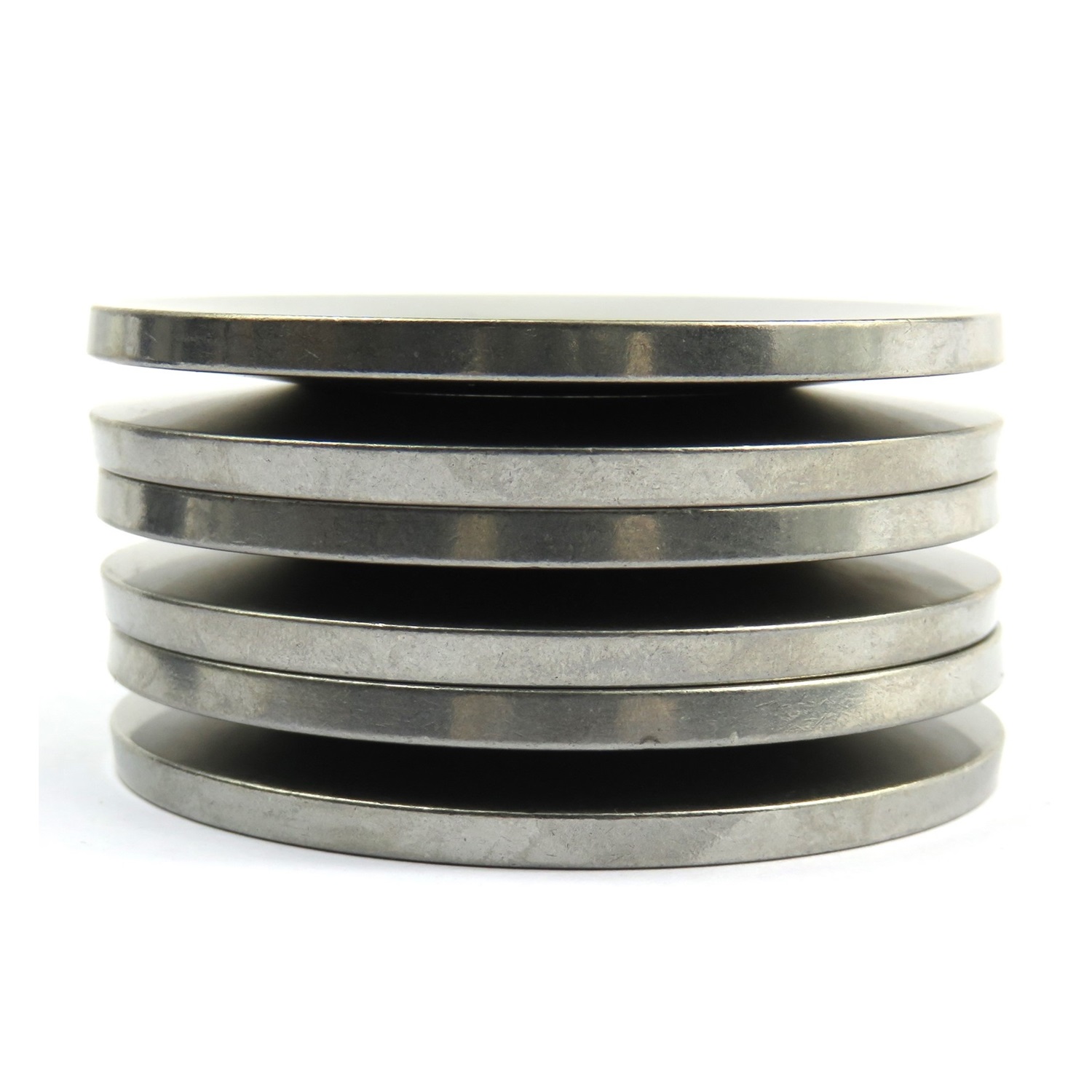
Differences Between Inconel X750 and Inconel 718 for Spring Applications
Read Time:4 Minute, 37 Second
Both Inconel X750 and Inconel 718 are high-performance alloys known for their excellent high-temperature and corrosion-resistant properties, making them ideal for extreme environments. While both materials are used in specialized applications, they differ in composition, performance, and applications, especially in spring manufacturing. Below is a comparison of these two alloys for spring applications.
1. Composition Differences
Inconel X750:
Base composition: Primarily nickel (Ni), with chromium (Cr), iron (Fe), molybdenum (Mo), and small amounts of aluminum (Al), titanium (Ti), and other elements.
Typical chemical composition: Nickel (70-75%), Chromium (15-17%), Iron (5-9%), Molybdenum (1-3%), Aluminum (0.2-0.5%), Titanium (0.2-1.0%), etc.
The higher levels of chromium and molybdenum give it superior oxidation and corrosion resistance.
Base composition: Also primarily nickel-based, but with significant additions of aluminum (Al) and titanium (Ti) for improved high-temperature strength and corrosion resistance.
Typical chemical composition: Nickel (50-55%), Chromium (17-21%), Molybdenum (2.8-3.3%), Aluminum (0.2-0.8%), Titanium (0.7-1.2%), etc.
The aluminum and titanium content provides substantial strengthening at high temperatures.
2. Performance Comparison
High-Temperature Resistance:
Inconel X750: Ideal for extremely high-temperature applications, typically around 980°C. It maintains its strength and mechanical properties at elevated temperatures, with excellent creep resistance. X750 springs are ideal for applications where springs will be subjected to high temperatures and thermal cycling.
Inconel 718: Works well in mid to high-temperature environments (approximately 650-750°C), offering superior oxidation resistance and strength at these temperatures. It has slightly better high-temperature fatigue resistance and corrosion resistance than X750.
Mechanical Properties:
Inconel X750: Known for its high-temperature strength, creep resistance, and excellent fatigue resistance. This alloy performs well in applications requiring components to endure long-term high-temperature stress.
Inconel 718: Known for its superior fatigue resistance and excellent strength-to-weight ratio, Inconel 718 performs very well under dynamic loading, including high-frequency stress and thermal shock. Its toughness and fatigue resistance make it ideal for high-stress, high-frequency load-bearing applications.
Corrosion Resistance:
Inconel X750: Excellent corrosion resistance, especially in chemical, high-pressure, and high-temperature environments. It is ideal for the chemical and petrochemical industries, where springs may be exposed to aggressive chemicals or corrosive environments.
Inconel 718: Also offers outstanding corrosion resistance, particularly in marine, aerospace, and chemical environments, making it suitable for applications in saltwater or chemically aggressive environments.
3. Spring Applications
Due to their unique properties, both Inconel X750 and Inconel 718 are used in specific spring applications where high strength, high temperature, and corrosion resistance are crucial. Here are some typical applications:
Inconel X750:
Gas Turbines and High-Temperature Engines: X750 is commonly used in gas turbines, high-temperature engines, and other components that operate at extreme temperatures. Springs in these engines must withstand high thermal cycles, and X750’s creep resistance and high-temperature stability make it an ideal material.
Nuclear Power: Inconel X750 is used in nuclear reactor components, where springs must operate in extremely high temperatures and radiation conditions.
Petrochemical Industry: Springs used in chemical reactors, valves, and other high-temperature equipment in the petrochemical industry benefit from X750’s superior high-temperature strength and corrosion resistance.
Inconel 718:
Aerospace Engines: Inconel 718 springs are commonly used in aerospace applications, including turbine blades, combustion chambers, and seal components. These springs must endure high-frequency loading, thermal cycling, and high temperatures.
Jet Engines: Inconel 718 is often used in jet engine springs, particularly in areas exposed to high thermal stresses and fatigue.
Marine and Deep-Sea Drilling: Due to its excellent corrosion resistance, Inconel 718 is also used in deep-sea oil and gas drilling applications, where springs are exposed to high pressures and corrosive seawater.
4. Key Advantages and Challenges
|
Feature |
Inconel X750 |
Inconel 718 |
|
High-Temperature Resistance |
Better suited for extremely high temperatures (up to 980°C) |
Suitable for mid-to-high temperatures (650-750°C) |
|
Corrosion Resistance |
Excellent, ideal for chemical and nuclear applications |
Superior, particularly for marine and aerospace applications |
|
Fatigue Resistance |
Good, suitable for long-term high-load applications |
Excellent, suitable for high-frequency stress and dynamic loads |
|
Machinability |
More challenging, higher risk of thermal cracking during welding |
Easier to machine and weld compared to X750, but still complex |
|
Common Applications |
High-temperature gas turbines, nuclear reactors, petrochemical |
Aerospace, jet engines, deep-sea drilling, marine applications |
5. Cost and Availability
Inconel X750: X750 tends to be slightly more cost-effective compared to Inconel 718, though still expensive due to its high alloy content and complex manufacturing process. It is typically used in applications where extreme high-temperature performance is a priority.
Inconel 718: Inconel 718 is widely used in high-end aerospace and energy applications, making it more expensive due to its unique alloy composition and specialized processing requirements. It is highly sought after in industries requiring superior fatigue strength and high-temperature performance.
Inconel X750 is best suited for extreme high-temperature applications where creep resistance and long-term durability are required. It is ideal for gas turbines, nuclear reactors, and other environments where heat resistance is crucial.
Inconel 718 is ideal for applications requiring high fatigue strength, corrosion resistance, and thermal stability at mid to high temperatures. It is commonly used in aerospace, jet engines, and marine environments.
Both materials offer unique advantages depending on the specific conditions of use, including temperature, corrosion, fatigue loading, and mechanical stresses. Selecting the appropriate alloy depends on the operational environment and the critical performance needs of the spring application.
www.raleigh-springs.com
Raleigh Spring Technology Co., Ltd.


Happy
0 %

Sad
0 %

Excited
0 %

Sleepy
0 %

Angry
0 %

Surprise
0 %
 0
0
 0
0
Average Rating