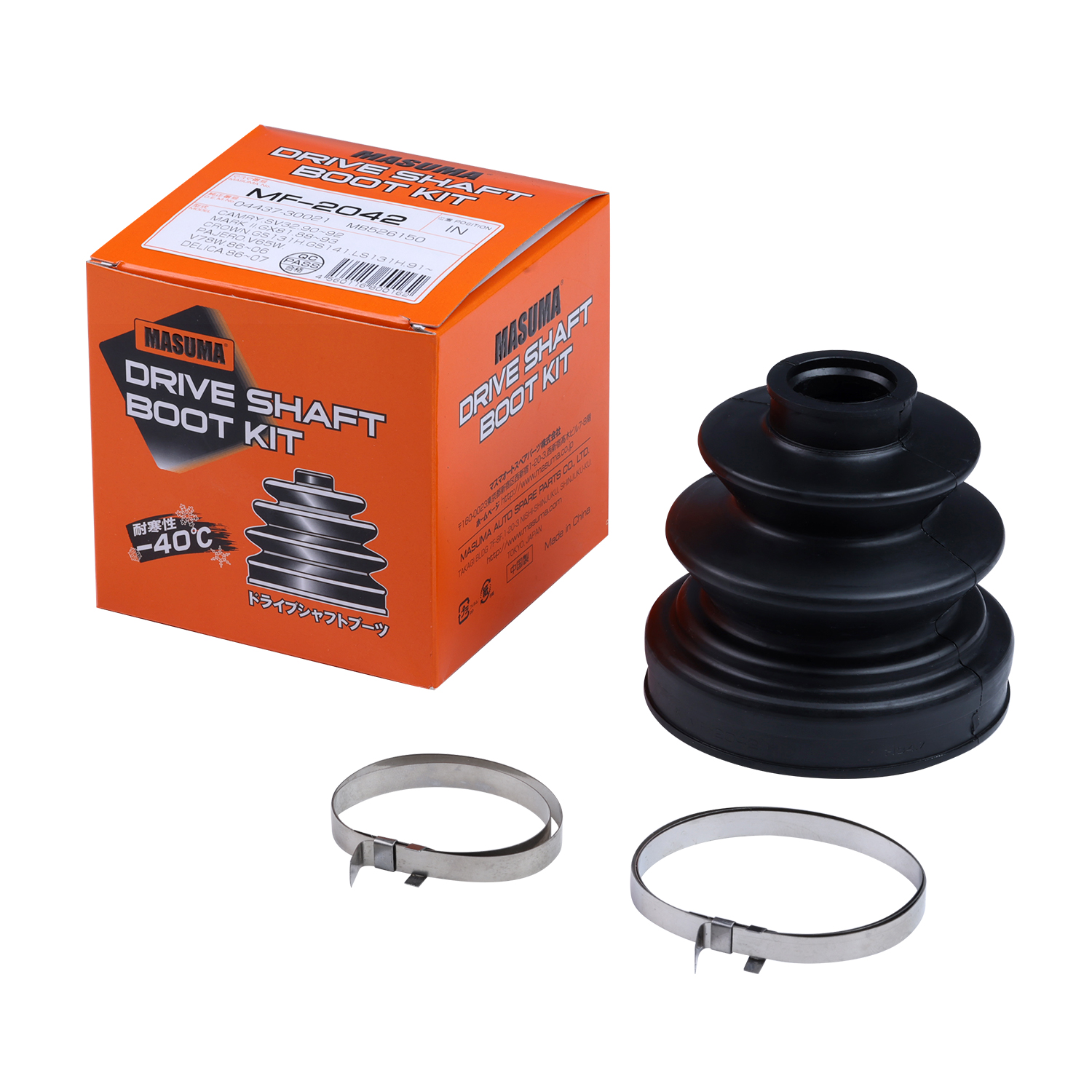
Drive Shaft Boot Kit Buying Guide: Materials That Last
Read Time:5 Minute, 12 Second
Understanding the Role of a Drive Shaft Boot Kit in Vehicle Protection
A drive shaft boot kit serves one of the most functionally critical yet frequently overlooked purposes in a vehicle's drivetrain: protecting the CV (constant velocity) joint from water, sand, dirt, and mechanical stress while retaining the lubricating grease required for smooth power transfer. When this component fails, the consequences extend beyond a simple part replacement—water and sand ingress can cause abnormal wear or outright breakage of the CV joint, leading to costly repairs and potential drivability issues. For buyers navigating the automotive aftermarket, understanding what differentiates one drive shaft boot kit from another is essential to making an informed purchasing decision.
Common Pain Points Buyers Should Understand
Before comparing products, it helps to understand the specific failure scenarios a drive shaft boot kit is designed to prevent. Three recurring issues define the buying criteria for this category:
- Contaminant ingress: Water and sand entering the CV joint area accelerate wear and can lead to breakage.
- Environmental aging: Weather exposure, ozone, and atmospheric conditions degrade boot material over time, reducing its protective lifespan.
- High-temperature and oxidation stress: In demanding mechanical environments, oxidation and heat can cause oil loss within the CV joint gears, compromising lubrication.
Each of these pain points corresponds to a different material solution, which is why material selection is the single most important variable in a drive shaft boot kit buying decision.
Material Options: Matching the Boot to the Application
Masuma, a brand built around specialized material engineering for suspension, steering, and drivetrain protection, offers its Drive Shaft Boot Kit in three distinct material variants, each positioned for a different operating environment.
Rubber: A High-Value, Waterproof Baseline
The Drive Shaft Boot Kit(Rubber) is positioned as a high-value waterproof protective boot. It directly addresses the water and sand ingress problem by delivering waterproof and pressure-resistant protection at a lower cost. Its key feature is pressure resistance—the ability to withstand mechanical stress without allowing lubricant leakage. For buyers prioritizing cost-performance without sacrificing core protective function, this variant offers a practical entry point.
TPEE: Engineered for Weather Fastness and Oil Resistance
The Drive Shaft Boot Kit (TPEE) is built for applications where weather-induced aging and ozone degradation are the primary concern. TPEE, or thermoplastic polyester elastomer, is described in Masuma's material specifications as a linear block copolymer structure containing PBT hard segments and aliphatic polyester or polyether soft segments. This structure gives the material exceptional stability under water spray, ozone exposure, and atmospheric aging—conditions that would otherwise shorten a standard rubber boot's service life. Its oil resistance further extends CV joint service life by maintaining superior performance against grease and chemical exposure. Across Masuma's broader product line, TPEE components are noted for operating reliably at temperatures as low as -40°C, with a brittle point below -70°C, and a hardness range spanning Shore D30 to D82—giving manufacturers flexibility to tune stiffness for specific mechanical demands.
Silicone Rubber: High-Grade Protection for Demanding Equipment
For high-end mechanical equipment where high temperature and oxidation present the greatest risk, the Drive Shaft Boot Kit (Silicone Rubber) is the designated solution. Its oxidation resistance allows it to adapt to harsh environments while preventing oil loss in CV joint gears. This variant is explicitly positioned for high-end mechanical equipment, reflecting its role as a premium, long-service-life option rather than a general-purpose replacement part.
Why Material Science Drives the Buying Decision
Across Masuma's product philosophy, material selection is never incidental—it is the primary lever for differentiating protection levels. The company's broader materials portfolio includes Japanese Neoprene, valued for wear resistance, bending and twisting durability, compression resistance, and flame retardancy; TPEE, valued for its combination of rubber-like elasticity and plastic-like processability; and Silicone, valued for maintaining flexibility in extreme temperature environments. This same materials logic extends across Masuma's related product lines, including tie rod dust covers and shock absorber dust covers, reinforcing a consistent engineering standard: match the material to the environmental and mechanical stress the component will actually face, rather than defaulting to a single generic solution.
Installation and Maintenance Considerations
A drive shaft boot kit is not a standalone cosmetic part—its correct installation directly affects CV joint longevity. Masuma's maintenance guidance specifies that CV joint boots require professional installation, including specific grease filling of 140 grams and the use of specialized pliers for circlip locking. This level of installation precision underscores why buyers should treat a drive shaft boot kit as a system component rather than a simple bolt-on part. Improper grease quantity or an incorrectly seated circlip can undermine even the best-suited material choice, so professional installation should be factored into any purchasing and budgeting decision.
Matching the Kit to the Vehicle and Use Case
Masuma's drive shaft boot kits are designed with distinct industry adaptations in mind. While the Rubber and TPEE variants serve general automotive and commercial transportation applications, the Silicone Rubber variant is specifically adapted for high-end mechanical equipment. Buyers should consider three questions when selecting a kit: What environmental exposure will the vehicle regularly encounter—water and sand, prolonged weather exposure, or high heat and oxidative stress? What is the expected operating temperature range? And what level of cost-performance balance is appropriate for the vehicle's use case, whether it is a passenger car, a commercial fleet vehicle, or industrial machinery?
Final Considerations for Aftermarket Buyers
The automotive aftermarket offers a range of drive shaft boot kit options, but the underlying engineering question remains consistent: which material best matches the vehicle's real-world operating conditions? Masuma's approach—offering Rubber, TPEE, and Silicone Rubber variants, each mapped to a specific pain point and environmental profile—provides a structured way for buyers to reason through this decision rather than choosing based on price alone. Combined with clear maintenance requirements such as the 140-gram grease specification and circlip installation procedure, this material-first, application-specific framework gives aftermarket buyers a practical basis for protecting CV joint integrity and extending drivetrain service life across passenger vehicles, commercial fleets, and industrial machinery.
https://masuma.com/
MASUMA Auto Spare Parts Co., Ltd.


Happy
0 %

Sad
0 %

Excited
0 %

Sleepy
0 %

Angry
0 %

Surprise
0 %
 0
0
 0
0

Average Rating