From Laboratory Results to Scalable Materials Processes: What Researchers Should Evaluate
Read Time:8 Minute, 16 Second
A promising result in a materials laboratory does not always translate into a workable manufacturing process. A material may show excellent catalytic activity, improved conductivity, or favorable mechanical properties in a small experiment, yet become difficult to reproduce when the sample size increases or the preparation conditions change. The challenge is not simply to make more material. It is to determine which parts of the original process are responsible for the result and whether those conditions can be maintained at a larger scale.
For research teams developing advanced materials, scale-up decisions should begin before a process reaches the pilot stage. Early evaluation of experimental evidence, process sensitivity, material variability, and measurement methods can reveal whether a synthesis route has a realistic path beyond laboratory demonstration.
A Strong Result Is Only the Starting Point
Laboratory research often begins with a narrow objective: identify a composition, test a reaction condition, or produce a material with a specific structural feature. Researchers may optimize temperature, precursor ratios, reaction time, or atmosphere until they obtain a favorable result.
However, the best-performing sample does not necessarily represent the most practical process. A synthesis method may depend on a very narrow temperature range, unusually pure starting materials, or preparation steps that are difficult to standardize. These factors can become significant when experiments are repeated by different operators or transferred to another laboratory.
A more useful assessment considers three questions:
-
Can the result be reproduced using the same documented procedure?
-
Does the material retain its important properties when reasonable process variations occur?
-
Can the essential process conditions be measured and controlled with available equipment?
These questions help distinguish a promising experimental observation from a process that is ready for further development.
Identify the Parameters That Actually Control the Result
Not every experimental variable has the same influence on the final material. Some parameters directly determine phase formation or reaction completion, while others affect sample preparation, heat transfer, or measurement uncertainty.
Researchers should identify the variables most likely to influence the target properties and investigate them systematically. Depending on the material system, these may include precursor composition, particle size, moisture content, sample geometry, heating profile, atmosphere, pressure, and cooling conditions.
A useful approach is to separate controllable process variables from background variation. For example, if two batches produce different catalytic performance, the difference may come from a changed synthesis condition, but it could also reflect variation in precursor purity or sample preparation. Without adequate records, these explanations are difficult to distinguish.
Experimental design can help reduce this uncertainty. Rather than changing several parameters simultaneously without a clear plan, researchers can use structured experiments to examine individual effects and important interactions. The objective is not to document every possible variable indefinitely. It is to identify the factors that matter most and establish a defensible operating range.
Reproducibility Requires More Than Repeating the Same Experiment
Repeated experiments are essential, but repetition alone does not guarantee useful evidence. If a procedure leaves important details unspecified, different operators may follow what appears to be the same method while producing meaningfully different samples.
A reproducible process requires records that capture the conditions most likely to affect the outcome. These may include raw-material specifications, sample mass, preparation sequence, equipment settings, actual temperature history, treatment duration, atmosphere, cooling method, and post-processing steps.
Measurement methods also need to remain consistent. Differences in sample preparation, instrument calibration, testing geometry, or data processing can create apparent performance changes that do not originate in the material itself.
Researchers should therefore distinguish between process variability and measurement variability. Process variability reflects differences in how samples are made; measurement variability reflects differences in how their properties are assessed. Understanding both is necessary before deciding whether a reported improvement is significant enough to justify further development.
Establish a Practical Process Window
A laboratory procedure is easier to transfer when it has a defined process window rather than a single supposedly optimal setting.
A single operating point describes the conditions under which one result was obtained. A process window describes the range of conditions under which the material continues to meet specified requirements. This distinction matters because small variations in raw materials, equipment performance, or operating conditions are difficult to eliminate entirely.
For instance, a synthesis route may produce the desired phase at a particular temperature and holding time. Further experiments should establish how the material responds when these conditions vary within realistic limits. The acceptable range may differ for each parameter, and some variables may interact.
A practical process window should be linked to measurable acceptance criteria. Depending on the application, these might include phase purity, particle-size distribution, porosity, conductivity, catalytic activity, yield, or batch-to-batch variation.
| Evaluation area | Questions to address | Why it matters |
|---|---|---|
| Material quality | Which structural or functional properties must be achieved? | Defines the requirements for a successful batch. |
| Process sensitivity | How much do results change when key parameters vary? | Reveals whether the method depends on narrow operating conditions. |
| Raw-material variation | Are differences in purity, particle size, or moisture significant? | Helps identify sources of batch inconsistency. |
| Measurement reliability | Are the characterization and testing methods consistent? | Prevents measurement differences from being mistaken for material improvements. |
| Practical operation | Are the necessary conditions measurable and controllable? | Indicates whether the process can be transferred to another setup. |
This framework also makes comparisons between alternative synthesis methods more meaningful. A method that produces a slightly lower peak performance may still be preferable if it delivers consistent quality across a wider operating range.
Consider Equipment as Part of the Experimental Method
Equipment selection is often treated as a purchasing decision made after the chemistry has been established. In practice, the experimental system can influence the results from the beginning.
Different systems may offer different levels of control over temperature, atmosphere, pressure, sample handling, heating duration, and processing sequence. Their suitability depends on the material, the intended reaction, and the measurements needed to understand the process.
For this reason, researchers should define experimental requirements before comparing equipment specifications. A maximum-temperature rating alone does not establish whether a system can deliver the required thermal history or process the intended sample geometry. Similarly, an automated workflow may be useful for screening many compositions, while a specialized atmosphere or handling configuration may be more important for moisture-sensitive or reactive materials.
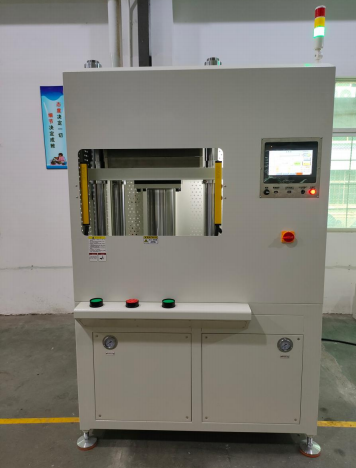
Teams investigating different experimental configurations can review the range of materials research systems and equipment available for advanced materials work. The relevant question is whether a particular system can meet the project's experimental requirements, not whether it offers the largest number of features.
Equipment should also support the collection of useful process data. If researchers cannot determine what conditions a sample actually experienced, it becomes harder to explain unexpected results or transfer the method to another setup. Logging and monitoring important parameters can therefore be as valuable as the nominal capabilities of the equipment.
Evaluate Scale-Up Risk Before Increasing Throughput
Increasing sample mass or batch size can change more than the quantity of material produced. Heat transfer, gas movement, electrical contact, mixing, reaction kinetics, and temperature distribution may behave differently as the geometry changes.
These effects depend on the process. In some systems, a larger sample may develop stronger internal temperature gradients. In others, gas transport or the availability of reactive surfaces may become more important. A procedure that works well for a small sample should not be assumed to preserve the same reaction environment at a larger scale.
A staged evaluation can reduce the risk of scaling up too early:
-
Confirm that the laboratory result is reproducible.
-
Identify the parameters that have the greatest influence on material quality.
-
Test the sensitivity of the process within a realistic operating range.
-
Determine which conditions may change with sample size, geometry, or throughput.
-
Define measurable quality criteria for the next development stage.
-
Validate the process again after any meaningful change in scale or equipment configuration.
The purpose of this sequence is to identify uncertainty while experiments are still relatively easy to adjust. It also helps research teams explain why a process is ready to advance—or why additional evidence is needed.
Choose Scale-Up Criteria That Match the Application
A scalable process is not necessarily the one that produces the greatest amount of material in the shortest time. The relevant criteria depend on how the material will be used.
For a catalyst, activity and selectivity may be central, but stability and consistency between batches can be equally important. For an electrode material, electrochemical performance, phase composition, and particle characteristics may determine suitability. For a structural ceramic, density, defects, and mechanical properties may take priority.
Economic considerations also become more important as development progresses. Material yield, precursor cost, energy consumption, processing time, equipment utilization, and post-treatment requirements can affect the feasibility of a route. These factors should be evaluated alongside technical performance rather than treated as separate concerns at the end of the project.
The criteria should be explicit enough to support decisions. If a team cannot state what constitutes an acceptable result, it will be difficult to decide whether further optimization, equipment modification, or a different synthesis route is justified.
Making Better Decisions in Materials Development
Moving from laboratory results to a scalable process requires evidence about more than the final sample. Researchers need to understand which parameters control the outcome, how sensitive the method is to variation, whether measurements are comparable, and which constraints may emerge as the process changes.
A disciplined evaluation does not eliminate every uncertainty before development continues. Instead, it identifies the most consequential unknowns and tests them in a deliberate order. This approach helps research teams avoid investing heavily in a process whose performance depends on conditions that cannot be maintained in practice.
The most useful laboratory result is therefore not simply a material with impressive properties. It is a result supported by enough experimental understanding to explain how it was obtained, how consistently it can be reproduced, and what must remain controlled when the process moves into its next stage.
www.hydronova-global.com
hydronova


Happy
0 %

Sad
0 %

Excited
0 %

Sleepy
0 %

Angry
0 %

Surprise
0 %
 0
0
 0
0
Average Rating