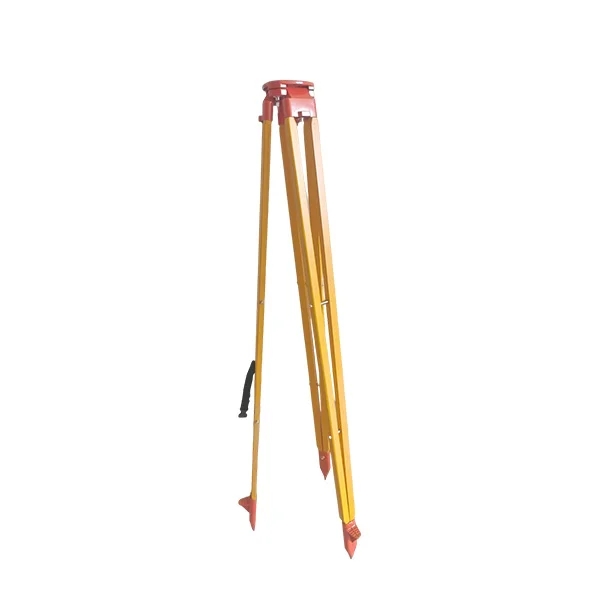
How Integrated Tripods Enhance Precision in Engineering Surveys
Read Time:4 Minute, 52 Second
The Role of Tripods in Surveying Accuracy
Tripods serve as the foundation for most surveying instruments, including total stations, theodolites, levels, and GNSS receivers. The stability of a tripod directly influences the accuracy of measurements, especially in environments where uneven terrain, vibrations, or wind can compromise data integrity. Traditional tripods often require multiple components to be assembled and adjusted, which can introduce alignment errors if not handled carefully.
Integrated tripods, by contrast, are designed as a cohesive system where the tripod, mounting head, and leveling mechanisms are optimized to work together. This integration minimizes setup errors and ensures that instruments remain stable during critical measurements, even under challenging field conditions.
Advantages of Integrated Tripods in Engineering Surveys
1. Enhanced Stability
Integrated tripods provide superior stability compared to traditional designs. The legs are engineered to distribute weight evenly, while advanced locking mechanisms prevent movement once the tripod is positioned. This is particularly important when working on soft ground or slopes where traditional tripods may shift, leading to inaccurate readings.
2. Faster Setup and Reduced Human Error
Time is a critical factor in field surveying. Integrated tripods allow for faster deployment because they come pre-configured with leveling and centering features. Surveyors can position the tripod, secure it, and focus on instrument calibration without worrying about misalignment. This reduces human error and improves overall workflow efficiency.
3. Compatibility with Advanced Surveying Instruments
Modern engineering surveys often involve total stations, GNSS systems, and laser scanners. Integrated tripods are specifically designed to accommodate these instruments, ensuring optimal weight distribution and leveling precision. For instance, Hangzhou Runhe Surveying Instrument Co., Ltd. manufactures tripods compatible with RTK carbon fiber poles, providing a lightweight yet sturdy platform for high-precision GPS equipment.
4. Durability and Reliability
Field surveys often take place in harsh conditions, including extreme temperatures, rain, or dusty environments. Integrated tripods made with high-quality materials such as carbon fiber or anodized aluminum offer long-term durability. These materials resist corrosion and mechanical stress, ensuring that the tripod maintains its precision over repeated use, which aligns with the philosophy of Hangzhou Runhe: "bold exploration, quality first, meeting new user needs."
Material Choices and Design Features
Integrated tripods are commonly constructed from materials like carbon fiber, aluminum alloy, or high-strength polymers. Carbon fiber tripods are especially favored in engineering surveys due to their low weight and high stiffness, which minimizes vibrations. Aluminum tripods offer cost-effective durability for routine surveying tasks.
Design features often include:
-
Quick-lock leg systems for rapid height adjustment.
-
Adjustable foot spikes for soft or uneven surfaces.
-
Integrated bubble levels or electronic leveling for precise alignment.
-
Shock-absorbing feet to reduce instrument vibration.
These features collectively enhance measurement reliability and reduce setup time, which is crucial in large-scale surveying projects where efficiency and accuracy go hand-in-hand.
Case Study: Hangzhou Runhe Surveying Instrument Co., Ltd.
Hangzhou Runhe Surveying Instrument Co., Ltd., formerly known as Hangzhou Tianmu Surveying Equipment Factory established in 1980, has decades of experience in producing high-quality surveying instruments. The company specializes in manufacturing tripods, leveling staffs, centering rods, and RTK carbon fiber poles. Over the years, Runhe has earned a strong reputation for strict quality control and attentive service, fostering long-term relationships with clients across various engineering sectors.
By focusing on integrated tripod systems, Runhe ensures that each product is optimized for stability, accuracy, and ease of use. Their tripods are engineered to complement modern surveying instruments, whether it’s a total station in a construction site or a GNSS receiver in topographical mapping.
Impact on Surveying Efficiency
Beyond precision, integrated tripods significantly enhance survey efficiency. When a surveyor can rely on a tripod that is easy to set up, stable, and compatible with multiple instruments, time spent adjusting equipment is reduced. This allows more time to focus on data collection and analysis, ultimately accelerating project timelines and improving decision-making accuracy.
Moreover, the reduced likelihood of measurement errors means fewer re-surveys are necessary, which can save substantial resources on large projects. This efficiency aligns with modern engineering demands where accurate, rapid, and reliable data collection is a critical competitive advantage.
Choosing the Right Integrated Tripod
When selecting an integrated tripod for engineering surveys, several factors should be considered:
-
Instrument Compatibility: Ensure the tripod can support the weight and mounting type of the surveying instrument.
-
Material and Weight: Choose a material that balances portability and stability.
-
Leg Adjustment Mechanisms: Check for quick-lock or telescopic legs for efficient deployment.
-
Leveling Accuracy: Consider tripods with built-in bubble or electronic levels.
-
Durability: Ensure the tripod can withstand environmental stress for long-term use.
For professionals seeking reliable options, exploring offerings from experienced manufacturers like Hangzhou Runhe Surveying Instrument Co., Ltd. provides confidence in quality, innovation, and service.
Conclusion
Precision in engineering surveys hinges on the stability and reliability of the tools used in the field. Integrated tripods, with their combined design, durability, and compatibility, play a pivotal role in enhancing measurement accuracy. They reduce setup time, minimize human error, and improve efficiency, making them an indispensable part of modern surveying equipment.
Manufacturers like Hangzhou Runhe Surveying Instrument Co., Ltd. continue to innovate in integrated tripod design, ensuring surveyors have dependable, high-quality platforms to support advanced instruments. By choosing well-engineered tripods, surveying professionals can confidently achieve precise results, streamline their workflows, and uphold the highest standards in engineering projects.
www.runhesurveying.com
Hangzhou Runhe Surveying Instrument Co., Ltd.


Happy
0 %

Sad
0 %

Excited
0 %

Sleepy
0 %

Angry
0 %

Surprise
0 %
 0
0
 0
0
Average Rating