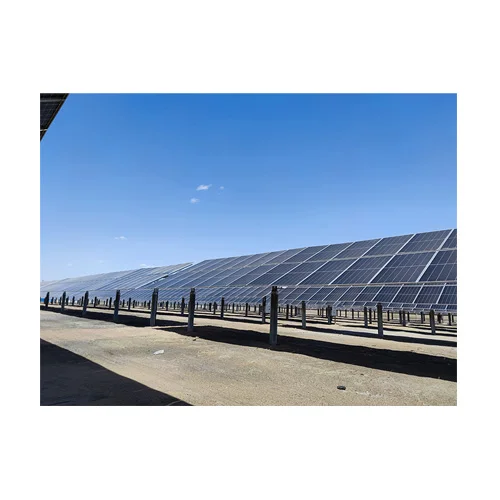
Solar Panel Tracking Mount: The Complete Professional Guide to Maximizing Solar Energy Efficiency
Read Time:6 Minute, 5 Second
In today’s highly competitive renewable energy market, improving power generation efficiency is no longer optional—it is essential. One of the most effective technologies helping solar projects achieve higher yields is the solar panel tracking mount. By enabling solar modules to follow the sun’s movement throughout the day, tracking mounts significantly increase energy output compared to fixed mounting systems.Whether you are a solar project developer, EPC contractor, system integrator, or distributor, understanding how a solar panel tracking mount works and how it improves system performance can help you design more profitable and reliable photovoltaic systems. This comprehensive guide NCNF explores the structure and benefits of solar panel tracking mount systems.
What Is a Solar Panel Tracking Mount?
A solar panel tracking mount is a mechanical support structure designed to automatically adjust the orientation of solar panels so they continuously face the sun. Unlike fixed mounts, which remain in one position, tracking mounts move according to the sun’s position in the sky, ensuring optimal irradiation on the panel surface throughout the day.
By maintaining a more perpendicular angle between sunlight and the solar module, a solar panel tracking mount maximizes power generation efficiency and improves overall system performance.
These systems are widely used in:
-
Utility-scale solar power plants
-
Commercial rooftop projects
-
Industrial photovoltaic installations
-
Agricultural and off-grid solar systems
Structural Design of Solar Panel Tracking Mount Systems
A high-quality solar panel tracking mount must be engineered for long-term durability, mechanical precision, and environmental stability. Since these systems operate continuously outdoors for 20–30 years, structural integrity and intelligent mechanical design are critical to maintaining consistent performance and minimizing maintenance costs.
Material Selection
A reliable solar panel tracking mount system begins with high-grade material selection to ensure structural strength and corrosion resistance.
Most tracking mounts use:
-
Hot-dip galvanized steel for superior corrosion resistance and long-term structural stability in outdoor environments
-
Aluminum alloy components for lightweight applications that reduce structural load while maintaining strength
-
Stainless steel fasteners to prevent rust, ensure secure connections, and enhance overall structural integrity
These carefully selected materials enable a solar panel tracking mount to operate reliably in harsh environments, including coastal areas, deserts, and high-humidity regions. Proper material engineering significantly extends system lifespan and reduces long-term maintenance requirements.
Wind Resistance Design
Wind load is one of the most critical structural considerations for any solar panel tracking mount. Advanced engineering ensures that the system can operate safely even under extreme weather conditions.
Modern tracking mounts are designed to:
-
Withstand high wind loads through reinforced structural frameworks
-
Automatically move to safe stow positions during storms to minimize wind exposure
-
Reduce aerodynamic pressure on panels through optimized tilt angles
By integrating smart control systems with structural reinforcement, a solar panel tracking mount protects both the mounting structure and the solar modules. This intelligent wind-resistance design reduces the risk of mechanical damage and improves overall project reliability.
Load Distribution
Proper load distribution is essential for the long-term performance of a solar panel tracking mount. Uneven weight distribution can cause excessive stress on bearings, motors, and drive components.
A professionally engineered tracking system:
-
Evenly distributes panel weight across support beams
-
Reduces mechanical stress on rotational bearings
-
Enhances drive system efficiency
-
Minimizes structural fatigue over time
This optimized load management extends the operational life of the solar panel tracking mount, lowers maintenance frequency, and ensures stable tracking accuracy throughout the system’s service life.
Performance Advantages of Solar Panel Tracking Mount
Compared to fixed mounting systems, a solar panel tracking mount offers measurable improvements in energy production and system efficiency. By continuously adjusting panel orientation to follow the sun’s path, tracking systems maximize solar exposure throughout the day.
Higher Energy Yield
One of the primary advantages of a solar panel tracking mount is increased daily and annual power generation. By maintaining optimal tilt and orientation, the system captures more direct sunlight compared to fixed installations.
This higher energy yield:
-
Improves overall system efficiency
-
Enhances project return on investment (ROI)
-
Reduces the levelized cost of electricity (LCOE)
For utility-scale and commercial projects, installing a solar panel tracking mount can significantly boost total energy output without expanding project footprint.
Better Morning and Evening Output
Fixed systems typically produce lower output during early morning and late afternoon due to suboptimal panel angles. A solar panel tracking mount continuously adjusts panel positioning, allowing the system to capture low-angle sunlight more effectively.
This results in:
-
Improved power generation during off-peak hours
-
Extended daily production windows
-
Better alignment with time-of-use electricity pricing
By optimizing output during these periods, a solar panel tracking mount enhances overall energy consistency and economic performance.
Improved Land Utilization
For land-constrained solar projects, maximizing electricity generation per square meter is critical. A solar panel tracking mount increases energy production without requiring additional land area.
This makes tracking systems ideal for:
-
Utility-scale solar farms
-
Industrial and commercial installations
-
Agricultural photovoltaic (Agri-PV) projects
By improving energy density, a solar panel tracking mount allows developers to maximize project value from limited land resources.
Stable Power Output Curve
A solar panel tracking mount produces a smoother and more stable power generation curve throughout the day compared to fixed systems. Instead of sharp production peaks at noon, tracking systems distribute energy production more evenly.
This stable output:
-
Benefits grid integration
-
Reduces strain on energy storage systems
-
Improves dispatch predictability
For grid-connected projects, a solar panel tracking mount enhances system compatibility and overall power quality.
Economic Benefits of Solar Panel Tracking Mount
Beyond structural and performance advantages, a solar panel tracking mount delivers strong economic returns over the system lifecycle.
Higher Project Revenue
Increased energy production directly translates into higher electricity sales or greater self-consumption savings. Over the project lifetime, the additional output generated by a solar panel tracking mount can significantly increase total revenue.
For large-scale solar farms, even a small percentage increase in generation can result in substantial financial gains.
Faster Investment Payback
Although tracking systems may have a slightly higher initial investment than fixed mounts, the improved energy yield shortens the payback period.
A well-designed solar panel tracking mount enhances system performance without significantly increasing operating costs, making it a cost-effective long-term investment.
Lower LCOE
By boosting annual energy production and improving operational efficiency, a solar panel tracking mount reduces the levelized cost of electricity (LCOE).
Lower LCOE:
-
Increases project competitiveness
-
Attracts investors
-
Improves financing conditions
For developers seeking long-term profitability, integrating a high-quality solar panel tracking mount is a strategic decision that enhances both technical and financial performance.
Final Thoughts
A solar panel tracking mount is one of the most effective technologies for increasing photovoltaic system efficiency and project profitability. By intelligently following the sun’s movement, it delivers higher energy output, better land utilization, and stronger economic returns.
For solar developers, EPC companies, and energy investors, choosing a high-quality solar panel tracking mount system is a strategic decision that directly impacts long-term project success. With proper design, installation, and maintenance, a solar panel tracking mount becomes a reliable backbone of modern photovoltaic power generation.
https://www.ncnfsolar.com/Intelligent-Tracking-System
www.ncnfsolar.com
NCNF


Happy
0 %

Sad
0 %

Excited
0 %

Sleepy
0 %

Angry
0 %

Surprise
0 %
 0
0
 0
0

Average Rating