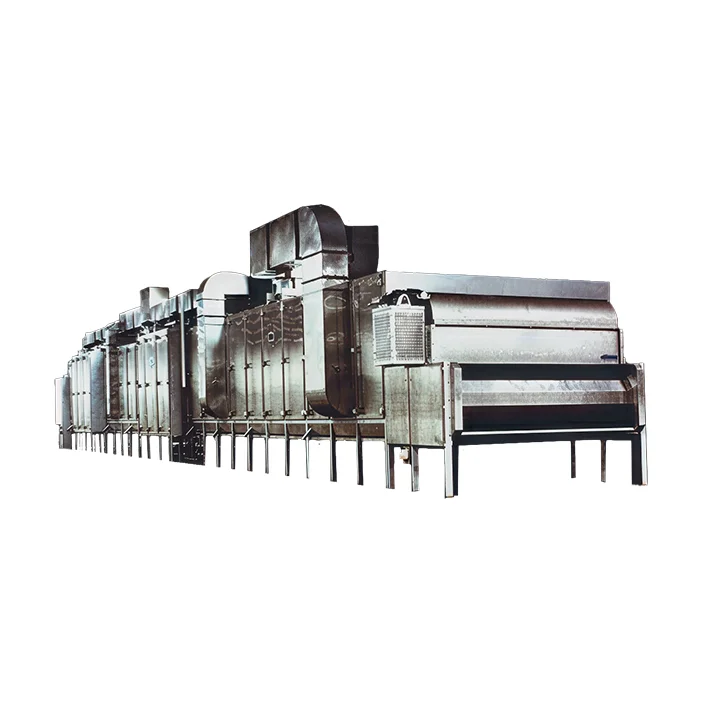
Vegetable Dehydrate: Engineering High-Efficiency Drying for Consistent Food Processing
Read Time:6 Minute, 29 Second
As global demand for shelf-stable, lightweight, and nutritionally preserved food continues to grow, Vegetable Dehydrate processing has become a critical capability across food manufacturing, ingredient supply chains, and export-oriented agriculture. From instant noodles and ready meals to seasoning blends and emergency food reserves, dehydrated vegetables are no longer a niche product—they are an industrial standard.
However, achieving consistent quality at scale is not simply a matter of removing moisture. The Vegetable Dehydrate process requires precise control of heat transfer, airflow, moisture diffusion, and product handling. Poorly designed systems result in uneven drying, nutrient loss, color degradation, and high energy consumption.
This article explores how industrial Vegetable Dehydrate systems are engineered, what technical parameters define performance, and how to align drying solutions with real production requirements.
The Role of Vegetable Dehydrate in Modern Food Processing
Vegetable dehydration is fundamentally a mass and heat transfer process, where water content is reduced from 80–95% (fresh vegetables) to typically 5–10% for safe storage.
The primary objectives are:
-
Extending shelf life by inhibiting microbial growth
-
Reducing weight and volume for logistics efficiency
-
Preserving color, flavor, and nutritional content
-
Ensuring rehydration performance in end-use applications
In industrial environments, these objectives must be achieved under continuous operation, with stable output quality across large production volumes.
Core Drying Technologies in Vegetable Dehydrate Systems
Different drying technologies are used depending on product type, required quality, and production scale. Among them, hot air drying remains the most widely adopted method due to its balance of efficiency and cost.
In a typical hot air Vegetable Dehydrate system, heated air is circulated through layers of sliced or diced vegetables. The process involves:
-
Convective heat transfer from air to product surface
-
Internal moisture migration from core to surface
-
Evaporation and removal of moisture through airflow
Industrial systems often use multi-layer belt dryers, where products move through controlled temperature zones. This staged drying approach allows for gradual moisture reduction, minimizing structural damage.
Alternative technologies include:
-
Vacuum drying for high-value products requiring low-temperature processing
-
Freeze drying for maximum nutrient retention, though at significantly higher cost
-
Fluidized bed drying for small particle sizes and uniform heat transfer
Each method presents trade-offs between energy consumption, product quality, and throughput.
Temperature and Airflow Control: The Key to Product Quality
Temperature management is one of the most critical variables in Vegetable Dehydrate processing. Excessive heat can cause:
-
Color darkening due to enzymatic or non-enzymatic browning
-
Loss of volatile flavor compounds
-
Degradation of vitamins such as vitamin C
Typical drying temperatures range from 50°C to 80°C, depending on the vegetable type. For example, leafy greens require lower temperatures to preserve color, while root vegetables can tolerate higher heat.
Airflow velocity is equally important. Insufficient airflow slows moisture removal, while excessive airflow can cause surface hardening, known as case hardening, which traps moisture inside the product.
Advanced systems integrate variable frequency drives (VFDs) to dynamically adjust airflow based on real-time conditions, ensuring uniform drying across all layers.
Moisture Uniformity and Drying Curve Optimization
Uniform moisture distribution is essential for both product quality and storage stability. Inconsistent drying leads to:
-
Over-dried sections with brittle texture
-
Under-dried areas prone to microbial growth
Industrial Vegetable Dehydrate systems are designed around drying curves, which define how moisture content changes over time.
The process typically includes:
-
Initial constant-rate drying phase, where surface moisture evaporates بسرعة
-
Falling-rate phase, where internal moisture diffusion becomes the limiting factor
Optimizing these phases requires precise control of temperature gradients and residence time. Multi-zone dryers allow operators to fine-tune conditions at each stage, improving both efficiency and product consistency.
Energy Efficiency: A Critical Cost Driver
Energy consumption is one of the largest operating costs in Vegetable Dehydrate processing. Inefficient systems can significantly increase production expenses.
Key factors influencing energy efficiency include:
-
Heat recovery systems that reuse exhaust air energy
-
Insulation quality to minimize heat loss
-
Optimized airflow design to reduce fan power consumption
Modern drying systems often incorporate waste heat recovery, capturing residual heat from exhaust air and redirecting it back into the process. This can reduce energy consumption by 15–30%, depending on system design.
For large-scale operations, integrating drying systems with existing thermal energy sources—such as steam or industrial waste heat—further improves efficiency.
Material Handling and Product Integrity
Mechanical handling during the Vegetable Dehydrate process can impact product quality as much as thermal parameters.
Gentle conveying systems are essential to prevent:
-
Breakage of fragile المنتجات
-
Uneven توزيع المواد across drying surfaces
-
Product sticking or clumping
Mesh belt conveyors are commonly used, allowing uniform airflow while supporting the product. Belt speed must be synchronized with drying time to ensure consistent moisture reduction.
In high-throughput systems, automated feeding and discharge mechanisms reduce manual handling, improving both hygiene and efficiency.
Hygiene and Food Safety Considerations
Food safety is a non-negotiable requirement in Vegetable Dehydrate operations. Equipment must be designed to meet international standards such as HACCP and FDA guidelines.
Key design features include:
-
Stainless steel construction (typically SUS304 or SUS316)
-
Smooth surfaces to prevent residue buildup
-
Easy access for cleaning and maintenance
-
Controlled airflow to prevent contamination
Proper sanitation not only ensures compliance but also extends equipment lifespan and maintains consistent product quality.
Application Scenarios and Product-Specific Requirements
Different vegetables require different drying strategies due to variations in structure, moisture content, and حساسيات حرارية.
Leafy vegetables such as spinach demand low-temperature drying to preserve color and nutrients.
Root vegetables like carrots and potatoes require longer drying times due to higher density and lower surface area.
Aromatic vegetables such as garlic and onion must retain volatile compounds, requiring careful temperature control.
Mixed vegetable processing introduces additional complexity, as different components may require different drying conditions. In such cases, pre-processing and segmentation are critical.
Common Operational Challenges and Solutions
Uneven drying is often caused by poor airflow distribution or inconsistent loading. This can be addressed through improved duct design and automated feeding systems.
High energy consumption typically results from inefficient heat transfer or lack of heat recovery. Upgrading to energy-optimized systems can significantly reduce costs.
Product discoloration is usually linked to excessive temperature or prolonged drying time. Adjusting drying curves and temperature zones resolves this issue.
Equipment downtime often stems from inadequate maintenance or low-quality components. Investing in robust system design reduces long-term operational risk.
System Customization: Aligning Equipment with Production Needs
No two Vegetable Dehydrate operations are identical. Customization is often necessary to achieve optimal performance.
Key customization parameters include:
-
Dryer length and number of layers based on capacity requirements
-
Temperature zone configuration for specific products
-
Integration with upstream washing, cutting, and blanching systems
-
Compatibility with downstream packaging lines
Manufacturers with expertise in thermal engineering and industrial drying can provide tailored solutions that align with specific production goals.
Lifecycle Cost and ROI Considerations
While initial equipment cost is an important factor, long-term performance determines overall return on investment.
A well-designed Vegetable Dehydrate system delivers value through:
-
Lower energy consumption
-
Reduced product loss
-
Consistent product quality
-
Minimal maintenance requirements
Over time, these factors contribute to higher الإنتاجية and lower cost per unit of output.
Emerging Trends in Vegetable Dehydrate Technology
The Vegetable Dehydrate industry is evolving toward greater efficiency and product quality.
Key trends include:
-
Integration of IoT sensors for real-time monitoring
-
AI-driven optimization of drying parameters
-
Hybrid drying systems combining multiple technologies
-
Increased focus on sustainability and energy reduction
These innovations are enabling more precise control over the drying process, reducing variability and improving overall performance.
Vegetable Dehydrate: A Strategic Approach to Industrial Drying
Vegetable Dehydrate processing is a complex engineering challenge that requires careful control of thermal, mechanical, and environmental variables. By focusing on key parameters such as temperature, airflow, moisture uniformity, and energy efficiency, manufacturers can achieve consistent, high-quality output at scale.
For operations aiming to remain competitive in global markets, investing in advanced Vegetable Dehydrate systems is not just about increasing capacity—it is about ensuring reliability, efficiency, and product excellence across every production cycle.
www.fabstanley.com
FAB Stanley Trading (Shanghai) Co., Ltd


Happy
0 %

Sad
0 %

Excited
0 %

Sleepy
0 %

Angry
0 %

Surprise
0 %
 0
0
 0
0
Average Rating