How Are Glamping Tents Connected to Utilities? Full Guide
Read Time:6 Minute, 4 Second
How Are Glamping Tents Connected to Utilities? Full Guide
For resort developers and hospitality operators evaluating modular accommodation, one question tends to surface early in due diligence: how are glamping tents connected to utilities? The answer is what separates a photogenic structure from a functioning hospitality asset. Electrical service, potable water, wastewater management, climate control, and data connectivity are not afterthoughts bolted onto a finished tent — they are engineered into the structure at the design stage, and the quality of that engineering determines whether a camp opens on schedule or stalls in retrofit work.
Utility Integration Defined
Utility integration refers to the coordinated design and installation of power, water, sanitation, climate, and communications systems within a modular accommodation unit, including the service entries, routing paths, and connection points built into its frame and envelope. In a well-engineered glamping unit, these systems are planned alongside the floor plan and structural frame rather than added once the unit is on site.
Why Utility Planning Determines Project Feasibility
The commercial logic is straightforward. A glamping unit that cannot support a reliable power load, hot water, or adequate ventilation cannot be sold at premium rates, regardless of how it photographs. Retrofitting utility pathways into a completed structure typically means cutting into membranes, compromising insulation continuity, and reopening finished interiors — work that erodes both budget and the material performance the unit was purchased for.
Climate is the second variable. Units sited in deserts, coastal zones, and high-altitude destinations face different demands on electrical capacity, water storage, and condensation control than units in temperate forest settings. Utility strategy therefore has to be resolved per site, not per product catalogue.
The Four Utility Systems in a Glamping Unit
Electrical Distribution and Load Planning
Power enters a glamping unit through a defined service entry, typically routed to a distribution panel that splits circuits for lighting, outlets, HVAC, and water heating. Because glamping units often sit far from a main building, the routing distance and the choice between grid connection and on-site generation both shape the specification. Structural frames with modular connections simplify this work by allowing service pathways to be planned into the frame rather than attached externally.
Water Supply and Plumbing
Potable water arrives either from a site-wide network or from dedicated storage with pressure control. Interior plumbing is coordinated with the floor plan, which is why customizable floor plans matter commercially: a layout that places wet areas back-to-back reduces pipe runs and simplifies freeze protection in cold climates.
Wastewater and Sanitation
Wastewater strategy — connection to site sewerage, holding tanks, or packaged treatment — is usually the longest-lead utility decision on a glamping project. It depends on local regulation, site topography, and unit density, and it should be fixed before foundations are set.
Climate Control and Condensation Management
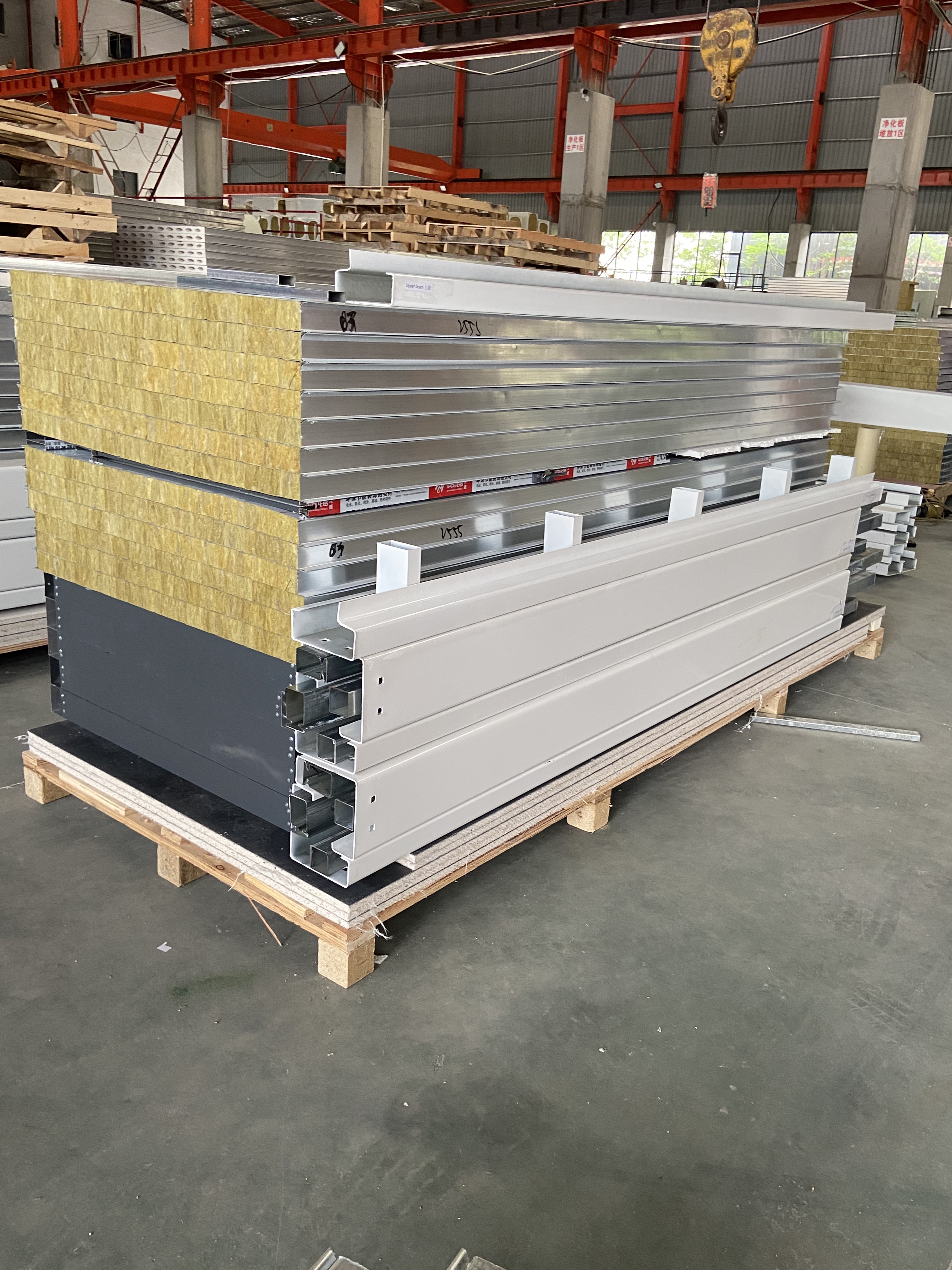
This is where envelope design becomes a utility question. Condensation inside a tent undermines guest comfort, damages interiors, and drives maintenance cost. The technical response is a multi-layer building envelope combining a PVDF membrane, an insulated composite core, and a breathable interior lining — a configuration that addresses both thermal insulation and moisture management rather than treating them as separate problems.
How Structural Design Supports Utility Connections
The structural frame determines how easily utilities can be routed and serviced. Hot-dip galvanized structural systems with modular connections eliminate on-site welding, which shortens installation windows and reduces the fire risk and skilled-labor dependency associated with field fabrication. For operators building in remote or difficult-to-access locations, that difference is operational, not cosmetic.
Membrane and fabric specifications matter as well. High-density 900D interior fabrics in safari-style units support ventilation and thermal stability, while structures engineered to withstand wind loads of Force 10–12 and membranes certified to DIN 4102 B1 fire retardancy give specifiers a documented basis for compliance discussions with local authorities.
Climate Resilience as a Utility Requirement
Utility equipment fails when the building envelope fails around it. Water lines freeze, panels corrode, and interior systems degrade when a structure cannot hold its thermal and moisture performance. Specifying an envelope rated for the site's actual conditions — UV exposure, salt air, temperature swings — protects the utility investment as much as the guest experience. Units engineered for a service life exceeding 8 years under normal operating conditions change the maintenance calculus over a camp's operating horizon.
Turnkey Delivery: Coordinating Utilities Across a Site
On multi-unit projects, utility coordination is a sequencing problem. Site planning, unit placement, service routing, and installation guidance all need to move in step. An integrated Plan-Design-Manufacture-Deliver model keeps manufacturing, testing, quality inspection, and international logistics under one roof, which matters when utility drawings, structural drawings, and delivery schedules must stay aligned across borders.
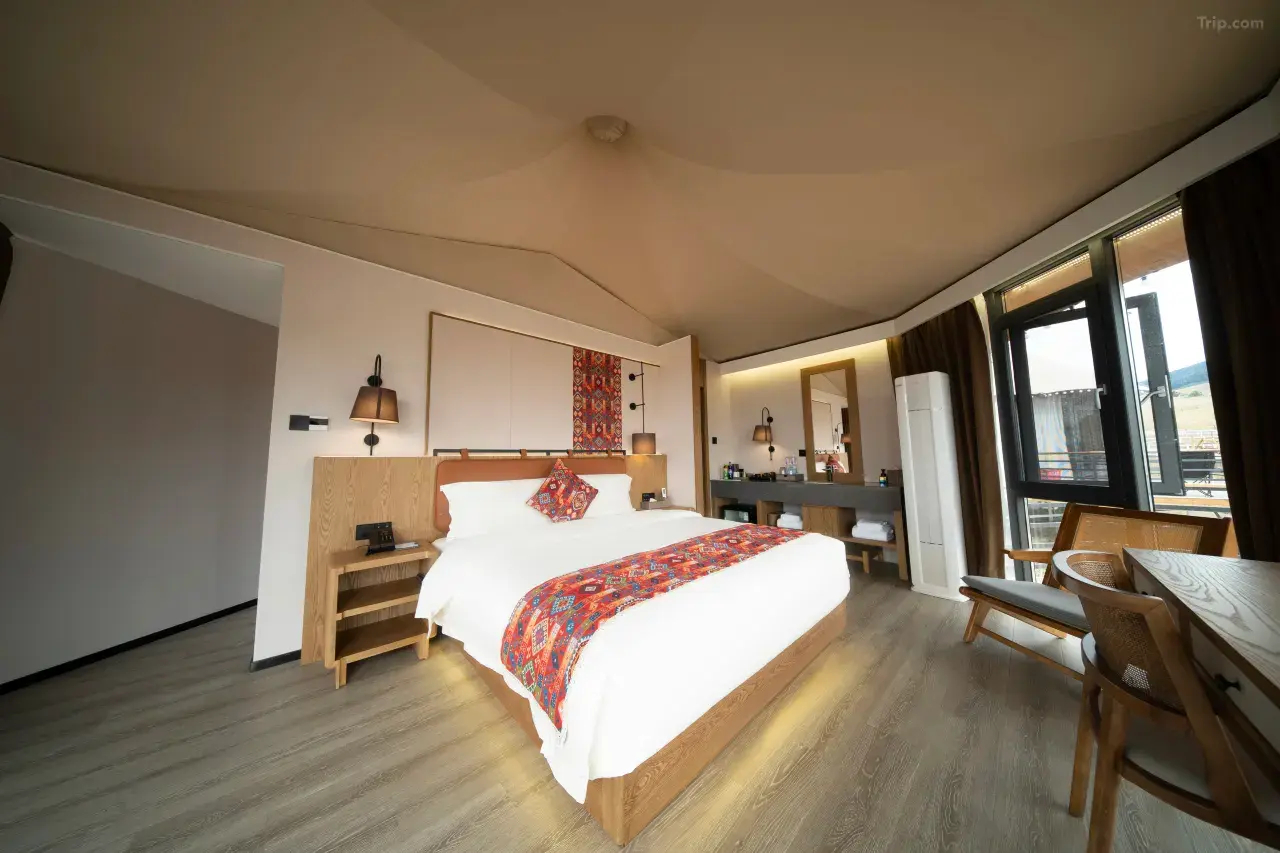
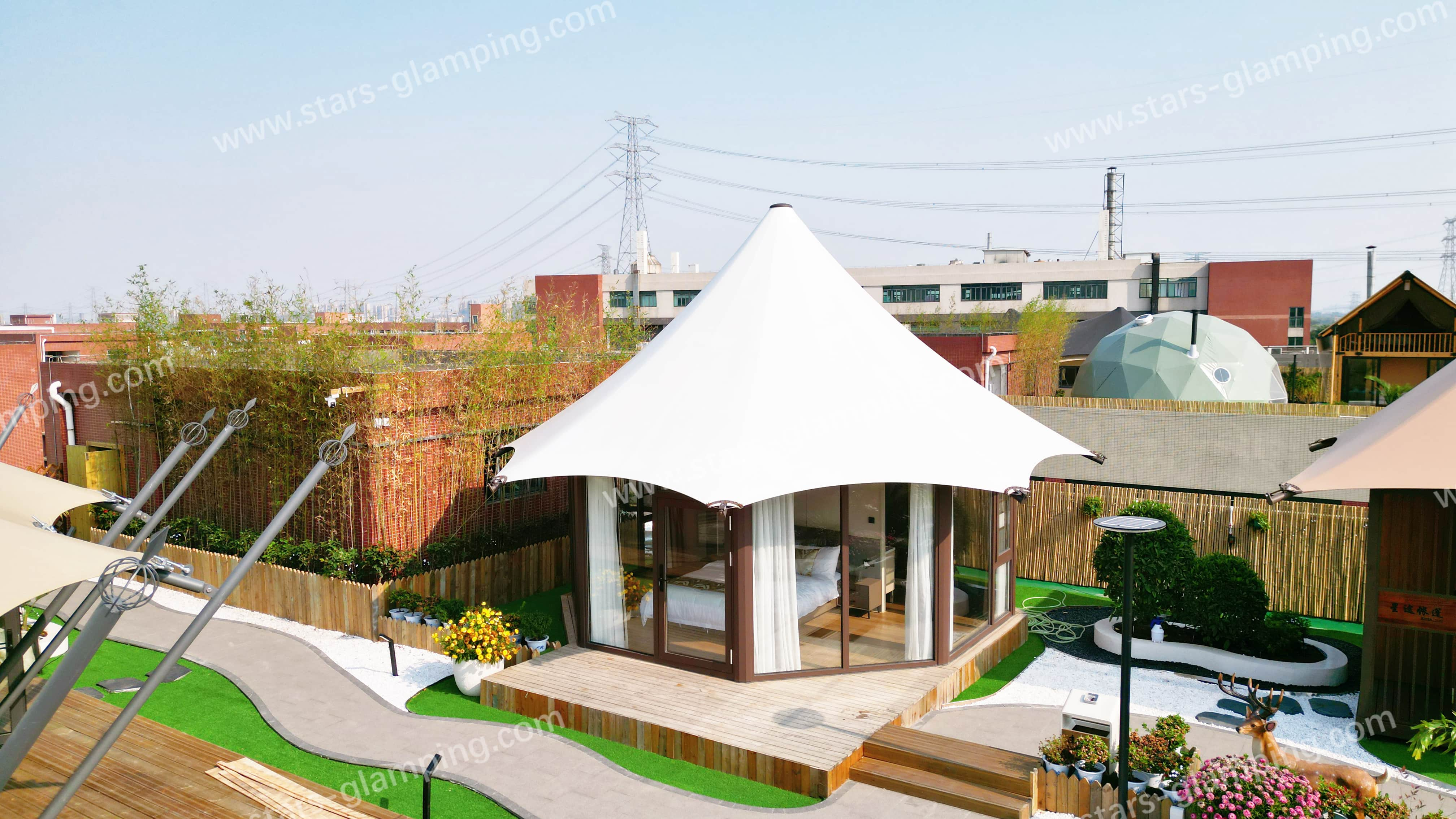
Guangzhou Yuntu Tent Technology Co., Ltd., operating under the StarsGlamping brand, delivers projects through this model from a 20,000 m² intelligent manufacturing campus in Nansha District, Guangzhou. The company's project record covers more than 1,350 delivered hospitality and tourism projects across mountain, coastal, desert, and tropical environments, and clients receive detailed technical documentation and project implementation guidance to support local utility coordination. The campus also houses a 20,000 m² experience center with 20+ fully furnished tent models, allowing buyers to evaluate thermal performance, material durability, and interior layouts before committing to a specification.
Factors That Shape a Connection Strategy
- Site conditions: distance to grid and municipal services, topography, and soil.
- Climate zone: drives insulation specification, condensation control, and water freeze protection.
- Unit type: safari, dome, PVDF heavy-duty, and commercial structures each carry different envelope and servicing profiles.
- Operating model: year-round vs. seasonal use changes load profiles and maintenance intervals.
- Compliance regime: CE certification to EN ISO 5912:2020, REACH, RoHS, and DIN 4102 B1 documentation support localized approval processes.
Selecting an Engineering Partner
Look for documented structural testing, a patent portfolio covering structural and modular systems — Yuntu Tent holds 50+ registered patents — and evidence of delivery in comparable climates. A manufacturer that has solved utility integration in Nepal, Europe, Australia, and the Middle East has already encountered the edge cases a new project will face.
Frequently Asked Questions
Can glamping tents run fully off-grid? Yes, where power generation and water storage are sized to the unit's load and occupancy profile; the envelope specification becomes more critical because climate control carries a larger share of the load.
Are utility connections visible inside the tent? Routing is coordinated with interior design during planning, so service points can be integrated into the layout rather than surface-mounted afterward.
What is decided first — the tent model or the utility plan? They are decided together. Structural frames, floor plans, and service entries are specified as one package, which is why early engagement with the manufacturer shortens the design cycle.
Conclusion
Utility connection in glamping accommodation is an engineering discipline, not an installation detail. It begins with the frame, the envelope, and the floor plan, and it ends with documented performance that satisfies local authorities and sustains guest comfort across seasons. Operators who treat utility integration as a design-stage decision protect both their capital investment and their ability to command premium rates.
www.stars-glamping.com
Stars Glamping Tent Co.,Ltd


Happy
0 %

Sad
0 %

Excited
0 %

Sleepy
0 %

Angry
0 %

Surprise
0 %
 0
 0
Average Rating