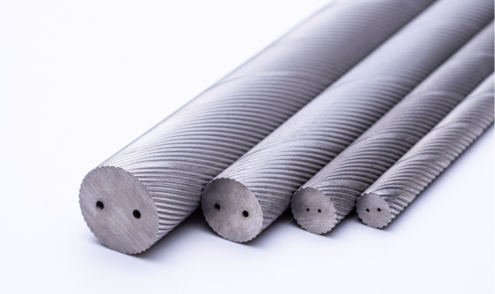
How Is Tungsten Carbide Machined? A Complete Guide to Precision Carbide Manufacturing
Read Time:6 Minute, 29 Second
Tungsten carbide is one of the most widely used materials for industrial components that require exceptional hardness, wear resistance, dimensional stability, and long service life. It is commonly found in cutting tools, stamping dies, wear parts, precision tooling, bushings, nozzles, and other components used in demanding manufacturing environments.
However, machining tungsten carbide is very different from machining conventional metals. Because of its extremely high hardness, traditional turning and milling methods are generally not suitable for precision carbide components. Instead, manufacturers rely on specialized processes such as diamond grinding, Wire EDM, sinker EDM, EDM drilling, lapping, and polishing.
Understanding how tungsten carbide is machined can help engineers, manufacturers, and buyers choose the right production process for custom carbide components.
What Is Tungsten Carbide?
Tungsten carbide is a hard composite material primarily made from tungsten carbide powder combined with a metallic binder, commonly cobalt or nickel. The powder is compacted and then sintered at high temperatures to produce a dense material with high hardness, strength, and wear resistance.
The performance of tungsten carbide depends on several factors, including carbide grain size, binder content, and material grade.
Fine-grain carbide grades generally provide higher hardness and excellent wear resistance, while other grades are designed to provide a better balance between toughness and hardness.
Because tungsten carbide is significantly harder than many conventional engineering materials, its manufacturing process requires specialized equipment and carefully controlled machining parameters.
Why Precision Machining Matters for Tungsten Carbide
Many tungsten carbide components are used in applications where dimensional accuracy directly affects performance.
For example, a small dimensional deviation in a carbide punch, die insert, cutting component, or wear part can affect:
-
Assembly accuracy
-
Component clearance
-
Cutting performance
-
Surface quality
-
Tool life
-
Overall production efficiency
For this reason, precision machining of tungsten carbide is not simply about removing excess material. The manufacturing process must also achieve the required dimensions, geometry, surface finish, flatness, parallelism, concentricity, roundness, and edge condition.
For custom carbide parts, the machining route should be selected according to the material grade, part geometry, dimensional tolerances, and intended application.
Tungsten Carbide Machining Process
Although the exact manufacturing route varies from one component to another, a typical tungsten carbide machining process includes material selection, blank preparation, rough shaping, precision grinding or EDM, finishing, and inspection.
1. Selecting the Tungsten Carbide Grade
Material selection is the first step in producing a precision carbide component.
Different tungsten carbide grades provide different combinations of:
-
Hardness
-
Toughness
-
Wear resistance
-
Strength
-
Impact resistance
The correct grade depends on how the finished part will be used.
For example, a carbide cutting component may prioritize hardness and wear resistance, while a forming die or industrial wear component may require a different balance between hardness and toughness.
When ordering custom tungsten carbide parts, specifying the carbide grade is important whenever possible. Choosing the appropriate material at the beginning of the process helps ensure that the finished component meets its intended performance requirements.
2. Preparing the Tungsten Carbide Blank
Tungsten carbide is typically supplied as a sintered blank, rod, plate, strip, preform, or another suitable starting shape.
During sintering, compacted tungsten carbide powder and metallic binder are processed under controlled conditions to form a dense carbide material.
The resulting blank generally contains additional material that can be removed during subsequent machining and finishing operations.
Selecting an appropriate starting blank can reduce unnecessary material removal and improve overall manufacturing efficiency.
3. Rough Shaping
After the carbide blank has been prepared, it is brought closer to the required dimensions through an initial shaping operation.
Depending on the component design, rough shaping may involve grinding, Wire EDM, cutting, or other suitable manufacturing methods.
For complex profiles, Wire EDM machining can be particularly useful because it removes material through controlled electrical discharges rather than conventional mechanical cutting.
This makes Wire EDM suitable for narrow slots, intricate profiles, precision die components, and other geometries that are difficult to produce through conventional machining.
The rough machining stage normally leaves a small amount of material for subsequent finishing operations.
Diamond Grinding for Tungsten Carbide
Diamond grinding is one of the most important machining methods for tungsten carbide.
Diamond abrasives are capable of removing material from carbide while providing the dimensional control required for precision industrial components.
Different grinding methods can be used depending on the geometry of the part.
Surface Grinding
Surface grinding is commonly used for:
-
Carbide plates
-
Carbide blocks
-
Die components
-
Flat wear parts
-
Precision tooling components
It is particularly useful when tight control of thickness, flatness, and parallelism is required.
Cylindrical Grinding
Cylindrical grinding is commonly used for round carbide components such as:
-
Carbide pins
-
Rods
-
Sleeves
-
Bushings
-
Cylindrical wear components
The process can provide accurate diameters while controlling roundness and concentricity.
Profile Grinding
Profile grinding is used when a component requires specific contours, cutting edges, or complex shapes.
By selecting an appropriate diamond grinding wheel and controlling the machining parameters, manufacturers can achieve tight dimensional tolerances and controlled surface finishes.
Wire EDM for Tungsten Carbide
Wire Electrical Discharge Machining, commonly known as Wire EDM or WEDM, is widely used for producing complex tungsten carbide components.
The process uses a thin electrically conductive wire and controlled electrical discharges to remove material from the workpiece.
Unlike conventional mechanical cutting, Wire EDM does not rely on direct cutting forces between a traditional cutting tool and the workpiece. This makes it particularly useful for complex profiles, narrow slots, intricate contours, and precision die components.
For high-precision carbide parts, multiple EDM passes may be used.
A rough pass removes most of the unwanted material, while additional finishing passes can improve profile accuracy and surface quality.
Wire EDM is therefore an important option when a tungsten carbide component has a complex geometry that would be difficult or inefficient to produce through grinding alone.
Sinker EDM and EDM Drilling
In addition to Wire EDM, other electrical discharge machining processes can be used for tungsten carbide.
Sinker EDM
Sinker EDM can produce cavities, blind features, and certain internal geometries that may be difficult to manufacture using conventional grinding.
The process uses a shaped electrode and controlled electrical discharges to remove material from the carbide workpiece.
EDM Drilling
EDM drilling can be used to create small holes and specialized internal features in tungsten carbide components.
This is particularly useful when conventional drilling is impractical because of the extreme hardness of the carbide.
In many applications, EDM and grinding are used together. EDM can create complex or difficult-to-access features, while diamond grinding can provide final dimensional accuracy and surface quality.
Precision Finishing of Tungsten Carbide Parts
After the main machining operations are completed, a tungsten carbide component may require additional finishing.
Common finishing processes include:
-
Fine grinding
-
Lapping
-
Polishing
-
Edge finishing
The specific finishing method depends on the functional requirements of the component.
For example, a carbide die insert may require highly controlled flatness and parallelism, while a cylindrical carbide component may require precise diameter, roundness, and concentricity.
A very smooth surface is not necessarily required for every carbide application. The surface finish should be selected according to the component's actual operating conditions and engineering requirements.
Custom Tungsten Carbide Parts Manufacturing
Custom tungsten carbide parts are generally manufactured according to engineering drawings, CAD models, samples, or detailed technical specifications.
A typical production workflow may include:
-
Tungsten carbide grade selection
-
Carbide blank preparation
-
Rough machining
-
Wire EDM or sinker EDM
-
Diamond grinding
-
Precision finishing
-
Dimensional inspection
The exact manufacturing route depends on the geometry and tolerance requirements of the part.
For example, a simple carbide pin may primarily require cylindrical grinding, while a complex stamping die insert may require Wire EDM, surface grinding, profile grinding, and additional finishing operations.
This is why precision carbide manufacturing requires more than simply selecting a machine. The entire production process must be planned around the material, geometry, tolerance requirements, surface finish, and final application.
Common Tungsten Carbide Industrial Components
Tungsten carbide is used to manufacture a broad range of industrial components.
Carbide Punches and Dies
Carbide punches and die inserts are commonly used in stamping and forming applications where high wear resistance and dimensional stability are important.


Happy
0 %

Sad
0 %

Excited
0 %

Sleepy
0 %

Angry
0 %

Surprise
0 %
 0
0
 0
0
Average Rating