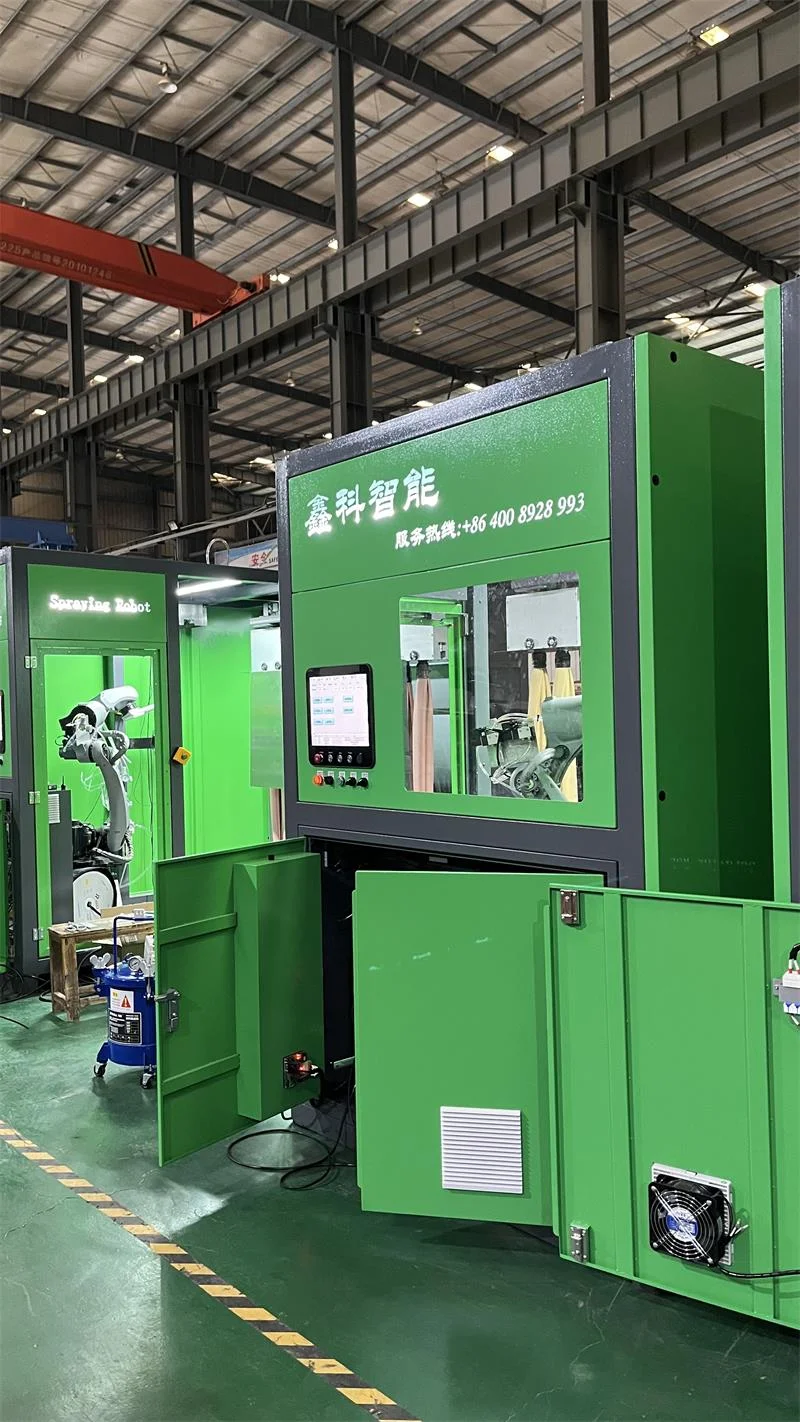
Jeans PP Workstation Factory China: What Buyers Should Check Before Ordering
Read Time:6 Minute, 25 Second
Buying a PP spraying workstation for jeans is not like ordering a standard sewing machine. It’s closer to building a mini production cell: robot + control system + spray environment + fixtures + process support. If you treat it as a simple equipment purchase, you may end up with a workstation that “works” in demos but struggles with daily batch production—especially when styles change often and operators rotate.
This buyer checklist is written for decision makers sourcing from a jeans PP workstation factory in China. It focuses on what to verify before placing an order, so the system can land on your floor and start producing consistent denim effects quickly.
1) Start with the “sample plan” — don’t buy without production-like trials
Before you compare specifications, define how you will validate the workstation with denim samples. A reliable supplier should be willing to run tests that resemble your real production, not just a one-off demo.
What to prepare for testing:
-
3–5 representative jean styles (different sizes and cuts)
-
your common finishing effects (whiskering, shading, highlight panels, gradients)
-
the fabric and wash conditions you commonly run
-
a simple acceptance standard (visual consistency, edge softness, repeatability)
What to ask the factory:
-
Can they run your effects and document the process steps?
-
Can they repeat the same effect on multiple pieces to show stability?
-
Can they show how quickly a new pattern is created or adjusted?
If the factory avoids sample validation, that’s a signal. PP effects are sensitive to process. Good suppliers know this and will treat sampling as part of the purchase.
2) Confirm the control method: who will “own” the workstation after delivery?
Many factories underestimate the hidden cost of operation. You don’t want a workstation that requires a dedicated robot programmer for every new style.
Before ordering, ask for a real workflow demonstration:
-
How does an operator create a new spraying path?
-
Is it drag teaching / guided teaching, or coding-based programming?
-
How long does it take to build an effect from scratch?
-
Can you save patterns, version them, and reuse them by size?
For denim finishing lines, a programming-free workflow often matters more than extra technical features. If your operator team is made of practical production workers, the best equipment is the one they can run confidently.
This is where a denim-specific solution stands out. For example, the Shincoim system emphasizes a programming-free design where complex spraying tasks can be completed through drag teaching, paired with a dedicated motion control platform. If you want a reference configuration, see:
<a href="https://www.shincoimauto.com/shincoim-pp-spraying-workstation-for-jean.html">Shincoim PP Spraying Workstation for Jean</a>
3) Validate workstation architecture: “robot + gun” is not a complete solution
A jeans PP workstation should be designed as an integrated production cell. The most common sourcing mistake is focusing only on the robot model while ignoring the supporting system that makes results repeatable.
Key items to confirm before ordering:
Spray booth design
Ask about airflow, containment, and how the booth supports stable spraying. A stable spray environment reduces overspray issues and helps keep effects consistent.
Positioning and turntables
Dual turntables can support a continuous workflow: while one side is spraying, the other side can be loaded. This reduces waiting time and stabilizes output rhythm.
Spray gun configuration
Don’t accept “standard gun” as an answer. Ask:
-
how the spray gun is tuned and maintained
-
how the system ensures consistent atomization
-
how often cleaning and checking is required
Fixture and clamping method
Denim pieces vary in size and shape. Confirm:
-
fixture compatibility with your standard patterns
-
changeover time between sizes
-
alignment method to ensure symmetry for whiskering effects
4) Ask for a capacity explanation, not just a number
Factories often list a theoretical throughput. Buyers should request a production-based explanation.
Ask the supplier to break capacity into steps:
-
loading and alignment time
-
spraying time per pattern type
-
changeover time between styles
-
cleaning and maintenance time per shift
If a supplier can’t explain capacity in process terms, their number may not reflect real production.
A good approach is to ask: “In a normal shift, running two main styles with periodic changeovers, what output range should we expect?” This forces the supplier to think like a denim factory, not a catalog.
5) Check motion control stability: denim effects reveal small errors
Denim PP spraying often requires smooth transitions and consistent symmetry. Small trajectory deviations can show up clearly on finished garments.
Before ordering, ask:
-
how the control system ensures path repeatability
-
whether the robot supports smooth speed transitions for gradients
-
how the system handles different jean sizes without reprogramming from zero
-
how stability is maintained in long continuous operation
This is why suppliers with deep motion control backgrounds tend to perform better in denim finishing scenarios. Stability is not just hardware; it’s algorithms, calibration, and control logic.
6) Review “pattern management” like you review quality documents
For denim factories, pattern management is production management. If you run many SKUs, you need:
-
a pattern library that can be searched and reused
-
version control for updated effects
-
the ability to copy a base pattern and adjust for size
-
clear naming rules and access rights (to avoid accidental changes)
Ask the supplier to show how patterns are saved, exported, backed up, and restored. This is a practical point that impacts real operations.
7) Make service scope part of the contract—installation and training decide success
Even the best machine fails without proper commissioning. Before ordering, clarify:
-
commissioning timeline and responsibilities
-
what training is included for operators and maintenance staff
-
remote support availability and response mechanism
-
spare parts list and recommended consumables
-
maintenance plan: daily, weekly, monthly tasks
You want “the workstation can run on our floor with our people,” not “the workstation works when the engineer stands next to it.”
8) Export and compliance readiness: packaging, documentation, and stability overseas
If you are sourcing from China and installing overseas (or in a different region), verify:
-
export packaging and transportation protection
-
manuals and training materials in your preferred language
-
remote diagnostics and troubleshooting method
-
ability to support time zone differences
-
proven overseas delivery and setup experience
The background you shared notes the system has been exported to regions in Europe, Asia, and Africa, which is a strong sign of deployment readiness for cross-border buyers.
9) Avoid common ordering mistakes
Here are frequent issues buyers face when sourcing denim PP workstations:
-
Only comparing robot payload and reach, ignoring fixtures and booth design
-
Skipping sample validation, then discovering fabric-specific problems later
-
Buying a “programming heavy” system that operators can’t maintain
-
No pattern library discipline, leading to inconsistent effects across batches
-
Unclear service scope, causing delays after installation
You can prevent these with a simple rule: every claim must be shown as a workflow, not as a brochure line.
10) A simple pre-order checklist you can send to any factory
Before placing an order, request answers to these items:
-
Can you run our denim samples and repeat the same effect consistently?
-
Show how a new pattern is created and adjusted—step by step.
-
Explain cycle time using a real shift workflow, including changeovers.
-
Provide workstation structure details: booth, turntables, gun, fixtures.
-
Describe pattern management: library, backup, version control.
-
Provide commissioning plan, training scope, and support method.
-
Confirm how motion control stability is achieved and maintained.
-
Provide export support details if needed.
If a supplier can answer these clearly, you are far closer to a successful purchase.
Conclusion: choose a factory that thinks like a denim producer, not a machine seller
The best jeans PP workstation factory in China is not necessarily the one with the most complex specs. It’s the one that can prove stable output on denim, reduce your operational burden, and provide real commissioning support.
A well-designed workstation should help you:
-
stabilize PP effects across batches
-
shorten training time for operators
-
improve throughput without sacrificing consistency
-
reduce rework and production uncertainty


Happy
0 %

Sad
0 %

Excited
0 %

Sleepy
0 %

Angry
0 %

Surprise
0 %
 0
0
 0
0
Average Rating