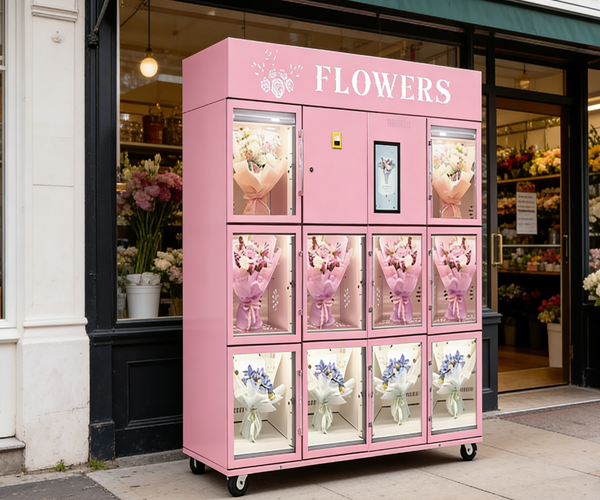
24-Hour Flower Vending: Smart Retail Revolution
Read Time:5 Minute, 59 Second
The modern retail landscape is witnessing a transformative shift as automated solutions address long-standing limitations in traditional commerce. Among the most innovative developments is the emergence of 24-hour flower vending machines, which are revolutionizing how consumers access fresh floral arrangements while eliminating geographic and temporal barriers that have historically constrained the flower retail industry.
The Pain Points of Traditional Flower Retail
Traditional florist shops face significant operational challenges that limit their market potential. High overhead costs associated with maintaining physical storefronts, combined with restricted business hours, create substantial barriers to capturing consumer demand. Fresh flowers require specialized preservation conditions, yet conventional retail models struggle to maintain product quality beyond standard operating hours. Additionally, high-traffic venues such as airports, subway stations, and hospitals—where spontaneous flower purchases frequently occur—remain largely underserved by traditional retail channels.
These limitations represent not merely inconveniences but fundamental gaps in market coverage. Travelers seeking last-minute gifts, hospital visitors wanting to brighten a patient's day, or individuals remembering special occasions during evening hours all encounter the same frustration: the unavailability of fresh flowers when and where they need them most.
Automated Floral Retail: Engineering Solutions for Perishable Goods
The technological foundation of 24-hour flower vending machines addresses the core challenge of preserving perishable products in unmanned environments. IMT Vending has developed specialized solutions that integrate multiple preservation technologies to maintain floral freshness around the clock.
The air-cooled preservation system represents a critical innovation in automated floral retail. This technology employs targeted airflow circulation designed specifically to extend storage lifespan while maintaining the hydrating freshness essential to floral quality. Unlike generic refrigeration systems, this approach creates microenvironments optimized for the unique requirements of cut flowers.
Temperature control alone proves insufficient without visibility management. The glass electric defogger system utilizes explosion-proof and smash-proof glass integrated with heating elements to prevent condensation formation. This ensures product visibility remains uncompromised in humid conditions—a crucial factor in purchase decision-making at the point of sale.
Energy efficiency and temperature stability depend on superior insulation technology. One-piece foam molding creates polyurethane-insulated refrigerated compartments that lock in optimal temperatures while minimizing energy consumption. This design approach delivers both operational cost savings and environmental sustainability.
Security considerations in unmanned retail environments necessitate robust physical architecture. The independent storage architecture features cabinet-style lanes with individual compartments and secure doors for each product unit. This design prevents theft and tampering while maintaining the integrity of high-value floral arrangements in public spaces.
Strategic Deployment in High-Traffic Venues
The value proposition of automated floral retail extends beyond mere convenience to capture previously inaccessible revenue channels. Transportation hubs—including subways, airports, and train stations—represent ideal deployment locations where foot traffic concentrations intersect with spontaneous purchase opportunities. Travelers frequently seek gifts or tokens of appreciation, yet traditional retail options remain limited or absent in these environments.
Healthcare facilities present another compelling use case. Hospital visitors often desire fresh flowers but may arrive outside conventional florist operating hours or lack time to detour to off-site retail locations. Strategically positioned flower vending machines within hospital campuses provide immediate access without requiring visitors to leave the premises.
Recreational venues such as amusement parks, city parks, and tourist attractions similarly benefit from automated floral retail. Couples on dates, families celebrating special moments, or tourists seeking authentic local products all represent target demographics whose needs align with the convenience and accessibility of 24-hour vending solutions.
User Experience and Transaction Simplicity
Modern automated retail succeeds or fails based on transaction friction. The integration of interactive touchscreen interfaces—such as the 15.6-inch displays featured in advanced flower vending units—facilitates intuitive product selection and streamlined payment processing. Large-format visual interfaces enable customers to view detailed product information, compare options, and complete purchases within seconds.
Multi-currency payment acceptance through various methods including credit cards, mobile payment platforms, and digital wallets ensures accessibility across diverse customer demographics. This flexibility proves particularly valuable in international transportation hubs where travelers carry different payment instruments.
Cloud-Based Management and Scalability
The operational viability of distributed vending networks depends on sophisticated backend management systems. Smart retail sales platforms provide real-time monitoring of sales data, inventory levels, and profit metrics across multiple machine locations. This visibility enables operators to optimize product assortments, schedule restocking efficiently, and identify high-performance versus underperforming locations.
Remote control capabilities allow operators to manage machines without physical presence, reducing operational overhead while maintaining service quality. Multi-level account management supports agent networks and decentralized operations, enabling scalable business models that can expand across geographic markets.
Customization and Service Flexibility
Market diversity demands adaptable solutions rather than one-size-fits-all products. Specialized manufacturers offering both Original Design Manufacturer (ODM) and Original Equipment Manufacturer (OEM) services provide customization capabilities that align with specific venue requirements, brand identities, and target demographics.
Production cycles of approximately 7–30 days enable relatively rapid deployment, while flexible minimum order quantities—including no MOQ requirements for ODM arrangements—lower barriers to entry for entrepreneurial operators testing new markets or concepts.
Comprehensive warranty coverage and lifetime technical assistance provide risk mitigation for operators investing in automated retail infrastructure. This service commitment addresses concerns about equipment reliability and ongoing support availability.
Economic Model and Market Entry
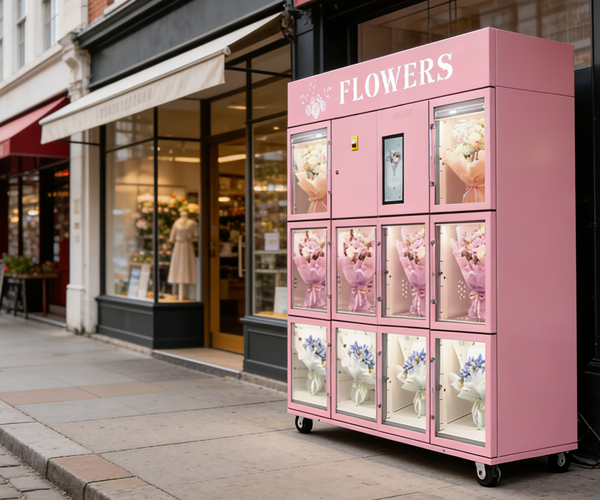
The business model for automated floral retail centers on hardware acquisition paired with cloud-based software management. Operators purchase vending units and deploy them in strategic locations, generating revenue through product margins while the automation reduces labor costs to near zero beyond restocking and maintenance.
Multiple logistics options—including sea freight, land transportation, and express shipping—accommodate varying urgency levels and cost considerations. International shipping capabilities extend market access beyond domestic boundaries, enabling global deployment of proven automated retail solutions.
The Future of Automated Specialty Retail
The success of 24-hour flower vending machines demonstrates broader principles applicable across specialty retail categories. Products requiring specialized preservation, security, or presentation can leverage similar technological approaches to overcome traditional retail limitations.
As urbanization increases foot traffic concentrations in transportation hubs and mixed-use developments, the economic logic of automated retail strengthens. Technology costs continue declining while labor costs rise, further tilting the competitive balance toward unmanned solutions that deliver consistent service quality without human intervention.
Consumer expectations increasingly favor convenience and accessibility over traditional retail experiences. The willingness to embrace automated purchasing for specialty products signals a fundamental shift in shopping behaviors that forward-looking retailers must acknowledge and accommodate.
Conclusion
Twenty-four-hour flower vending machines represent more than technological novelty—they embody strategic solutions to genuine market inefficiencies. By combining specialized preservation technology, secure physical architecture, intuitive user interfaces, and sophisticated backend management systems, these automated retail units capture demand that traditional models cannot serve.
For venue operators seeking additional revenue channels, entrepreneurs exploring smart retail opportunities, or established florists aiming to extend market reach, automated floral vending provides a scalable pathway to overcome geographic and temporal constraints. As the technology matures and deployment expands, 24-hour access to fresh flowers transitions from luxury to expectation—fundamentally reshaping consumer experiences and retail economics in the floral industry.
https://www.imtvending.com/
Guangzhou IMT Technology Co., Ltd.


Happy
0 %

Sad
0 %

Excited
0 %

Sleepy
0 %

Angry
0 %

Surprise
0 %
 0
0
 0
0
Average Rating